avatarDark Energy Articles

Free AI web copilot to create summaries, insights and extended knowledge, download it at here

2238

Abstract

ium.com/v2/resize:fit:800/1*2ST6SGC1GXAXQ_C4QMli4w.jpeg"><figcaption>[Photo by <a href="https://www.pexels.com/photo/blue-and-white-planet-display-87009/">Pixabay</a>]</figcaption></figure><h1 id="6e70">Plants extremely resistant to drought</h1><p id="13f0">Researchers are particularly interested in the so-called resurrection plants. This is a group of plants that are super resistant to dehydration. They include, for example, the Jericho rose (Anastatica hierochuntica), an annual plant capable of living in the extreme conditions of the deserts of Africa and the Arabian Peninsula.</p><blockquote id="07d6"><p>“Resurrection plants can completely dry out, losing almost all of their water, and later — after rehydration — come back to life,” Dr. Byrt says. — “We want to borrow from them this unusual mechanism that evolution has equipped them with.”</p></blockquote><h1 id="4591">Sprouting on the Moon</h1><p id="1161">The plants destined for space travel will be placed in a container the size of a shoebox. There will also be temperature-controlled cameras inside, allowing us to track what’s going on inside the small capsule.</p><p id="3fe7">Interestingly, an analogous container will be located on Earth. Scientists intend to make the view from both containers available to anyone who is interested. Thus, it will be possible to observe for yourself how the plants on the Moon will perform compared to those planted on the planet.</p><figure id="5e9d"><img src="https://cdn-images-1.readmedium.com/v2/resize:fit:800/1*UHx0zqC8RIBjFq1VmsRFWg.jpeg"><figcaption>[Photo by SevenStorm JUHASZIMRUS from <a href="https://www.pexels.com/photo/full-moon-illustration-684441/">Pexels</a>]</figcaption></figure><h1 id="5119">How long will the lunar plant experiment last?</h1><p id="9629">The experiment on the Moon will last a short time. <b>According to Dr. Byrt, there will be enough energy to power the container for 72 hours. </b>However, this will already be enough to take the “first small step.” That is, to see how the species selected by the researchers will cope with germination beyond Earth. Recall that recently scientists first grew plants in soil from the Moon. In turn, vegetables were grown in Antarctica without soil.</p

Options

<div id="ed8c" class="link-block">
      <a href="https://articlebay.medium.com/in-antarctica-vegetables-have-been-grown-without-soil-useful-in-space-78bd216a5583">
        <div>
          <div>
            <h2>In Antarctica, vegetables have been grown without soil — useful in space?</h2>
            <div><h3>Ways to grow plants extraterrestrially are being tested by scientists in Antarctica, where they have managed to grow…</h3></div>
            <div><p>articlebay.medium.com</p></div>
          </div>
          <div>
            <div style="background-image: url(https://miro.readmedium.com/v2/resize:fit:320/1*diS4KrIVB2LC3oZuJMx8oA.jpeg)"></div>
          </div>
        </div>
      </a>
    </div><p id="bb92">And why is such research being done at all? Scientists point out that the knowledge of how to grow plants in extreme and at the same time unpredictable conditions is very necessary for us not only to colonize space. But also to ensure our food security.</p><p id="cbab">Having knowledge of what plants grow in what way would help people living in regions that are prone to natural disasters. Thus, research in space could also serve to ensure that we are able to survive on Earth.</p><div id="bf9e" class="link-block">
      <a href="https://readmedium.com/first-ever-aerial-footage-of-an-orca-killing-a-white-shark-efdbd5c846b8">
        <div>
          <div>
            <h2>First-ever aerial footage of an orca killing a white shark!</h2>
            <div><h3>Researchers say oceanic orcas are responsible for chasing white sharks out of South Africa’s coastal region.</h3></div>
            <div><p>medium.com</p></div>
          </div>
          <div>
            <div style="background-image: url(https://miro.readmedium.com/v2/resize:fit:320/1*egJVyR_ko4iEwp_dLxI45g.jpeg)"></div>
          </div>
        </div>
      </a>
    </div><p id="9962"><b>Cool that you made it to the end of this article. I will be very pleased if you appreciate the effort of creating it and leave some claps here, or maybe even start following me. It would be nice if you also left a tip! Thank you!</b></p></article></body>

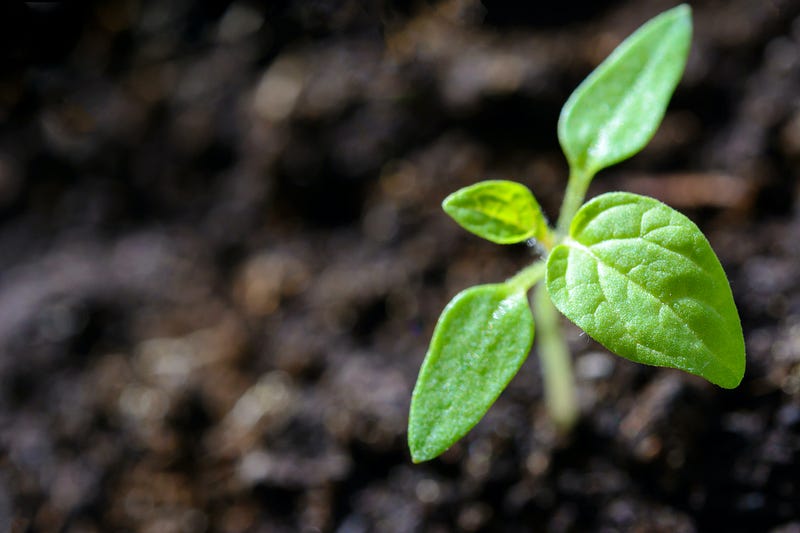
By 2025, Australia intends to try to grow plants on the moon.

Australian scientists plan to see what kind of plants could grow on the Moon. Seeds from Earth will be sent to our natural satellite in a shoebox-sized container.
[Photo by PhotoMIX Company from Pexels]

“Our mission is simple: to grow life on the moon.”

That’s the goal of the ALEPH- 1 (Australian Lunar Experiment Promoting Horticulture) project by Australian startup Lunaria One. Lunaria One brings together scientists from several Australian universities, including the Australian National University (ANU).

The project calls for Earth’s plant seeds to be sent to the moon in three years. Scientists will use the Beresheet 2 space mission for this, a private venture by the Israeli company SpaceIL to send a lunar lander and an orbiter into space. The green shipment will fly aboard the former.

Seeds from Earth will fly to the Moon

The seeds will be sent to our natural satellite in a sealed container. After landing, they will be hydrated, and thanks to electronics, it will be possible to observe whether germination will occur. And also, how it will progress.

What kind of seeds will fly to the moon? Specially selected and properly prepared.

“It’s an exciting challenge: how to design plants for space travel?” — ponders Dr. Caitlin Byrt, who is involved in the project, in an interview with Australia’s ABC News. — “Our first step is to see how biology has solved this problem on Earth in the past”.

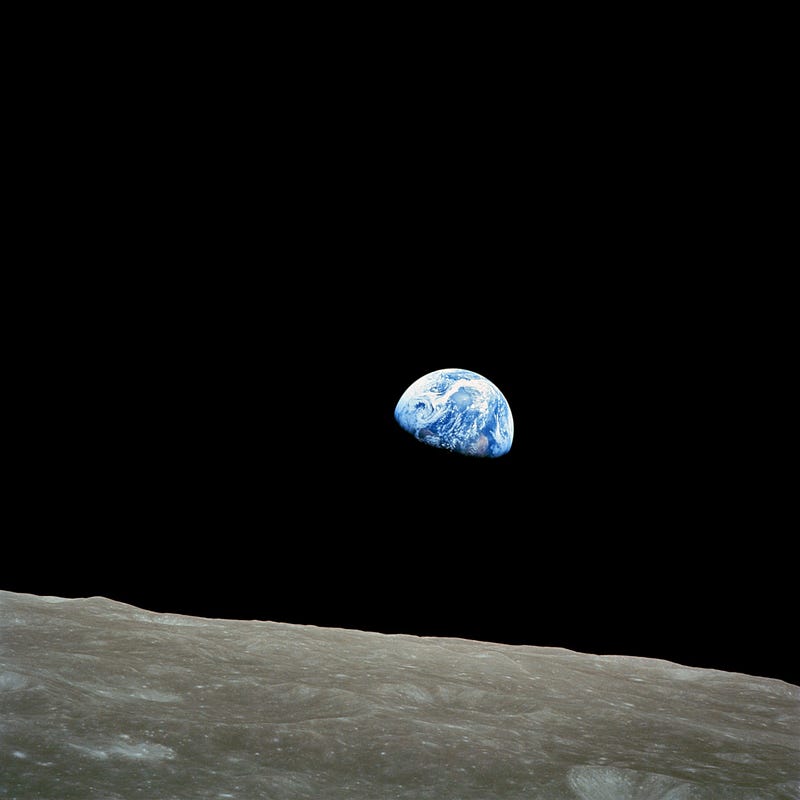
The scientist recalls that a few billion years ago the Earth was a barren planet, devoid of life. Then life exploded, and plants adapted to survive in sometimes extreme conditions. Examining how they did so will help select plants capable of surviving in space.
[Photo by Pixabay]

Plants extremely resistant to drought

Researchers are particularly interested in the so-called resurrection plants. This is a group of plants that are super resistant to dehydration. They include, for example, the Jericho rose (Anastatica hierochuntica), an annual plant capable of living in the extreme conditions of the deserts of Africa and the Arabian Peninsula.

“Resurrection plants can completely dry out, losing almost all of their water, and later — after rehydration — come back to life,” Dr. Byrt says. — “We want to borrow from them this unusual mechanism that evolution has equipped them with.”

Sprouting on the Moon

The plants destined for space travel will be placed in a container the size of a shoebox. There will also be temperature-controlled cameras inside, allowing us to track what’s going on inside the small capsule.

Interestingly, an analogous container will be located on Earth. Scientists intend to make the view from both containers available to anyone who is interested. Thus, it will be possible to observe for yourself how the plants on the Moon will perform compared to those planted on the planet.
[Photo by SevenStorm JUHASZIMRUS from Pexels]

How long will the lunar plant experiment last?

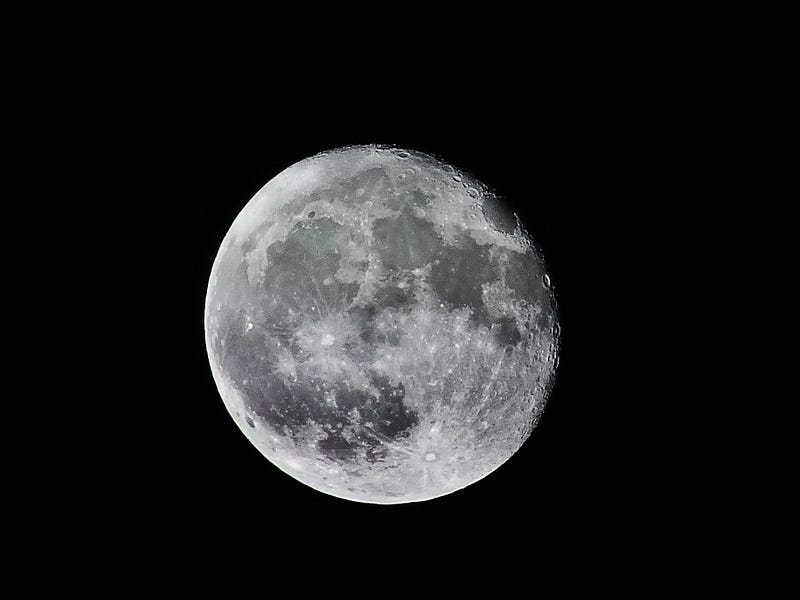
The experiment on the Moon will last a short time. According to Dr. Byrt, there will be enough energy to power the container for 72 hours. However, this will already be enough to take the “first small step.” That is, to see how the species selected by the researchers will cope with germination beyond Earth. Recall that recently scientists first grew plants in soil from the Moon. In turn, vegetables were grown in Antarctica without soil.

And why is such research being done at all? Scientists point out that the knowledge of how to grow plants in extreme and at the same time unpredictable conditions is very necessary for us not only to colonize space. But also to ensure our food security.

Having knowledge of what plants grow in what way would help people living in regions that are prone to natural disasters. Thus, research in space could also serve to ensure that we are able to survive on Earth.

Cool that you made it to the end of this article. I will be very pleased if you appreciate the effort of creating it and leave some claps here, or maybe even start following me. It would be nice if you also left a tip! Thank you!

Space
Life
Nature
Science
Technology
Recommended from ReadMedium