First-ever aerial footage of an orca killing a white shark!
Researchers say oceanic orcas are responsible for chasing white sharks out of South Africa’s coastal region.
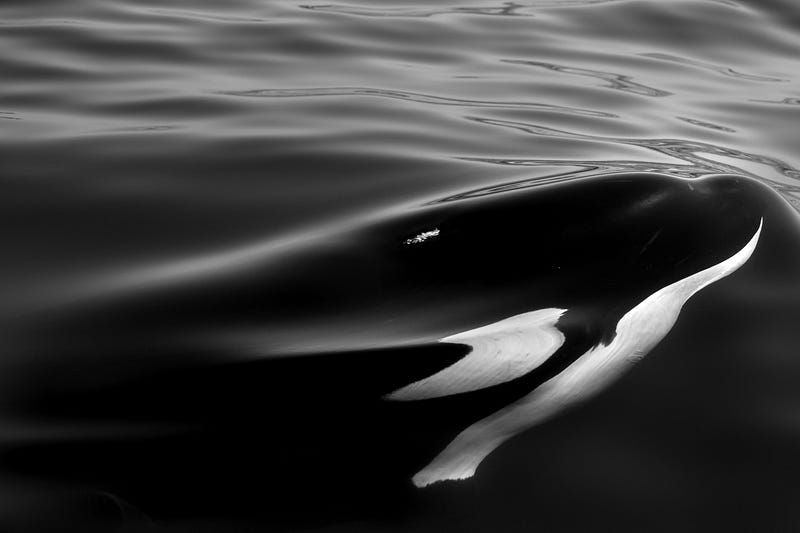
Both the oceanic orca (Orcinus orca) and the white shark (Carcharodon carcharias) are alpha predators. They are at the top of the food chain. This means that they have no natural enemies (except humans) to hunt them. However, there are cases of orcas attacking man-eating sharks. Moreover, experts have noted a decline in the shark population off the coast of southern Africa in recent years.
First-ever aerial video of an orca attack on a shark
Scientists from South Africa decided to explain the phenomenon. They conducted a study during which they observed the behavior of orcas. The scientists hoped that from a helicopter they would be able to record the moment when these mammals are hunting and, more importantly, at whom. The researchers were successful, resulting in the first-ever video and evidence that could redefine our knowledge of marine ecosystems.
The researchers managed to capture the moment of the orca attacks on the sharks on May 16. The video shows two orca swimming in the beautiful turquoise waters of the Indian Ocean, in Mossel Bay, not far from a stranded shark. At some point, a third orca emerges from the depths to attack the predator, and the color of the water at this point begins to turn red.
Scientists have described the exact strategy of the orca attack
“This behavior has never been observed before, and certainly not from the air,” — says Alison Towner, a marine biologist at the University of Rhodes in South Africa, who co-authored the scientific paper, which appeared in the journal Ecology in early October. The researchers analyzed the predators’ strategy step by step.
The predator very quickly turned the shark on its side and bit its belly. After some time, the shark disappears into the depths of the ocean, and its liver floats to the surface of the water. Scientists point out that the orcas acted as a team. While one prepared to attack from the water, the others distracted the shark and swam around it. The researchers say that in a similar manner, the orcas killed at least 3 cannibal sharks within an hour.
Is the same pair of orcas responsible for the shark attacks?
Interestingly, one of the predators has been identified as an individual named “Starboard” by the researchers. This is the same orca that was previously suspected of killing several sharks whose carcasses were found on several South African beaches. Four of the sharks were missing their livers. The animal had been seen in the past with another orca, which was named Port. The pair is believed to hunt white sharks together in the region.
“I first saw Starboard in 2015. He, along with Port, who is close to him, are suspected of killing a total of 7 sharks in False Bay”, says David Hurwitz, who is a cetacean and shark watch boat operator. —”In 2019, we saw with our own eyes how they kill a copper shark, but what the video shows is something completely unbelievable”, he adds.
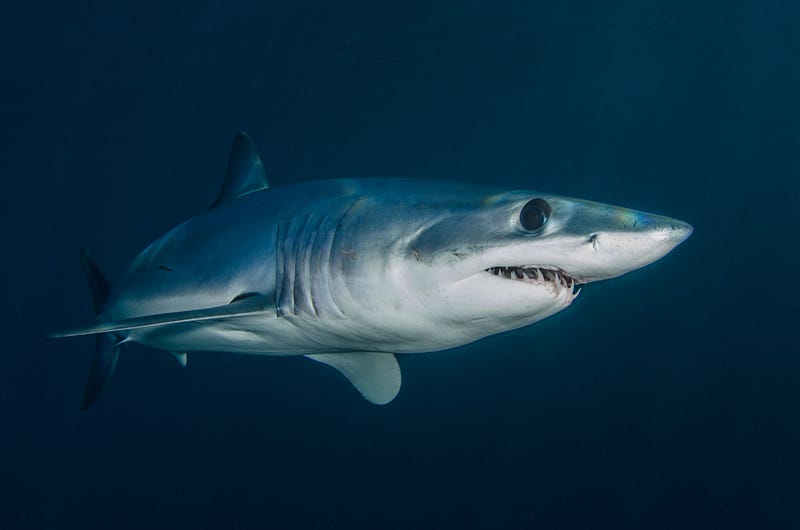
Orcas may threaten local shark population
Interestingly, a total of two independent videos were recorded. One from a drone, and moments before from a helicopter. Both show attacks, and scientists suspect that the same orcas are behind it. Is it possible that we are dealing with an oceanic pair of killers like Butch Cassidy and the Sundance Kid or Bonnie and Clyde?
The first video was recorded at 2:07 pm, and four minutes earlier observers spotted sharks fleeing the area. That same day, all the recorded footage documented a total of 10 sharks. After the event, none were spotted in Mossel Bay for weeks.
Experts point out that the shark strategy is extremely effective and sophisticated. However, there is concern that when more predators start behaving in a similar manner, it could threaten the local white shark population.
Source: Ecology
Cool that you made it to the end of this article. I will be very pleased if you appreciate the effort of creating it and leave some claps here, or maybe even start following me. It would be nice if you also left a tip! Thank you!