
Atomic amphibians? Tar-black frogs have appeared in the exclusion zone around Chernobyl
Scientists have discovered that a certain species of amphibians may have evolved rapidly after the Chernobyl reactor explosion in the area. The eastern tree frogs went from bright green to black. Why this change?
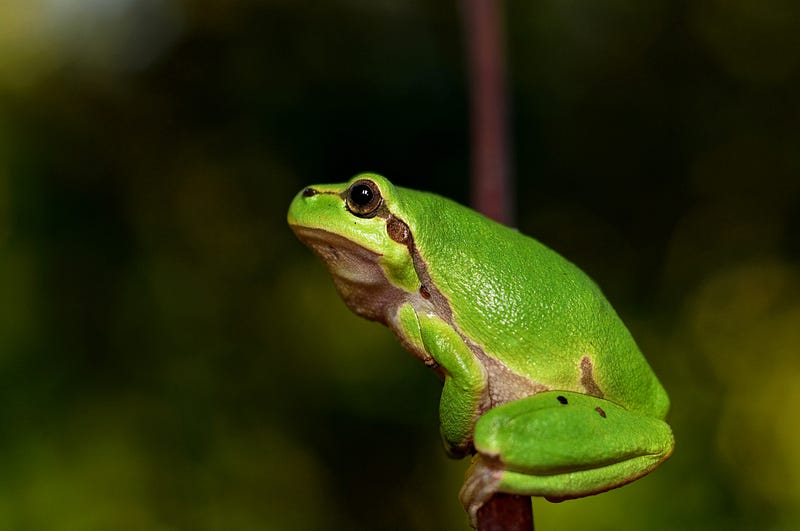
Can organisms adapt to life in an area with elevated levels of ionizing radiation? Research conducted in the Chernobyl Exclusion Zone — even before the war broke out — suggests yes. Two scientists have shown that there are species that have adapted to life in the contaminated area. And in surprising ways.
“Our work in Chernobyl began in 2016,” the company said. — write Spanish zoologists Pablo Buccaro and German Orizaola in an article in The Conversation website. — “That year, near Reactor IV, we came across several eastern tree frogs with unusually dark coloration.”
These frogs are usually bright green, although there are individuals with darker skin among them. However, they are in the minority. Could the change in the coloration of the riverfrogs’ backs be somehow related to radiation exposure?
Three years of research in the exclusion zone around Chernobyl
For the next three years, scientists searched for frogs of this species in northern Ukraine. In total, they examined 200 males found at twelve sites. They varied in the degree of radioactive contamination. Some were, as the researchers wrote, “the most contaminated areas on the planet.” Four sites, meanwhile, were outside the zone altogether.
It turned out that the frogs from the zone were much darker than those that lived far from the power plant. Some of the animals were even pitch black.
“However, the color of the frogs’ skin is unrelated to the level of radiation to which amphibians are exposed today”, the researchers explained. — “The dark color is typical of frogs living in or near the most contaminated areas immediately after the disaster”.
How does Chernobyl evolution work?
“Our study suggests that Chernobyl frogs may have undergone rapid evolution in response to radiation,” the researchers write.
It promoted those frogs that had slightly darker skin and were a minority in the normal population.
A pigment called melanin is responsible for skin color. It belongs to the pigments that protect against ultraviolet radiation. But it is not the only one. Its lesser-known function is to protect also against ionizing radiation. That is, the level of which rose sharply after a reactor explosion, as a result of contamination of the area with various types of radioactive isotopes.
Melanin absorbs the energy of ionizing radiation and neutralize ionized molecules. These are free radicals that disrupt the functioning of individual cells. Among other things, they can lead to the development of cancer. Thus, frogs that had more melanin “at the start” were better predisposed to survive and reproduce in a contaminated area.
“More than ten generations of tree frogs have been born since the Chernobyl explosion,” the researchers write. — “A classic, in this case instantaneous, evolutionary mechanism could have been at work. It may explain why the dark ones now dominate among the riverflies living in the zone”, the zoologists conclude.
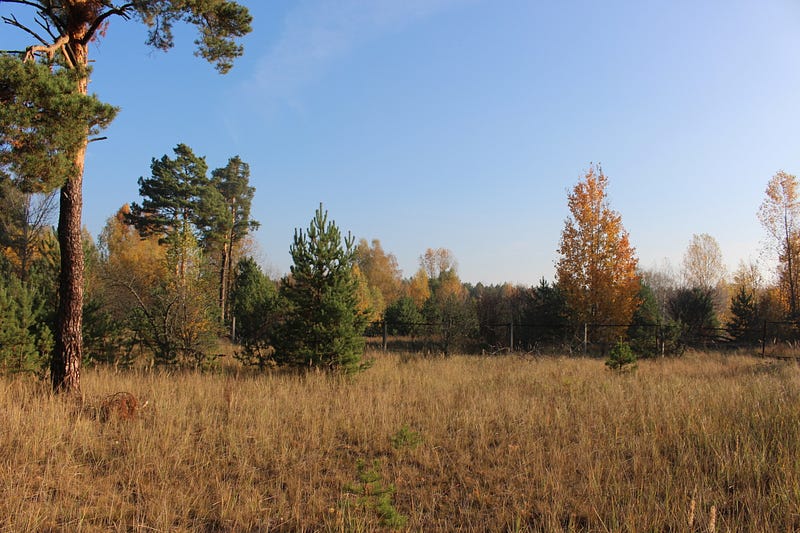

Chernobyl explosion and nature
How did the explosion of reactor IV at the Chernobyl nuclear power plant in 1986 affect the surrounding nature? The answer to this question is still inconclusive.
Some scientists (e.g., Anders Møller and Tim Mousseau), conducting years of research in the Exclusion Zone, reported a decline in pollinating insects and spiders. They also indicated that birds from the zone lived shorter lives and had more difficulty reproducing. However, these reports were criticized. The scientists — defended by Kate Brown in her book “Chernobyl. Instructions for Survival” — were accused of methodological errors, among other things.
At the other extreme are researchers who reported on the increased abundance of animals living in the zone as early as the 1990s. They stressed that wild boars, roe deer, deer, beavers, wolves and many others had returned to the deserted area. Species unseen for years, such as European deer, bears and lynx, appeared there. Enthusiasts have begun to write about a “thriving Exclusion Zone.”
The latter term is controversial. However, researchers agree that the abandoned areas around Chernobyl have turned into one of the largest wildlife reserves in Europe.
To clarify which group is right, further studies conducted in the Exclusion Zone are needed. In turn, these will be possible only after the Ukrainian-Russian war is over.
“We hope that the international community of scientists, together with Ukrainian colleagues, will be able to return to studying the fascinating evolutionary processes taking place in Chernobyl’s ecosystems,” Pablo Buccaro and German Orizaola wrote at the end of their article.
Cool that you made it to the end of this article. I will be very pleased if you appreciate the effort of creating it and leave some claps here, or maybe even start following me. It would be nice if you also left a tip! Thank you!