
The Fetishizing of Mother’s Day
Instead of actually honoring what it takes to be a mother, we give it lip service
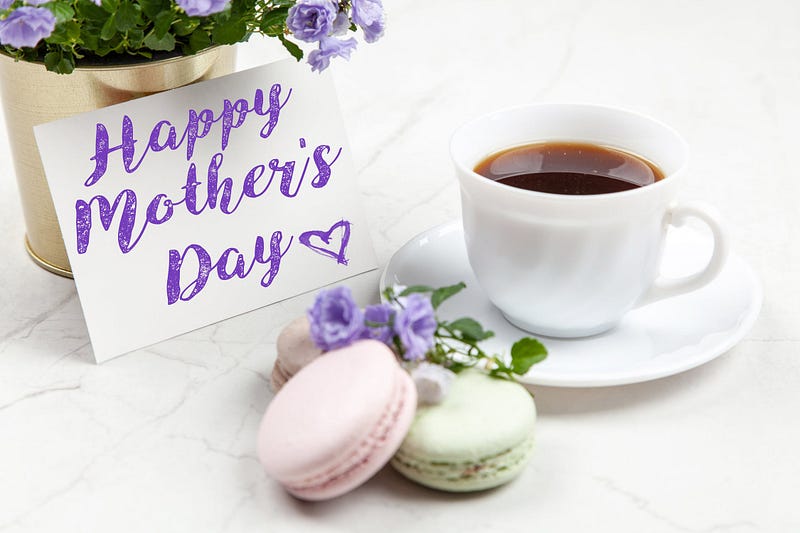
This morning at 9 am my husband James got an email from a male co-worker. It was an inspirational quote about Mother’s Day. Aside from the fact that we’d prefer not to be contacted for anything other than emergencies on Sunday morning when we’ve just woken up, this struck us both as particularly weird. He wasn’t wishing me a happy mother’s day; he was just reminding James of the importance of it. A few minutes later another male co-worker sent something similar, no doubt inspired by the first guy.
Although I do appreciate that they are ostensibly honoring the place that mothers hold in our collective hearts, there are several problems with this. First off, one day a year is hardly enough — we need to value mothers every day of the year. In America in particular, we love mothers; we just don’t respect them. We glorify the role of motherhood and expect that any self-respecting woman will revel in that role, but we also don’t really think that it takes much to do that particular job. After all, isn’t it just natural and what is most fulfilling for women anyhow? What do women who stay home with their children even do all day? In a 2011 survey, some 63% of adults continue to believe that being a mother is the most important job for a woman in today’s world.
We put mothers on a pedestal only in the abstract — in real life, they are overworked, overlooked, under-compensated and, in many cases, essentially excommunicated from the adult sphere. Our society depends on women to bear children; our law requires us to care for them. But mothers are supposed to do this alone and out of the way.
We glorify motherhood more than we admire mothers, in particular. This is what I mean when I say that motherhood gets fetishized in our culture. If you think all redheads are fun-loving sexpots, and are attracted to them as a group for that reason more than you are attracted to individual people who happen to have characteristics you like, such as flaming locks, you are a fetishist. The group and the qualities that you imbue that group with are more important to you than actual individuals and the particulars of their actual lives.
One of the ways that fetishization takes place as relates to motherhood is to wish strangers, whose mother-status you don’t even know, a Happy Mother’s Day. I’ve always taken this day to be a personal one; a way to honor the mothers and grandmothers in your particular life. Yesterday I got wished Happy Mother’s Day by a clerk in a store. Sure, I’m of the right age to potentially have a child and I’m wearing a wedding ring, but neither of those things is any guarantee that I am in fact, a mother.
And for all she knew, I’d just lost a mother or a child. For all she knew I was never able to have children or simply had no desire to bear them. She didn’t know anything about me in particular but wanted to honor who I am supposed to be — as distinct from who I actually am. That’s hardly honoring, although I’m not blaming that particular store clerk. She’d no doubt been encouraged to be friendly and warm to customers and on the surface, that just seemed like a good way to do so in the context of a culture that loves motherhood even as it looks down its nose at actual moms.
Mom brain; mom jeans, helicopter mom, soccer mom, stage mom, MILF!
If we really cared about mothers in America, we would do something about all the American mothers who die in childbirth. We would be urgently asking why the United States saw a 26.6% increase in maternal deaths (60% of which are preventable) from 2000 to 2014, while rates in other similarly developed countries decreased dramatically during the same time period.
The mother status of female political candidates and how they balance that with the rest of their lives is always a prime concern. No-one thinks much about how much male candidates are on the campaign trail away from their children or how they balance fatherhood with politics.
Still, voters also “reserve their highest reward for women who can both do the job of a politician and that of a wife and mother,” writes a research team led by political scientist Dawn Langan Teele of the University of Pennsylvania. “Female candidates have to be superwomen, while male candidates enjoy the luxury of delegating family work to others.”
I have no real way of knowing how authentically my husband’s co-workers honor the mothers in their lives on a daily basis. Perhaps they actually do. Lots of people who aren’t mothers are well aware of what it takes, and I feel fortunate to be married to one of them. He fixed me a stupendous brunch this morning. But as a society, we are still a bit stuck in that weird place of giving lip-service to motherhood while fetishizing it just the same; liking the idea of it more than we do the reality.
By all means, wish the women in your life who are mothers a happy day. I bought my mom a card and a gift and told her that I loved her. She told me that she thought I was a wonderful mom and she told me that she loved me too. This is beautiful and meaningful because it’s about our particular experiences as mothers and my experience as an adult child. You can even give a shout out to all mothers everywhere. But please don’t co-opt the day for some kind of feel-good schmooze-fest if it’s disconnected from the way you think and talk about mothers the rest of the year.
© Copyright Elle Beau 2020 Elle Beau writes on Medium about sex, life, relationships, society, anthropology, spirituality, and love. If this story is appearing anywhere other than Medium.com, it appears without my consent and has been stolen.