
POETIC POLITICAL POKING
The Fate of Glyphosate
The time is NOW to untangle the corporate pull on our health
Profit over people Health becomes feeble
Handing over our care Leads to more despair
Who do we believe To find pain relief
Our bodies screaming for health The system geared for wealth
Crops doused in chemical Responses almost mechanical
We need to, to feed the masses No need for concern with the gasses
A quick jab or pills Will ail all life’s ills
A bandaid fix Vs nutrients added to the mix
Keep us moving on our way No regards to the future price we pay
The race of rats Needs some new cats
Stop the madness Repaint the canvas
Systemic walls can break down
When persistent voices stand ground
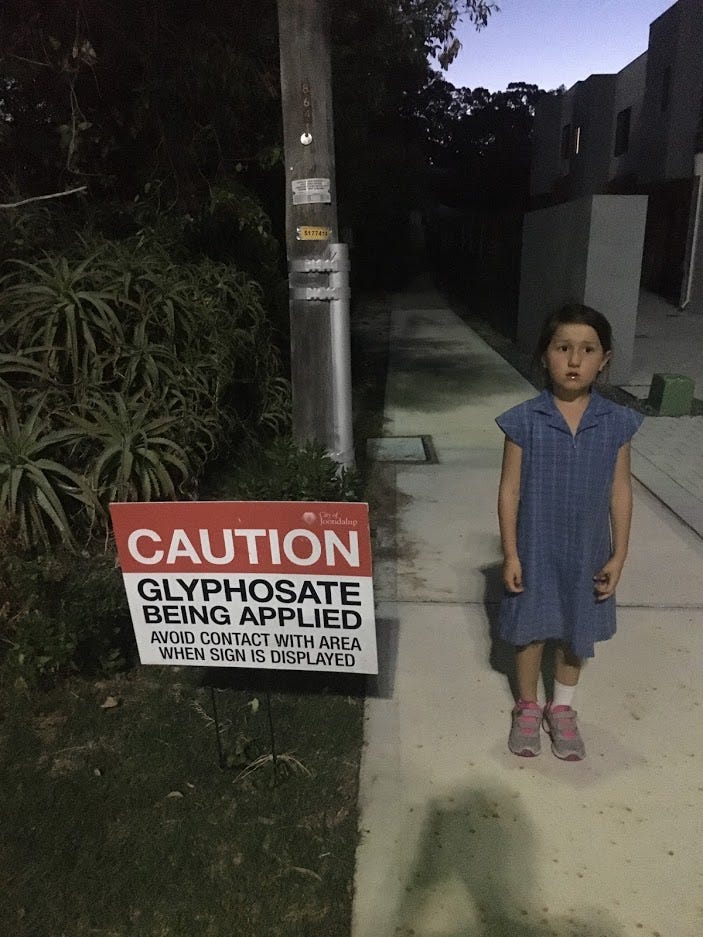
Glyphosate spraying notification signs have been catching my attention of late.
After a couple of — “ That’s odd — I was sure they just sprayed a few weeks before”, triggers I signed up for email notifications from the council.
I get an email almost every 2–3 weeks.
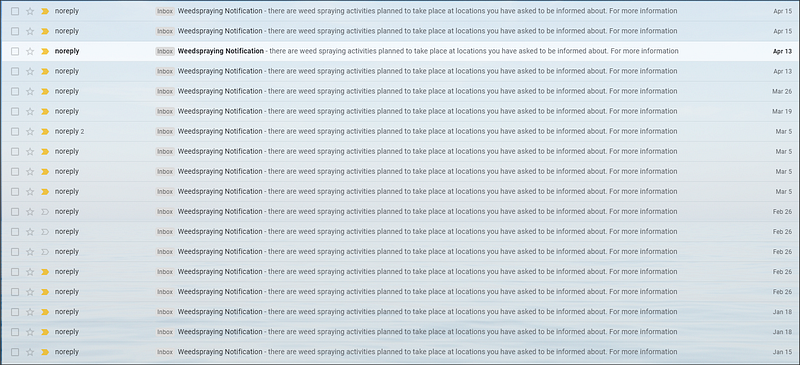
On their website, it hints to be every 12 months they spray.
This is a map of one week’s schedule in my local community.
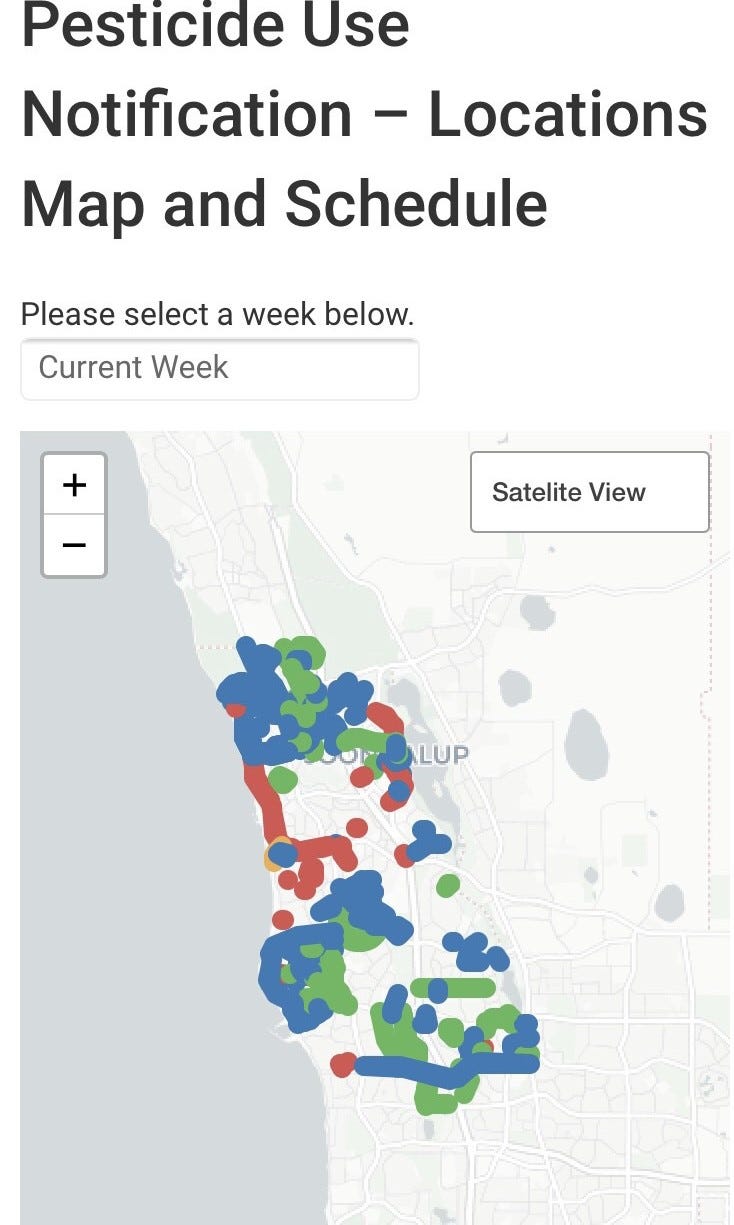
That is a huge amount of spraying going on!
On the school ovals, verges and local parks and shops.
Why so much?
One day following a “spray”, we found 3 dead birds at the park.
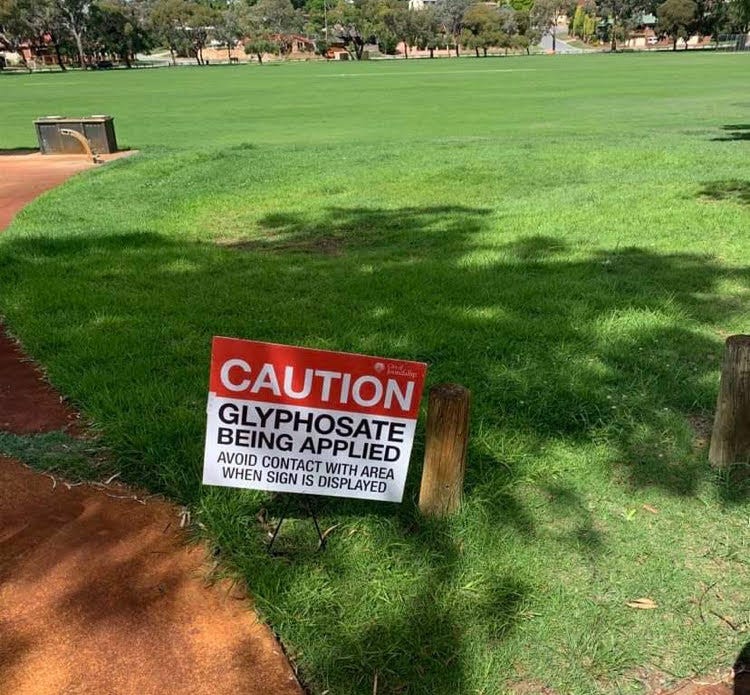
It didn’t look like the local stray cats were the culprits in their demise.
It looked like they had been poisoned.
By the time I came back with a phone to take a snap and report it to the ranger, the bodies of the birds were gone.
It is plausible the events were unrelated, but it did leave me curious AND wanting answers.
Answers that seem completely elusive at this stage. I have had to step away from the loops of bureaucratic madness to save my sanity for now.
Enter the ranting rant going on here!
Are the weeds that “BAD”?
Clover is green. Considered damn lucky if you ever find a four-leaf one. And adds rich nutrients to the soil — so why do we want to get rid of them in public places — to have perfection? — The definition of which is what..exactly?!
What if there is a better way to use plants to stop this persistent and consistent spraying?
Going on a tangent — because that what happens in a rant session!! — what about our food?
The market gardens —
Crates and crates of chemicals loaded into trucks to spray a single field of lettuce or tomatoes.
What if it didn’t have to be this way?
How about agriculture?
Vast fields of food sprayed by crop sprayers and now even drones.
What if mono-crops no longer existed?
What if the soils we planted were rich in naturally occurring nutrients?
Would the need to spray even be necessary?
What if more of us grew our own food in our yards, community gardens, on our street, verges, in our schools. Or even vertically on buildings?
Imagine how much land we would save.
How much could we return to what it looked like before we cleared it?
Hang on, you may say.
What about the farmers?
There are infinite opportunities when push comes to shove.
A way where impossible becomes possible.
Farmers are the best place to lead the pack—the perfect pioneers of the possible potential on a larger scale. Help guide us all in how efficient and effective the “what ifs” can be.
I am by no means an expert.
I know I don’t have the one size fits all solutions. There are gaping wide gaps in my knowledge…that I know my ranting rambles highlight!
BUT …
There are always solutions.
AND…
They already exist.
The voices have been out there guiding us for years. Voices are being amplified all over the place — AND they are getting louder.
A trail of them for those interested —
A community that thrived after a sneak peek into what “Peak Oil” could look like — a fav of mine from the ’90s.
Newer documentaries like
and
which give me hope.
Hope of what could be.
What is possible.
We can ditch the chemicals and still feed the world.
People like Desiree Driesenaar amplifying her thinking, innovation and integrated tools. All geared towards proving regeneration is possible and profitable.
Others like Heather Jo Flores guiding us with introductions to permaculture.
A seed of knowledge planted each week for a year with her online courses and her book called “Food Not Lawns”.
Michele Thill, Lanu Pitan and Ashley Nicole empowering us with guidance on food and well being.
We could be saving millions on health costs in the process.
Just think.
Maybe.
Just maybe- if the growing number of type 2 diabetes cases could be a thing of the past by untangling the amount of sugar, in all its creative guises, from ingredient lists?
This alone represents a massive saving of 237 Billion USD a YEAR…a YEAR! for just the United States.
Imagine taking back the control.
Knowing what is in our food more clearly.
Breaking free from the marketing manipulation of big food industries and pharma.
Cultivating the nutrients we need after air and water — feeding the only true hunger — nutritional hunger.
The fuel that powers our health, healing and how we show up in the world.
I truly believe that when our nutritional needs are met, our ability to show up in the world improves infinitely.
Just ask Pierre Trudel
Health truly is wealth. Not only for us but our planet too.
Grateful some countries are seeing the light. Of course, the big guys don’t let go without a fight.
Glyphosate was the impetus for this ranty rant/poem — but — it isn’t the only chemical out there. It isn’t the only villain in our food and health systems.
I hope the fate of Glyphosate, its chemical buddies and manipulative marketers are no longer nigh but near. Near to being kicked in the rear — literally - out the arse end of us and from the face of the earth.
Thanks for reading my rant
Thanks for being you


