avatarRandy Rather

Free AI web copilot to create summaries, insights and extended knowledge, download it at here

2885

Abstract

st’s advanced concurrency features provide excellent tooling for efficient and safe multi-threaded programming, maximizing your LLM’s throughput potential.</li><li><b>Web Ecosystem:</b> While Rust may be newer relative to languages like Python and JavaScript, its web development ecosystem is growing rapidly. Frameworks like Actix Web and Rocket offer mature solutions for building high-performance REST APIs.</li><li><b>Cross-Platform Compatibility:</b> Applications built with Rust can easily compile to run on virtually any operating system (Windows, Linux, macOS, etc.). This versatility is a tremendous advantage in deployment scenarios.</li></ol><h1 id="0df0">Let’s set the stage</h1><figure id="d2d7"><img src="https://cdn-images-1.readmedium.com/v2/resize:fit:800/1*AcpA4MkKboaPY0ONHHsN2g.jpeg"><figcaption></figcaption></figure><p id="4fe8">To interact with LLMs from Rust programs, there are a few primary methods:</p><ol><li><b>API Clients:</b> Many LLM services provide readily available REST APIs. Rust offers excellent HTTP client libraries, such as <code>reqwest</code>, to facilitate seamless communication with these APIs.</li><li><b>Model Hosting:</b> If you need low-latency or offline access, consider hosting language models directly within your Rust server. Rust bindings exist for popular frameworks like ONNX Runtime, allowing you to load and execute models locally.</li><li><b>Hybrid Approaches:</b> In some cases, a combination of the above approaches might be optimal. Your Rust server could interact with an external API when dealing with larger, more computationally intensive LLMs, while hosting smaller models locally for real-time tasks.</li></ol><h1 id="39fa">Our approach</h1><figure id="5b02"><img src="https://cdn-images-1.readmedium.com/v2/resize:fit:800/1*yxk1qTnQ9WfTTwKl-p20lg.jpeg"><figcaption></figcaption></figure><p id="c74d">In this design brainstorming session, we’ll outline the conceptual framework and key components for building a Rust-based REST server aimed at serving Language Model (LM) requests efficiently. Our goal is to design a scalable and performant server architecture that can handle various LM-related functionalities such as chat interactions, health checks, and version information retrieval.</p><h1 id="c75f">Problem Definition</h1><p id="8384"><b>Goal:</b> Establish a clear objective for our server. Possibilities include:</p><ul><li>Providing a central point of access and control for one or more large language models.</li><li>Offering an API layer for other applications to leverage LLM capabilities easily.</li><li>Abstracting away platform-specific LLM details behind a simple REST interface.</li></ul><h1 id="93e8">Target Users:</h1><p id="822d">Who are we building this server for?</p><ul><li>Developers building LLM-powered applications.</li><li>Data scientists conducting experiments with LLMs.</li><li>Int

Options

ernal services within an organization that need LLM functionality.</li></ul><h1 id="40ab">Design Thinking for a Rust LLM REST Server</h1><ol><li>Project Structure:</li></ol><p id="692a">We’ll start by defining the overall project structure, including modules, dependencies, and project organization. This involves setting up a Cargo-based project with appropriate dependencies for handling HTTP requests, JSON serialization, and any required LM-related functionality.</p><p id="08d8">2. Endpoint Design:</p><p id="347b">Next, we’ll design the REST API endpoints that our server will expose. Key endpoints may include:</p><ul><li><code>/api/query</code>: Endpoint for handling chat interactions with the Language Model.</li><li><code>/api/health</code>: Endpoint for performing health checks to ensure the server is running smoothly.</li><li><code>/api/app/version</code>: Endpoint for retrieving version information of the server application.</li></ul><p id="7e21">Each endpoint will have specific request/response formats and logic for handling incoming requests and generating appropriate responses.</p><p id="5660">3. Language Model Integration:</p><p id="cfb7">We’ll integrate the Language Model functionality into our server to handle chat interactions. This may involve leveraging existing LM libraries or implementing custom logic to interact with the LM backend.</p><p id="7166">4. Error Handling:</p><p id="51e4">Error handling is crucial for ensuring the reliability of our server. We’ll design robust error handling mechanisms to gracefully handle errors and return meaningful error responses to clients.</p><p id="4375">5. Concurrency and Performance:</p><p id="2b52">Rust’s concurrency features will be leveraged to ensure our server can handle multiple requests concurrently without compromising performance or safety. We’ll design our server to efficiently utilize system resources and minimize latency.</p><p id="b4f6">6. Configuration and Deployment:</p><p id="ee30">We’ll design our server to be configurable and deployable in various environments. This involves defining configuration options for server settings such as port number, log levels, and any other relevant parameters.</p><p id="e1e2">7. Testing and Quality Assurance:</p><p id="0a99">Comprehensive testing will be an integral part of our design process. We’ll plan for unit tests, integration tests, and possibly end-to-end tests to ensure the reliability and correctness of our server implementation.</p><p id="647b">Conclusion:</p><p id="860d">This design brainstorming session provides a high-level overview of the key components and considerations involved in building a Rust-based REST server for serving Language Model requests. By carefully planning and designing our server architecture, we can create a robust and scalable platform for handling LM interactions effectively.</p></article></body>

The Far Side of the Moon

1961
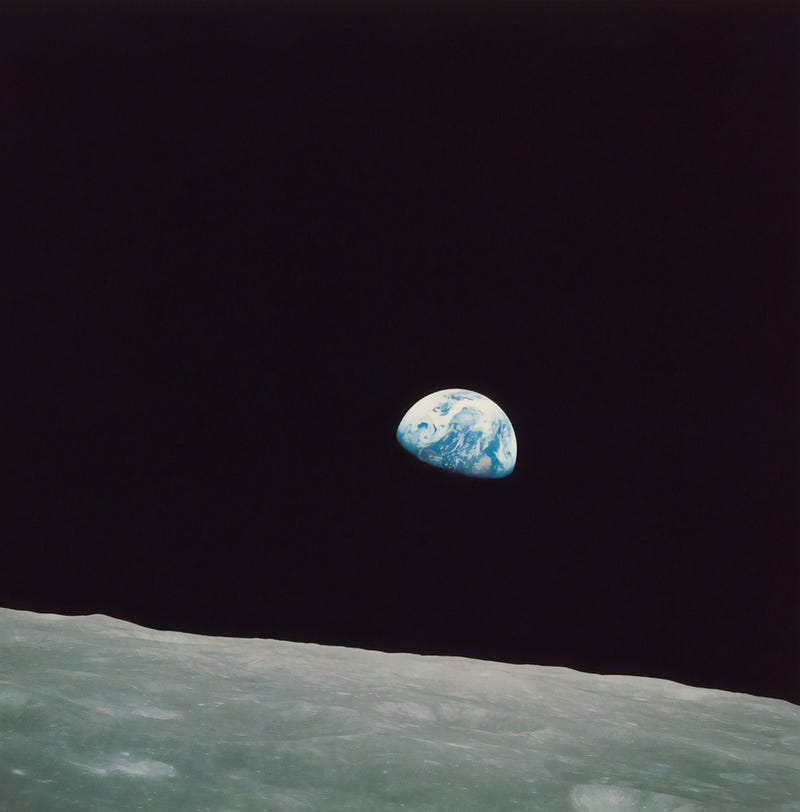
Photo by The New York Public Library on Unsplash

“They’re coming,” Draq said with excitement.

“Who?” asked the High Speaker.

“The humans. They’re working on projects to bring them here. They’re competing with each other to see who can get here first. Calling it a ‘Space Race.’”

“We knew this time would come. We must begin preparations to leave.”

“I’m tired of running. Let’s just stay this time. When their craft passes this side of their moon and they’re finally able to see us, we can just wave as they pass by. Can you imagine their excitement?”

“You know better than that,” replied the High Speaker. “They’re easily frightened and provoked to violence. You’ve seen what they do to each other. Their moon has been our home for a long time, but soon they’ll learn of our presence. We must leave before that happens.”

“We’ve been running for as long as I can remember,” Draq lamented. “I don’t even know what our homeworld was like. This has to stop. We can work with the humans. We can teach them to be more compassionate. We have so much to offer them, surely they would welcome us.”

“Yes, we have much to offer them. But they would weaponize anything learned from us. That’s what they do. The humans are no better than the ones who forced us from our home to begin with. They’re just less advanced.”

“Where will we go?”

“The Council has archived possible locations. It’s the first thing they do whenever a new home is established. We just need to revisit the archive and choose the best fit for our needs.”

“The gaseous planet they call Saturn would conceal us and allow us to watch the humans,” Draq suggested.

“We usually move farther than that. Why would you want to watch them?”

“You see them as savages, but I still have hope for them. I would like to see their progress.”

“This ‘Space Race’ is just the start, you know,” the High Speaker cautioned. “Eventually they’ll reach Saturn as well. What will we do then?”

“When that time comes, if they’re still the barbarians of today, we’ll move to one of our archived sites. But, if they’ve progressed to a more civilized state, such as our own, we’ll have the opportunity to make a friend. That’s something we’ve not had in my entire lifetime.”

The High Speaker thought for a moment. “Very well. I’ll put your motion before the Council. At the very least we can continue our anthropological study of them while we wait for their arrival to Saturn. I doubt the council would pass on that, and we won’t have lost anything by doing it. But, when the time comes and they arrive at Saturn… I just wouldn’t get my hopes up.”

“I would,” Draq said with conviction.

For another story about the moon:

Fiction
Science Fiction
Flash Fiction
Aliens
Hope
Recommended from ReadMedium