
LONG COVID
The Face of Long Covid May Not Be Who or What You Think
How my husband joined the ranks of those living with an invisible illness.
“I missed my flight.” I could hear the stress and exhaustion in my husband’s voice.
“What do you mean you missed your flight?” I asked, trying to be patient.
“Well, I had to check my bag, and the airline didn’t open the counter until one hour before my flight. The line was so long”…my husband’s voice trails off. He’s exhausted and out of words for the day.
I ask why he didn’t alter his plans in order to not miss his flight, quickly thinking of at least three ways I would have problem-solved my way out of that predicament, all the while knowing it’s a pointless question.
“None of those thoughts ever occurred to me.”
This is a typical conversation with my husband these days. He can’t problem-solve and freezes in stressful situations.
In September of 2020, he caught Covid at work. Initially, a mild case that felt like a bad cold with a lot of sinus congestion, we thanked our lucky stars and God and breathed a huge sigh of relief.
When I tested and remained negative we were more relieved and felt we had made it through our first encounter with Covid 19 relatively unscathed. One minor and sad fallout was that we missed our son’s wedding because my husband was still sick and I was in quarantine.
Still, my son reminded me, as I sobbed on the phone, “Some people are dying! Let’s be grateful; we’ll make it through this.”
Before I was able to soothe my raw emotions about missing my firstborn’s wedding, I began to realize we had not skated by. Something was terribly wrong with my husband. As his initial Covid symptoms abated, they were replaced by much more concerning and debilitating symptoms.
After the required two weeks off work, he attempted to return to his job as transportation manager only to be slammed with a wall of fatigue that forced him back home to bed.
Take a few more weeks, his company generously offered. Yes, some more rest is what you need, I encouraged.
Rinse and repeat twice more as the fatigue refused to relent. HR suggested FMLA and STD. Take as much time as you need, they directed him.
Surely you’ll be better by the new year, I comforted the man who had never taken more than a week off work for outpatient hip surgery or vacation.
He was troubled about missing so much work, but his body simply would not cooperate with his will.
Covid’s grip continued…
As fall turned to winter, Covid attacked my husband in ways that doctors couldn’t explain and had no answers for.
Heart and chest pains sent him reeling with anxiety, thinking he was having a heart attack. Cardiologists and expensive tests revealed nothing wrong with his heart.
Unexplained pain in his back, shoulders, legs, ankles. His words: “I feel like my ankle is broken.” “It feels like someone is driving a nail through my thigh.”
Visits to a neurologist and a rheumatologist revealed, yet again, nothing amiss.
By this time, whispers of “long haul” and “long haulers” were circulating on the news and social media. Desperate to find answers, we soaked in all the news and latest findings about what would soon be labeled Long Covid.
At the time we were seeking help, doctors were shaking their heads at us, saying that they had not heard of Long Covid. While not intentionally dismissive, I’m sure they were labeling my husband as a hypochondriac or in need of mental health support.
The latter was indeed true. Diagnosed two decades earlier with depression and anxiety, my husband had been stable and functional as long as he stayed on his medications and got enough rest. In fact, the four years prior to Covid had been his healthiest years. He was thriving at work, and we were enjoying our lives on our hobby farm in Texas. Before the pandemic, he had taken a new job in Colorado, where he became ill.
Disability became a term we would grow familiar with
As debilitating fatigue and pain continued to keep my husband home from work and in bed most of the day, short-term disability ran out, and long-term disability denied his claim. There was still very little known about these so-called long haulers. The disability company saw no reason my husband could not return to work. After all, medical tests and blood work had revealed nothing.
Fortunately, we had banked the money from selling our farm and were living in an apartment. We were able to supplement my contract work with our savings.
It’s heartbreaking to hear the many stories in the Long Covid Facebook groups of those who were denied all disability, lost their jobs because they couldn’t perform their duties, and ate through all their savings and 401K trying to pay the mortgage, all the while inflation skyrocketed throughout the pandemic.
Eventually, long-term disability was approved, and I found full-time employment to replace my husband’s income.
In so many ways, we’re fortunate, we know this, but it doesn’t dismiss or cancel the trauma that Long Covid has inflicted on my husband.
As we rounded the corner on nine months post-infection, new battles emerged.
Insomnia and anxiety attacks were relentless. It was obvious that my husband’s nervous system and brain were inflamed and misfiring. He sometimes would go 3–4 days without sleeping a wink at night, only to fall into an exhausted sleep by 6 a.m.
Yes, we tried everything from essential oils to warm baths, CBD and meditation, breathing and weighted blankets, melatonin, and on and on.
Accompanying the insomnia were anxiety and obsessive-compulsive behaviors. He became obsessed with having enough food in the house, and I would find him rearranging the refrigerator two to three times a day. I also chalked this up to going from a high-paced job environment to being home bored out of his mind.
It became clear that stress was the enemy and any over-extension of his energy envelope would push him into panic attacks. His body seemed unable to regulate his temperature, throwing him into profuse sweating and overheating.
While we worked on stress mitigation and relaxation techniques and began applying for SSDI, doctors remained baffled. You’ll get better soon they kept promising, but we knew they knew they didn’t know if that was true.
Heading into the second winter of Long Covid, insomnia was somewhat resolved with the addition of the antidepressant, Trazadone. High blood pressure was up, so the doctors added another medication.
My husband grew weary of feeling so weak that he decided to attempt some light exercise in the workout room. That seemed to not cause harm so we looked into some post-Covid rehab clinics.
While claiming to understand Long Covid, the rehab facility we chose clearly didn’t understand post-Covid fatigue and post-exercise malaise. They pushed him too hard, and he relapsed. Another three months of doing almost nothing just to get back to where he had been.
By this time, we were tired of pandemic life in an apartment, so we bought an RV and headed for warmer climates. Being in the sun of Arizona seemed to help, so my husband attempted a job search.
He jumped at an interview only to return home exhausted from the process. I gently pointed out that if interviewing for a job was that exhausting, how could he expect his body and mind to do work every day and handle the stress that was inherent in his occupation?
The bigger problem with his desire to return to work was his mind. You’ve probably heard of the brain fog associated with Long Covid, but as this insightful and well-researched article points out, calling what Covid does to the brain, brain fog, is actually dismissive to Long Covid patients.
Brain fog and cognitive decline
I had Covid in February of 2023 and experienced this fog for one day. I couldn’t think, or find words. It felt like my brain was empty (a frightening experience for someone whose brain is always filled with words and ideas). Expressing this to my husband, he replied, “Welcome to my world.”
To give you an idea of what Covid has stolen from my husband cognitively speaking, his previous occupation entailed managing a team of 100+ employees, managing and coordinating routes and delivery drivers, and overseeing large operating budgets. It was easy for him to create spreadsheets and do math in his head.
After Covid, he could not figure out how to add a tip to the bill at a restaurant.
He works hard at trying to do math in his head, hoping his skills will come back. Some days he is mentally quicker than others and gets giddy with hope only to get discouraged again on days when he forgets our address or stumbles over words when talking to a stranger.
Will he recover from Long Covid?
People ask me, on a regular basis, if he’s “better.” Assessing what “better” is has become more about accepting a new normal rather than fighting to return to what was.
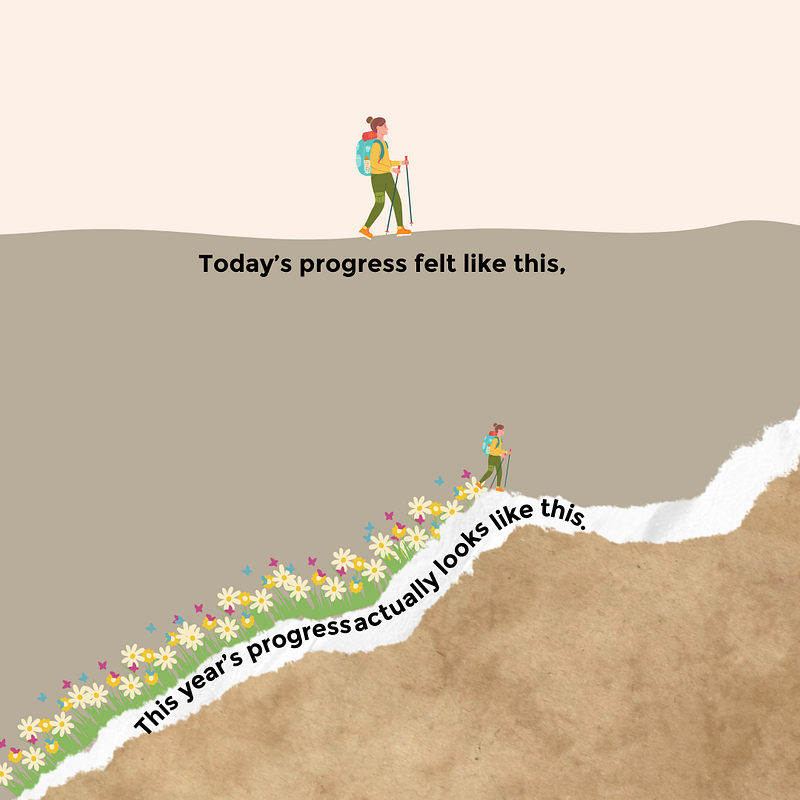
Looking at his health year after year, I say, “Yes, he’s better.” But a month-over-month or week-over-week view does not reveal improvements. This drawing helps explain what progress for those with Long Covid feels and looks like.
We just passed the three-year mark, and I wish I could say that Covid is behind us. We look for small improvements, rejoice on positive days, and plan our lives carefully to avoid unnecessary stress.
We’re still navigating the world of disability, waiting on a final determination from LTD and appealing SSDI’s denial. It seems absurd that they could think he’s faking. Who would choose to stop working in the prime of their career, go without medical benefits, remove themself from the workforce thereby decreasing their retirement goals and savings, and uproot their life to travel back and forth across the country to see doctors at a Covid clinic that has a six-month waiting list? No sane person could or would fake this.
I’ve wanted to tell my husband’s story for a while now, but I realize it’s a risk. There will be those who read this and will say it’s a farce, he’s faking, or it’s all in his head. One woman on Facebook said if he was “truly disabled” it would be easy to get Social Security disability.
I wouldn’t wish what we’ve been through on anyone. I hope by telling his story, those who judge will be a little less harsh and those who know someone who hasn’t been the same since they caught Covid will be a bit more understanding and compassionate.
In the meantime, we keep adjusting to our new normal and pray for more research and protocols for treating Long Covid and the health changes it has caused.
Thank you for reading. If you know someone with Long Covid, please know that they appreciate your patience and encouragement!


