
The Eye-Opening Lessons I Learned From Terrible but Popular Books
What does it take to write a book that’s worth reading?

I love hating things; it’s energising and makes for interesting conversations. But hating something that most others love can be frustrating and a little lonely.
In an attempt to make the most of things, I try to learn from what I hate so that the good of hating outweighs the bad.
These lessons are for real-life use, but I also use them in fiction writing.
The last time I made a list like this, the majority of the writers were men, so this time, most are women. I’m also focusing on YA (young adult) books this time around.
Here are five YA books I hate, why I hate them, and what I learned from them.
Children of Blood and Bone by Tomi Adeyemi
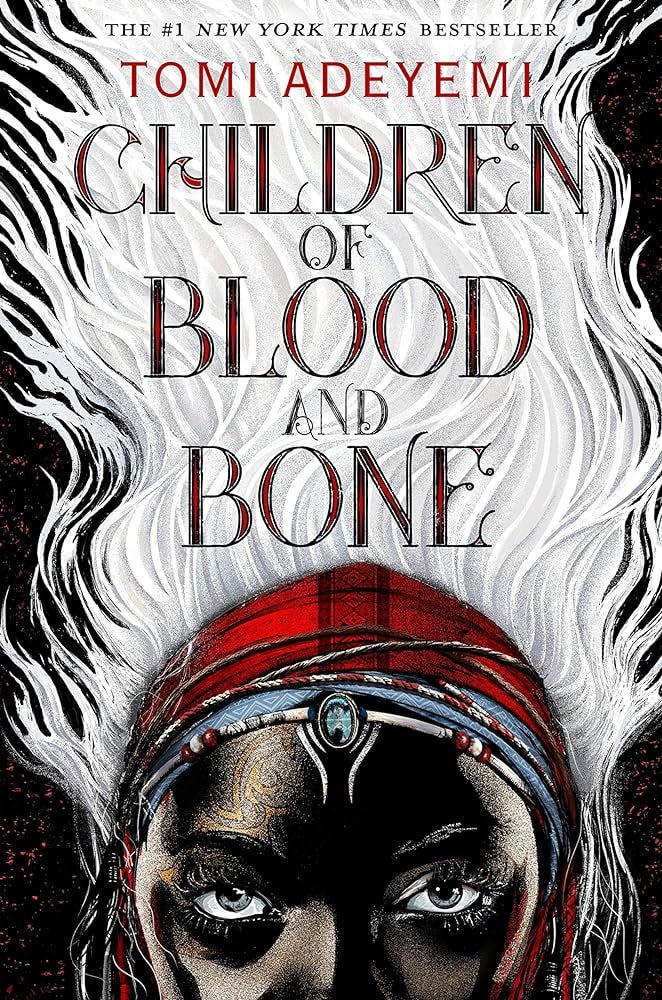
The pettiest cause of my dislike is the number of exclamation marks Tomi Adeyemi uses in this book.
Exclamation marks, when overused, make writing look clumsy and immature. They’re fine and necessary from time to time, but this book has them everywhere. Worse is that they often show up with the word, “Ugh!”
Really? That’s how you’re going to express frustration, horror, disgust, and half a dozen other complex emotions? With “Ugh!”?
The writing sin of repetition doesn’t end there. A lot of the ideas the characters have are repeated so often that no matter how valid the points they’re trying to make, I dismissed them on principle. Zélie’s anger, Amari’s shame, Inan’s curse — if you’re needing to express an idea that many times, it generally means you didn’t say it well enough the first time.
The amount of repetition would have been enough to make the plot predictable, but to make things worse, it’s painfully obvious who’s right and who’s wrong. There’s no intricacy or depth.
The characters grow only to change their minds a chapter later and go back to how they were before, like Amari in the arena or Inan and Zélie throughout the entire book. It’s tiring.
The main characters are often irritating. They’re on a tight schedule yet stop for celebrations. They don’t learn. When they do grow, it doesn’t feel natural, like Inan in the Gombe River Valley. And they aren’t ever clever; the only times Zélie is strong is when she’s relying on shortcuts. She doesn’t solve any problem without using either the stone or blood magic.
Lessons Learned:
- Using shortcuts to express emotions isn’t worth it.
- If you say things often enough, people will stop listening to you.
- Predictability makes you boring, but unreliability makes people lose faith.
- Be likeable, be intelligent, or be complex. If you’re none, no one will want to stick around.
The Ballad of Songbirds and Snakes by Suzanne Collins
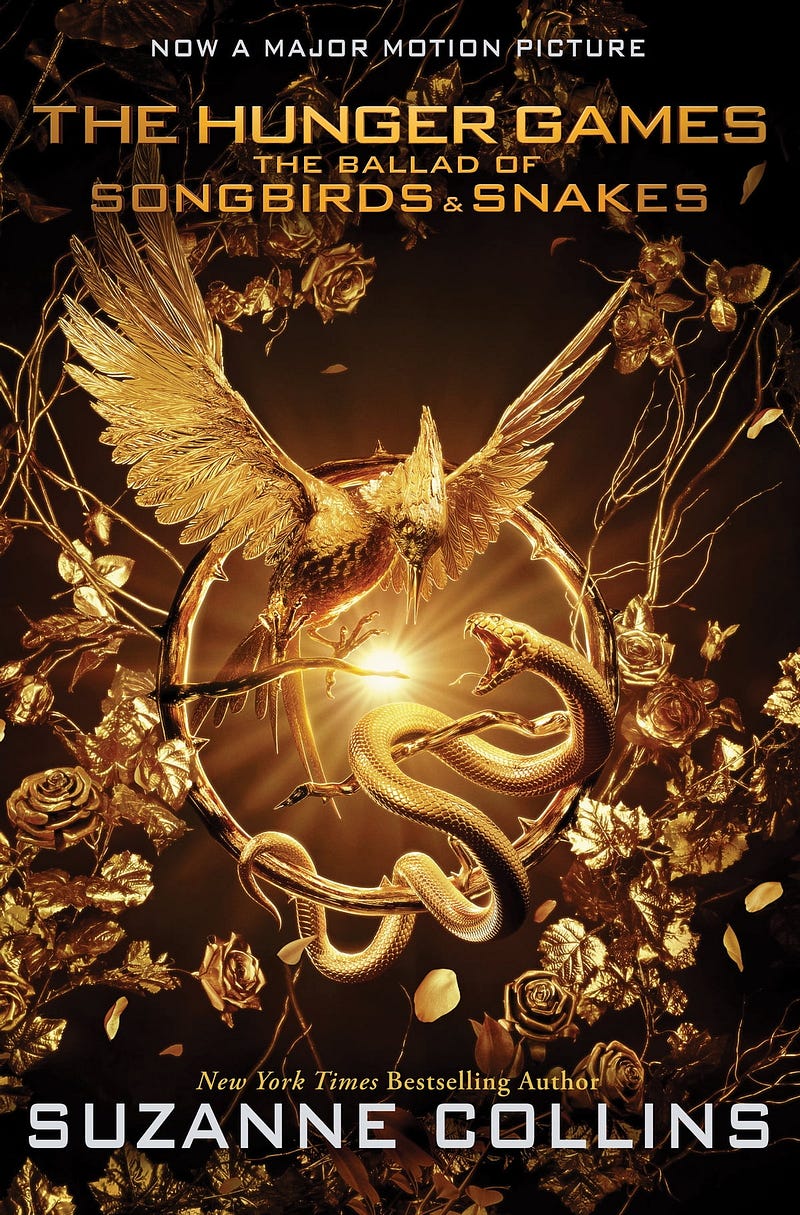
I was eleven years old when the first of The Hunger Games books came out and was immediately obsessed. So you can imagine how quickly I went out and bought this book.
I hated it.
Negative character arcs are fascinating because they offer a new perspective, but this book doesn’t. Snow is pathetic; he’s impossible to root for and no fun to hate. His internal monologues are one long stream of self-pity after another.
It feels clumsy and unconvincing as though Collins doesn’t know the characters.
The most I could summon for any of them was frustration, and the romance is awful. There’s no chemistry, appeal, or sense to it.
The book reads like a badly written YA. It would have made more sense if it had been written for an adult audience because that’s where fans of the original series are now. Of course, this could be a way to lure young readers toward Katniss’s books, but it’s so terrible that I doubt it achieved that.
The themes of security versus liberty and whether people are inherently good or evil are supposed to be central to the story, yet their arguments are shallow.
The origin story for the Games doesn’t make sense. If something costly doesn’t yield results, you don’t carry on doing it for ten years.
According to this book, the Games only exist because one person believes cruelty is inherent to humanity, and she believes that because it is inherent to her. It’s a boring, simplistic, and unrealistic explanation.
There’s no tone or atmosphere. The writing is bland, and the ideas are repetitive. And some of the plot points from the original books are reused.
Lessons Learned:
- If you’re going to be bad, make your reasons for it interesting.
- Know who’s rooting for you. They’re your ideal target audience.
- It’s better to leave out explanations if the explanations aren’t compelling.
- Having an appealing vibe might not be essential, but it does help.
Shadow and Bone by Leigh Bardugo
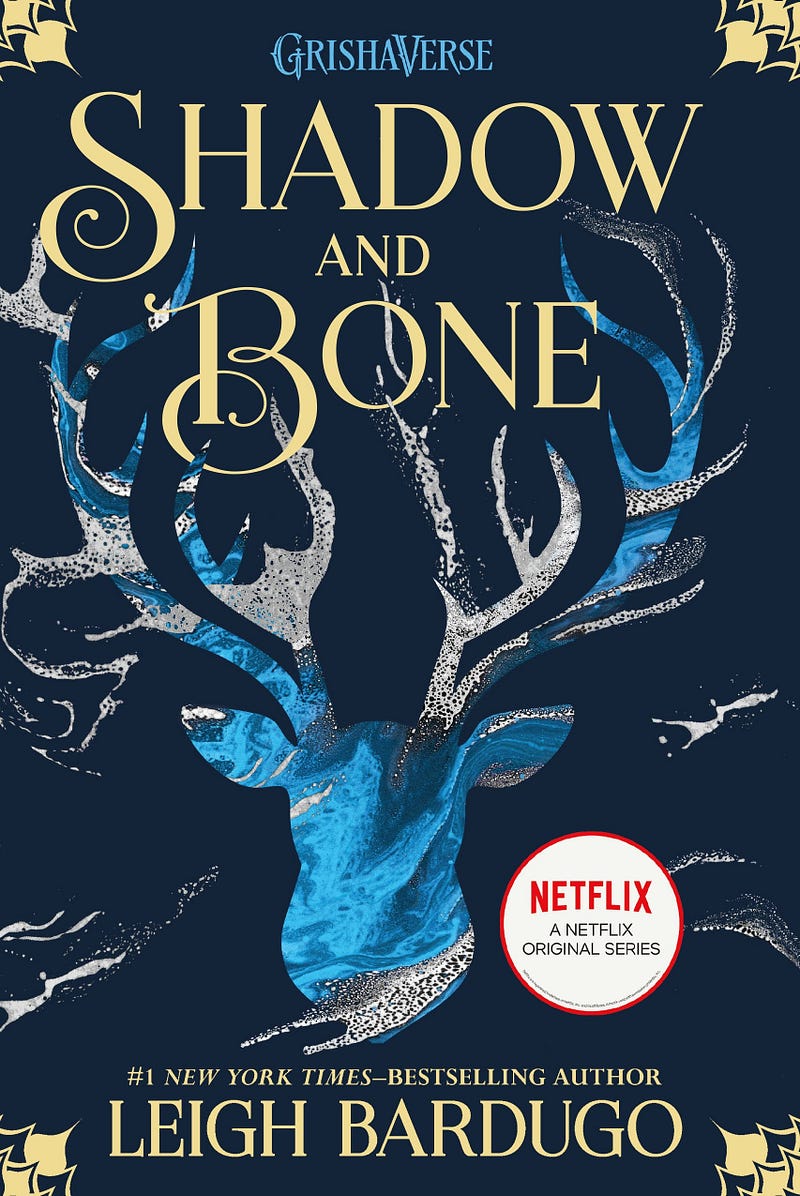
I cannot believe the same woman who wrote Six of Crows wrote this book.
The writing style is clumsy. Bardugo uses a lot of filter verbs — verbs like “hear”, “see”, “feel”, and “think” that dilute the POV character’s experience — and adjectives to over-explain what she’s already shown.
The characters, although full of potential, are simple. They lack complex emotions and motivations.
That lack of complexity extends to the plot. It’s a story about good versus evil, but there’s no twist, no revelation, no message beyond “being evil is bad”, which makes the story generic and predictable.
It didn’t make me feel anything, either intellectually or emotionally.
Lessons Learned:
- Be direct in how you communicate.
- You’re not a simple person, so don’t act like one.
- Deep diving into philosophy isn’t for everyone, but having morals and values beyond the black-and-white of children’s stories is.
- If you don’t make people feel things, they won’t seek you out.
To Kill a Kingdom by Alexandra Christo
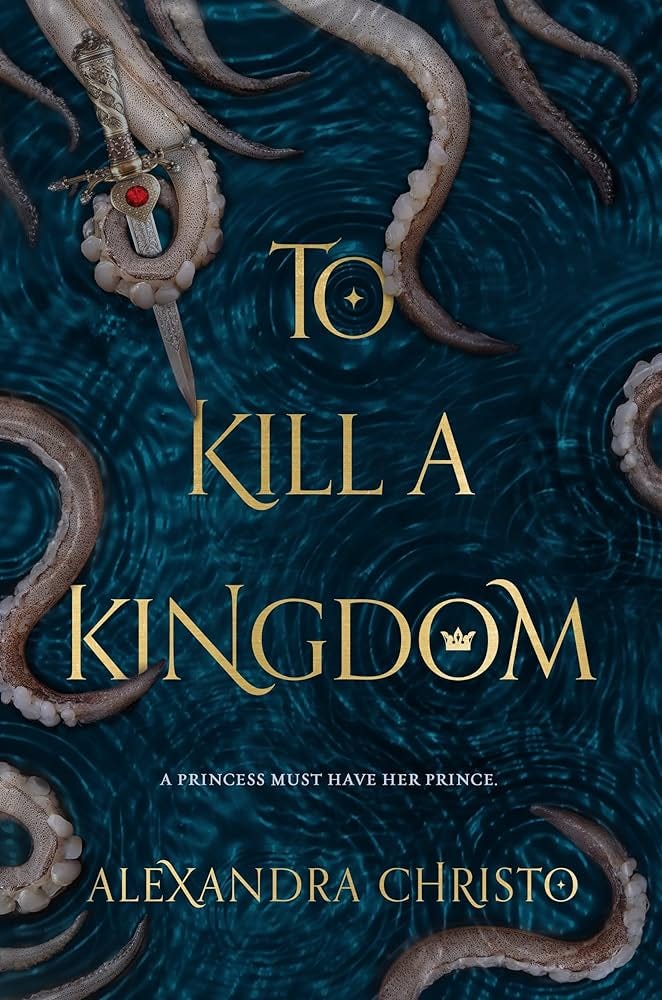
I have a heart for every year I’ve been alive. There are seventeen hidden in the sand of my bedroom.
Those are the two first sentences in To Kill a Kingdom, and they grabbed me immediately.
But what should have been a story of violence, revenge, piracy, and maybe some nice monarchical world-building turned into a boring romance with terrible dialogue, confusing info dumps, and awful flat writing.
The relationship took a turn for the worse the minute they started admitting to themselves that they liked each other because it turns out that tension was what was holding the plot together.
The main female character thinks she’s funny and badass but she isn’t. She’s just mean and prissy.
This story world could have been amazing, but Christo gives no geographical, historical, or general information, just random details about specific island nations, most of which the plot doesn’t even go near.
And I hated the ending. Spoiler ahead . . . Turning the girl into an all-powerful sea queen felt cheap and easy. There’s no sacrifice, no consequence, just a perfect solution to everyone’s problems.
Lessons Learned:
- If you make a promise, even implicitly, keep it, especially if it’s one of the first interactions you have with people.
- Being mean is not going to make you any friends..
- Looking cool is cheap unless it’s more than skin-deep.
- Perfect isn’t interesting.
You’ve Reached Sam by Dustin Thao
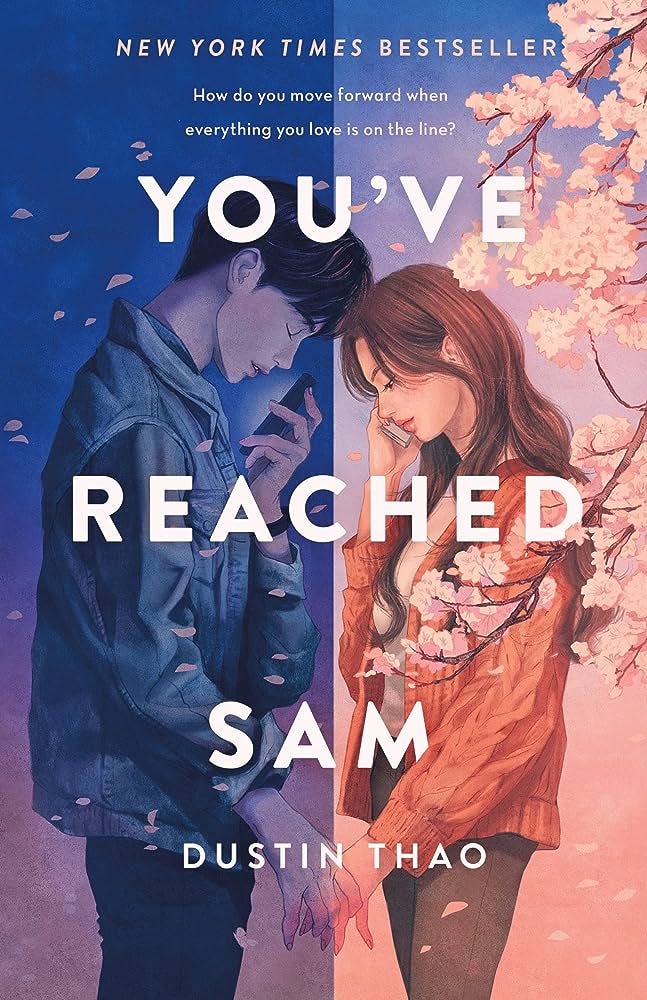
My sister recommended this book, and that is the only reason I made it past the first couple of pages because the prologue is bad.
It’s set up like a dream sequence, which is never good, and it rushes through trying to get readers to care for these flavourless characters and their flavourless relationship.
The characterisation is all told, so there’s no connection, no sense of really knowing any of the characters.
The author is intent on describing outfits and does it in a way that tells rather than shows. In fact, there’s a lot of telling going on (eg. “I’m startled by his sudden presence.”) and italics are used as a quick cheat to convey thoughts that would otherwise require more skill to write.
The dialogue is dull as dirt.
The plot is a cycle of “How is this possible?” and “I don’t know.” And having one dream sequence was bad enough, but they’re constant.
The whole story is predictable, and the only thing I found interesting was the mystery behind the mother’s government letter, and that didn’t even get resolved.
Lessons Learned:
- First impressions matter, but you can’t rush people into liking you.
- Telling people your traits and emotions will only get you so far. They need to see you.
- Work on your conversation skills.
- You can’t say “I don’t know” to every question and keep expecting people to listen to your answers.
To be fairer than I’d like to be, I’m no longer the target audience for YA, so I accept that these books may have charms that I’ve outgrown.
If you want to read the first of my “five books that others love but I hate” stories, you can find it here:
Thank you for reading!


