
The Experiences of the Metaverse
In previous articles I’ve shared the structure of the metaverse in terms of market dynamics, the companies that occupy the metaverse value chain, and the megatrends that will shape its future.
Here I’m going to get down to the nitty-gritty: what are the experiences you can have in the metaverse — now and in the future?
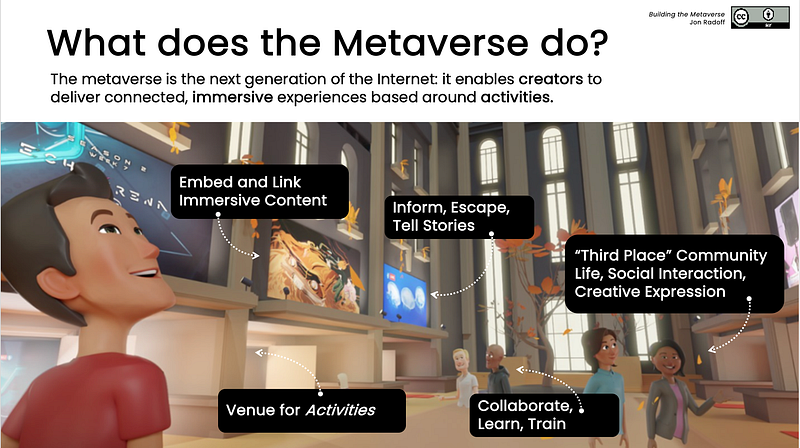
I’ll be making the case that the experiences of the metaverse share some common properties:
- An emphasis on activities
- …in increasingly immersive places in which the self is present
- …crafted by an exponential rise in creators
- …supported by the connective tissue to link and embed immersive, emergent content
What Jobs Does the Metaverse Do?
By its very nature, the experiences of the metaverse will be extremely varied.
First, let’s examine all of the roles the metaverse will inherit.
All the Jobs of Television
Ben Thompson uses the metaphor of “jobs” that a product does to explain how the internet has already disrupted television, and that’s a good place to start: for almost 100 years television kept us informed, provided education, a live view of sporting events, brought stories into our living rooms, and offered an antidote to boredom. The internet does these now, and that will only continue in the metaverse — augmented by an exponential rise in creators and immersiveness.
All the Jobs of the Internet
It should also be obvious that the internet does a lot more jobs than the ones originally done by television. It also sells us stuff, provides a platform for software applications, enables marketplaces, and facilitates collaboration. As I’ll explain below, the metaverse will enhance all of these by simplifying the process for creators and embedding more experiences within immersive settings.
“Third Place”
Ray Oldenburg coined the “third place” (beyond the home and work) as the venues for community life, social interaction and creativity.
Currently, the third place is partly filled by social networks.
However, physical third places provide a venue for activities. Most social networks focus on only one main activity: sharing content.
It’s already been happening inside games.
Games allow you to engage in actual activities with your friends… And they’re good at telling stories, offering an escape, and even harbor an emerging industry of live streaming with the addition of esports.
From Transactions to Activities
The current internet is mostly about transactions and access to information.
The the metaverse, we’ll mostly be talking about activities.
As the metaverse expands to include immersive learning, shopping, education, travel, and other undreamt-of applications, it will become more game-like, which is to say: more activity-oriented.
Properties of the Metaverse
The Metaverse is really Internet 3.0. How is it qualitatively different from the internet we have now?
I think it is useful to think of the metaverse both as a thing as well as a process. It is already here. The process of building the metaverse is being driven by:
- Activities: mainstreaming of immersive experience — those where you don’t simplify look at pages and apps, but engage in activities with others within places.
- Creator-driven: both the tools to create your own activities, as well as creator economies that enable users to add content to them, will enable non-technical folks to shape the metaverse.
- Embedding and Linking of Emergent Content: just as hyperlinks and embedded content became the connective tissue of prior generations of the Internet, the ability to bridge and layer elements of the immersive internet together will power the next emergent wave of innovation. We may need new terms — hyperportals and hyperstreams?
What’s Immersive Mean, anyway?
The dictionary definition is:
1. noting or relating to digital technology or images that actively engage one’s senses and may create an altered mental state: immersive media; immersive 3D environments.
2. noting or relating to activity that occupies most of one’s attention, time, or energy:her many years of immersive sociological fieldwork.
3. characterized by or relating to dipping, absorption, or immersion.
That out of the way — I think this is a somewhat vague way to think about immersion.
An easier way is to think of it as giving us the illusion of a place we are in; and when I use “we” what’s inherent in that is that the self is present in this place.
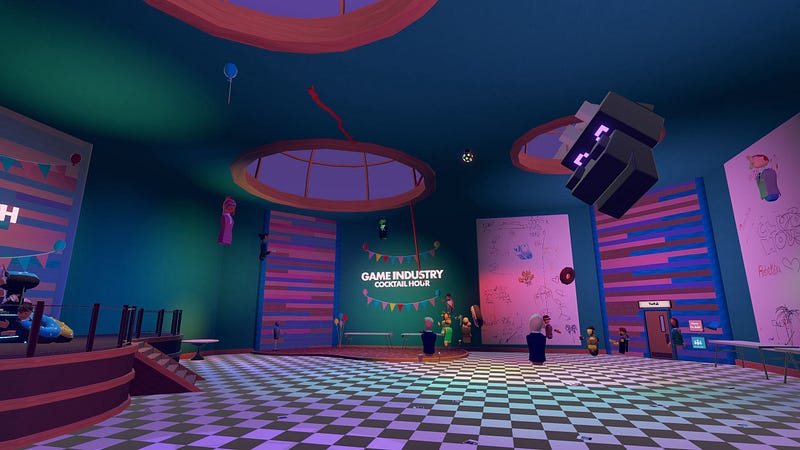
Naturally, that includes AR and VR — but also includes anything where our minds perceive it as spaces or places where our self can be. So that includes virtual worlds in games, which could be in 2D or 3D.
But is isn’t limited to graphical experiences. An example is Clubhouse, which is already part of the metaverse.
Clubhouse is sometimes described as “interactive podcasts” but that doesn’t really capture it.
It provides the illusion of being in a room with a group of people engaging in the activities like learning, socializing and water-cooler conversation. And its activity-pattern mirrors the way people look for groups in an MMORPG.
Metaverse experiences give us a sense of place by tapping into the sensorimotor faculties we evolved to use. Videogames have gotten increasingly good at this — and now some of that learning, along with the spatial computing technology to place this content all around us — will expand not only the potential for games and entertainment, but disrupt numerous other jobs as well.
Use Cases for the Metaverse
Let’s move from the jobs performed by the metaverse, to some specific examples.
Games
We already have games — which are already part of the metaverse — but they’ll be increasingly immersive (more adapted to sense-of-place, more social, more interactive) and crafted by an exponential rise in creators.
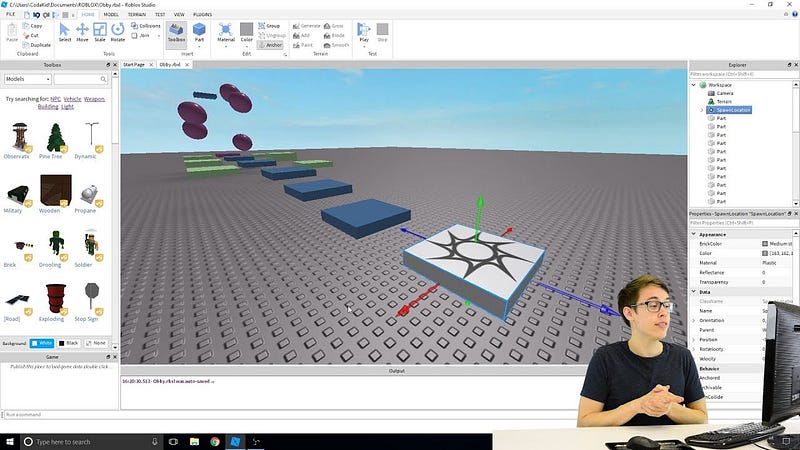
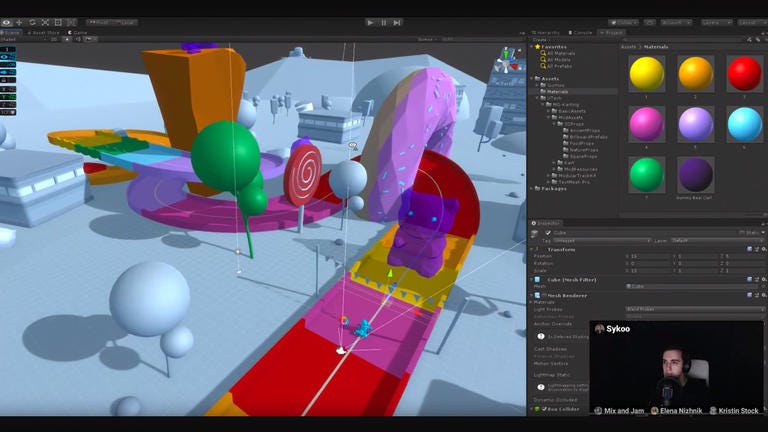
Unity and Roblox are two examples of platform that have disrupted game-making by making it possible for millions of creators to deliver games:
Social Experiences
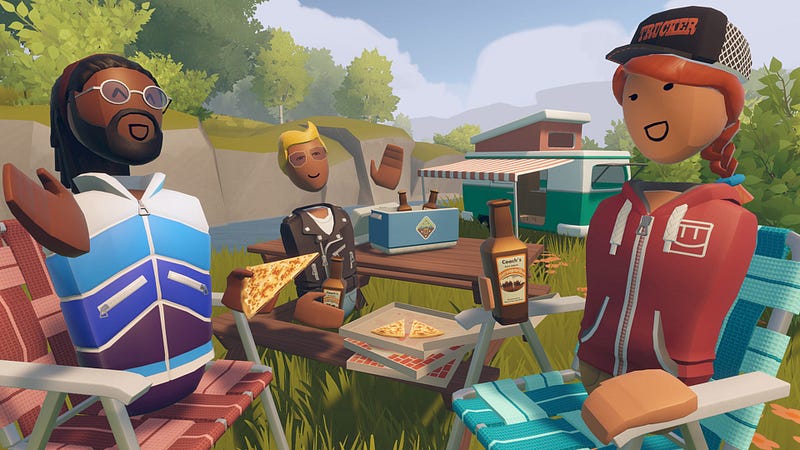
Building on much of the technology that enabled virtual worlds in games, the metaverse will give us the ability to socialize through activities rather than simply socializing through sharing photos and news links.
Immersive Commerce
The largest successes in ecommerce so far have been around lower-touch, self-directed buying.
Traditional retail still excels at situations where high-touch, pour-you-a-tea and consulting on your purchase is appreciated by the consumer. Is this where immersive commerce in the metaverse might take off?
Shopify thinks it might be:
(Also in the above video: how Shopify used VR to collaborate)
Collaboration
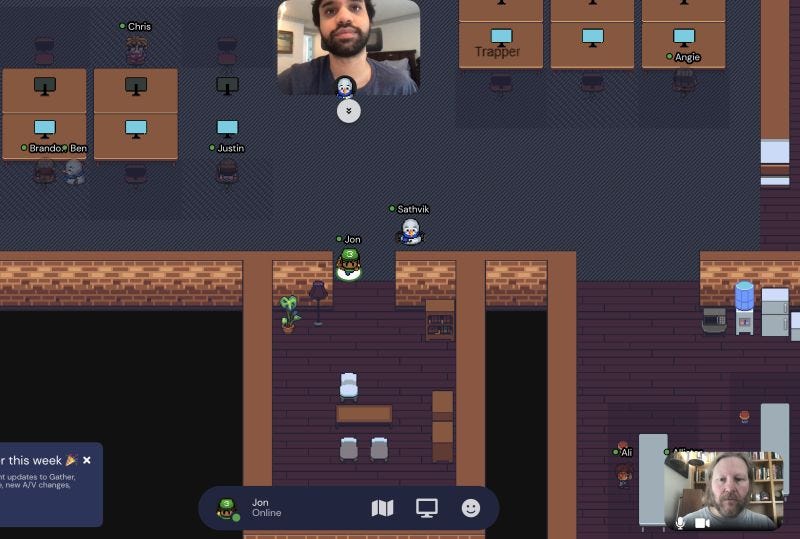
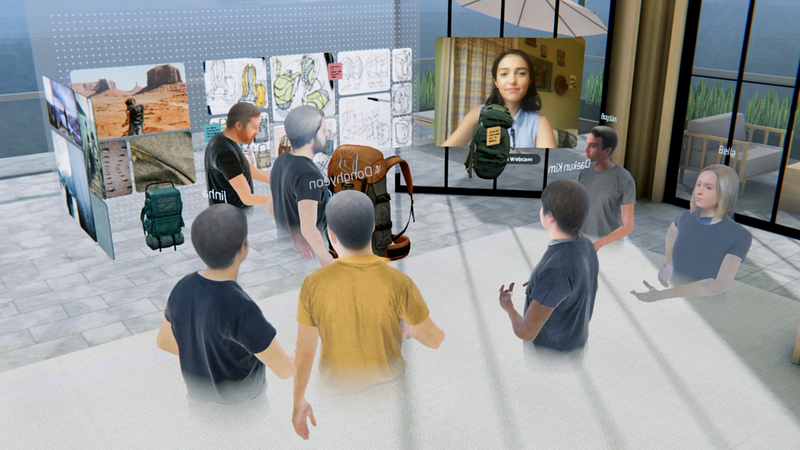
We already collaborate through tools like Zoom, Slack and Discord. But in the future, greater immersiveness will enable coworkers to participate in ways that are still challenging through existing technologies.
Real Estate
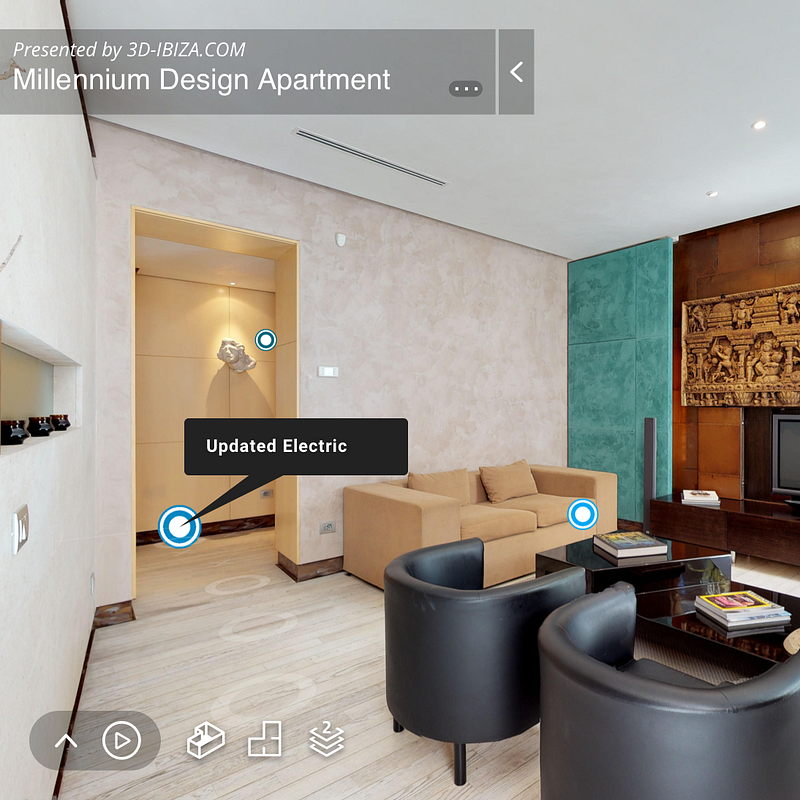
Although I suspect it will be a while before people starting buying a home exclusively through VR — it will likely become a significant way people prescreen the properties they are interested in visiting — as well as revisiting and examining the augmented information about a property.
Look for the experience to become more social and more interactive as the metaverse absorbs the real-estate industry:
Travel
One of the most expensive and ecologically-taxing industries is travel.
The metaverse may someday allow you to visit some of the world’s most interesting sites. Matterport has already made it possible to visit five of Egypt’s heritage sites in VR:
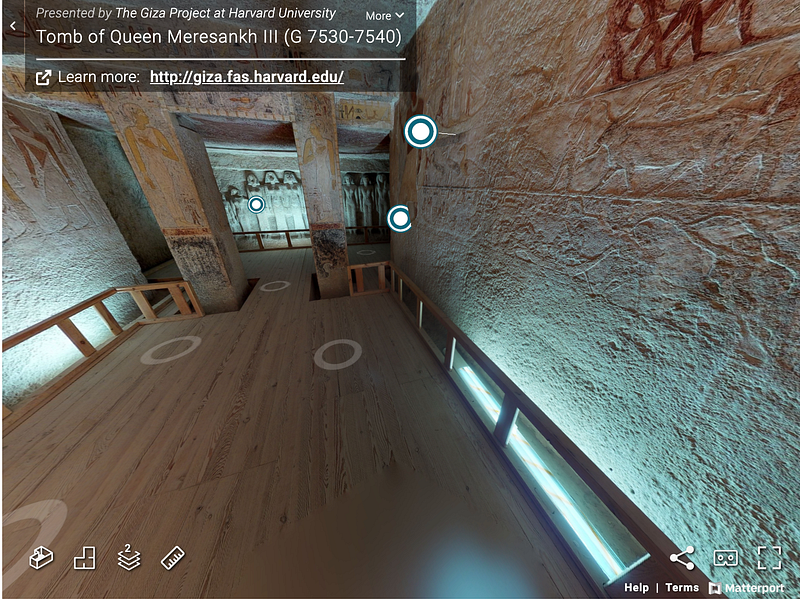
Right now, most travel in the metaverse is static, premade, “single-player” experiences. But imagine what may happen when it becomes multiplayer and you are actually there — with your friends — via telepresence.
Architecture, Engineering and Design
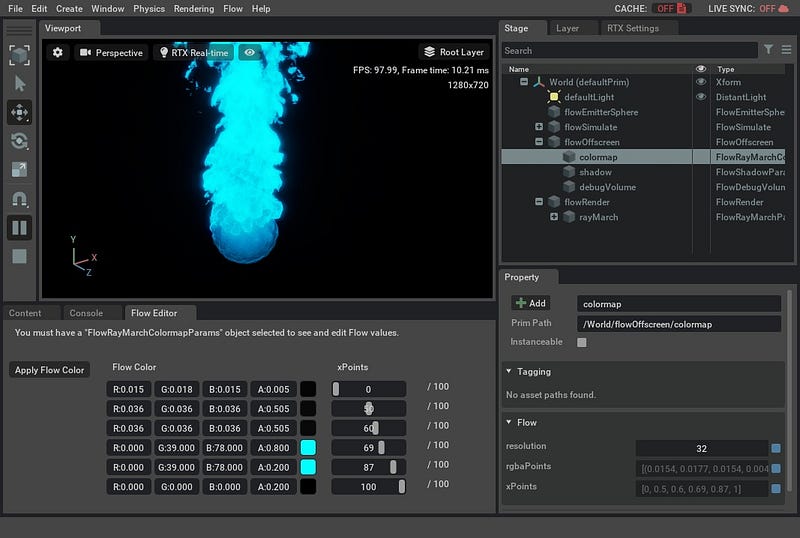
Speaking of collaboration — NVIDIA’s Omniverse is creating an interoperable collaboration space where architects, engineers and designers can work together to design spaces:
You can even incorporate AI models for fluid dynamics into the environment, as well as a growing library of real-world physics.
Automotive
Cars have long been a fascination of videogames, and of course that will continue in the metaverse. The metaverse will bring a huge number of new uses cases to the automotive industry as well.
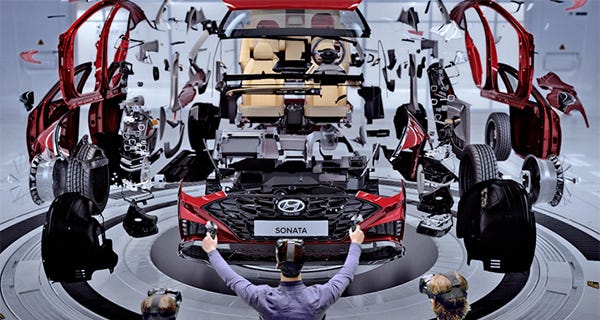
Just as with architecture, the metaverse will provide a collaborative, social space for designing vehicles. It will provide a simulation environment for testing cars, especially autonomous driving. And you may someday visit a virtual showroom with your family to decide which vehicle you’re going to buy.
Learning and Education
Although we struggled to replace education with Zoom and Google Classroom during the pandemic, our technology options were limited. That will change in the future as the metaverse transforms education to be more immersive, more social.
It will enable amazing educators from anywhere to lead — equipping them with tools for their creativity— and draw upon everything that’s been learned from games to make the experience more fun and interesting.
This will impact everything from traditional education, to corporate training, to skill-based learning (like how to fix your dishwasher withaugmented reality).
Fitness
I don’t think I’ll ever visit a gym again. Before the pandemic, I was already using my Peleton regularly (follow me there!). During the pandemic, I started meeting with my personal trainer on Facetime twice per week:

Supernatural VR has brought fitness into the world of the metaverse by making it more interactive and more social:
Volumetric Livestreaming
Livestreaming is currently a one-to-many experience. It’s great for showing off games and teaching. It is already social. It’s part of the metaverse already…
But it will grow. As livestreaming becomes volumetric, it will become more immersive and more social than it already is:
Esports
There’s a huge and growing audience of customers who enjoy videogames as a spectator sport, and if you’ve never taken a moment to appreciate the excitement fans have in these events, then take a moment now to watch this video — which does an excellent job of capturing the feel:
Now: imagine when we transport more of that excitement, social structure and community into the metaverse.
Concerts might give us a hint as to what that will look like:
Live Music
Right now, you mostly watch music videos or listen to music recordings.
That will continue, of course — but the metaverse promises to bring you into music experiences like none before. Fortnite and Roblox already set records with live music concerts that attracted tens of millions of fans — but that’s only the beginning.
There’s a whole new realm of interactivity, community and augmented experience to be had within the metaverse. Some of these experiences won’t simply be an alternative to in-person concerts — they will be better. And because the metaverse will be a future of abundance, the front-row seat will go from a rare commodity to something anyone could experience.
Immersive Theater and Transforming the Physical World
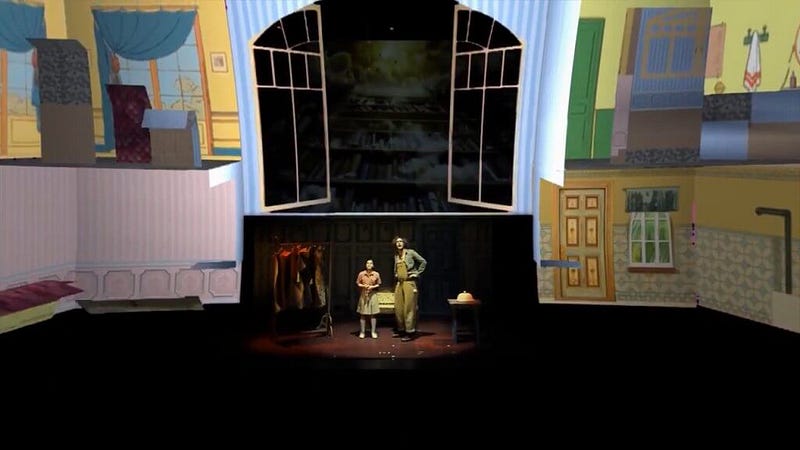
Most of what I’ve written above is entering entirely digital spaces — but the metaverse will also include activities within spaces we physically travel to; in these, we’ll bring the metaverse with us.
The Internet of Everything will feed data, geospatially-triggered content and digital twins into the metaverse — letting us comprehend, manipulate and simulate the real world in new ways that save us time, and unlock new possibilities in our lives and businesses. The industrial, travel, military, civic and residential applications of making this information omnipresent is infinite.
There are even physical escape rooms, theaters, concerts and live experiences that are mixing the physical and the virtual — augmenting it with special effects, new characters, and interesting information.
Conclusion
The metaverse is the next generation of the internet.
It is being built around activities you’ll enjoy with your friends and coworkers.
An exponential increase in creators are mixing-and-matching, embedding and linking, leveraging a new era of creator-oriented tools.
It will take you to places you never imagined.
And it is awesome.
Further Reading
If you enjoyed this introductory article, you’ll love this deck I assembled to capture many of the topics I cover on Building the Metaverse:
After you’ve flipped through that, please enjoy a few other articles related to the experiences we’re having in the metaverse:
- Market Map of the Metaverse will give you an understanding of many of the companies currently working to build it.
- The Metaverse Value-Chain will show you how value flows across industries to enable the experiences I’ve written about here.
- 9 Megatrends Shaping the Metaverse will show you the major trends — social and technological — that are driving the metaverse forward.
- Evolution of Creator Economies tells the story of how creator-led industries ultimately need tools that are designed for creators.
- I recommend this new book for anyone who is curious about the non-gaming use cases: The Augmented Workforce: How Artificial Intelligence, Augmented Reality, and 5G Will Impact Every Dollar You Make (affiliate link)
- The Great Unbundling is an article by Ben Thompson about how television is being disrupted by the internet, and inspired me to approach this article from the standpoint of “What jobs does the metaverse do?”
- For background on this “job” a product does: Clay Christensen, the creator of Disruption Theory, originated this concept, and illustrates it with McDonald’s and the job a milkshake does.


