
The Evolution of Tags
In February of 2015, we unleashed tags upon Medium with the vision of increasing connectivity among everyone’s ideas. To quote from the Medium post I wrote back then:
…we wanted to create spaces on Medium where all stories on a specific topic could be organized together in one central place. From there, those interested in that topic could consume those stories all at once, and potentially even be inspired to share their own. Our belief is that when brought together, good ideas have the power to fuse, recombine, and spark even greater ideas.
We’ve gotten incredibly positive feedback on tags, particularly from our writers who have used them to find an audience and community. While we could’ve left it there, we didn’t — that’s just not our style. Instead, over the past few months, we’ve continued to evolve and leverage tags to level up personalization, distribution, and discovery on Medium.
Personalization
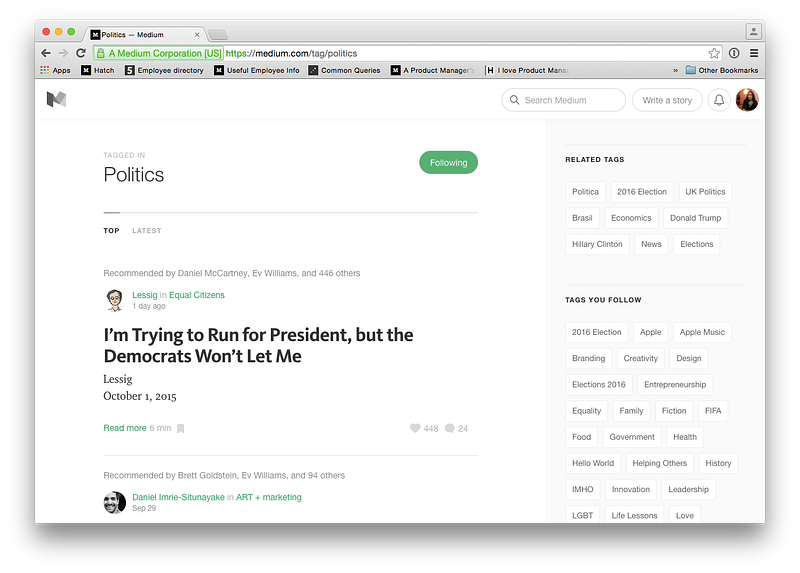
Prior to tags, Medium was primarily a social-based network — if someone you followed wrote or recommended a story, we’d surface it to you in your home feed or daily digest email. However, with the introduction of following tags, we shifted Medium from being purely social-based into a network that’s based on your interests. Want to read more stories about politics? Go ahead and follow the Politics tag:
We’ve also leveraged following tags in new user onboarding — after signing up for Medium, a new user can follow tags/topics that they’re interested in, which helps us pick out the best stories in their home stream and daily digests right off the bat. On average, 70 percent of new users follow three or more tags during onboarding:
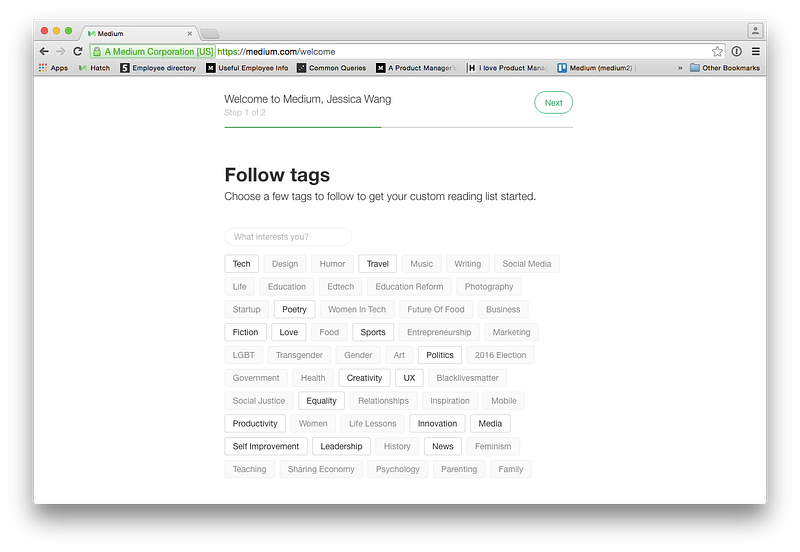
We’re working on making onboarding better, as well as creating a way to enable users to “re-onboard” and continuously personalize their suggestions by following more tags/topics. For now though, you can do so by going to this super-secret-link.
Distribution
As a writer, tags are an effective way to find an audience for what I have to say, even if I don’t already have a dense network or following. Unlike a standalone website, I have the opportunity to build out this audience on Medium over time. Additionally, tagging a post improves distribution — tagged posts are viewed 3× more often than non-tagged posts.
On the tag creation side, we’ve added Tag Suggestions to help authors choose good tags for their stories, which can be a daunting task when you’re just about to publish. Now when you click publish, you’ll get a couple of tag suggestions, which you can either accept or reject:
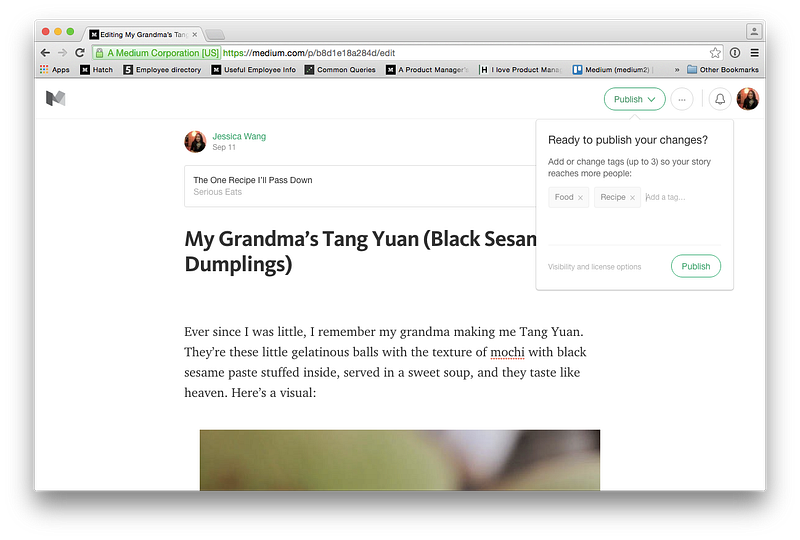
The introduction of tag suggestions increased the percentage of tagged posts from 30 percent to 80 percent. Qualitatively, tag suggestions improve our overall tag ecosystem, as there’s now greater consistency among stories within a specific tag. The more users that tag stories, the better our suggestions get, because we can better classify what goes into each tag.
Discovery
We’ve also started surfacing tagged posts in your home feed and daily digests, increasing the possibility of serendipitous discovery. So my Medium universe has expanded: No longer am I limited to reading just what my friends are publishing and recommending, but there’s the opportunity for me to stumble upon an amazing story about politics by an author I don’t already follow.
Additionally, while Featured Tags have lived on our web homepage since the initial launch, they’re now also a key part of our new Explore feature, available in the latest versions of our iOS app and Android app:
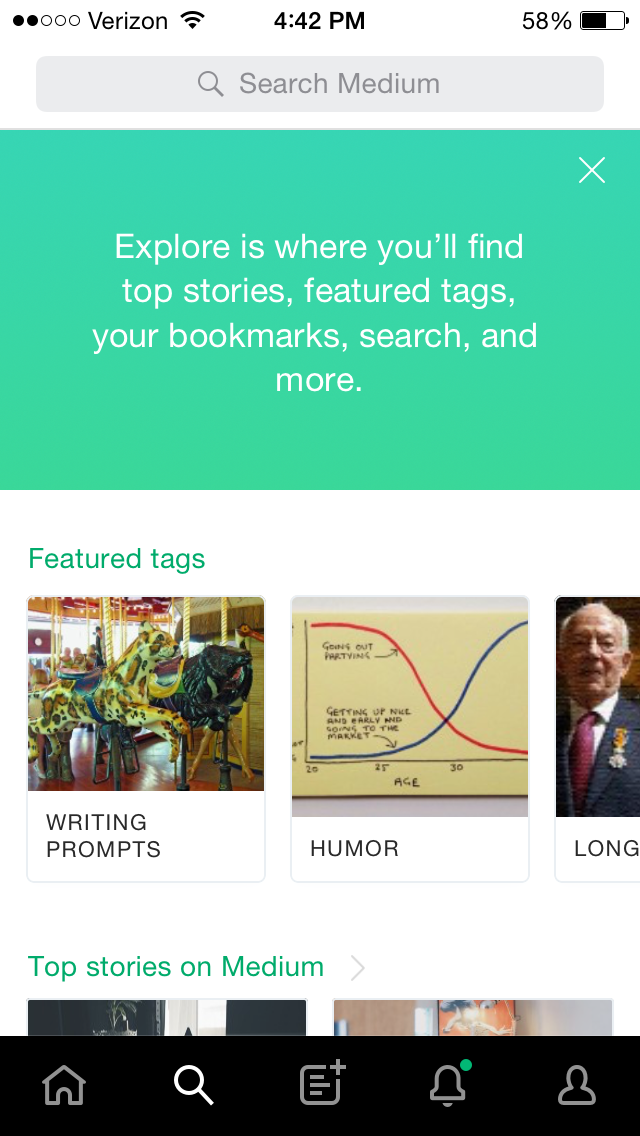
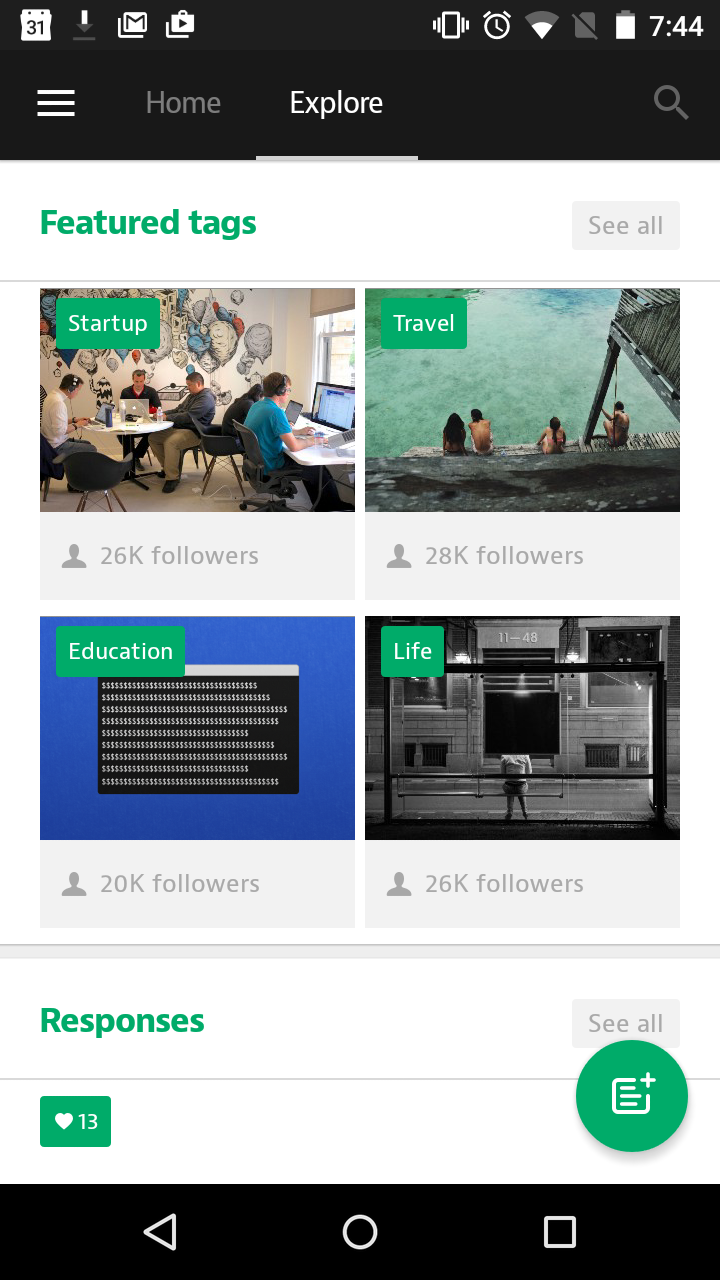
We’re still in the early stages of unleashing the full potential of tags but wanted to share some of the exciting new developments that have happened since we first launched the feature back in February. Let us know what you think in a Response below.


