
ESSAY, POP CULTURE
The Evolution of Gangsters Portrayed in Pop Culture
Why do we like mobsters?
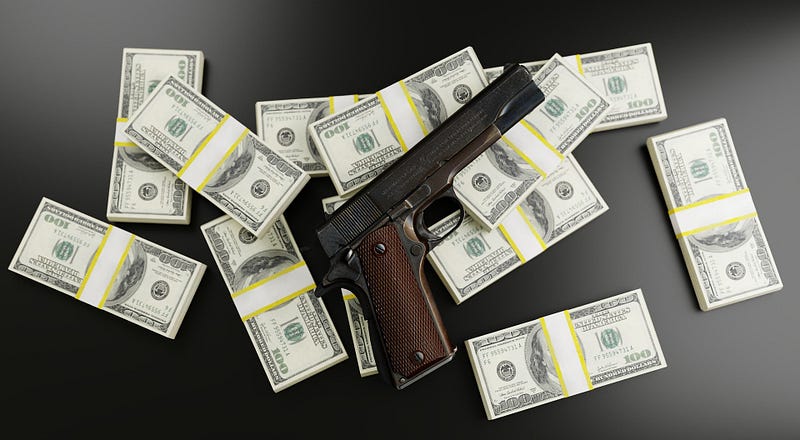
The Romanticized Mafioso
Let’s face it, men love gangsters. There is the obvious answer why: they look cool, they take risks that we never would, and they represent status, power, and money. The not too obvious answer is because we resonate with them on a level that connects us with our past. You guessed it: it’s nostalgia. Longing after something that slipped through our hands a long time ago.
Don Winslow puts it perfectly in his novel, The Winter of Frankie Machine:
“Hanging out with mob guys, Frank thought, was like being frozen in some perpetual junior high school time warp. The conversations were always about sex, food, farts, smells, girls, small dicks, and homos. And crime, of course.”
Films like The Godfather I-II, Mean Streets, and Scarface, had managed to romanticize their antiheroes in a way that was beyond engaging (if you haven’t seen those, you know what to do). They were represented as passionate, self-made individuals. Men of honor. The Corleone family and Tony Montana lived by their own principles.
They were sort of incarnations of the Wild West’s bandits and outsiders. Criminal immigrants — that’s what criminologists call the “alien conspiracy theory” of organized crime. Hollywood glorified them in a stylish and captivating manner.
In the ’90s, Martin Scorsese brought the Italian-American mobsters a little closer to us. Perhaps, with more violence, appeal, and likable qualities. The Goodfellas and Casino — followed by many similar attempts — represented a more insightful view of the modern mafiosos lives. Loyalty, inside jokes, and the idealized and fearful status among made men. Scorsese was often criticized for glorifying gangsters, but the truth was, that’s what the audience wanted. We craved for these type of stories to watch.
At the end of the ‘90s, David Chase created a cornerstone in television history by portraying gangsters living in the suburbs of New Jersey. The Sopranos was a perfect fictional but very realistic take on the Italian-American Mafia in the States.
“We like the Sopranos because in many ways they are just like us. They live in suburbia, Dad sees a shrink, the parents are worried about getting their daughter into an Ivy League university.” — Jennifer Hunter
“The Sopranos was an anomaly at the time”- Dana Renga journalist and professor points out. It was hated by Italians and loved by Americans. Why? Because spaghetti and meatballs just don’t cut it. Italians couldn’t identify with the Mafia life in the U.S., because it completely derails from the European one.
Chase didn’t miss the chance to compare the two on television. There is an episode in the second season where the gang flies to Naples. In the end, the New Jersey guys can’t wait to leave the old country. Their early enthusiasm completely vanished by the Italian hospitality.
“People who see themselves as “all-American” can be fascinated by Italian mobsters, and even admire them, without worrying that their lives will come into contact with mobsters’ lives. Psychological distance allows us to romanticize and feel nostalgia for almost anything. Psychological distance is, among other things, a coping mechanism.” — James Finckenauer
Interestingly, for the rest of Europe — besides the Americans — was easy to engage with that world. Not because they knew it first hand, rather the opposite. They didn’t have any connection with Italian-American culture, which was fascinating and engaging. It was kind of an untouchable, imperfect fictional reality. We could easily put these characters on a pedestal because we were separating ourselves from them.
There were many reasons to let them grow close to our hearts. The hangouts in the strip club (Bada Bing!), the generous feasts, the funny conversations, the drinking and smoking, the gambling, and, of course, the wise guy codex.
But in its essence, that feeling of bond and loyalty what reminded us of our youth. Belonging to something loyal and respected, something worthwhile and constant.
Following these guys’ day-to-day lives created an illusional world. Kind of the one we experienced in our adolescent years back in high school. Small problems, small decisions, and big laughs — golden times.
“Historically, Hollywood has its own connections to the mob, and several of those who appeared in The Sopranos had gang backgrounds, but overall US films can project a myth.” — Emma Jones
The Real Beasts of Organized Crime
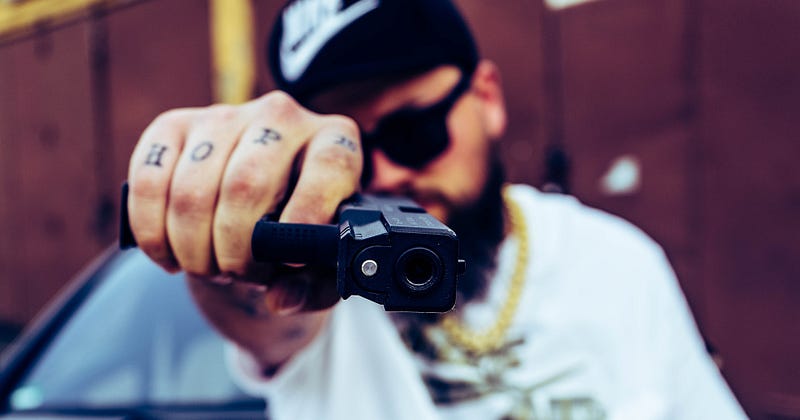
Although David Chase brought the Mafia-family experience closer to reality, it was still glamorizing the criminal lifestyle. Movies like the City of God, Romanzo Criminale, Tropa de Elite, and then Gomorra started to introduce us the real evil.
Roberto Saviano’s bestseller book, Gomorrah, completely tear down walls and misconceptions about the Italian Mafia (Camorra) in Naples.
Those criminals weren’t desirable but terrifying, fearful, and ruthless. They didn’t mess around with funny punch liners and fashion choices. They showed us what needed to be done in order to rule the business, territory, and eventually the whole country.
Don Winslow’s novel, The Power of the Dog, grasped the perspective from beyond the Mexican border and informed us about the Drug Cartels.
“You see these people at a distance. A lot of audiences don’t want to see the truth of what these people did. If you put that on screen, they are repulsed by it. They want to believe in the legend and not the truth. — Antony Earnshaw
While Hollywood had romanticized their gangsters on the screen, the rest of the world was trying to do the opposite. Deromanticize the life of criminal organizations and let us take a walk in the belly of the beast. See how human lives became more worthless than ever.
The Gomorrah series and the Netflix hit Narcos came later, showing us how Drug Lords gained and then possessed unimaginable power. It was shocking to witness their brutality, but also enthralling how they’ve built whole empires.
“Often the real-life criminal element is too close for comfort in Italy — the film Gomorrah had several non-professional actors who ended up arrested or investigated, while Saviano, author of the book the film is based on, is still under police protection after being put on a Mafia hitlist.” — Emma Jones
Since Gomorrah (the novel), something has changed in how organized crime was being represented in the last decade or so. Authors began to dehumanize criminal figures but kept their integrity to create suspense and drama. Mobsters in current pop culture are not emotionless creatures, but they stand very close to that description. However, they are often religious and family loving individuals, but when it comes to business, they cope with how to keep their emotions out of it.
By dramatization, the gap between them and us decreased. They came disturbingly close and forced us to realize that these things could be easily happening around us — in fact, they are. It is a much more believable fictional reality than it ever was before.
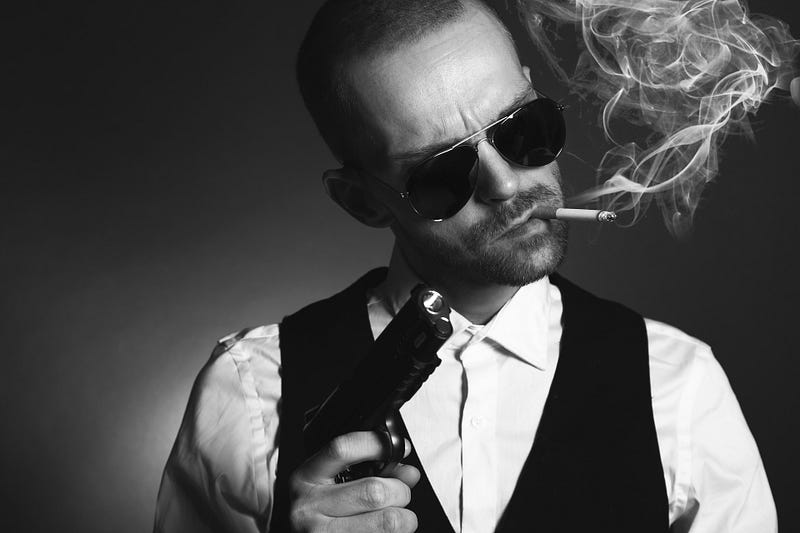
“Don’t get old, it’s a bad idea.”
Saviano said that gangsters in the Camorra tend to be younger these days. If they reach early middle age, they see it as a failure. In their minds, they haven’t done anything big or bald enough hence they’re still alive.
The old-school type often come to the realization that there are two ways of how their life can come to an end: death or incarceration. The younger generation doesn’t even consider the latter one as a possibility.
Even Scorsese, who heroized mobsters for decades, made a final piece where he deromanticized the genre. Last year The Irishman had portrayed infamous mobsters with very little sentiment and cool factor. Kept it plain and simple: everybody gets whacked, eventually. And the few who don’t, will be left alone being alienated from everyone they ever cared about.
By that time nostalgia fades, and leaves nothing but a bitter taste in the mouth.
Don Winslow beautifully sums up the consequences of such life through Frank Machianno’s words:
“It’s what happens, this life of ours. Piece by piece, it takes everything away from you. Your home. Your work. Your family. Your friends. Your faith. Your trust. Your love. Your life. But by that time, you don’t even want it anymore.”
We know well enough that gangsters’ lives are finite. To them, living on the periphery of society can be lethal of any given day. And to some extent, that’s what makes us want to witness everything they do — more and more so.
If you’re a big film enthusiast like me, you might want to check out this piece as well:
Sources: https://www.newyorker.com/science/maria-konnikova/why-do-we-admire-mobsters, https://www.thestar.com/news/insight/2015/09/20/why-the-mafia-continues-to-fascinate.html, http://www.bbc.com/culture/story/20190816-are-mafia-dramas-getting-too-close-for-comfort, https://www.bbc.co.uk/news/magazine-34312359, https://www.history.com/topics/crime/the-mafia-in-popular-culture, https://www.independent.co.uk/news/world/europe/secrets-of-the-mafia-mind-revealed-by-psychiatrists-2128037.html, https://www.psychologytoday.com/us/blog/your-neurochemical-self/201106/my-mafia-roots
If you’d like to read more from me, sign up for my monthly newsletter here.


