
FILM
Jonah Hill’s Love Letter to Our Childhood — Mid90s
Grab your board, we’re going back.
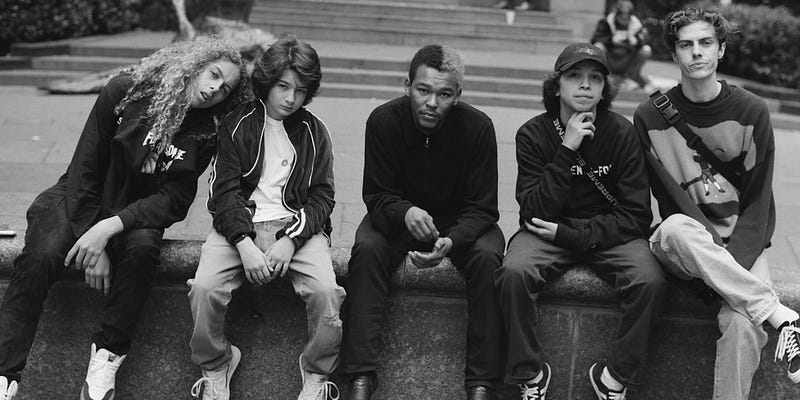
When I was 14, my friends and I used to go to this tiny pub to play foosball all afternoon. That’s where we met these strange guys with funny hairstyles and trapeze pants. They were older than us by a few years. They knew everything about the game, played it on a semi-pro level, and competed at competitions. But in that little pub, filled with cigarette smoke, they played to have fun. Over time, we get to know them more and more, and they taught us a lot about the game — but more importantly, they made us feel cool just by interacting with us.
I often think about those times with bittersweet nostalgia.
Jonah Hill’s first movie, Mid90s, captures that reminiscence painstakingly well. It resonates with a part of our soul that treasures that time period when we were insecure and shy, longing for acceptance and the approval of others.
Stevie (Sunny Suljic) is at the age when he doesn’t know what he wants or what he likes. He’s wandering in his brother’s room like it’s an unknown yet fascinating new world — searching for something he can relate to. He just wants something — anything — that could create a bond between the two. But his brother is a complete ass — angry, frustrated, and unwilling to develop a relationship with his young brother beyond blood. Not having a father around, Stevie just wants a friend, possibly a role model he can look up to. But since his brother rejects all attempts to engage with him, he goes to seek friends elsewhere. One day, he notices a few skater boys on the street — messing around, bantering, having fun. He clearly admires their friendship — longing for that type of camaraderie. His loneliness forces him to create connections. So he does anything to get their attention. He starts skating and when he falls, he gets up and tries again until they begin to pay attention to him.
Put your hand on your heart and tell me you didn’t crave for anything remotely similar to that feeling when you were at his age. Tell me you didn’t wish to have a connection with the cool guys — to be approved, to be a part of their group. Jonah Hill’s directorial debut resonates on many levels with Millennials and finds a way to embrace a specific type of vulnerability.
In the simple yet effective plot of Mid90s, everything happens naturally.
Making new friends induce parties, parties induce drinks, drugs, and girls, and that influence induces changes and emotions. For the first time in his life, Stevie meets people who respect and love him. He finds acceptance that motivates him more than anything before. The bond he creates with these guys is stronger than any connection he had. So it’s no wonder that he defends it when some people try to break it. He’s one of them now. Jonah Hill’s writing and directing are subtle and delicate — depicting feelings with very few words and instead relying on atmosphere and the power of images. In one of the most emotional scenes, Stevie and Ray (Na-kel Smith) go skateboarding at sunset which turns into night, and eventually, they fall asleep on their boards in the street. They don’t talk because there’s no need for words — they completely understand each other without them.
Sometimes, all you need is to be in the company of someone who gets you. Just to be present, knowing that no matter what happens, they are there for you. Maybe not forever but certainly in that particular moment — and sometimes that’s all you need to feel safe, accepted, and loved. Mid90s demonstrates this feeling with such elegant and explicit care that not many other films can achieve. Hill’s debut might not be perfect, but it’s original and unique enough to pay attention to him as a filmmaker in the coming years.
If you’re a big film enthusiast like me, you might want to check out this piece as well:
If you’d like to read more from me, sign up for my monthy newsletter here.