avatarRochelle Deans

Free AI web copilot to create summaries, insights and extended knowledge, download it at here

2155

Abstract

believes Kuzco is capable of change.</li></ol><p id="ed81">Let’s look at each of these in turn to see how they contribute to Kuzco’s story.</p><h1 id="6faa">Provide Proof of Consequences</h1><p id="8b36"><i>The Emperor’s New Groove</i> is the only movie I can think of offhand that opens with the dark night of the soul. Kuzco, now a llama, sits in the rain and sobs about how everything has gone wrong for him. Then Narrator Kuzco asks for the story to backtrack to how he got there.</p><p id="6e0c">It’s a prologue, of sorts, but one that fast-forwards rather than rewinds.</p><p id="b9a8">Why does this work? Well, we’re about to sit around for an hour watching Kuzco care about himself and only himself. He’s about to <a href="https://www.urbandictionary.com/define.php?term=FAFO">FAFO</a>, and we go in <i>knowing</i> his actions have consequences. We can put up with him a little longer knowing he won’t get away with it.</p><h1 id="751d">Make the Antagonist Even Worse</h1><p id="dc84">Kuzco is a selfish, spoiled brat. There is no way around that fact. His selfishness is so entrenched that we don’t even get a moment that proves he’s not <i>entirely</i> heartless. Instead, at right about the beat where we would get a plucky protagonist saving a cat, we get a scary-beyond-all-reason advisor sitting on Kuzco’s throne, saying the iconic:</p><blockquote id="e3e3"><p>Yzma: It is no concern of mine whether or not your family has… what was it again?</p></blockquote><blockquote id="12b7"><p>Peasant: Umm… food?</p></blockquote><blockquote id="f032"><p>Yzma: Ha! You really should have thought of that before you became peasants!</p></blockquote><p id="d197">Then, when Kuzco fires her because he’s upset, her retaliation is to want him killed. We don’t like Kuzco, sure, but if we must bet on a Kuzco/Yzma fight, we want Kuzco to win. That gets us <i>enough</i> on his side to put up with what he does when escaping a plot to kill him.</p><h1 id="6505">Give Us a Good Guy Who Believes in Him</h1><p id="e6b0">We’re introduced to one other main player that makes a key difference in getting us to root for Kuzco: Pacha. Pacha doesn’t really have a

Options

flaw, and unlike a lot of “buddy cop” stories, there isn’t much Kuzco can teach him. Instead, his one major character defect, as it were, is his unwavering belief in the good of humanity.</p><p id="02ca">Pacha repeatedly shows up for Kuzco, even when Kuzco has proven his own lack of compassion over and over again. He tells himself, his wife, and Kuzco himself that he truly believes Kuzco can learn to care about someone besides himself.</p><p id="c241">We like Pacha. We want him to be right. The one thing he believes that isn’t proven is that Kuzco can be redeemed. And thus? We root for his redemption.</p><h1 id="1c26">Conclusion</h1><p id="b99b">Creating an unlikable character is all about their reframing. We talked in my last article we need to understand their <i>motivation</i> for bad behavior, and in Kuzco we see another way to reframe them: in reference to others.</p><p id="c2be">We want Yzma to lose, and she wants Kuzco dead, so we want Kuzco alive. We want Pacha to be right, and he believes Kuzco can change, so we want Kuzco to change for Pacha’s sake. We also want Kuzco to get what’s coming to him, and we’ve been assured from minute one of the movie that he will.</p><p id="fa07">What results is a slow build of character arc, where Kuzco only begins to show signs of being capable of change well into the second act of the story. Even in the finale, when he decides not to build his summer home on the hill where Pacha currently lives, he plays it off as a selfish decision:</p><blockquote id="15e4"><p>Kuzco: So, you lied to me.</p></blockquote><blockquote id="27df"><p>Pacha: I did?</p></blockquote><blockquote id="fc3e"><p>Kuzco: Yeah. You said when the sun hits this ridge just right, these hills sing. Well, pal, I was dragged all over those hills and I did not hear any singing.</p></blockquote><blockquote id="732d"><p>[<i>takes Kuzcotopia</i>]</p></blockquote><blockquote id="9086"><p>Kuzco: So, I’ll be building my summer home on a more <i>magical </i>hill. Thank you.</p></blockquote><p id="aa58">Kuzco has made the choice he’s incapable of in the beginning — and we rooted for him the entire way.</p></article></body>

The Emperor's New Groove: A Case Study in Unlikable Characters

The three techniques Disney used to make us root for Kuzco
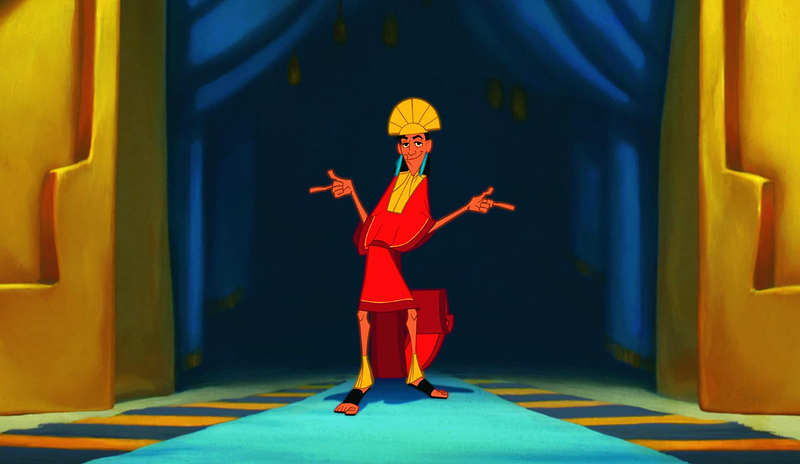
Kuzco in The Emperor’s New Groove, Disney © 2000, image via IMDB

This week, I introduced my children to the masterpiece that is The Emperor’s New Groove. It’s been one of my favorite Disney movies for, well, twenty-two years, and I was delighted to finally get to share it with them.

But I’d recently written about writing likable characters, and so that idea was at the forefront of my mind as I watched.

Because Kuzco? He isn’t likable. He doesn’t even get a moment in the beginning of the movie where he “saves the cat.” Instead, he defenestrates an old man for “throwing off his groove.” But we root for him anyway. Why is that?

I think there are three reasons for it — reasons we can use as we’re writing deeply flawed characters ourselves.

  1. We start the movie with proof that Kuzco’s hubris will hurt him: all we have to do is wait and we’ll move to the “find out” part.
  2. We quickly meet Yzma, who makes Kuzco’s ignorant selfishness seem kind by comparison.
  3. We also meet Pacha — a character who does have a heart — and he believes Kuzco is capable of change.

Let’s look at each of these in turn to see how they contribute to Kuzco’s story.

Provide Proof of Consequences

The Emperor’s New Groove is the only movie I can think of offhand that opens with the dark night of the soul. Kuzco, now a llama, sits in the rain and sobs about how everything has gone wrong for him. Then Narrator Kuzco asks for the story to backtrack to how he got there.

It’s a prologue, of sorts, but one that fast-forwards rather than rewinds.

Why does this work? Well, we’re about to sit around for an hour watching Kuzco care about himself and only himself. He’s about to FAFO, and we go in knowing his actions have consequences. We can put up with him a little longer knowing he won’t get away with it.

Make the Antagonist Even Worse

Kuzco is a selfish, spoiled brat. There is no way around that fact. His selfishness is so entrenched that we don’t even get a moment that proves he’s not entirely heartless. Instead, at right about the beat where we would get a plucky protagonist saving a cat, we get a scary-beyond-all-reason advisor sitting on Kuzco’s throne, saying the iconic:

Yzma: It is no concern of mine whether or not your family has… what was it again?

Peasant: Umm… food?

Yzma: Ha! You really should have thought of that before you became peasants!

Then, when Kuzco fires her because he’s upset, her retaliation is to want him killed. We don’t like Kuzco, sure, but if we must bet on a Kuzco/Yzma fight, we want Kuzco to win. That gets us enough on his side to put up with what he does when escaping a plot to kill him.

Give Us a Good Guy Who Believes in Him

We’re introduced to one other main player that makes a key difference in getting us to root for Kuzco: Pacha. Pacha doesn’t really have a flaw, and unlike a lot of “buddy cop” stories, there isn’t much Kuzco can teach him. Instead, his one major character defect, as it were, is his unwavering belief in the good of humanity.

Pacha repeatedly shows up for Kuzco, even when Kuzco has proven his own lack of compassion over and over again. He tells himself, his wife, and Kuzco himself that he truly believes Kuzco can learn to care about someone besides himself.

We like Pacha. We want him to be right. The one thing he believes that isn’t proven is that Kuzco can be redeemed. And thus? We root for his redemption.

Conclusion

Creating an unlikable character is all about their reframing. We talked in my last article we need to understand their motivation for bad behavior, and in Kuzco we see another way to reframe them: in reference to others.

We want Yzma to lose, and she wants Kuzco dead, so we want Kuzco alive. We want Pacha to be right, and he believes Kuzco can change, so we want Kuzco to change for Pacha’s sake. We also want Kuzco to get what’s coming to him, and we’ve been assured from minute one of the movie that he will.

What results is a slow build of character arc, where Kuzco only begins to show signs of being capable of change well into the second act of the story. Even in the finale, when he decides not to build his summer home on the hill where Pacha currently lives, he plays it off as a selfish decision:

Kuzco: So, you lied to me.

Pacha: I did?

Kuzco: Yeah. You said when the sun hits this ridge just right, these hills sing. Well, pal, I was dragged all over those hills and I did not hear any singing.

[takes Kuzcotopia]

Kuzco: So, I’ll be building my summer home on a more magical hill. Thank you.

Kuzco has made the choice he’s incapable of in the beginning — and we rooted for him the entire way.

Character Development
Developmental Editing
The Emperors New Groove
Save The Cat
Writing Tips
Recommended from ReadMedium