
ESSAY
The Effects of Having a Birthday In November
My love for yams continues
“Were there days in the past when you only ate yams, Amma?” my wife inquired of my mother.
“Who said that? To be honest, we weren’t wealthy, but we had enough for three rice meals a day,” my mother replied with a serious tone.
“Ayiya mentioned it. He said there were days when he only had yams,” my wife responded, glancing a doubtful look in my direction.
“Ah, that. It’s true, but it’s the other way around. He is very fond of yams. So, there were days when he ate nothing but yams out of greed,” my mother chuckled in response.
“See? I didn’t lie to you. It’s just a matter of interpretation,” I tried to evade, attempting to deflect my wife’s attack.
For the past two years, I haven’t been able to be home during the yam harvesting time. So, to make my wife interested in this task, I might have exaggerated a few things. Who would have thought she’d take them literally?
Perhaps you already know that our Sri Lankan meals are mostly rice-based. We used to proudly declare ourselves a nation that consumes rice with every meal. However, besides rice, we include several other items in our meals. These freely available foods add extra nutrition to our diets.
Yam comes to light as an essential element under these additional meals, playing an important role in our food culture. Our elders were said to have known more than 500 varieties of yams, but now, we only recognize fewer than 100 types. It seems that some varieties have gone extinct with time, and people have forgotten about their existence.
It may be a coincidence, but I was born in November, the same month we harvest yams. Perhaps that’s why I love yams so much, eagerly awaiting November each year for the harvest.
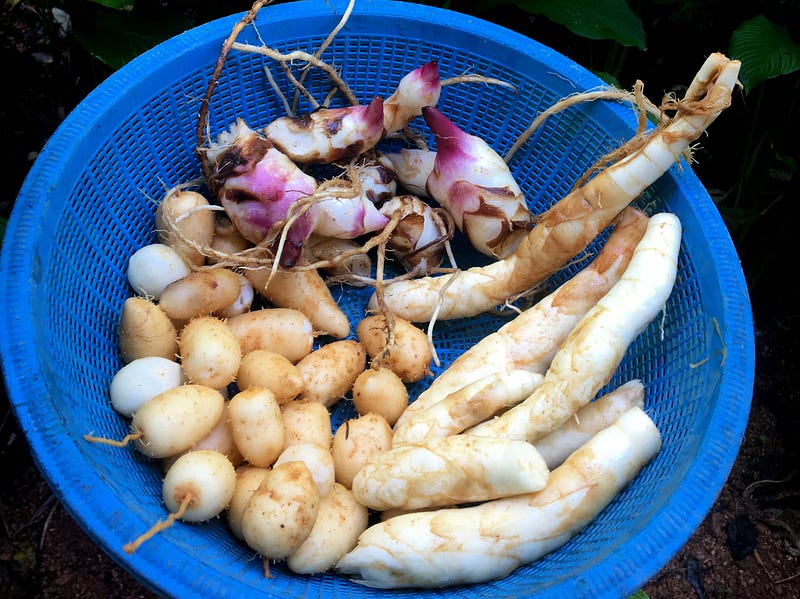
Among the various types of yams in our garden, this weekend, we focused on four specific types of yams.
- Dam Ala (Purple Yam / Dioscorea alata)
- Hulankeeriya (Arrowroot / Maranta arundinacea)
- Artichoke (Not the common Artichoke)
- Buthsarana (A type of Canna Lily)
Since I’ve already covered the purple yam previously, this post will focus solely on the other three. We maintain small crops of each type around our yard, not for commercial purposes but for our own consumption.
Among these three, Hulankeeriya or Arrowroot is my favorite. It is a small bush, somewhat similar to a turmeric plant. Harvesting Arrowroots requires extra care. Because upon removal of the plant, there’s often nothing visible underneath except a few roots that run deep into the ground. Each root ends with a white tuber, almost like a carrot, but with distinctive ring patterns.
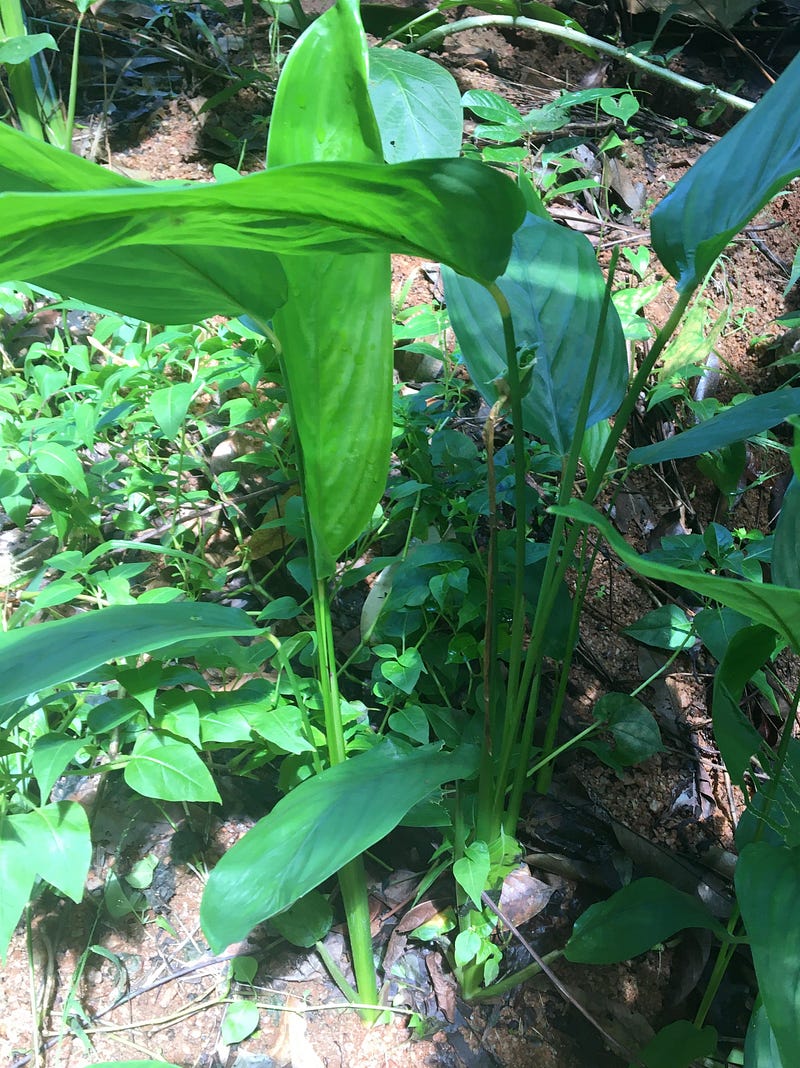
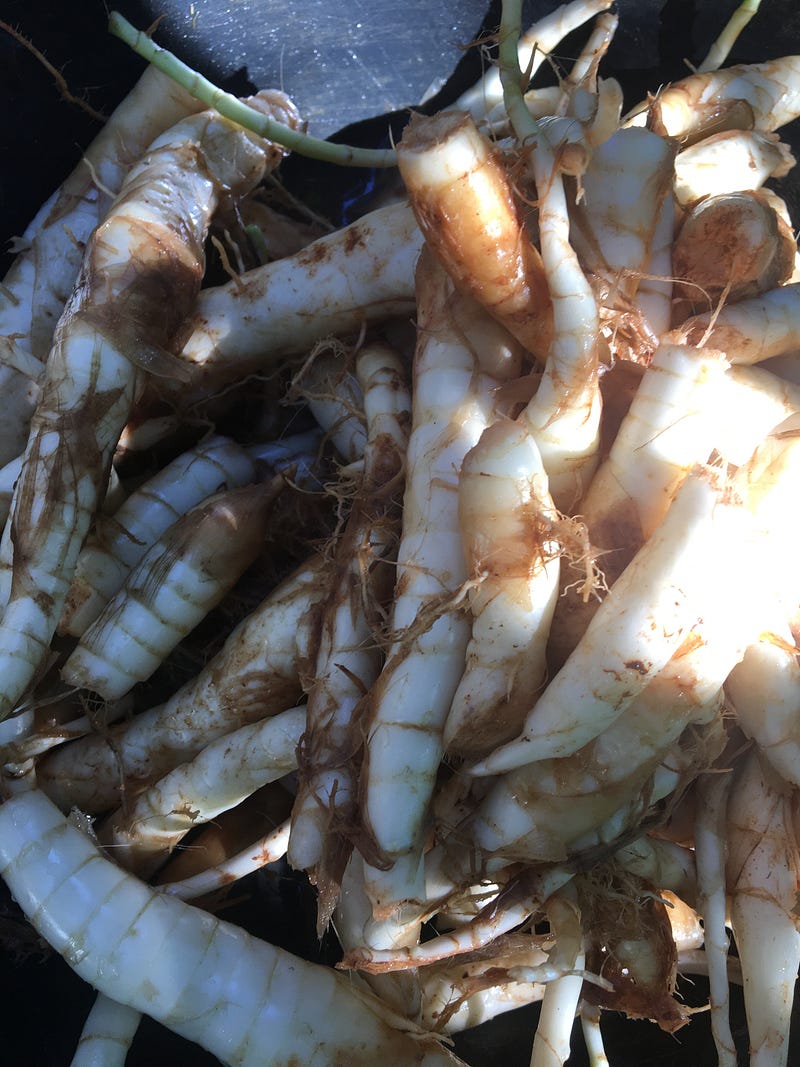
We need to dig carefully around a plant about a foot or two deep to collect these white tubers. I must admit, during removal, I often damage at least half of them. However, since we consume them immediately, it doesn’t matter. Otherwise, the damaged ones don’t last long. Given this is my favorite, we dug up about ten bushes, collecting around two kilos of tubers.
Next, we moved on to the Artichoke. This should not be confused with the vegetable known by the same name. It is a name we refer to locally, and I couldn’t find their English or scientific designation. They some what resemble arrowroot bushes.
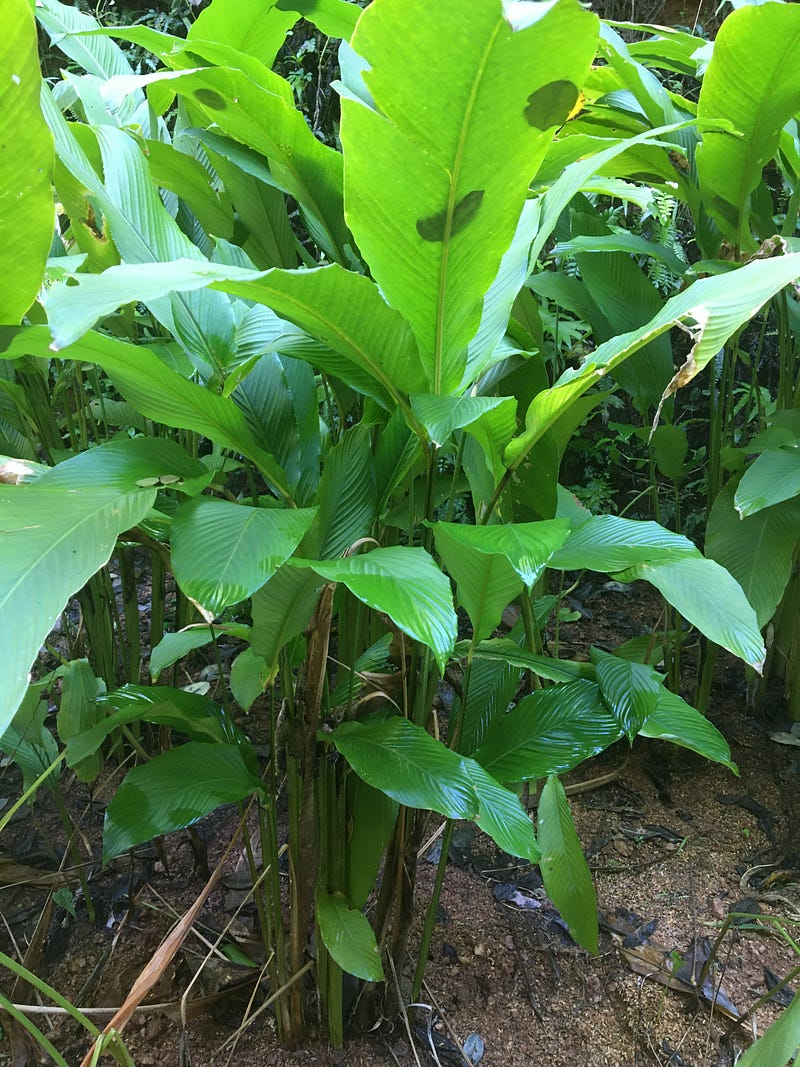
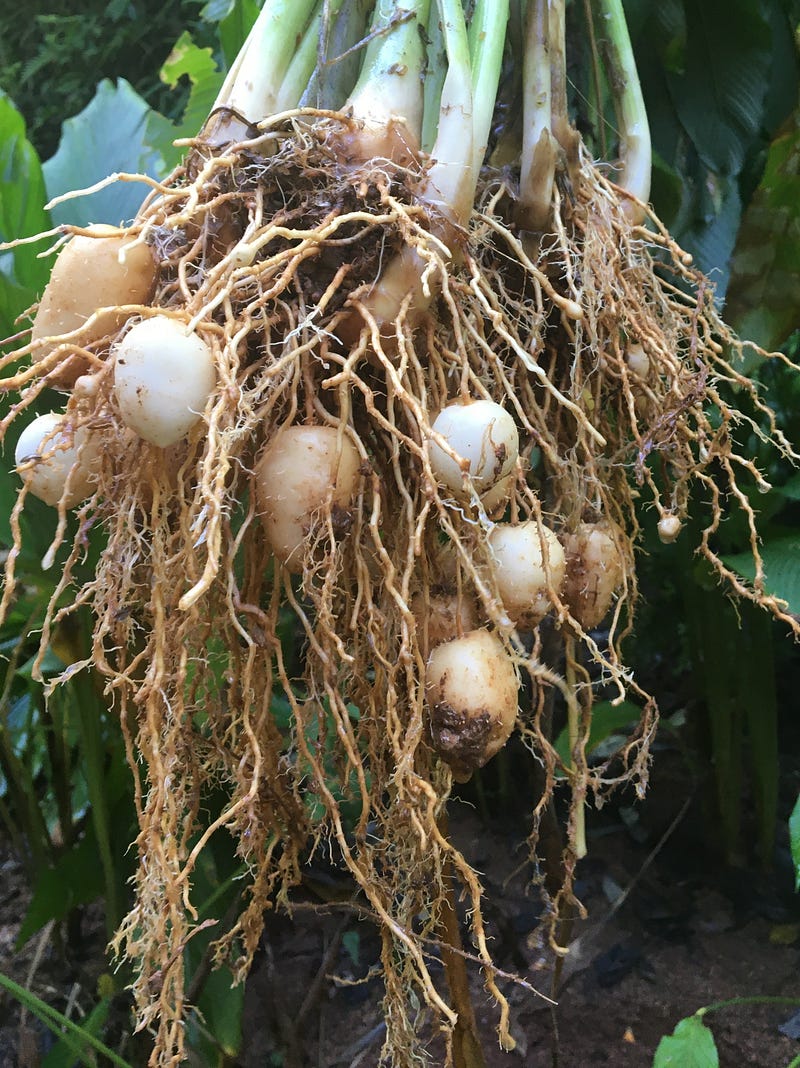
Unlike Arrowroot, harvesting Artichoke is very easy. Pulling up the bush brings out all the yam bulbs still attached to the main plant. We noticed they might continue growing if left undisturbed, so we only dug out two bushes.
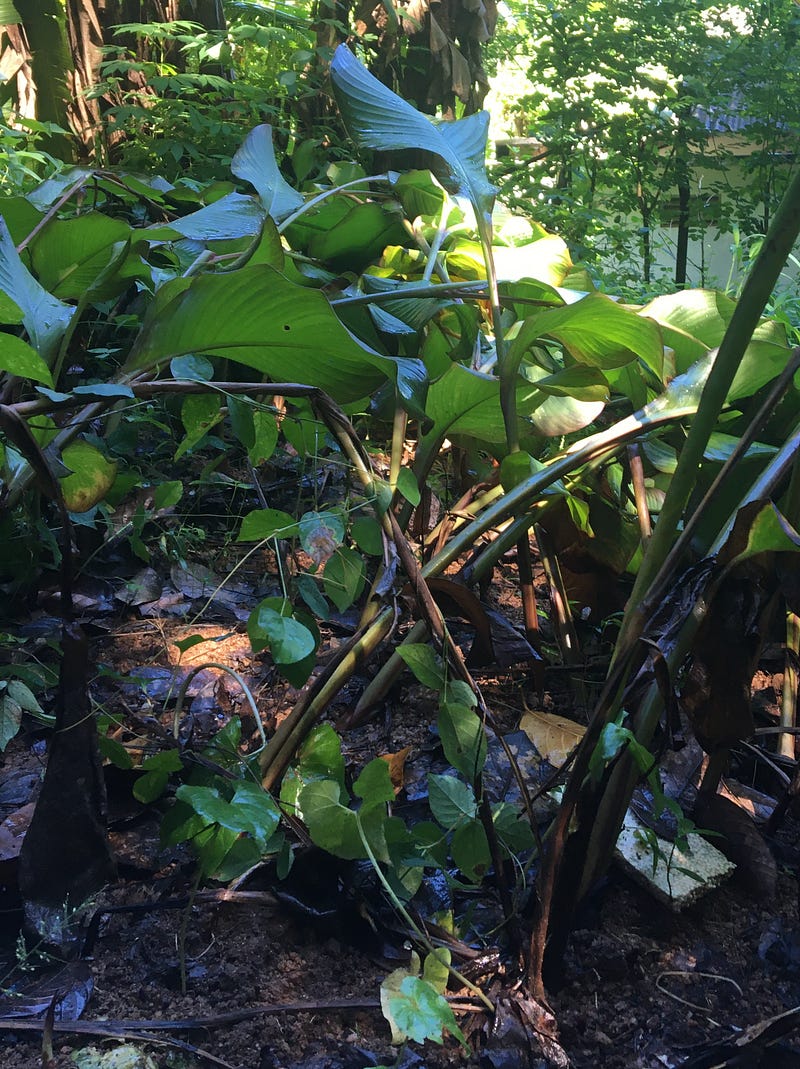
To conclude our harvesting day, we needed Buthsarana, too. It is an edible type of Canna lily. Due to heavy rain, they had fallen to the ground. We only dug up a single bush because we already had enough yams. In this variety, the edible part is the rhizome, which can be easily dug out.
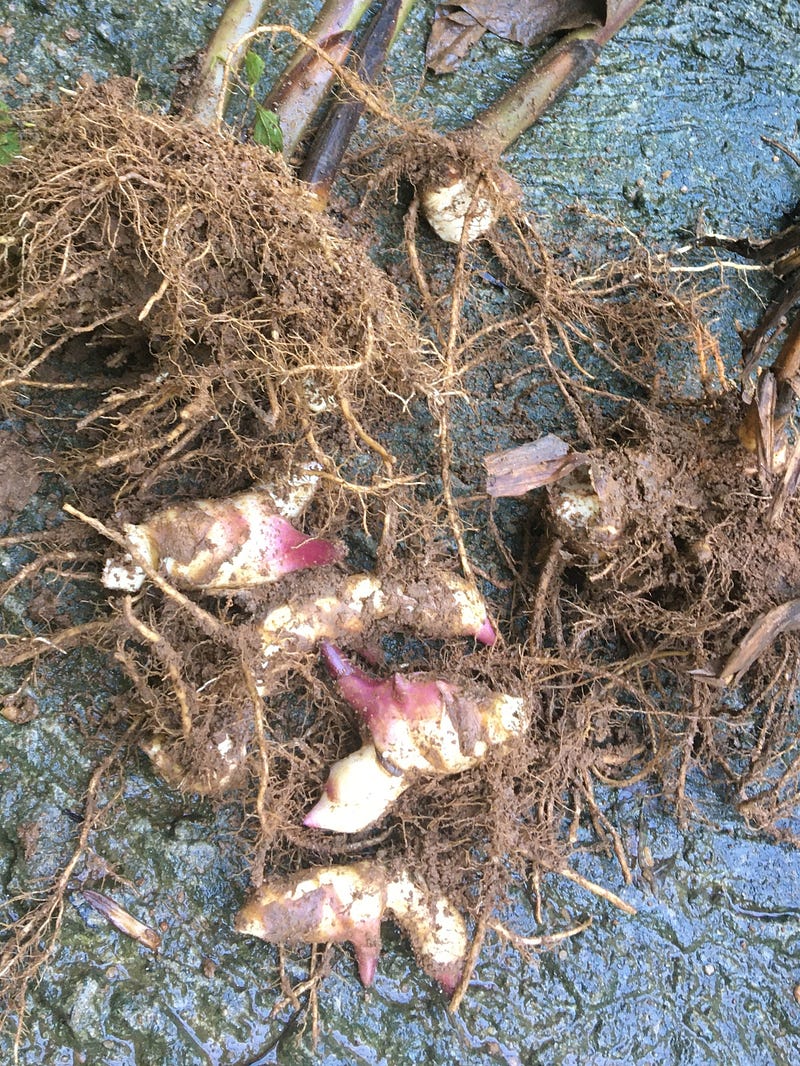
The next step is cleaning them. With Arrowroots, you must remove the outer husk until you reach a polished surface. Cleaning Artichoke is more straightforward; just washing it removes the mud. With the Buthsarana, you must remove the outer husk until you uncover a pinkish, bird-like yam.
You can prepare numerous dishes with yams, but the simplest method, boiling them, is my preferred way, too. Usually, Artichoke requires additional cooking time, so we started with them and added the other two later.
After half an hour, the yams were nicely cooked and ready to eat. If you prefer, add a small amount of salt; otherwise, this is a pure natural food with a fantastic taste.
All of these yams contain a high percentage of fiber content, offering various benefits for the bowel system and aiding in lowering cholesterol. I must admit I’m not an expert in health and nutrition to provide a detailed review. However, I assure you that none of these yams have adverse effects. Because our elders never restricted their usage, unlike other foods with limitations.
Arrowroots have a nice crunchiness due to their high fiber content. Artichokes, with their oval egg shape, have two layers inside. Both are edible and taste the same, but the outer layer is slightly tougher than the inner one. Buthsarana is quite similar to sweet potato in terms of texture and taste.
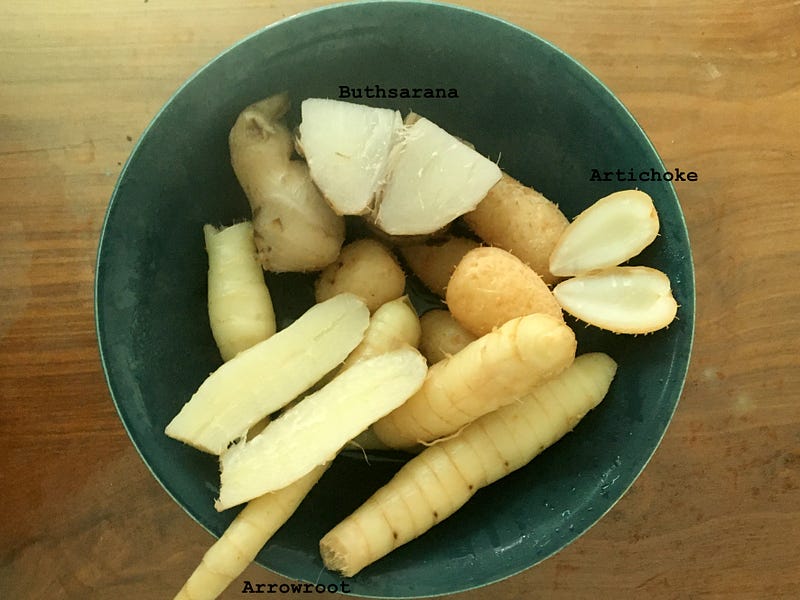
We cooked these dishes well before noon to consume during our tea time. But who needs lunch when you have yam. So, I shamelessly helped myself a few times and obviously skipped my lunch later.
Thank you all for bearing with me for my yam harvesting journey extended over two posts. I felt that I needed to share this culinary tradition with you. And I must admit that writing about what I love brought me more joy and happiness.


