
The Double-Shift Prejudice
On how a Mexican budget policy hurts students’ well-being
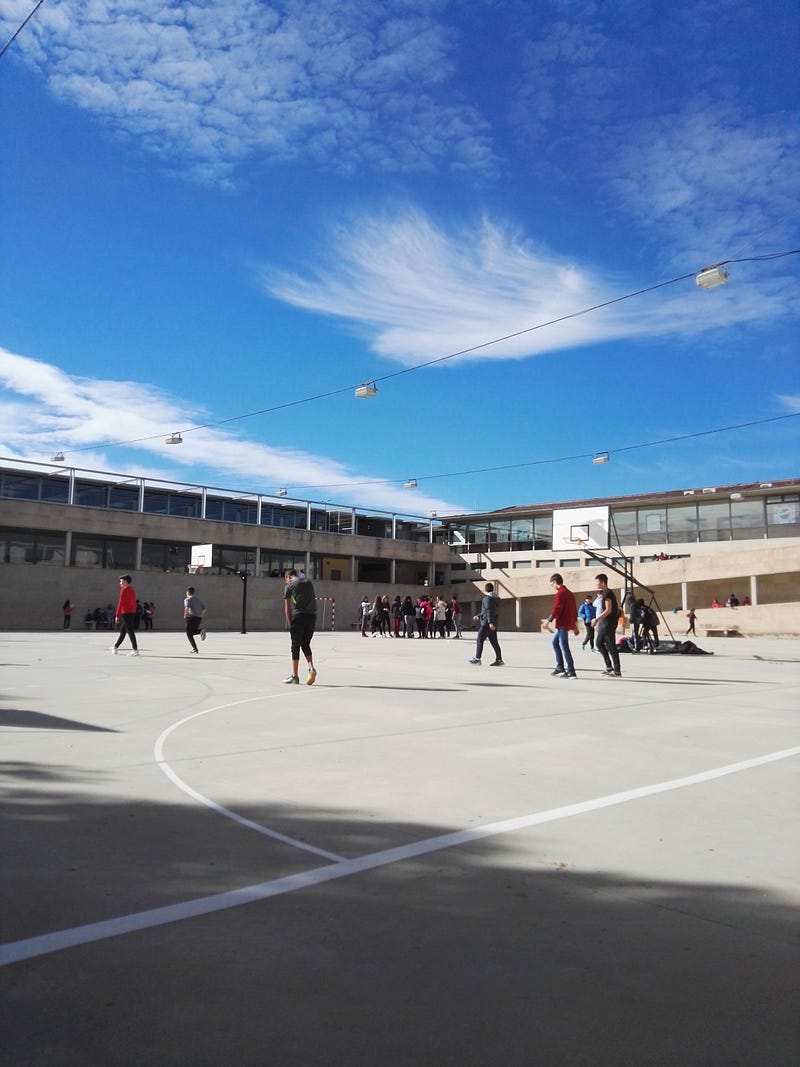
I have been a high-school teacher for over sixteen years now. I work in what we call a double‐shift high school.
Most of the Mexican public schools from all educational levels function like this, with a morning (from 7 am to 2 pm) and an afternoon shift (from 2 pm to 9 pm), to take better advantage of the facilities. In other words, it’s cheaper to use the school during the evenings than to build a whole other building to make sure you are providing education to all of your citizens.
I won’t dwell on the fact it is clearly unhealthy to have students at school as the light of day dies, and their bodies start to succumb to sleepiness.
However, I want to point out some issues with this schedule: first of all, it makes it easier for students to go to bed really late. From what my students have told me, it isn’t rare for some of them to go to bed at 2 am. And then, of course, they wake up around 11 am…or 12 pm.
You can see the problem: with this sleeping schedule, just precisely when are they going to have time to do their homework, to study? There are even some students who go to school without having eaten anything at all, and their “breakfast” ends up being some crap they got at the school cafeteria at 4 pm. Part of our work as teachers ends up being trying to instill healthy sleeping and eating habits in our students.
Another problem is safety. At 9 pm, when the school “day” ends, it is pitch dark out there. And here in Mexico, we don’t really do school buses. Students have to get to school on their own means. Sometimes their parents drop them off, but most of them take a conventional bus, ride bikes, or walk. It is pretty common for students to be mugged on their way back home. I have even had students who have gotten hit by cars (my school is very close to two major intersections).
There’s another issue. One that affects students’ self-esteem. There is a common notion that says students from the afternoon shift are not as smart and capable as those from the morning shift. This idea persists because, when a student requests a transfer between the two shifts, her grades tend to be one of the most important aspects to take into consideration. In other words: good grades, morning shift. Bad grades, afternoon shift.
There are even some teachers who tell the students: “ugh, it’s always the same with you guys! It’s so difficult to work in the afternoon shift.”
What would you feel like if year after year, your teachers told you that, just because you have to go to school during the afternoon, you are not as smart as those who go in the morning? It’s not a very nice thing to say, right?
A 2016 paper by El Centro de Investigación y Docencia Económicas and El Colegio de Mexico, states that “there is no evidence to support these beliefs; that is, that the afternoon shift is inherently of lower quality.”
Instead, this is just a case of the school administrators first filling all of the spots available in the morning, and then moving on to the afternoon shift. Still, prejudice continues.
From my part, I have always worked in the afternoon shift and I can assure my students are quite capable. There was only one semester when I had a couple of classes during the mornings…and I was not too fond of it.
I can’t really explain why. There was something in the atmosphere, something “odd”. There is just a particular vibe during the afternoons. Some of my fellow teachers say that we, the afternoon shift people, are way more relaxed, not as stressed up.
It could be. But I like to think that there is also some sort of “team-spirit” involved. We are in this together. Working on getting better despite the harsh conditions, despite the danger, the frustration of knowing there’s nothing we can do at the moment to change this. People may think we are “lower quality,” “not as smart,”…but we love to prove them wrong.
We show up, students and teachers, side by side, no matter what. We are the afternoon shift, a sense of community running amongst us. No matter what people may think of us, we will keep on giving our best.
Want to stay in touch with me?
_________________________ Gabriela Rosales shares her life with a husband, a son, and 9 dogs (update: now there’s 11 of them…help!). She currently works as a high-school teacher in a Mexican border town by night, and types Medium articles and screenplays by day. Yeap, in that order.


