
The Disconnect Between Great Teachers and Great Learning
When I read The Best Teachers Will Always Do This One Thing by Tavian Jean-Pierre which I totally agree with, I felt compelled to respond. I agreed with all he said but I hoped that he wasn’t expecting that by following his suggestions, teachers would be assured of having enthusiastic, passionate, students experiencing great learning.
There is a lot of focus in the adult world on how to make children want to learn, be enthusiastic learners, follow directions, do as they are told, perform well on tests, and in many other ways meet the expectations of adults, even when the desired outcome means nothing to the child.
Sadly though, being a great teacher does not ensure students will be great learners. And that is simply because while the teacher chooses to enter the classroom, students don’t.
Teachers are in the classroom because (usually) the topic is one they have chosen, are passionate and curious about, and they have a desire to pass on this interest to others.
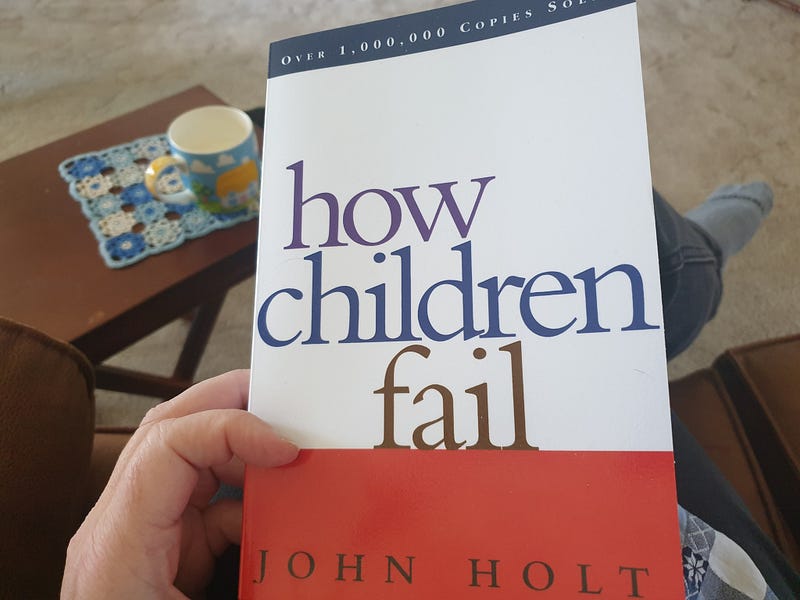
In contrast, in his book “How Children Fail”, author John Holt shares the students’ perspective:
“They (the students) were in school because they had to be, and in my class either because they had to be or because otherwise they would have had to be in another class, which might be even worse.”
Further, Holt shares his own thoughts as a teacher of reluctant students:
“So the valiant and resolute band of travelers I thought I was leading toward a much-hoped for destination turned out to instead be more like convicts in a chain gang, forced under threat of punishment to move along a rough path leading nobody knew where and down which they could hardly see more than a few steps ahead.”
“How Children Fail” was published in 1964, then revised and republished in 1982. It is a book about how the schools then were failing to provide the education that children needed. He shares his observations of how children learn tricks and techniques which ensure their survival in this strange environment full of strangers. He shares how the techniques he was taught to ensure learning was happening were many times actually part of the problem.
We, adults, presume to know more about learning than children do, but how often do teachers sit and observe their students? Just watching and making note of the learning that is happening without adult direction and guidance.
Sit and watch for an hour an infant, toddler, or pre-school-aged child at home, not in an institution, but their natural habitat, home. Watch how they interact with everything in that environment. How they interact with other people of all ages. Constantly observing, questioning, experimenting, and yes, learning.
Humans are born with the innate desire to learn. It is not a skill to be taught from a curriculum.
Teachers sharing about themselves, going above and beyond the required text, and relating the content to real-life are all valuable. But what students are really missing when constantly under the direction of adults (teachers, coaches, parents, et al) is autonomy, adventures, and the freedom to dive deeply into their own interests.
The solution to the education problem isn’t more schooling and better teachers, but less teaching and allowing more learning to happen naturally through an interesting environment where exploring can happen.
To children, learning is as natural as breathing. When adults get out of the way, learning cannot be stopped from happening.
More of my writings: Homeschooling is just School at Home. Isn’t It? How to Start Homeschooling: Six Simple Steps
Topical books I recommend: How Children Fail by John Holt* Learning All the Time by John Holt* The Brave Learner by Julie Bogart*
*Affiliate links


