
The Difficulties of Being a Woman, Black and Bisexual
My thoughts this Bi visibility day
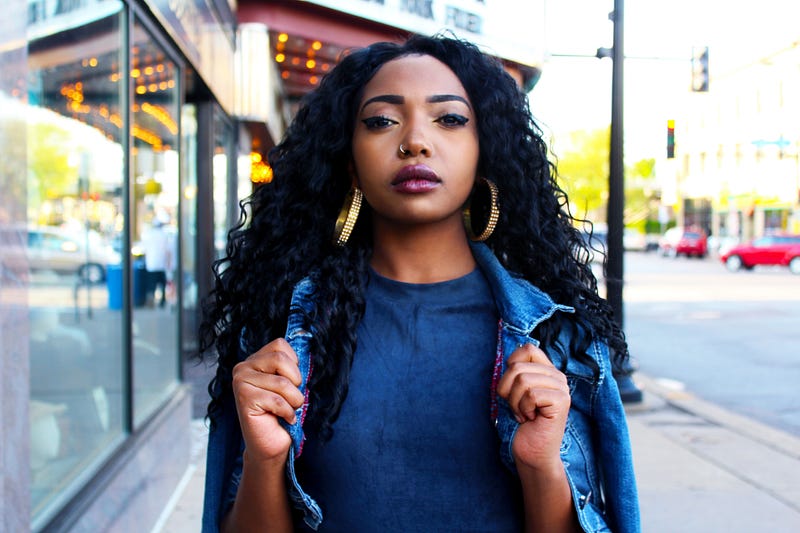
Woman
There are times I feel like I’m progressively stacking oppressions. If there is a God, he is laughing at me so hard right now. Don’t get me wrong. I love being a Black woman and I have learnt to embrace my sexuality. However, in regards to the identity lottery, I’ve fucked it.
Intersectionality is a branch of feminism asserting how all aspects of social and political identities (gender, race, class, sexuality, disability, etc) discrimination overlap or (“intersect”) — for example, race with gender in the case of a Black woman. Intersectionality aims to separate itself from “White feminism” by acknowledging the fact that all women have different experiences and identities — Kimberlé Crenshaw
So essentially the oppression a White woman is exposed to is different from that of a Black woman. A queer White woman will be exposed to differential treatment compared to a heterosexual White woman. Simple right? So in regards to myself, not only do I experience sexism but racism and homophobia too. Essentially I am pretty far down the totem pole.
Celebrating the day for me feels shallow. Due to the intersections of my identity, I do not feel seen.
Black
Too Black to be queer. Too queer to be Black. A memoir — Dr Jon Paul
The Black community is very socially conservative. Only tending to vote liberally because of racism. Because of this, they are extremely homophobic; due to religion and/or culture.
Many Black people behave this way, yet like Hart, are quick to claim that they aren’t homophobic. They so simply understand racial microaggressions yet pull a blank when it comes to the ones pertaining to homosexuality. Stating that any negative comments are just an “opinion.”
Take for example Pose, a TV series that centres New York City’s African-American and Latino LGBTQ and gender-nonconforming ballroom culture scene in the 1980s. Since its debut, it has received (and won) many award nominations including; Golden Globe and Prime Time Emmy Awards. Yet the cast and crew were completely shut out of the BET and Black Girls Rock awards.
Not too long ago a clip from The Shop, an American talk show television series,was circulating. In it, Lil Nas X was asked about why he decided to come out so early in his career, to which Kevin Hart loudly interjected, asking rhetorically, “he said he was gay, so what?”Almost as if he hadn’t spent the past few months apologising and defending the homophobic jokes that caused his removal from hosting the Oscars.
Now, I am not going to discuss whether his apology was sincere or not. I am merely pointing out the experiences we Black queer individuals go through. Hart is a perfect example. He goes from joking about how“he’d break a dollhouse over his son’s head if he ever found him playing with one.”To questioning Lil Nas X as to why he was scared to come out in the first place. Gaslighting 101.
Lil Nas X responds perfectly, while gently calling out Hart. He later adds that, “it’s not being forced…I’m growing up to hate that shit.” Which summaries perfectly what it was like for me growing up. From my uncle saying, he’d kill his son if he was gay. Being told frequently during Sundays that being gay is an abomination. To my dad jokingly misgendering Caster Semenya in the car. And my older brother contorting in disgust whenever discussing anything to do with the LGBTQ+ community.
Many Black people behave this way, yet like Hart, are quick to claim that they aren’t homophobic. They so simply understand racial microaggressions yet pull a blank when it comes to the ones pertaining to homosexuality. Stating that any negative comments are just an “opinion.”
Bisexual (Bi)
Contrary to popular belief, homosexuality doesn’t cure racism. You would think being a part of a marginalised group would make others sympathetic to the plights of others but if that was the case, we would have outlawed most of these -phobias and -isms by now.
In June 2018, a Stonewall report found that 51% of LGBTQ+ BAME (Black, Asian and minority ethnic) people reported having experienced racism within the LGBTQ+ community. This year Manchester Pride made news after revealing that they were using a different flag, which included brown and black stripes, for its 2019 event. The reaction was mixed. With some people claiming that the point of the rainbow flag was for it to include everybody. But others thought that the flag sent out a message that BAME LGBTQ+ people deserved the same recognition and visibility as white people at the event.
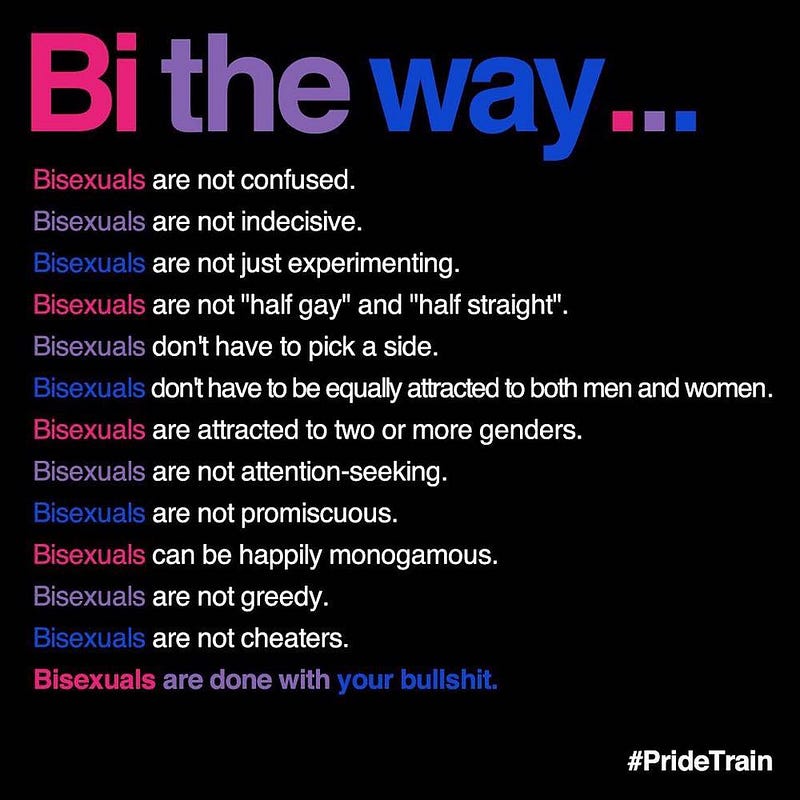
I am trying to not be cynical and enjoy the fact it is #BiVisibilityDay. But that would involve a certain level of dishonesty on my part if I claimed today was one I had enjoyed. It is a day that has been celebrated for 20 years yet bisexuality is not accepted in both the heterosexual and LGBTQ+ community — even though we reportedly make up 52% of the LGBTQ+ community.
A 2015 study found that gays and lesbians had nearly identical prejudice against bisexuals as heterosexuals. We are commonly stereotyped as greedy, cheaters, confused. And in my experience women don’t want to date me once they find out my sexuality.
Because of this, we are statistically less likely to come out, with one survey finding that compared to 71% of lesbians and 77% of gay men, only 28% of bisexual individuals shared their sexual orientation. A different report found that bisexual individuals are prone to higher rates of depression, anxiety, self-harm and suicide, all of which are embedded in biphobia. Not to mention, Bi youths have a higher incidence of suicidal thoughts and suicide attempts than gay and lesbian youths as well as a higher risk of truancy and bullying.
Lewis Oakley, a bisexual activist and writer noted in the BBC article, The Bisexuality Dating Dilemma, that:
It seems like it’s socially acceptable, to be honest about your bisexual discrimination. Nobody has ever turned to me and said: ‘Eww you’re mixed race, I couldn’t possibly date you,’ but I always hear that my bisexuality doesn’t fit with people’s needs.
A lot of gay men came out as bisexual themselves to come to terms with their sexuality, but they fail to realise that whilst for some people bisexuality is a stepping stone, for others, it’s a destination.
When bisexuals come out, they are immediately putting off people they could be with, because both gay and straight people reject them.
Celebrating the day for me feels shallow. Due to the intersections of my identity, I do not feel seen. So all I can do instead is bring awareness, firstly of my lived experience as a bisexual Black woman. And secondly, of the plight of bisexual individuals in society.
This Bi Visibility Day I ask for those reading this piece to check their biases. Also to read around to see how you may become a better ally. Do better. As documented I spent a long time denying my sexuality. But it is now a badge I wear with honour.
The majority (if not all) of my queer friends are bisexual. Without them, I probably would have never come out.
So I can not stress enough the importance of surrounding yourself with people who are like you. Who can support and guide you. Who remind you daily that your sexual orientation is valid.
To the Bi people reading this, I hope your day was wonderful. Bi Black people, know that I see you, even when others can’t.
ZUVA is an award-winning Leeds based spoken word artist, poet and freelance writer. Click here to join her weekly mail list to get her — Comprehensive Guide for True Beginners — Things I Wish I Knew Before Publishing My First Piece. It contains over 16 articles by 12 different authors on everything you need to know before publishing your first piece here.
She is the editor of An Injustice! A intersectional millennial publication. Check here for now to join!


