The Difference Between Art and Entertainment
Society has become obsessed with climax and resolution

Art, at its best, mines the paradoxes that make humans human. It celebrates our ability to embrace ambiguity, and to experience this sustained, unresolved state as pleasurable, or at least significant.
Commercial entertainment, by contrast, has the opposite purpose. The word entertain — from the Latin for “to hold within” — literally means “maintain,” or “continue in a certain condition.” Its goal is to validate the status quo values by which we already live, reinforce consumerism, and — most of all — reassure us that there is certainty in this world. Not only do we find out whodunnit, but we get to experience a story in which there are definitive answers to big questions, villains to blame when things go wrong, and a method for administering justice. These plots depict a character we like (usually a young man), put him in danger, raise the stakes until we can’t take it anymore, and then give him the solution he needs to vanquish his enemy and win the day, at which point we can all breathe a sigh of relief. It’s the stereotypically male arc of arousal: crisis, climax, and sleep.
This arc of tension and release, or complication and cure, has dominated our culture and defined not only our entertainment but our businesses, religions, and life journeys. Entrepreneurs don’t want to create a company that succeeds by sustaining itself; they want a “home run” so they can sell it to someone else. Worshippers turn to religion less to explore their relationship to creation or ethics than to guarantee their own salvation or claim to virtue. We play life as a board game with winners and losers, where we “end up” in a certain career, marriage, and socioeconomic class.
We have been trained to expect an answer to every question, and an ending to every beginning. We seek closure and resolution, growing impatient or even despondent when no easy answer is in sight. This fuels capitalism and consumerism, which depend on people believing that they are just one stock market win or product purchase away from fulfillment. It’s great for motivating a nation to, say, put a man on the moon before the end of the decade, or go to war against some other nation.
But it doesn’t serve us as we attempt to contend with long-term, chronic problems. There’s no easy fix for climate change, the refugee crisis, or terrorism. How do we even know when we’re done? There’s no flag to plant, no terms of surrender. Motivating a society to address open-ended challenges requires a more open-ended approach — one that depends less on our drive toward climax than on our capacity for unresolved situations. Like life.
It requires living humans.
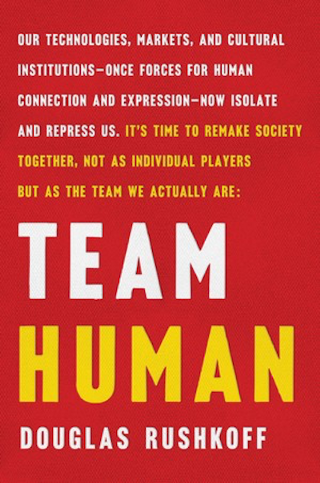
This was section 60 of the new book Team Human by Douglas Rushkoff, which is being serialized weekly on Medium. Read the previous section here and the following section here.