
The Delusion of Clocks
Explaining the real reason you never have time, and what to do about it and Day 2 of my 100 day writing challenge
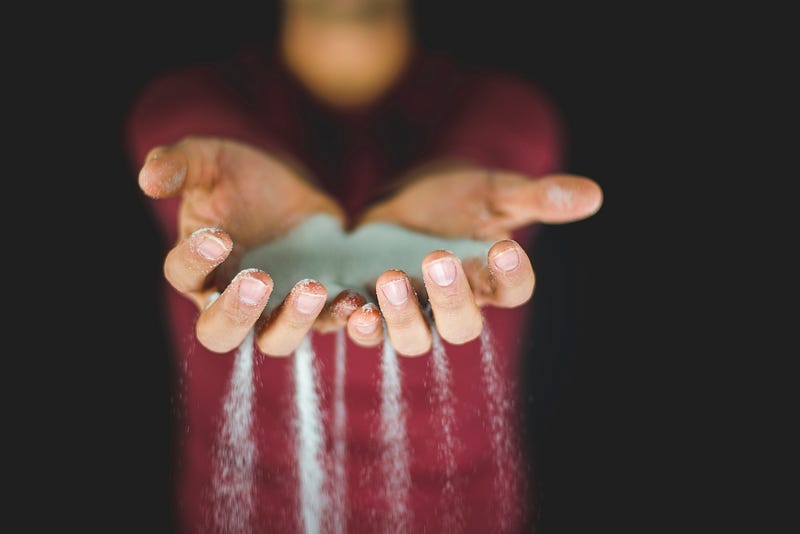
When last did you hear someone say, ‘I don’t have the time?’
Recently? Me too.
It was the truth, but they lied. This lie/truth dilemma is the delusion of the clocks, and in this article, I’ll try to explain why we never have time and the one thing we can do about it. Let’s start from what we know — this lie/truth is an excuse.
Time is a created thing. To say “I don’t have time” is to say “I don’t want to”. Lao Tzu
We don’t want to do it
It’s an accepted, valid excuse, not having ‘the time to’. Lao Tzu was succinctly correct. When we do not want to undertake the task at hand, we use this globally accepted fallacy.
‘Can you get the laundry done?’ I don’t have time. ‘Did you call your mum?’ No, I didn’t have the time. ‘Have you read my article yet?’ So sorry, I have not had the time.
Substitute ‘I don’t want to.’
It’s the perfect excuse. We are all busy falling short of commitments. The excuse is shared reality, so we tick-tock through each day, 24 hours at a time. Then days go, then the years. We thought we measured time, but right at the end, we realise the truth time measured us — and found us wanting.
Time has us
It’s simple. We don’t have time. Time has us.
This simple reason no one has time is: we do not have time. Nobody has time. It’s not something we own.
We are given time, but we do not own it.
Time, in its simplicity, helps us make sense of the passing of life. The measurement of time is a human construct using the clock and calendar, which is based on the sundials and the circular predictability of seasons. Hence we have the quandary, and Einstein’s theory of relativity did not help. Time, an ethereal, shadowy, moving notion has become a scientific, visual, and predictable fact is founded on human measurement, not reality. We were doomed to fail right from the start.
No one was ever going to ‘have’ time.
The clock deludes us into thinking of our life as having seconds, minutes, and hours, but the reality is far from a simple tick-tock.
‘I’ll have the report ready in a day.’ We say. ‘Lunch will be ready in an hour.’ Your mum confirmed. ‘I’ll spend a couple of hours on Facebook before bed!’ Your daughter yells.
This is our accepted reality. It’s wrong.
Andrew Jaffe wrote this in his brilliant article, The illusion of time published in The Nature Journal 2018.
According to theoretical physicist Carlo Rovelli, time is an illusion: our naïve perception of its flow doesn’t correspond to physical reality. Indeed, as Rovelli argues in The Order of Time, much more is illusory, including Isaac Newton’s picture of a universally ticking clock. Even Albert Einstein’s relativistic space-time — an elastic manifold that contorts so that local times differ depending on one’s relative speed or proximity to a mass — is just an effective simplification.
The University of Helsinki “What is time?.” ScienceDaily, 15 April 2005.
The concept of time is self-evident. An hour comprises a certain number of minutes, a day of hours and a year of days. But we rarely think about the fundamental nature of time.
The measurement of time has made us (humans) think that we have power. We assume we have 24 hours in a day, and once we fill up those 24 hours, then we don’t have time for anything else.
The real reason you never have time is simple. You never had time. You don’t have time for anything. Research, Google, Experiment with time and you’ll discover the fundamental truth. Nobody has time.
The ownership of time belongs to a power beyond any human.
Wrap your brain around this question, how long is a minute? The ticking clock can give you an answer. But reality’s response is far from its delusion. For someone waiting for test results, a minute is an eternity. For another, spending time in the arms of a loved one, a minute is a flash.
In those moments, we do not control the passing of time; the clock is meaningless. We can’t explain why a second takes forever.
‘I had a long night,’ the insomniac said. ‘Is it morning already? Where did the night go?’ Both said of the same seven-hour period.
Physicists and scientists over the years have tried to unpack the concept of time. From Einstein to Barbour, exploring from a two-dimensional to a four-dimensional construct. Does time move forward? Or is time now? What is time?
You may think you have 24 hours in a day, but you don’t. You just think you do, everybody does, so it became an accepted reality.
For someone waiting for test results, a minute is an eternity. For another, spending time in the arms of a loved one, a minute is a flash.

Doing something about the lack of time
If we agree we don’t have time, never had, never will. Then what?
Well, next time you feel you don’t have enough time to do everything you need to do. Don’t beat yourself up. Don’t feel guilty. It’s not an excuse. It’s a shared reality. Time measures how we spend our life. It goes ahead of us and looks back at us, filling our brains with moments and memories.
The important thing is that we have control over the moments and memories that time helps us understand. This is our human superpower. Although we don’t have time. We can make time.
Every ‘free’ human can control the story that time writes about them. We do this by making time for the narrative we want. The Tombstone principle inspired by Dr. Jim Loehr and echoed by Jack Hayford in his success principles asks people to consider what they would like to see written on their tombstones and to give time (decide) in alignment with that narrative.
Time measures how we spend our life. It goes ahead of us and looks back at us, filling our brain with moments and memories.
Use time properly
Do this one thing
If time gives you a sense of the passing of life, then you need to take control of the passing of life. Take control of the memories you make. Here are three very simple tips.
1Decide the life you want to live. What do you need to do in life? There are categories of tasks in life. These are some of mine, make yours up, and identify the aspects of life you need to make time for.
- What do you need to do for physical sustenance? (eat, sleep, drink, exercise...)
- What do you need to do for mental sustenance? (hobbies, work…)
- What do you need for emotional sustenance? (relationships, hobbies, responsibilities, work…)
- How do you impact others? (relationships, hobbies, work…)
2Do not allow things to crowd up time. Remember, you don’t have time. Mindless scrolling on social media, the pursuit of vanity, empty distractions, waiting on others. If you allow these to fill up your time, then you’ll never create the memories you want. Time simply watches and gives the report at the end.
Ruthlessly ask yourself these questions:
- What areas of your time are being controlled by others? And is there anything you can do about it?
- In which areas of life, can you take your destiny into your hands?
- In areas where you are not in control, can you align your mindset with your purpose?
- Where are you losing time, or in which areas can you gain back time?
- Am I strategic enough — am I using less time to achieve more, or is it the other way round?
3Make the time for what matters. Next time you want to do something and don’t have the time, say the words. I will make time to (insert activity). If you cannot complete the sentence honestly, then ask yourself why. If you answer honestly, then that's the first step to using time properly. Here are some of my answers.
- I can’t make time to… because I don’t feel like Sound like a priority task that you are procrastinating on, either due to laziness, or lack of clarity, or perceived lack of enjoyment in carrying out the task.
- I can’t make time to… because I have other more important things to do Seems like you already have your priorities. Perhaps check that these are intentional priorities you made, and you are not drifting aimlessly with a vague knowledge of what's important or not.
Whatever your responses are, be honest, at least to yourself. Time is going to recount how you spent your life. Be one step ahead in the game of life, and make time work for you.
This is our human superpower. Although we don’t have time. We can make time.
Day 2
This is the second of 100 Days
I am re-introducing an old story. This is about walking for good posture.
I am reconnecting with Dr. Jackie Greenwood, Andrew Jazprose Hill, Roz Warren, Deepak Sharma and Jim Latham and I am discovering new writers to follow and read Luke Brennan Brandon Fong Tatiana


