
Travel Adventures
The Defiance of Street Art in San Juan, Puerto Rico
Globetrotters August Writing Prompt
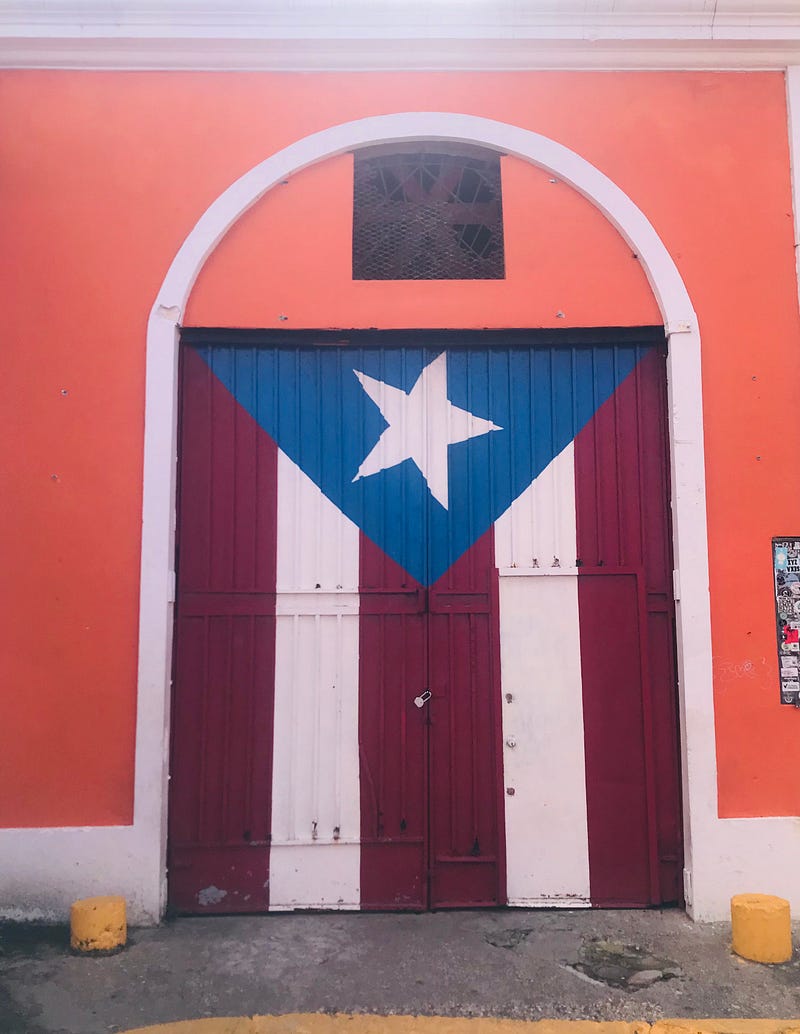
I once had in mind the idea to collect photos of street art from my travels and compile them into a book, complete with historical or contemporary context for what may have motivated the creation of particular pieces.
I still might do that.
But for now, I’ll focus here in article form on the place and its art that immediately leapt forward when I began reading this month’s writing prompt from the intrepid editors at Globetrotters: San Juan, Puerto Rico.
From where I was living at the time in Kingston, Jamaica, it was a relatively easy trip in December of 2021. I say relatively because travel between Caribbean islands and countries is often the opposite of straightforward, usually involving a layover in Miami or Panama City and therefore having to fly north first to go south or west to go east.
Puerto Rico is an interesting place, to be sure. On one hand, it’s the United States. And on the other, it is decidedly not.
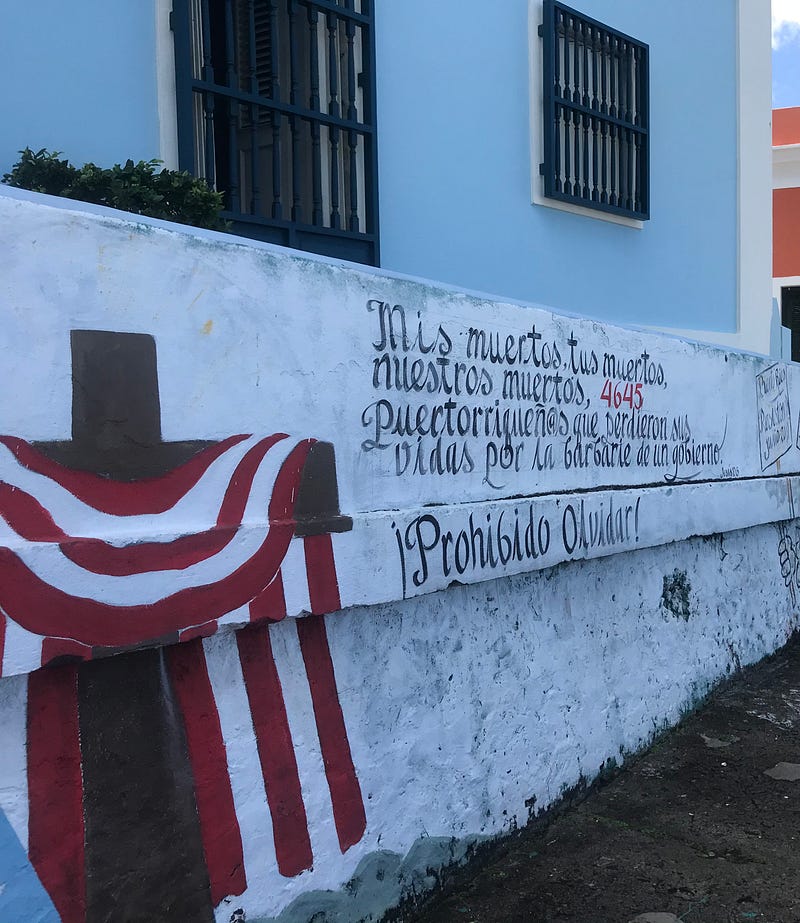
As a foreign observer of the US and its people, one of the things that stands out is the tight allegiance that many people have to their state or their particular region, while also holding onto their firm loyalty to their country as a whole. It might be a stereotype, and I’ve met plenty of great Americans in my travels, but the majority are often eager to tell you about where they are from.
Often in the first five minutes.
Often in a way that it should mean as much to you as it does to them.
I digress. But the reason I do that is to lead into the fact that in Puerto Rico, identity seems to not be presented as an allegiance to a place — as important as that is, as it might be to someone from Texas or Michigan. Those places have their own characteristics that make them special, while contributing something to the greater whole.
In Puerto Rico, rather, it is a defiance. A defiance that may have existed all along, or perhaps one that is more recently reborn. The island, you see, has been a possession of the United States since 1898, when the growing imperial republic defeated a declining Spanish one in the same war that enabled the US to take Cuba, the Philippines and Guam and then treat them as colonies and its people as subjects.
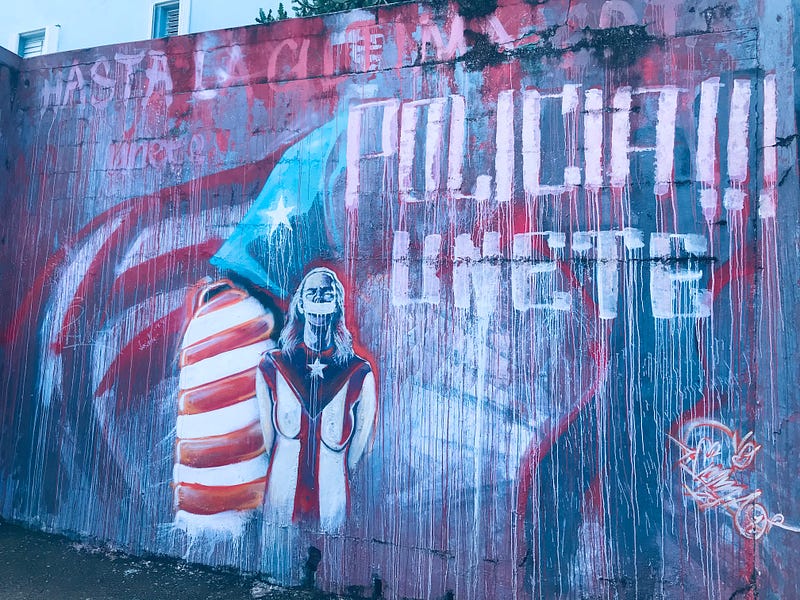
The Philippines got independence in 1946. Cuba, in 1902, though it was only after the Communist Revolution in 1959 that it slipped out under the American yoke, a battle which continues today, despite the United States’ best efforts to topple the government. Guam remains one large American military base in the Pacific, while Puerto Rico is officially an “unincorporated territory of the United States”.
It is neither independent, nor does it have full statehood. Its 3.2 million people, in addition to a diaspora that is 6 million strong are US citizens, however they cannot vote in federal elections, nor can they elect their own senators and representatives to the US Congress. They find themselves in a very strange limbo.
Several referenda have been held on the topic in Puerto Rico but things remain unchanged. Whether the island becomes independent, is granted full statehood or remains as it currently is, what is clear is that a strong sense of Puerto Rican identity exists both on it and amongst its people abroad.
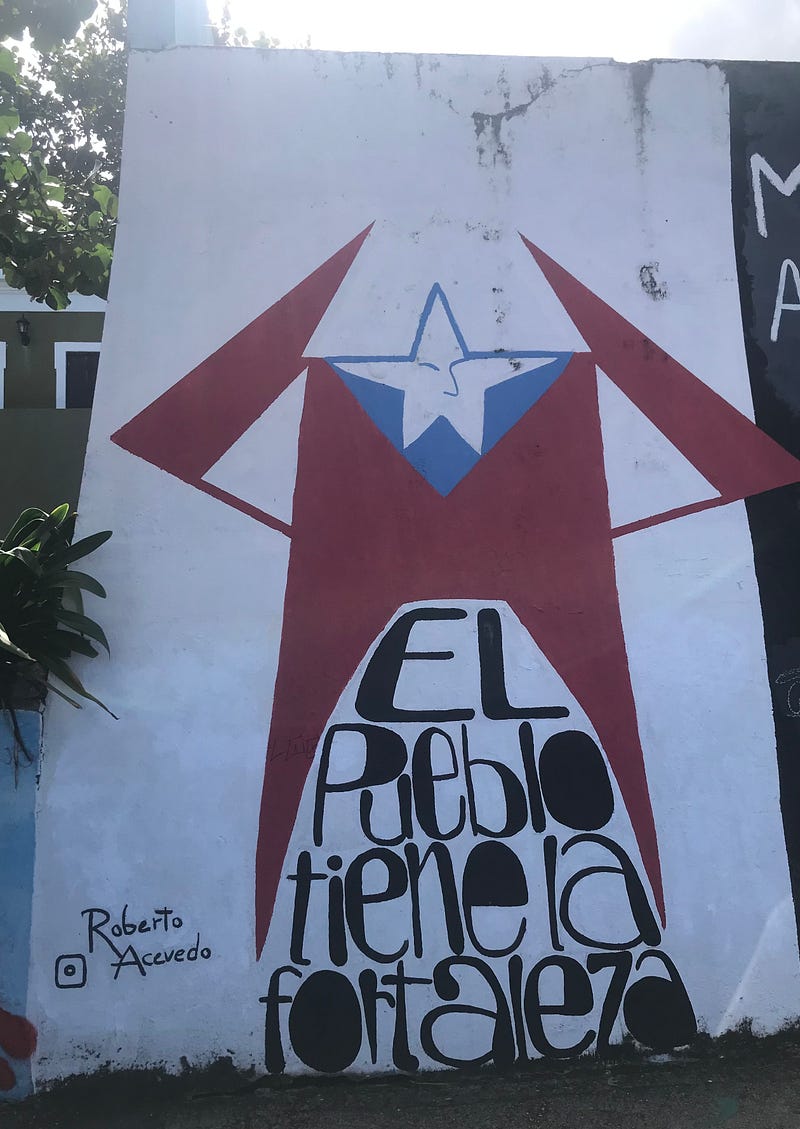
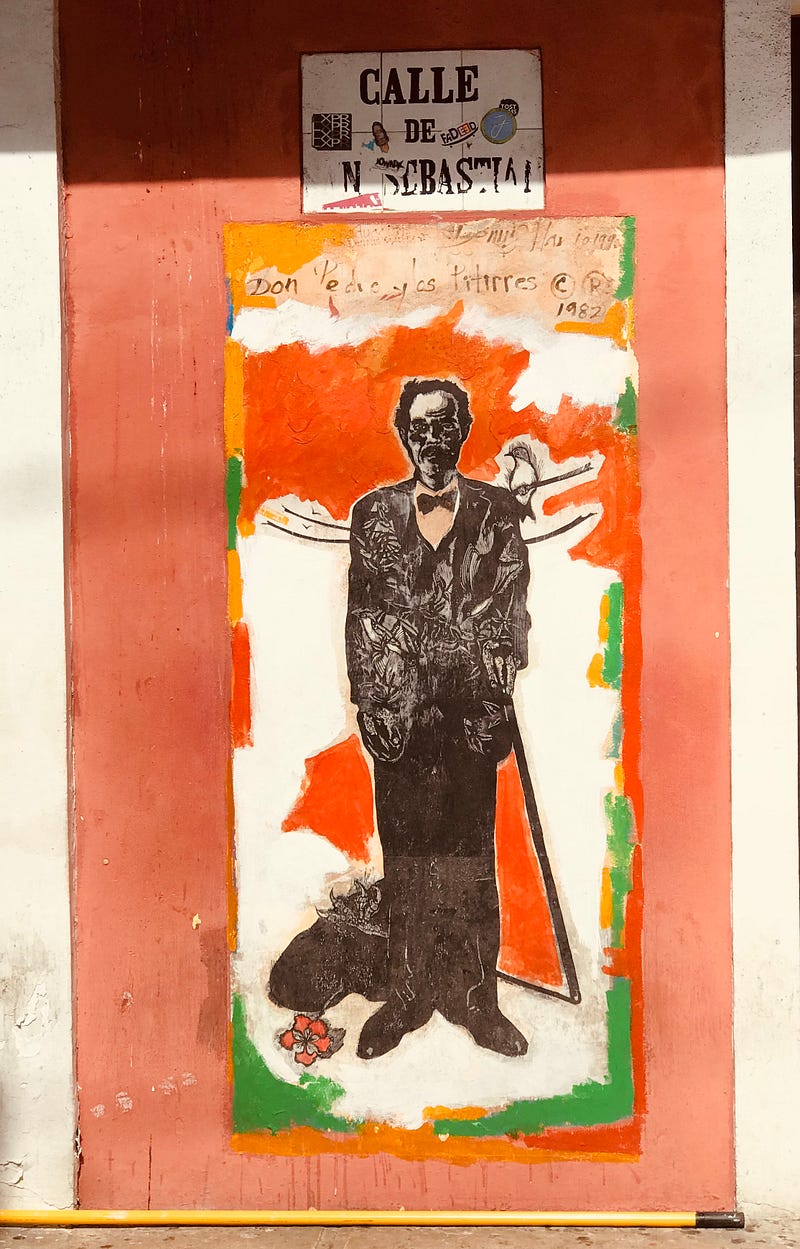
This is reflected very clearly and frequently in the public art that can be seen everywhere in the old town of San Juan, the capital city. Everywhere you look, visual reminders can be seen of the fact that many Puerto Ricans, or more accurately, Boricuas, as they prefer to be called, are not happy with the present state of affairs as a vassal territory of an empire that they believe cares little for it.
The image of Donald Trump and his wife throwing paper towels at people in the wake of the devastation of Hurricane Maria in October, 2017 springs to mind as all you need to know about the relationship in its present form.
I have but two regrets about my all too brief time in Puerto Rico: I spent too much of it in San Juan and didn’t get to see more of the rest of the place and while I wandered around in the old town, I spent more time looking at the visual art than photographing it.
Maybe that’s the idea. I’ll probably do the same if and when I ever get there again.
In Globetrotters you will find many fine writers and a team of editors dedicated to providing a space to enable them to bring us tales of their adventures around the world. My thanks to Anne Bonfert, Adrienne Beaumont 😇, JoAnn Ryan, Jillian Amatt - Artistic Voyages and Michele Maize for their tireless work on this.
Here are three articles that have stood out to me lately on this writing prompt!
Aaron Paulson brings us scenes from Toronto, where he once lived and recently returned to.
Erie Astin explores the art in a place I’ve never been (yet): Montana.
Matthew Bamberg is in one of my favourite cities, Mexico City for a close look at art and architecture at one university there.
I really do hope that you like what you have just read. If you want unlimited access to thousands of writers, consider a subscription to Medium. It will set you back $5 a month and if you use the link below, then I get a slice of that. Hasta la victoria, siempre.


