
Mexican Travel Surprise
Art and Architecture Meet at a Mexico City University Campus
World-class mid-century modern wonderland
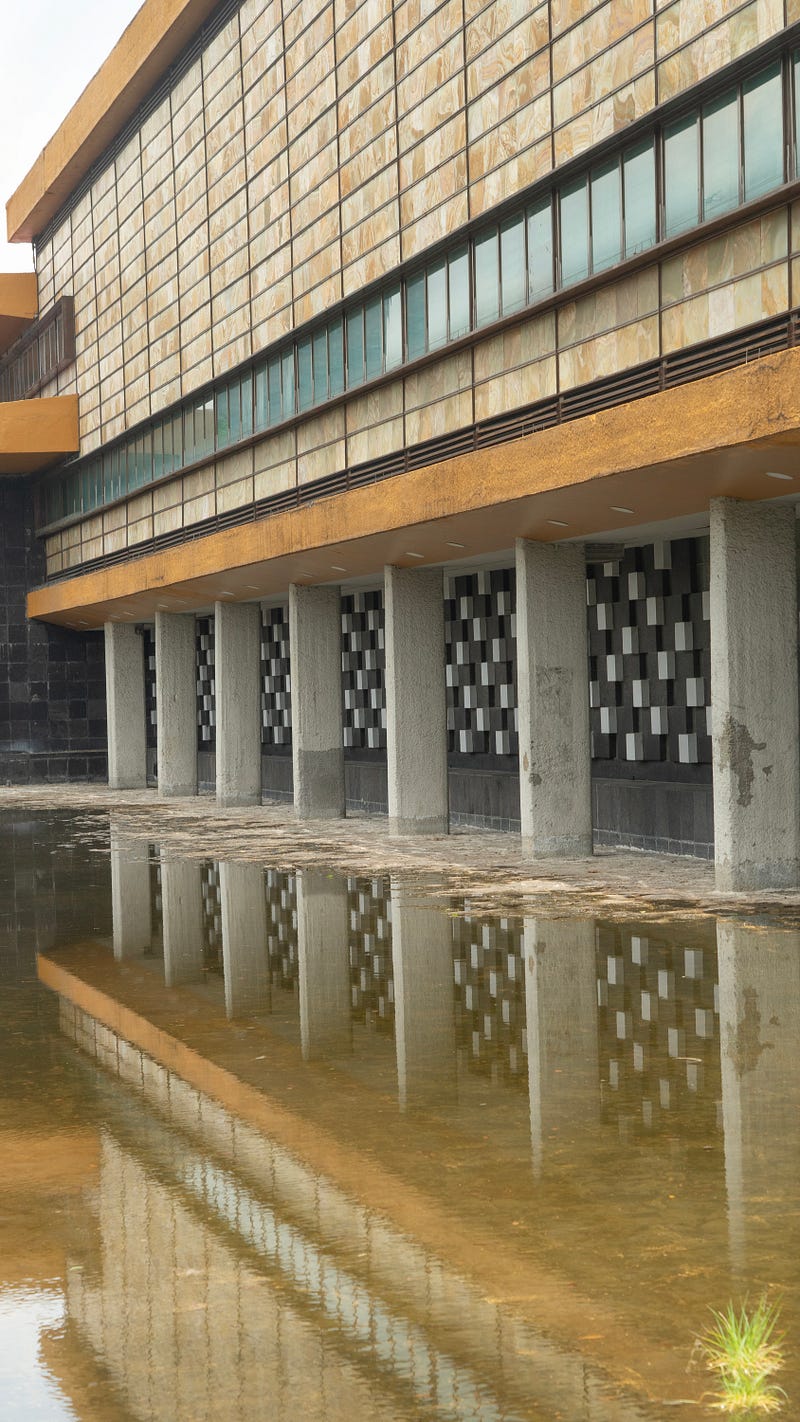
Mexico is a surprising country in terms of the post-WWII effort the government has initiated in the arts.
I wanted to find out for myself what exactly the deal was with so many Americans relocating to Mexico City. I had a hunch that some of the finest culture, history, art, and cuisine were to be savored in the sprawling metropolis.
Traveling in Search of Modern Utopia
Over the years I have become somewhat obsessed with architectural photography, primarily from the middle of the last century.
My goal over the past two decades was to document any leftover signage from all over the world that was erected from the 1920s to the 80s.
At first, it was just neon monuments (colorful during the day and flashing gifts by nightfall) that I wanted to visit and photograph.
These journeys led me down Route 66 in the early 2000s.
That infestation of curiosity grew into craving visits to as many mid-century architectural spots around the world that have not succumbed to the wrecking ball.
Shortly thereafter, I relocated to Palm Springs, a place synonymous with mid-century modern.
A Bucket List of Mid-Twentieth-Century Architecture Destinations
Next, I wanted to conquer the world of mid-twentieth-century architecture in places where it hasn’t been seen and written about ad nauseam in many United States publications, art galleries, museums and gift shops.
I traveled almost everywhere all at once over the next few years, encountering architectural gems that I have only imagined in dreams.
Mexico City had not been on my bucket list until reading about large numbers of people flocking there.
Before I knew it I was there, encountering one of the most engaging cities I’ve ever visited.
I took a tour of the Coyoacán neighborhood in Mexico City, finding a treasure trove of twentieth-century art history that included the home of artist Frida Kahlo.
On the tour, I asked the guide where I might find a cluster of mid-century modern architecture.
Instantly he reacted saying. “Go to the university. You’ll love it.”
The next day I experienced twentieth-century design superiority with a Mexican flare at UNAM, the Universidad Nacional Autónoma de México.
The unique buildings at the university soared into the sky in different directions, angled and curved steel, glass, and stone.
The reward: murals on select structures by some of the most talented artists in Latin America.
Mid-Century Modern Building Murals at UNAM
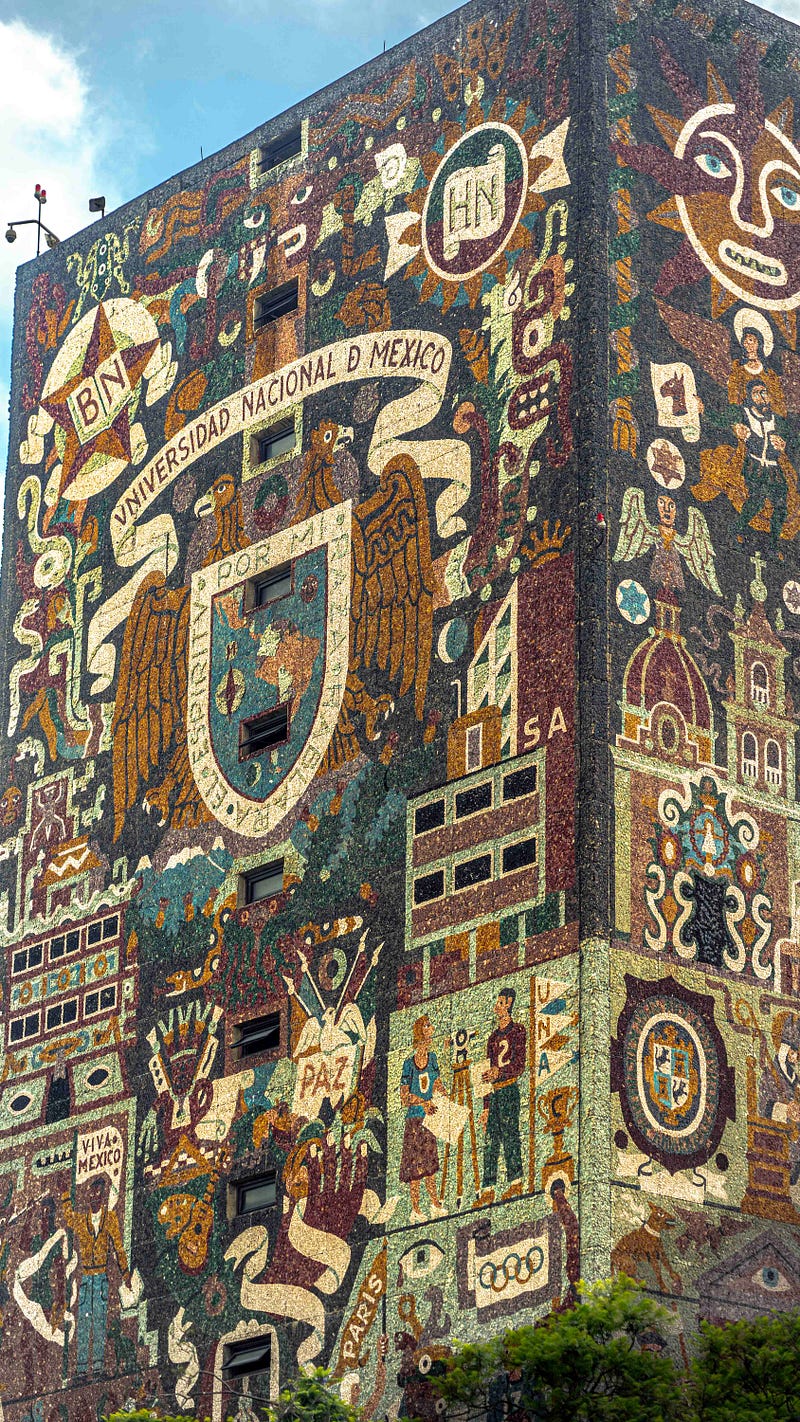
The large university campus in the unique bohemian neighborhood of Coyoacán contained a collection of world-class murals few tourists to Mexico City ever see.
The campus contains a number of unique works by stone artists whose works are a primary feature of many of the campus buildings.
UNAM’s library is a symbolic display of Mexico’s cultural transformation from pre-Columbian to Spanish colonial eras.
Stilts a-la Le Corbusier
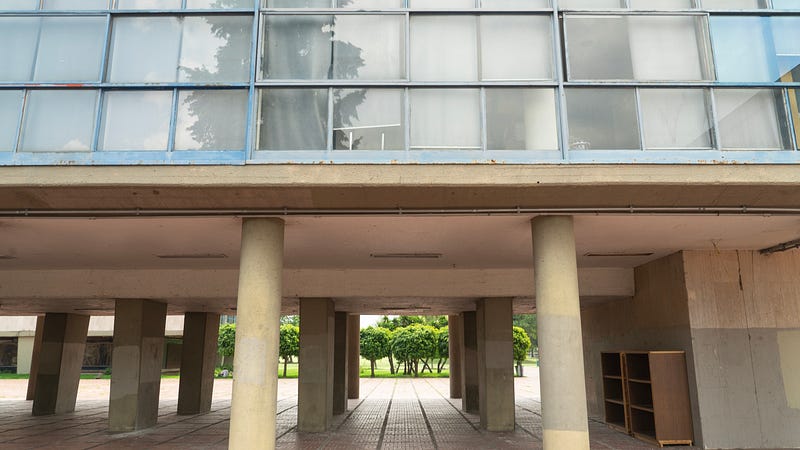
French architect Le Corbusier added stilts as a signature modern design to lift buildings up from the ground.
At UNAM, stilts are one of the many designs modeled after European designers in order to create ground-level views of mountain gardens that extend through many of the structures of the campus.
Curves
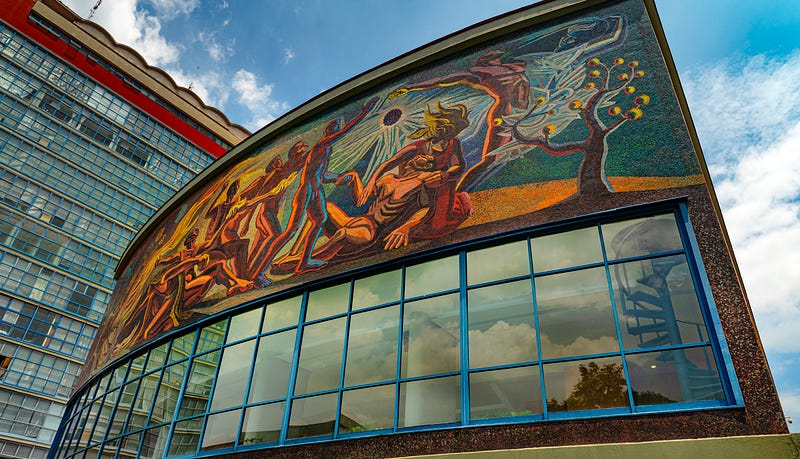
Finally, UNAM features a few buildings with curves, which are common in modern buildings around the world.
Art combined with architecture are fabulous features of UNAM, making it a must-see destination for any architectural or photography buff.


