The Death of the 7” EP
2024 will herald the 75th anniversary of the 7” vinyl record.

Can you believe it? The 7” is about to turn 75! However, the noble 7” EPs of 2024 are expensive!
Increasing production costs, shipping, Record Store Day, and the generally inflated cost of vinyl — The 7” is on its deathbed. Or is it?
I live on an island, and everything that has to be shipped here is expensive. That’s pretty much any vinyl record, irrespective of the label’s location.
If you treat the '90s like it was ten years ago, as I’m inclined to do, you were looking at $6 or $7 to get yourself a 7” delivered from any address in the world right to your doorstep. New EPs in a store? $5AUD. Before the Compact Disc swept the record store shelves bare of vinyl, an EP was a quarter the cost of a full length, which is pretty damn reasonable.
One might argue that the equivalent EP today, approximately $38AUD to land in the suburbs outside of Melbourne, is effectively a quarter of a full length still, but I’m not shelling out $150 for a single LP, despite acknowledging that this is not the wildest proposition you’ll be made when pursuing the latest and greatest on the most classic of all musical formats.
Records have found their way up there with other essentials, petrol, utilities — all the stuff we need but can’t quite afford. And if projections hold, the LP will thrive for years to come, but its little brother, the beloved 7” with its glossy, full colour covers and occasionally oversized centre hole are being priced out of existence. We have arrived at the stage of the vinyl record’s most aggressive price gouge.
Who cares about those weird little records anyway?
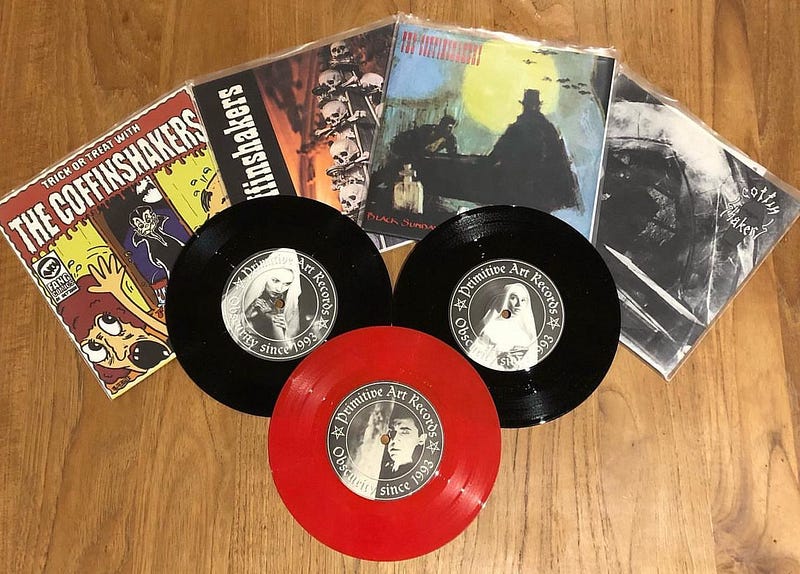
Ugh! I do! I mean, sure, it’s annoying that you gotta flip them every three minutes or so, and I can never remember what speed each is set at, and most of the labels I’ve supported over the years never bothered to include that detail on the label and… deep breath… but as a concise and contained invitation to musical nirvana, they can’t be beaten.
The intro to the TV show Happy Days had that classic jukebox scene — the 45 with the massive centre hole on the jukebox. That scene is perfectly synonymous with rock ’n’ roll. While that was one indication that the record was a classic 45, the smaller hole iterations were not bound by such standards.
Generally comprised of an A side (the lead cut) and a B side (a non-album slice), fans would be able to pick up a single in advance of the full-length album release. This is the single format which was common during the 1970s and 80s. A close cousin, the double A-side featured two “lead” tracks, the sentiment being that both would have been good enough for inclusion on the album they were chosen to represent. It’s an interesting little snapshot into the psyche of the album itself to consider the typical B side as having not made the grade.
Wow, these little records have character, after all!
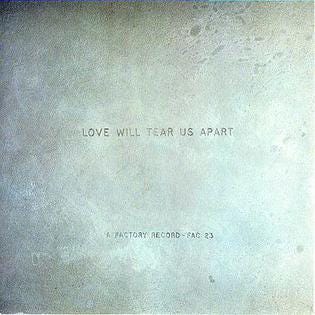
Album singles weren’t the only purpose of the 7”, and plenty of acclaimed artists released 7” records featuring tracks that were never featured on albums. And I don’t mean B sides either! The Beatles, The Smiths, and Joy Division (to name a few) each released non-album material on 7” format — and some of these cuts being their most feted — particularly in the case of Joy Division whose Love Will Tear Us Apart from 1980 is as famous as their often misplaced sleeve design.
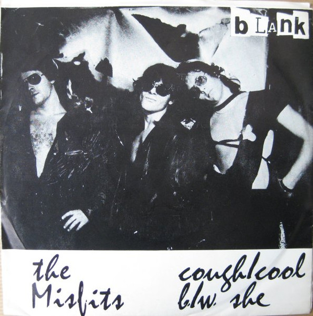
Did you know? 7 of the 25 highest-selling vinyl records on Discogs were 7” EPs. 10K for a Misfits 7”!!! I agree that She was their most immortal song, but.
Why are they called EPs, then?
EP translates to Extra Play, and at its simplest, there are more than the conventional two songs of the traditional 7” release. The album teaser singles were less inclined to be bound to the two-track convention, but the EP was designed to maximize the playing time of the record, featuring four to six tracks, depending on length. The EP format followed the initial 7” within a couple of years and experienced varied degrees of popularity across the globe, particularly in the UK and Sweden, less so in the US and Canada.
The Philippines even had a stab at labeling these EPs as mini-albums, going as far as to emulate the sleeve design of the album from which the tracks were pulled. It is purely coincidence that these share a namesake with the 12” mini-album concept from the 80s that was popular with European metal releases and has been sustained to this day.
Contemporary 7” releases.
The 7-inch format is still being produced, though I see less of these made available as stand-alone releases through the indie labels. The single concept still exists, as do most of the conventions mentioned above, but the motivation is less promotional and more vanity oriented. Any elaborate packaging that can be applied to 12-inch LPs can also be assigned to 7” records.
But with limited distribution channels for vinyl — they don’t make music stores like they used to — there are fewer opportunities to buy 7”s in stores, so it’s mail order from labels, distros, and services like Discogs or Bandcamp.
Will this format be sustained?
Approx 10% of the catalogue labeled New Releases on the Sub Pop site are 7” records. Some genres tend to skew more heavily on this format than others, but 10% is a reasonable ratio.
Not everyone has the pleasure of living on an island, though the relative cost of the 7” is high compared to full-length records. From a recent trip to Japan, I noted that the average cost was 40 to 50% of a relative full length, and these were fairly generic metal EPs — nothing obscure or in demand. While Japan is also an island, music, particularly secondhand vinyl, is extremely well-priced.
The manufacturing cost of a 7” can be approximately 60% of a 12” which naturally contributes, but more pertinently, as long as printers and pressing plants still have the facilities to manufacture 7” records, there’s no explicit death sentence pending announcement.
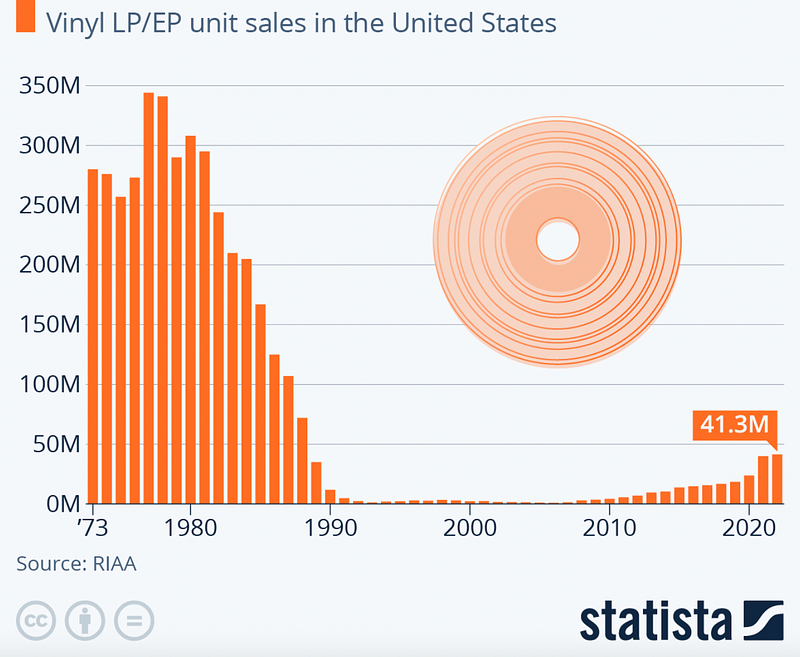
And considering record sales continue to increase — by the end of 2022, vinyl was back to pre-1990 numbers in the US, and in 2023, outsold CDs for the first time in 33 years, noting that may not be as illustrious a statistic as initially read, EP fanatics can exhale. There’s still a colossal secondhand market to contend with.
The Solution?
It comes down to rationalising purchases. It’s harder to make unnecessary 7” purchases, and the lofty costs of shipping further complicate this. It requires the completists to become more creative or more pragmatic.
Buying trips are nice if you can manage them, but even then, it’s still predicated by whatever the shops are carrying. We see countless examples of out of print records being reissued in absurdly low numbers for reasons I can’t readily conceive.
If you know someone reliable in a particular part of the world you know you’ll visit, buying records and EPs over Discogs and having your friend compile them for when you visit is a cost-effective approach. Again, shipping is so expensive now, and you’re often paying taxes in two territories, so if you have the weight allowance when returning home from your trip, this is a noteworthy method but still risky.
With newer revolutions (pun intended) like Greenyl, the first eco-friendly vinyl record promising more efficient production processes, and ideally, scalable technology that can be adapted to locations like Australia, which already has three independent pressing plants, provided the interest in vinyl as a music format sustains, the 7” ought to be one of the boats that continues to rise with that tide.