
The Day Our Melting Pot Boiled Over — New Orleans
The Enslaved People’s Uprising of 1811 — Led by Charles Deslondes
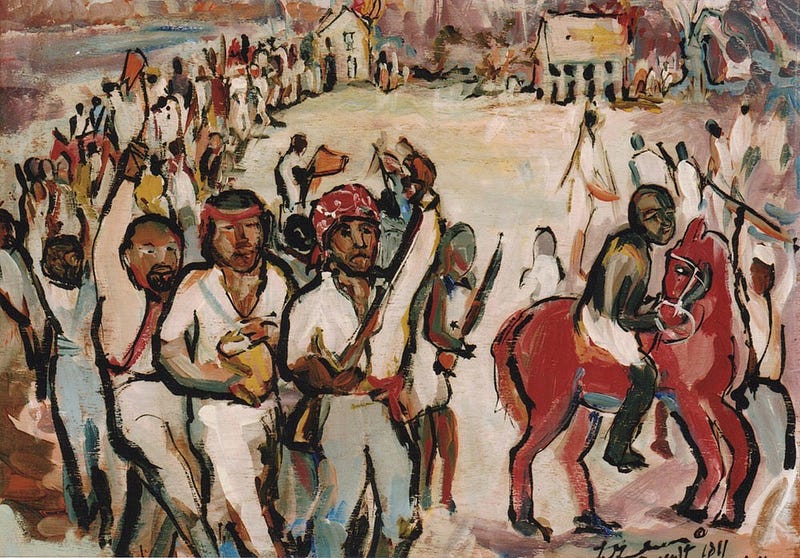
“Between the 17th and 19th centuries, enslaved Africans and African Americans in British North America and the United States staged hundreds of revolts” (Blakemore, 2019).
New Orleans, at the mouth of the mighty Mississippi River, is America’s melting pot. Initially, the city consisted of enslaved Africans, Carrbibeans, Indigenous tribes, and European colonialists. Prepared by African chefs, Gumbo, the Southern pride and joy, signified an homage to West African stew.
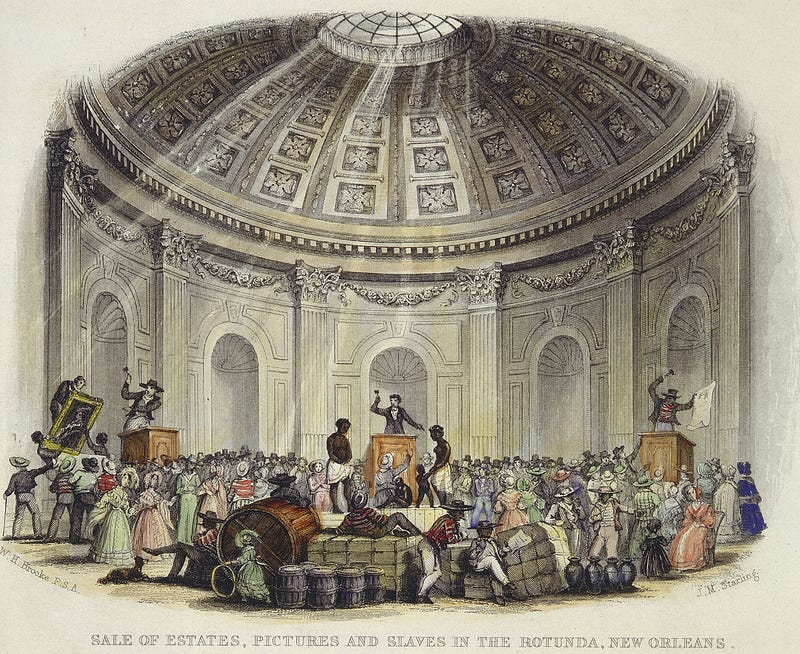
Gumbo is an African word for okra. The stew generally consists of filé, a roux, meat, and vegetables, served with rice. New Orleans puts American history into bowls, delivering it to its visitors. In the infamous French Market, originally an Indian trading post, people from across the globe traded spices, produce, clothing. Slave outposts dispersed throughout the city. European colonialists sold African men, women, and children to the highest bidder.
Initially, the Chitimacha Tribe governed the area that became New Orleans. Their turbulent relationship with French settlers resulted in losing the majority of their ancestral lands and their tribe’s freedom.
“Iberville, an early French explorer, encountered the Chitimacha and one of their subdivisions, the Washa along the Mississippi River’s shores in 1699. In 1706, as a response to slave raids and French aggressions, a group of Chitimacha killed St. Cosme, a priest and slave owner, and several members of his party, who were missionaries to the Natchez Tribe.
Bienville responded to this by convincing other tribes to help them make war on the Chitimacha. This war lasted until 1718 when a Chitimacha Chief met Bienville in the fledgling city of New Orleans. A treaty establishing peace was signed, and a ceremony was held, which ended the long war in which the majority of the tribal members were annihilated. In the twelve years of conflict, many Chitimacha were forced into slavery and were the most enslaved of any population in Louisiana during that time-period” (Tribal History).
Today, many New Orleanians share an African and Chitimachan heritage because of their enslavement. They once held 5,440 acres of land. After suing the federal government for their lands, they maintained 963. However, their enslavement muddied the roux of their ancestral line. Thus, not all tribesmen or women know their heritage.
Historians falsely insist that Iberville and Bienville held noble characteristics. However, starting a war with allies and enslaving people should not be described as idealistic behaviors. New Orleans Streets, named in their honor, illustrate the will of the white ruling class who committed war crimes against the Chitimacha Indians and African people. If New Orleans is a melting pot, it melted through the heat of colonial invasion.
French colonists founded New Orleans in 1718. As a major port, the city became a military asset. The control over New Orleans tottered between French and Spanish rule. The architecture of the French Quarter and Uptown echoes a neo-classical and Spanish colonial style. People travel to observe creole cottages, townhouses, shotguns, and bungalows. They love to experience the annual Mardi Gras carnival and eat decadent food.
“Most New Orleanians know of Deslondes Street in the Lower 9 and the bounce songs that rep it, but the story of Charles Deslondes is often left out of history” (Chenier, 2020).
Historians describe Charles Deslondes as a Creole Black man, born in San Domingue, Haiti. Sold to Jacques Deslondes, he worked as a slave driver and used the trust slave owners had for him to lead an uprising. Nevertheless, New Orleans high school textbooks never name him or his crusade in the pursuit of liberty.
The Enslaved People’s Uprising of 1811 was the day the melting pot boiled over. Historians do not agree on what started the revolution. However, some suggest that Charles’ Haitian origin was relevant to the case.
“The Louisiana Slave Revolt of 1811 was the largest slave insurrection in the history of the United States. The revolt was carried out by enslaved men and women, house servants and field hands, some born in Louisiana and others recently arrived from Africa and the Caribbean. Bound to the sugar plantations in St. Charles and St. John the Baptist Parishes, these slaves together decided to build an army and fight for their freedom” (Paper Monuments).
As Charles Deslondes guided his troops towards New Orleans, between two and five hundred enslaved Africans, Creole, and Free Black people joined the march. Their second-line lasted for two days as they fought in pursuit of freedom and happiness. They played music as they marched — some wore uniforms, taken from a plantation.
“Led by Charles Deslondes, a slave believed to have arrived in Louisiana from Haiti, the revolt began on January 8 on Manuel Andry’s plantation near present-day LaPlace. Armed with pikes, axes, shovels, and a few rifles, the army of the enslaved began its two-day march in military formation down the east bank of the Mississippi River. Waving flags and beating drums, the rebels burned plantations, crops, and storehouses. As it marched on New Orleans, the army grew as slaves rushed out from the plantations to join the fight. Witnesses estimated that the army had grown to between two hundred and five hundred slaves” (Paper Monuments).
The revolution that so many enslaved Africans wanted finally arrived. They joined; their desire for freedom exceeded their fear for white supremacists. Their victory was short-lived. William C.C. Claiborne, the governor of the territory, called for the militia to shut down the rebellion. After two days, local authorities brutally slaughtered the enslaved Africans, Creoles, and Free Black people. New Orleanians will recognize the name Claiborne, an Interstate, and street, running throughout the city. Like in many Southern cities, white supremacists are upheld as heroes, denigrating non-white people.
“It was really brutally put down,” Gwendolyn Midlo Hall, an author and historian at Michigan State University, tells Bacon-Blood. “It was incredibly bloodthirsty in the way the elite put it down, cutting people into little pieces, displaying body parts.” The brief battle killed dozens of the fighting slaves. The surviving leaders were rounded up to face a tribunal on January 13 and many were sentenced to death by firing squad. (Fessenden, 2016)
Despite the consequences, Charles Deslondes knew he wanted freedom. Those who followed him and fought for liberation sacrificed their very lives just for a taste of liberty. White New Orleanians valued Claiborne because suppressing Black liberation was honorable in their eyes. Til this day, his name adorns streets and highways, anonymous with daily travel.
Americans of all colors should understand that the Black Lives Matter protests are part of a long fight for Black liberation in America. Each generation pushes the agenda forward. While colonialist ideology is a constant opposing factor in the fight for racial equity. Nevertheless, not even the white-washing of history can change that.
- Author’s Note: This uprising had several names. Some called it The Louisiana Slave Revolt of 1811, The Enslaved People’s Uprising of 1811, or German Coast Uprising — — the name given to the revolution depends on the perspective of the individual telling historical information.
More Articles Curated in Race, Equality,
References:
Blakemore, E. (2019, November 08). How two centuries of slave revolts shaped American history. Retrieved August 03, 2020, from https://www.nationalgeographic.com/history/reference/modern-history/two-centuries-slave-rebellions-shaped-american-history/
Chenier, C. (2020, May 05). Charles Deslondes & The Forgotten Revolution of 1811. Retrieved August 01, 2020, from https://www.noirnnola.com/post/2018/01/08/charles-deslonde-the-revolution-that-history-forgot
Fessenden, M. (2016, January 08). How a Nearly Successful Slave Revolt Was Intentionally Lost to History. Retrieved August 01, 2020, from https://www.smithsonianmag.com/smart-news/its-anniversary-1811-louisiana-slave-revolt-180957760/
Paper Monuments et al., “The Enslaved Peoples’ Uprising of 1811,” New Orleans Historical, accessed August 1, 2020, https://neworleanshistorical.org/items/show/1402.
Tribal History. (n.d.). Retrieved August 01, 2020, from http://www.chitimacha.gov/history-culture/tribal-history
Quotes. (2020). Retrieved August 01, 2020, from https://www.malcolmx.com/quotes/


