avatarCarmen Ballesteros

Free AI web copilot to create summaries, insights and extended knowledge, download it at here

4427

Abstract

250 million euro is one in 140 million.</p><p id="a1ba">We have 300 times more possibilities to die by a flesh-eating bacteria (1 in a million) than winning the most popular lotteries in the United States (<a href="https://www.thebalance.com/what-are-the-odds-of-winning-the-lottery-3306232">one in 300 million</a>). The regular lottery offers a biggest chance, one in 15 million.</p><p id="ba70">So, being fully aware of this, why the heck do I play?</p><p id="0e80">Because this one is different. It’s made to be shared. Almost everybody is involved, so it also means <i>fun</i>. And I never miss an opportunity to have fun.</p><h2 id="d57b">The chances to win the Christmas lottery</h2><p id="924e">The chance to win the big prize is bigger than any other lottery. 1 in 100,000 (0,001%). Still pretty slim.</p><p id="beea">So again, why do we play???</p><p id="b138">Because as I said, it’s made for sharing. There is not only one prize but 15,304. That is a 15,3% chance to win something.</p><p id="6169">I usually belong to the other 84,7%. But some years I won a few euros.</p><p id="af03">What we love here is the centenary ritual.</p><p id="97d7">A normal lottery lasts 5 minutes, or the time it takes to select 6 numbers from a drum. Here it lasts 3 and a half hours, starting at 8:30 am. This is briefly the process:</p><ol><li>The lottery commissaries show the wooden balls to the public. They are stored in a metal rack.</li><li>The commissaries empty those structures into a big transparent hopper.</li><li>One commissary empties the hopper into the drum.</li></ol><figure id="0947"><img src="https://cdn-images-1.readmedium.com/v2/resize:fit:800/1*yjZZ0IvK5RgHMPCnGM25zQ.jpeg"><figcaption>From the left: The metal racks that contained the numbers, small drum with prizes, and transparent hopper emptying the balls into the big drum. Pictures from the National TV broadcast. Full program <a href="https://www.youtube.com/watch?v=a5zeJAJA3n8">here.</a></figcaption></figure><p id="41e4">Once all the balls are in place in both drums. Students from St. Ildelfonso’s School enter the stage. The school opened in 1543 as a home for orphans from Madrid.</p><p id="a62b">Since the year 1771, a selection of those children became part of the National Lottery, singing the numbers and the prizes in an unmistakable tune. And from 1999, non-orphan students were invited to sing, too.</p><figure id="0ba9"><img src="https://cdn-images-1.readmedium.com/v2/resize:fit:800/1*7OuXfPTx-6n_o4_7Py-lNQ.jpeg"><figcaption>Children entering the stage. Screenshot from <a href="https://www.youtube.com/watch?v=a5zeJAJA3n8">here</a>.</figcaption></figure><p id="1d60">One of the biggest national traumas was the year Spain adopted the Euro, it sounded better when they sang it in Pesetas.</p> <figure id="6bf6"> <div> <div> <img class="ratio" src="http://placehold.it/16x9"> <iframe class="" src="https://cdn.embedly.com/widgets/media.html?src=https%3A%2F%2Fwww.youtube.com%2Fembed%2FFYfPUbfV99A%3Ffeature%3Doembed&amp;display_name=YouTube&amp;url=https%3A%2F%2Fwww.youtube.com%2Fwatch%3Fv%3DFYfPUbfV99A&amp;image=https%3A%2F%2Fi.ytimg.com%2Fvi%2FFYfPUbfV99A%2Fhqdefault.jpg&amp;key=a19fcc184b9711e1b4764040d3dc5c07&amp;type=text%2Fhtml&amp;schema=youtube" allowfullscreen="" frameborder="0" height="480" width="854"> </div> </div> </figure></iframe></div></div></figure><h1 id="3f96">The madness of the day</h1><p id="88ca">No matter what shop, office, hairdresser, or bakery you enter, the only thing you hear is the voice of the children. Everybody has the TV/radio on.</p><p id="6b84">Why is that? Because as I mentioned before, more chances to win mean more expensive tickets. So they created a smart system dividing each number into 172 series, and each series into ten 20 euro tickets.</p><p id="34d8">Meaning that when a child sings a prize associated with one number, there are 1,720 winners. Including the first prize.</p><p id="a665">The other particularity of this lottery is that the biggest prize is 400,000 euros/ticket. Not quite enough to buy a Lamborghini and retire.</p><p id="6f2a">More than 1,800 numbers are sung throughout the morning, but there are more winning combinations to amount to the total 15,304 prizes. And for each lucky number, there are 1,720 winning tickets.</p><p id="c51d">So everybody goes nuts

Options

with it.</p><p id="0fed">You can buy tickets from July. It’s almost mandatory to buy when you are traveling, especially in the shops that won in previous years. You buy some tickets with your friends, your work colleagues, your family, and anybody around you.</p><p id="f6ad">Are you getting married? There was some relevant major event in your city or the country? run to the lottery shop because the number will fly very soon.</p><figure id="2038"><img src="https://cdn-images-1.readmedium.com/v2/resize:fit:800/1*_67GyZf2nb7xxgzOLSo-6w.jpeg"><figcaption>People queuing in Madrid to buy their tickets. Photo by Barcex, CC BY-SA 3.0 via Wikimedia Commons</figcaption></figure><p id="f7a2">Students and NGOs buy numbers and divide them into small participations with a little donation to pay for their travels or projects. Bosses gift their employees with tickets as part of the Christmas bonus. Bars buy tickets so all their regular customers can share the joy if they win.</p><p id="e784">I will never forget my father-in-law’s face when I said that we paid for the high school trip with the earnings of the lottery.</p><p id="8c19">We all know cases of people who broke the tradition and didn’t do well. My own uncle didn’t buy in with his co-workers because he had too many already, and they won. That morning everybody was drinking champagne in the office and he was alone in a corner crying inside.</p><p id="d42b">A similar anecdote was the theme of this lottery commercial that went viral globally. I challenge you to watch it without crying.</p> <figure id="bdac"> <div> <div> <img class="ratio" src="http://placehold.it/16x9"> <iframe class="" src="https://cdn.embedly.com/widgets/media.html?src=https%3A%2F%2Fwww.youtube.com%2Fembed%2Fei-_M_3aTyI%3Ffeature%3Doembed&amp;display_name=YouTube&amp;url=https%3A%2F%2Fwww.youtube.com%2Fwatch%3Fv%3Dei-_M_3aTyI&amp;image=https%3A%2F%2Fi.ytimg.com%2Fvi%2Fei-_M_3aTyI%2Fhqdefault.jpg&amp;key=a19fcc184b9711e1b4764040d3dc5c07&amp;type=text%2Fhtml&amp;schema=youtube" allowfullscreen="" frameborder="0" height="480" width="854"> </div> </div> </figure></iframe></div></div></figure><p id="bf18">I never won the big prize, not even a significant one, but I love all the fun around it.</p><p id="2c9b">I said we do this twice a year. Tomorrow is the next one. In Spain, the three kings pay us a visit on the Epiphany (the 6th of January) bringing presents to the well-behaved children.</p><p id="336c">Of course, we celebrate the occasion with another extraordinary lottery with children singing. This one is called the Children’s lottery.</p><p id="1d1d">I know. We have no shame for some things. My culture can be very irreverent sometimes, and I love it.</p><p id="8ca2">If you love crazy traditions, check out what we do to end the year:</p><div id="5af6" class="link-block"> <a href="https://readmedium.com/the-most-fun-and-least-elegant-new-years-tradition-in-the-world-d20acd6f08ea"> <div> <div> <h2>The Most Fun (And Disgusting) New Year’s Tradition You Probably Don’t Know About</h2> <div><h3>Every New Year a whole country collectively chokes on fruit.</h3></div> <div><p>medium.com</p></div> </div> <div> <div style="background-image: url(https://miro.readmedium.com/v2/resize:fit:320/1*nODUMWXx8oPhqFp17JaGsw.jpeg)"></div> </div> </div> </a> </div><p id="d314">Thank you for reading! Do you celebrate any “weird” traditions in your country? I would love to know! Let me know in the comments, please!</p><div id="d9a8" class="link-block"> <a href="https://carmenballesteros.medium.com/membership"> <div> <div> <h2>Join Medium with my referral link - Carmen Ballesteros</h2> <div><h3>As a Medium member, a portion of your membership fee goes to writers you read, and you get full access to every story…</h3></div> <div><p>carmenballesteros.medium.com</p></div> </div> <div> <div style="background-image: url(https://miro.readmedium.com/v2/resize:fit:320/0*6LsVfOuL8IZ8E0WL)"></div> </div> </div> </a> </div></article></body>

Millions of Spaniards Celebrate Christmas by Gambling

And we shamelessly use orphans to do so
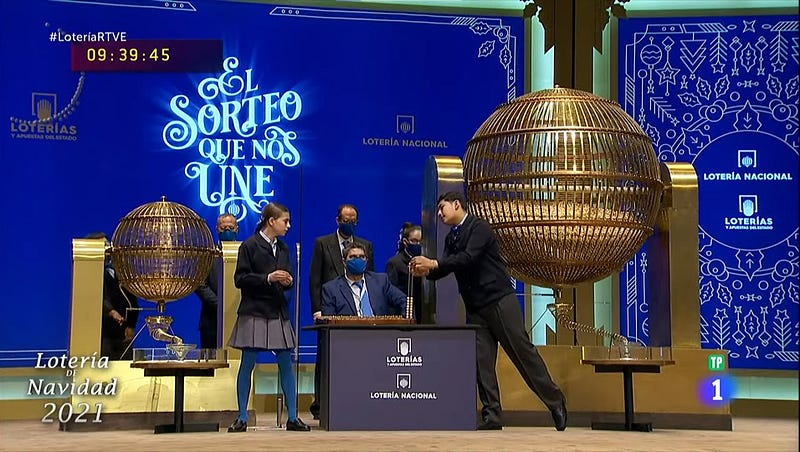
Screenshot of the National Television broadcast for the Christmas Lottery. You can watch the full program here.

***Note from the author: Gambling is a serious addiction. This article talks about a centenary Spanish tradition played in family once or twice a year. I’m in no way inviting or encouraging you to gamble.

Everything is ready. This year will be my time. I’ve got my tickets, and I chose them very carefully. The traditional lottery tune tastes like Christmas.

Forty-eight thousand, five hundred thirtyyyy One thousand euuuuroooss Fifty-three thousand, and twenty-seven One thousand euuuuroooss Eighty-six thousand, one hundred and forty-eight FOUR MILLION EUROOOOOOSSS

The children did it again, they sang the big prize.

And the whole country stops. Nervousness. A quick check on our numbers. 1,780 people celebrate. They won the big prize! And the rest of us look disappointedly at our lottery tickets spread around the table.

How didn’t I win the lottery this year? It’s impossible! I had such beautiful numbers!

Welcome to the Spanish Christmas lottery tradition.

The Spanish Christmas & Epiphany Extraordinary Lotteries

Yes. I wrote Christmas and Epiphany. One of the most Catholic countries in the world starts and closes the Christmas holiday with a big National lottery. And we love our more-than-200-years-old tradition.

King Carlos III brought the lottery to Spain from Naples in 1763. Fifty years later, they celebrated an extraordinary lottery for the Christmas season on the 22nd of December.

It was extraordinary because there was not only one winner but thousands. It quickly became popular. Very popular.

After all, who hasn't dreamed of winning the lottery? Wouldn’t it be nice to win a big prize and celebrate it with the family?

The day I realized our uniqueness

Summer 2014. My Scottish boyfriend’s parents come and visit us in Spain. I’m nervous, this guy is special and I want to give a good impression.

Me (at a beach bar): Oh! They sell Christmas lottery here! Shall we share a ticket? My now father-in-law (horrified): Do you usually buy lottery? Me (sweating): No! no, no, no, I don’t gamble! But it’s the Christmas lottery, you know, everybody does. It’s our tradition. Him (even more horrified): You’ve got more chances to be struck by a lightning than to win the lottery.

I started a nervous rambling, including words that should never be mixed, like children, orphans, Christmas, and prizes. Each word was digging me deeper and horrified him more than the previous one. There I was, a non-gambling person talking about statistics and chances to win a lottery I didn’t fully understand.

And then it hit me. There’s no chance anybody from abroad would understand it without a good explanation.

The lottery system

I have a private joke with a British friend who lives in Spain. Every year by the 10th of December he says, “Right, I’m ready! This is the time of the year that Carmen unsuccessfully tries to explain to me the Spanish lottery!”

But this year I had a plan. And he did understand. And, believe me, if he could do it, a drunk monkey can.

Our chances to win a regular lottery

Let’s start with why we shouldn’t buy regular lottery. As with every risky game, both the big prize and the ticket price adapt to the probabilities of winning.

So, whenever you see a lottery with a huge prize and a cheap ticket, the odds of winning are going to be as insignificant as finding a specific sand grain in the desert.

The EuroMillions, for instance, costs 2,5 euros, and the chance to win up to 250 million euro is one in 140 million.

We have 300 times more possibilities to die by a flesh-eating bacteria (1 in a million) than winning the most popular lotteries in the United States (one in 300 million). The regular lottery offers a biggest chance, one in 15 million.

So, being fully aware of this, why the heck do I play?

Because this one is different. It’s made to be shared. Almost everybody is involved, so it also means fun. And I never miss an opportunity to have fun.

The chances to win the Christmas lottery

The chance to win the big prize is bigger than any other lottery. 1 in 100,000 (0,001%). Still pretty slim.

So again, why do we play???

Because as I said, it’s made for sharing. There is not only one prize but 15,304. That is a 15,3% chance to win something.

I usually belong to the other 84,7%. But some years I won a few euros.

What we love here is the centenary ritual.

A normal lottery lasts 5 minutes, or the time it takes to select 6 numbers from a drum. Here it lasts 3 and a half hours, starting at 8:30 am. This is briefly the process:

  1. The lottery commissaries show the wooden balls to the public. They are stored in a metal rack.
  2. The commissaries empty those structures into a big transparent hopper.
  3. One commissary empties the hopper into the drum.
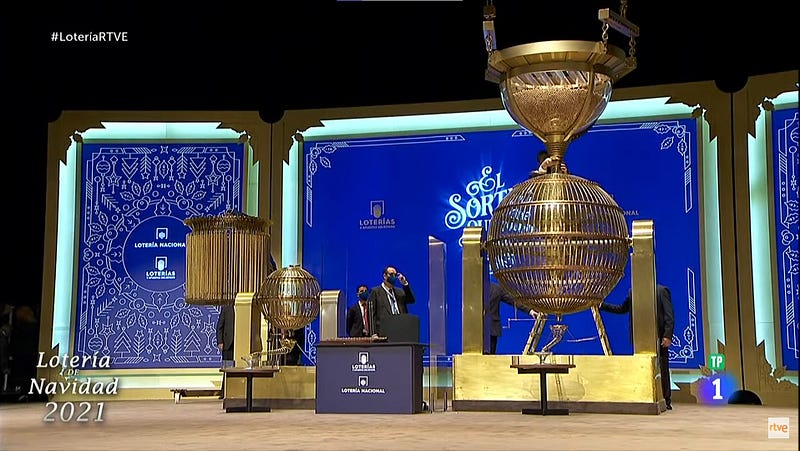
From the left: The metal racks that contained the numbers, small drum with prizes, and transparent hopper emptying the balls into the big drum. Pictures from the National TV broadcast. Full program here.

Once all the balls are in place in both drums. Students from St. Ildelfonso’s School enter the stage. The school opened in 1543 as a home for orphans from Madrid.

Since the year 1771, a selection of those children became part of the National Lottery, singing the numbers and the prizes in an unmistakable tune. And from 1999, non-orphan students were invited to sing, too.

Children entering the stage. Screenshot from here.

One of the biggest national traumas was the year Spain adopted the Euro, it sounded better when they sang it in Pesetas.

The madness of the day

No matter what shop, office, hairdresser, or bakery you enter, the only thing you hear is the voice of the children. Everybody has the TV/radio on.

Why is that? Because as I mentioned before, more chances to win mean more expensive tickets. So they created a smart system dividing each number into 172 series, and each series into ten 20 euro tickets.

Meaning that when a child sings a prize associated with one number, there are 1,720 winners. Including the first prize.

The other particularity of this lottery is that the biggest prize is 400,000 euros/ticket. Not quite enough to buy a Lamborghini and retire.

More than 1,800 numbers are sung throughout the morning, but there are more winning combinations to amount to the total 15,304 prizes. And for each lucky number, there are 1,720 winning tickets.

So everybody goes nuts with it.

You can buy tickets from July. It’s almost mandatory to buy when you are traveling, especially in the shops that won in previous years. You buy some tickets with your friends, your work colleagues, your family, and anybody around you.

Are you getting married? There was some relevant major event in your city or the country? run to the lottery shop because the number will fly very soon.
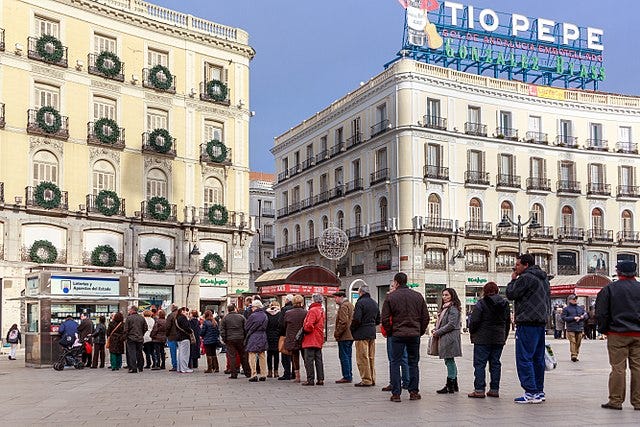
People queuing in Madrid to buy their tickets. Photo by Barcex, CC BY-SA 3.0 via Wikimedia Commons

Students and NGOs buy numbers and divide them into small participations with a little donation to pay for their travels or projects. Bosses gift their employees with tickets as part of the Christmas bonus. Bars buy tickets so all their regular customers can share the joy if they win.

I will never forget my father-in-law’s face when I said that we paid for the high school trip with the earnings of the lottery.

We all know cases of people who broke the tradition and didn’t do well. My own uncle didn’t buy in with his co-workers because he had too many already, and they won. That morning everybody was drinking champagne in the office and he was alone in a corner crying inside.

A similar anecdote was the theme of this lottery commercial that went viral globally. I challenge you to watch it without crying.

I never won the big prize, not even a significant one, but I love all the fun around it.

I said we do this twice a year. Tomorrow is the next one. In Spain, the three kings pay us a visit on the Epiphany (the 6th of January) bringing presents to the well-behaved children.

Of course, we celebrate the occasion with another extraordinary lottery with children singing. This one is called the Children’s lottery.

I know. We have no shame for some things. My culture can be very irreverent sometimes, and I love it.

If you love crazy traditions, check out what we do to end the year:

Thank you for reading! Do you celebrate any “weird” traditions in your country? I would love to know! Let me know in the comments, please!

Money
Culture
Spanish
Travel
Life
Recommended from ReadMedium