
The Dark Ugly Side of Dr. Seuss Might Surprise You
His shocking life: from racism & cheating to obsessive eroticism.
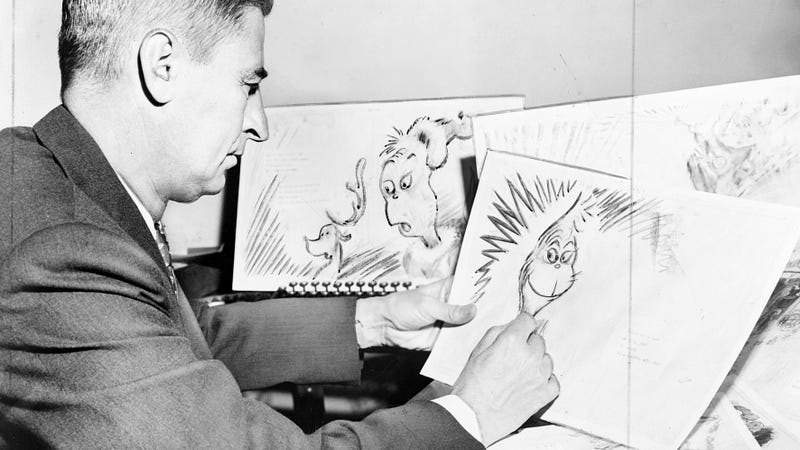
Every story of Dr. Seuss held a deeper, darker side, and this fact sits true for his personal life as well.
Every story of Dr. Seuss held a deeper, darker side, and this fact sits true for his personal life as well.
The characters of Dr. Seuss’s stories were dynamic and dangerous — like that cat-wearing hat that had the potential of destroying the house. Interestingly, Dr. Seuss was dangerous, too, as he destroyed lives — at least of his wife.
Born on March 2, 1904, Theodor Seuss Geisel grew up in Springfield, MA, where he crafted his art of inking the most absorbing literature under a pseudo. What is the story of the pseudo? He had to take a pen name when he lost his editor in chief job for drinking in prohibition.
Immense accumulated success after dropping the first book, “And To Think That I Saw It On Mulberry Street,” gave Dr. Seuss confidence to punch out more classics — that too for several decades.
In between his successful career, Dr. Seuss did surface his dark side, but it, at large, remained unknown to many. Let’s dive into the other side of the personality of children’s favorite storyteller.
1. Seuss was habitual of creating racist cartoons
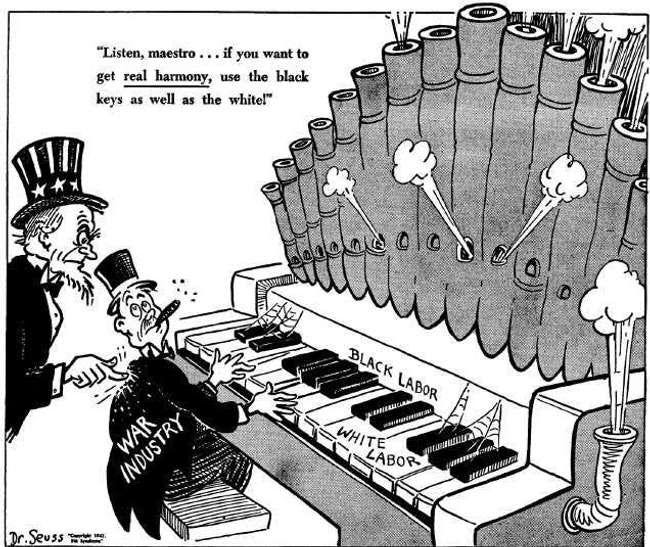
Some habits just do not evaporate, and one of Dr. Seuss’s never vanishing habits was to create racist cartoons.
If you deemed that world war II was the only instance when he inked the racist cartoons, then it was simply not the case — the history of such an act dates back much earlier.
Labeled as “chinaman”, a racist caricature of a Chinese person was drawn in his very first children's book. Despite the critiques, Dr. Seuss refused to alter the character until 1978.
Another of his books, “If I Ran the Zoo”, depicts two African men in grass skirts, without shoes or shirts — the demeaning depiction of black people spread throughout his editorial cartoons, followed by highly racist arguments. In short, Dr. Seuss's cartoons were the product of his racist mentality.
Interestingly, this year, on March 2, on his birthday, Dr. Seuss Enterprises announced a piece of appreciative news: they would stop publishing six of his books to portray people in hurtful, wrong ways. Such an action was deemed vital to support all families and communities.
The enterprise carrying Dr. Seuss’ legacy would not license And to Think That I Saw It on Mulberry Street, If I Ran the Zoo, McElligot’s Pool, On Beyond Zebra”, Scrambled Eggs Super!, and The Cat’s Quizzer.
2. Seuss even created racist ads for pesticide
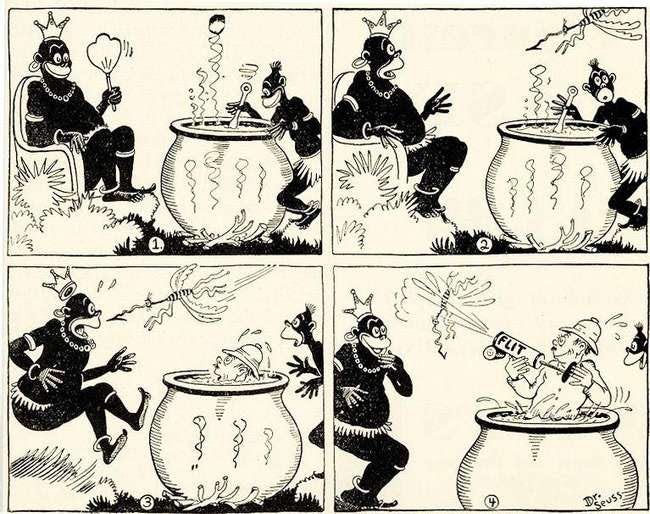
The earliest work of Dr. Seuss paid him for crafting oil and pesticides ads. The industry had nothing to do with racism, but Dr. Seuss poured the element into it as a horrid humor attempt out of nature. His flit pesticide ad showed awful caricatures of black people — something that had nothing to do with the product itself.
3. Seuss cheated on his wife during her serious illness
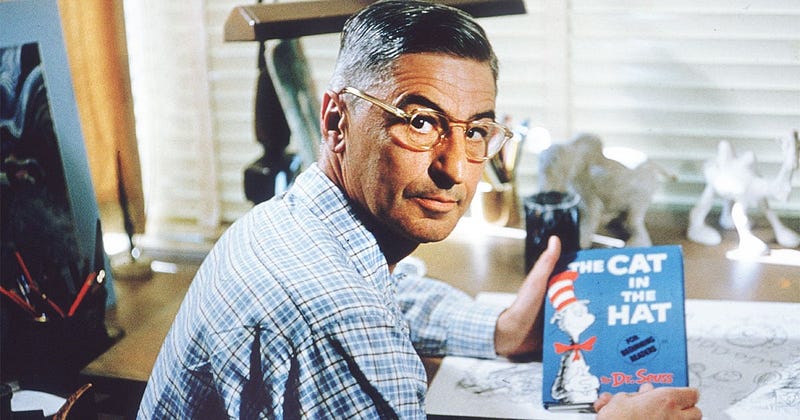
Apart from sliding the darkness over his illustrations, Dr. Seuss reserved some for his personal life as well. He was married to Helen Palmer Geisel for 40 long years.
The woman fell seriously ill and began suffering from partial paralysis from Guillain-Barre syndrome, followed by cancer.
Instead of standing by his wife’s side during the excruciating times, Dr. Seuss began an affair with Audrey Stone Dimond, proudly revealing it to the public and his sick wife.
The cruel infidelity broke Helen completely, who, instead of dying slowly with cancer, chose to take her own life. The suicide note of Dr. Seus wife read:
Dear Ted,
What has happened to us? I don’t know. I feel myself in a spiral, going down down down, into a black hole from which there is no escape, no brightness. And loud in my ears from every side, I hear, ‘failure, failure, failure…’ I love you so much…I am too old and enmeshed in everything you do and are that I cannot conceive of life without you…My going will leave quite a rumor but you can say I was overworked and overwrought. Your reputation with your friends and fans will not be harmed …Sometimes think of the fun we had all through the years…
The suicide note did not make much of a difference to Dr. Seuss, who died a few months after Helen’s death, married his mistress.
4. Seuss didn’t like children
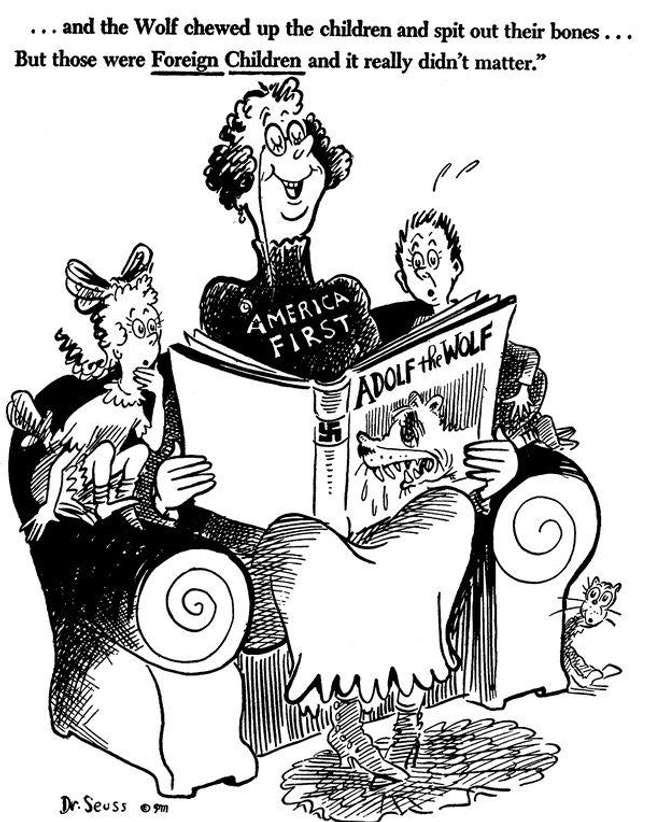

What an irony? A classic one, indeed. One of the most famous children authors in the world once confessed to his wife how he was pretty terrified with the children — the root of that terror being children’s unpredictable nature. He never had children and lived by a rule: “You make them, and I’ll amuse them.”
5. Seuss obsession with erotic art & how it flopped
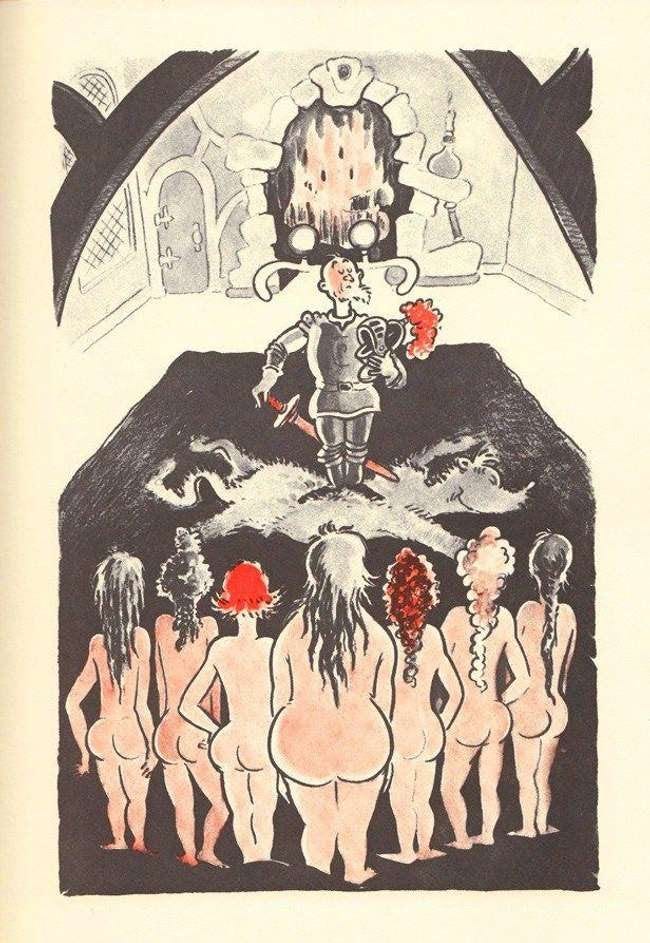
After inking several children’s books, Dr. Seuss shifted his interest to erotic storytelling — a domain where he thought his talents could be better served.
Signing up the contract with Random House publishing did not come without a condition — he would be allowed to publish his adult book, over which he had poured his heart and soul for quite a long time.
As a result of the contract, a total disaster met the poor hands of the public: The Seven Lady Godivas. The book was a mess where he portrayed eroticism by drawing women similar to the characters of children’s books — what he thought were sexiest babes turned absurd-looking creatures. Interestingly, Dr. Seuss could not sort out what went wrong.
6. He created offensive Anti-Japanese propaganda
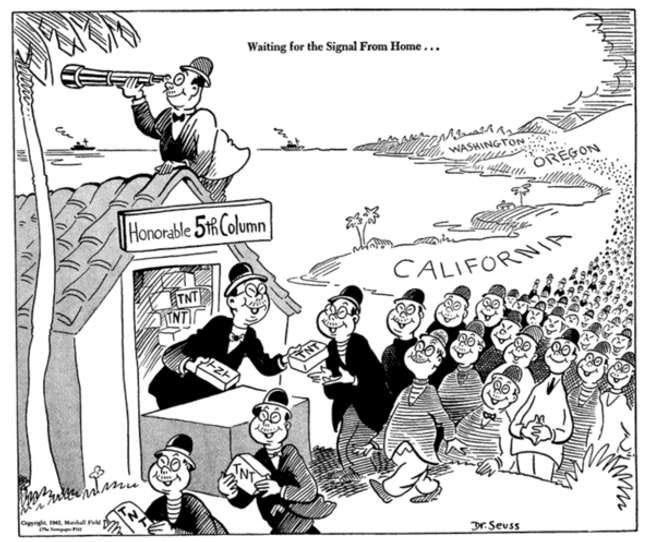

Everyone tried to contribute to the war in their way, and so did Dr. Seuss. By creating racist propaganda, Dr. Seuss, through his work, attacked America’s Japanese enemies.
The government commissioned a full artistic license to produce educational cartoons for the troops. Availing liberty, Dr. Seuss inked Japanese soldiers’ horrific caricatures. Not were the characters offensive, but so were the messages contained within.
He targeted Germans too in his propaganda, but the Japanese were on his hit list for whom he created especially problematic and hateful slogans.
https://www.kqed.org/pop/15140/the-surprising-and-scandalous-stories-behind-beloved-childrens-books
Reference: