
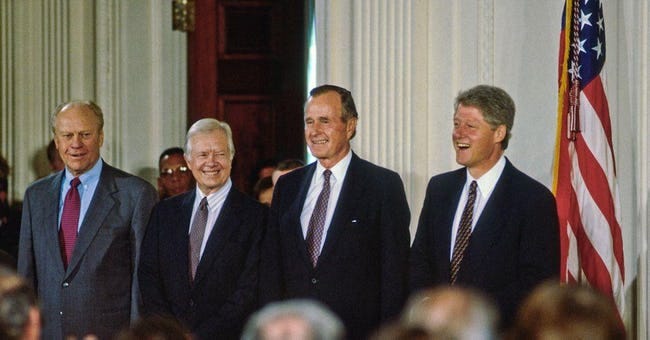
What Life Is Really Like For An Ex-President
14 things you don’t know about life as an ex-president
Is there nothing more pathetic in life than a former president? Well, that is what President John Quincy Adams declared once.
Have you ever wondered what ex-presidents do once they leave office? One just thinks of post-presidential benefits without considering the rules ex-presidents have to abide by even after moving out of the office.
Interestingly, lifetime pension and state funeral don’t suffice for ex-presidents’ burdens after leaving the office. Let’s dive into the restricted lives which presidents get to follow after retirement.
1. They make good money with book sales
Former presidents have a wealth of life experiences to share, and they simply capitalize on that. Bill Clinton, for example, negotiated for $15 million in advance, when writing “My life”. Other figures include George W. Bush who accumulated $7 million over 1.5 million sold copies of “Decision Points”.
We have seen several ex-presidents throwing a couple of books in the market, but some turned into full-time authors like Jimmy Carter. Turning himself into a prominent author, Cater wrote 14 books.
The historians commented how he was broke when he left the White House and then taking up authorship got him fortunes. By using creative skills smartly, ex-presidents like Cater were able to make a pretty decent amount of money.

2. Some Ex-Presidents seek jobs
Not all ex-presidents turn towards writing for generating an income stream: many actively seek jobs. Such cases were prominent before 1958 when pensions were not fixed for presidents upon leaving office.
Some of the ex-presidents include Grover Cleveland and George Washington, who both found an alternative route. Cleveland invested in the stock market while Washington retired to Mount Vernon to run his whiskey distillery.
3. Speeches fund their lifestyle
Former presidents utilize their knack for giving speeches and capitalize on it. Interestingly, history has witnessed instances where ex-presidents have given more speeches than the presidents themselves.
If we hint towards Clinton, he earned $75 million from his speeches, let alone the amount netted from his books.
In 2010, Clinton stated:
I’ve never had any money until I got out of the White House. But I’ve done reasonably well since then.
4. They chase the Nobel Prize
Former presidents find an interesting pastime of chasing the Nobel prize. Digging into the philanthropic act, many dedicate their time to humanitarian work.
Jimmy Carter in 1981 initiated Carter Center, where he promoted fair elections, resolved diplomatic disputes, and strove towards eradicating several diseases. Result? He won a 2002 Nobel Peace prize.
5. They avail a huge travel budget
Travel perks that a former president gets to relish are huge. With a massive budget allotted in the Former Presidents Act, an ex-president receives up to $1 million in security and travel expenses per annum — even $500,000 additional for their spouse.
Before you think they got to live a freedom lifestyle in exploring the world, hold your horses, as there is a catch.
The 1968 law states the budget is used for only those travels where they officially represent the US government. Ouch.
6. Ex-presidents plan their lavish funeral
Not everyone in this world gets to plan one’s funeral service, but ex-presidents do, and that too while still in the office.
If chosen to go for the state funeral, then they would have to coordinate with the Military District of Washington for designing the event.
Wondering what comes under their careful event planning? Ex-presidents got to decide where to include aircraft flyovers, parades or gunfire salutes — the state funeral spans over five days, where all the while the country flags remain lowered.
The best part is that such a decision is reversible and former presidents get the liberty to opt-out whenever they want from their decision. Richard Nixon availed such an option when he passed in 1994, getting buried in California’s presidential library.
7. They aren’t permitted to drive
They never get to hear the title of a “driver”, because they are not allowed to drive. Owing to security reasons, they can’t drive on public roads, as rather the secret service do that instead.
Some presidents fulfilled the urge of driving their favorite vehicle by finding a workaround — driving within their vicinity. Taking George W. Bush, for instance, he drove on his private property, his Texas ranch.
Joe Biden once joked:
There are a lot of reasons to run for president, but there’s one overwhelming reason not to run for president… I like to get that [Corvette] Z06 from zero to 60 in 3.4 seconds.
8. The Secret Service screens the mail first
Walking down to the mailbox to pick up mail is not something an ex-president can do. Why? Well, because of potential danger.
At first, the mail goes for the screening to an off-site screening place, where the secret service scans every package.
The importance of such an act was much realized when in October 2018, the Secret service intercepted Clinton’s and Obama’s mail, discovering the pipe bombs. Potential explosive devices were appropriately handled.
9. Some aren’t guaranteed health benefits
Former presidents are offered health benefits, but not all of them. Some ex-presidents leave office after eight years while some rest after four, but only those federal employees who serve the government for at least five years qualify.
Jimmy Carter was not given any health benefits while Barack Obama, George W. Bush, and Bill Clinton all qualified.
10. They get paid staff and compensation for office space & supplies
This is indeed a great perk where despite losing office, the ex-presidents do not lose their staff.
The government allows a $150,000 per year budget to ex-president’s office staff over the next 30 months of leaving the office.
The budget does not vanish after that duration. Instead, it shrinks to $96,000 — then, it depends on the ex-president to spend from their pocket or not.
The cherry on top: Ex-presidents get proper compensation for office supplies and space to establish their own work — anywhere in the country, wow.
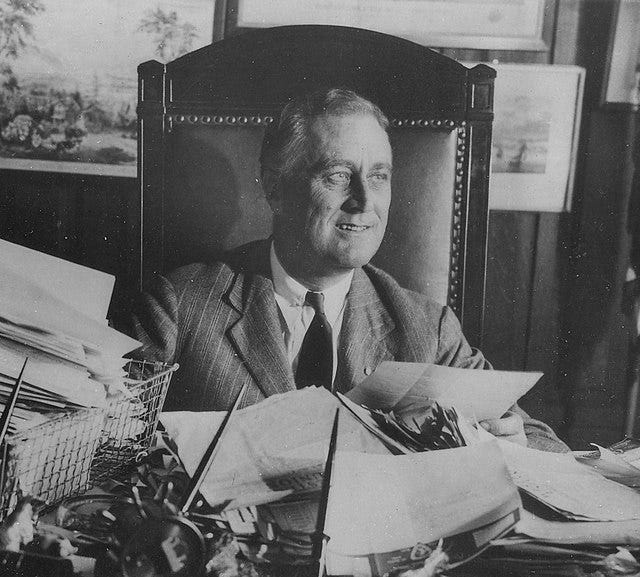
11. Library Facility, Thanks To Franklin D. Roosevelt
Franklin D. Roosevelt started a tradition of spending a decent amount of time in the library. So today, we see several modern ex-presidents doing the same.
Roosevelt preserved his presidential as well as personal records in the Franklin D. Roosevelt Presidential Library and Museum. Before such preservation measures, the presidents used to simply pack up their records, losing many during the process.
The first presidents’ documents were either damaged or mutilated by rats; thus, to avoid such a fate of vital docs, the presidential library came into existence. Now several ex-presidents, including Harry S. Truman, worked in the presidential library.
12. Ex-Presidents gel up better
The bond among the ex-presidents strengthens. After contesting against each other, many draw closer to each other, as, after all, they had shared similar experiences.
For instance, Bill Clinton, after ousting George H.W. Bush, did not earn many appreciative words from Bush. But as soon as both left office, they saw each other more than the opposition. Interestingly, George W. Bush in 2017 labeled Clinton as “a brother from another mother.”
13. They avail pension for lifetime
This might be an already familiar point of ex-presidents getting a lifelong pension. According to the former president’s actions, passed by congress in 1958, the pension’s value amounted to $25000 per year.
If we talk about the current era, then the pension of a former president equals the salary of a cabinet member. Even surviving spouses of deceased former presidents fall into the eligibility criteria of claiming the annual pension.
Interestingly, the presidents who resign also get a right to a lifetime pension, but this eligibility does not extend to those who get removed from office by impeachment.
14. They remain under the protection of Secret Service
Another perk of the former president is getting secret service protection for life. In 1994, a law was passed that extended the Secret Service period to ten years after the president leaves office.
Such a declaration was reversed in the 2012 former president’s protection act and now, it never goes away.
Children get to avail the provision till they turn 16 and spouses until they do not divorce and get remarried.
More from the author: