
The Damage Done When Women Exercise Incorrectly
Is your workout schedule a healthy one?
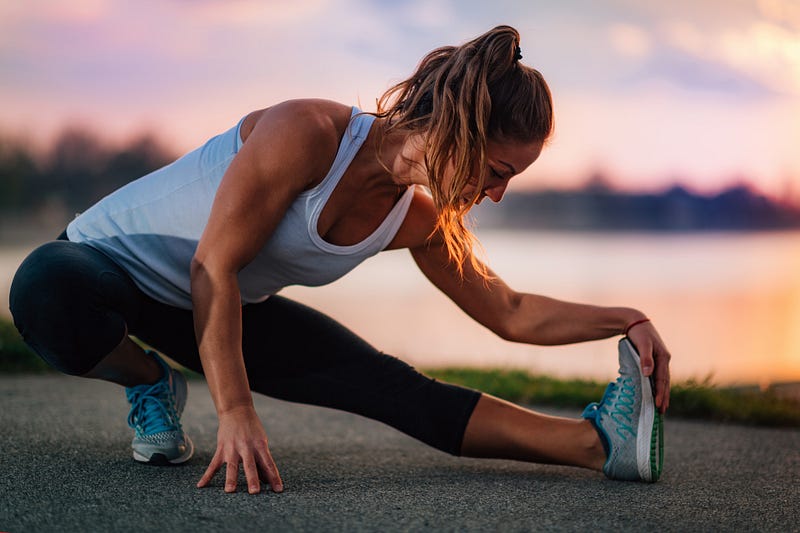
I was under 30 when I was told I had severe bone loss.
It was due mostly to the drugs I’d been prescribed to treat an autoimmune disorder, but could just as easily have been my athletic schedule.
I was a competitive ice skater and kept up an intense training routine. I was on ice a minimum of 2 hours a day most days. Then off-ice training in ballet, running, biking, touch rugby or other sports for another 2–3 a day a week.
I can see now, I wasn’t eating anywhere near enough for my output.
As an athlete, I was at the extreme end, but many of us are exercising incorrectly without realizing it.
Both young and older women are told to push ourselves, do more strength training, more cardio.
We’re told there’s an epidemic of obesity and sedentary living, so more is good, right?
Not always.
Who is at risk?
Women in their late 30s to 50s are one group especially at risk. One reason for this is the research studies — and consequent recommendations — around diet and exercise are usually conducted on men, younger women, and people over 65.
“Don’t just take it for granted that someone says research has been done,” warned fitness and health coach Helen Blair in my interview with her.
“Has the research been done on middle age women who are in peri or menopause? Chances are it hasn’t.”
Midlife women are going through huge changes hormonally, physically, and mentally and yet there are no clear guidelines around appropriate exercise levels.
Sports Psychologist Deborah N. Roche, PhD says, “Many of us use exercise to manage stress. It can be a great way to clear your head and enhance your mood. However, you can have too much of a good thing.”
Younger women are at risk too
New mothers are another group at risk for over-exercising. Women in this group are dealing with stress, exhaustion, breastfeeding, and sleep disturbances. They’re juggling new family routines and often working on top of it and yet there’s so much pressure to be back in shape within a few months of giving birth.
Young women are another group highly susceptible to over-exercising and under-eating.
Many know to avoid the dangers of anorexia, but still aim for unrealistically tiny bodies. The difference is it’s fashionable now for those tiny bodies to be fit and toned, not just thin.
Wanting to be strong and build muscle is wonderful. What many young women don’t know is how to correctly balance their food intake while building that muscle.
Are we putting our long-term bone health at risk? It seems we are.
The protein problem
Under-eating plus over-exercising equals bone loss for women. Osteoporosis may seem like an older person's problem, but what we do before we hit 50 sets us up for our later years.
Under-eating is an important part of the problem, according to health and fitness coach Helen Blair. She finds many of the women she works with, especially those over 40, are not eating enough protein.
Restrictive diets, like intermittent fasting, concern Blair. She worries skipping breakfast and eating only twice a day means women are missing out on vital protein.
“We underestimate the protein we need, especially if we’re active. It’s all about that repair and regrowth of muscle mass and putting back what’s lost,” she explains.
We need protein for muscles growth and if we’re not careful when we lose weight, we’re actually losing muscle instead of fat.
That’s why Helen prefers body scans to normal scales, because you can see how much muscle you’ve gained and fat you’ve lost. The number on the scale doesn’t show you the full picture.
The first half of our lives impacts the quality of the second half. Building strength, protecting our bones, and learning to eat right for our bodies before 50 is crucial.
“You don’t need to do a lot and it doesn’t need to be complicated, but it’s a great opportunity.” says Blair.
Know your why
It’s important to work out why you’re exercising.
Is it to lose weight? It might surprise you to learn exercise isn’t actually a big factor in weight loss. What you eat has far more impact on body weight than your workout.
Is it for your overall health? Moving our bodies regularly is vital for our long-term health, but the benefits take less time to achieve than you might expect.
Dr. Benjamin Levine says 2.5 to 3 hours a week is enough to get most of the health benefits you want from exercise — reducing heart disease, cancer, etc.
Levine, a professor of internal medicine at the University of Texas Southwestern Medical Center and director of the Institute for Exercise and Environmental Medicine at Texas Health Dallas told The New York Times:
“Once you get past five hours per week or so, you’re not exercising for health, you’re exercising for performance.”
If you’re exercising for performance, eating well and scheduling full-day recovery periods is crucial. That allows your body the time and resources it needs to repair from the workout and become stronger.
Blair agrees. She says two 20-minute high intensity workouts and a couple of short strength-training sessions a week are enough for most people to see the benefits of exercise without overdoing it.

You just read another post from In Fitness And In Health: a community dedicated to sharing knowledge, lessons, and suggestions to living happier, healthier lives.
If you’d like to join my newsletter and receive more stories like this one, tap here.