avatarRandy Runtsch

Free AI web copilot to create summaries, insights and extended knowledge, download it at here

2672

Abstract

n their partner dies.</p><figure id="2ce9"><img src="https://cdn-images-1.readmedium.com/v2/resize:fit:800/1*tQ69RBxftddHayNCLzSNhw.jpeg"><figcaption></figcaption></figure><p id="ce54">Cardinals often feed on or near the ground as they hop among trees and shrubs. They also pick seeds or berries from plants. They favor seeds, grains, and fruits. They also eat snails and insects.</p><figure id="97d8"><img src="https://cdn-images-1.readmedium.com/v2/resize:fit:800/0*r2dJ4zNbsqNn7NJj"><figcaption>Male northern cardinal. Photo by the author.</figcaption></figure><p id="38ba">Pairs of northern cardinals visit my backyard bird feeder year-round. They especially love sunflower seeds.</p><p id="b172">One time, a cardinal pair perched on the railing of the deck at my house. The male picked up a peanut from the bird feeder with his beak. He then placed the peanut in the beak of his mate.</p><figure id="854b"><img src="https://cdn-images-1.readmedium.com/v2/resize:fit:800/0*1J-YryoTITXBDOLz"><figcaption>Female northern cardinal. Photo by the author.</figcaption></figure><p id="d112">Male cardinals sing to guard their territory. He will chase off males who enter his domain.</p><figure id="5222"><img src="https://cdn-images-1.readmedium.com/v2/resize:fit:800/0*9MHu6cTdcIq_byQO"><figcaption>Male northern cardinal in snow. Photo by the author.</figcaption></figure><p id="c160">Reflections of their images in mirrors or glass can confuse cardinals. They believe that their reflection is an intruder. They sometimes attempt to chase it away for long periods.</p><p id="493a">Female cardinals build cup nests of twigs, bark, and grass. Males sometimes provide materials. The birds conceal their nests well among brush or branches.</p><figure id="928b"><img src="https://cdn-images-1.readmedium.com/v2/resize:fit:800/1*DjTo7Jyzf1BaoLM0KDYdAg.jpeg"><figcaption>Juvenile northern cardinal. Photo by the author.</figcaption></figure><p id="2c72">Within six days after they complete their nest, the female cardinal lays a clutch of three or four eggs. Each egg measures up to 0.7 inches by 1.1 inches. Females do most of the incubating.</p><p id="1986">Chicks hatch after 12 or 13 days of incubation and fledge within 11 days. A pair of cardinals produces one or two broods each year.</p><figure id="e4d5"><img src="https://cdn-images-1.readmedium.com/v2/resize:fit:800/1*jkRCZX6s6sVRGZfd_7LPkg.jpeg"><figcaption>Male northern cardinal. Photo by the author.</figcaption></figure><p id="0c95">The northern cardinal adapts well to human-dominated environments. They live in open woodlands, city parks, backyards, heavy brush, and desert washes. The birds spend most of their

Options

time in thickets or perched in trees while they sing.</p><p id="2363">Northern cardinals have moved northward with expanding towns and cities. The North American Breeding Bird Survey estimated their total population at 120 million in 2014.</p><p id="692d">Shortly after sunrise this morning, I will hike the woods of Essex Park. I look forward to hearing the cardinals’ songs. But now I know the comely birds want to chase me from their domain.</p><div id="c034" class="link-block"> <a href="https://readmedium.com/the-birds-of-spring-part-i-62a62108991b"> <div> <div> <h2>The Birds of Spring — Part I</h2> <div><h3>undefined</h3></div> <div><p>undefined</p></div> </div> <div> <div style="background-image: url(https://miro.readmedium.com/v2/resize:fit:320/1*ynuFADg3AYtyj_m2zO7g9A.jpeg)"></div> </div> </div> </a> </div><div id="6b1c" class="link-block"> <a href="https://readmedium.com/my-little-chickadee-6197632def38"> <div> <div> <h2>My Little Chickadee</h2> <div><h3>In praise of the small and ever-present black-capped chickadee</h3></div> <div><p>medium.com</p></div> </div> <div> <div style="background-image: url(https://miro.readmedium.com/v2/resize:fit:320/1*YkqcP7GLHq7uwZRTkP2skA.jpeg)"></div> </div> </div> </a> </div><div id="7d37" class="link-block"> <a href="https://readmedium.com/the-elusive-belted-kingfisher-f46d456164a4"> <div> <div> <h2>The Elusive Belted Kingfisher</h2> <div><h3>A pair of belted kingfisher has outfoxed me for months. But today I captured an acceptable photo of one of the birds.</h3></div> <div><p>medium.com</p></div> </div> <div> <div style="background-image: url(https://miro.readmedium.com/v2/resize:fit:320/1*jiUkhSN-J1p_7YVHy3PpVQ.jpeg)"></div> </div> </div> </a> </div><h1 id="b93f">References</h1><p id="ce2f">All About Birds — <a href="https://www.allaboutbirds.org/guide/Northern_Cardinal/lifehistory">Northern cardinal</a></p><p id="7e96">National Audubon Society — <a href="https://www.audubon.org/field-guide/bird/northern-cardinal">Northern cardinal</a></p><p id="efdf">Wikipedia — <a href="https://en.wikipedia.org/wiki/Northern_cardinal#U.S._state_bird">Northern cardinal</a></p></article></body>

Birds and Photography

The Colorful Northern Cardinal

Handsome northern cardinals might be the most popular songbird in North America
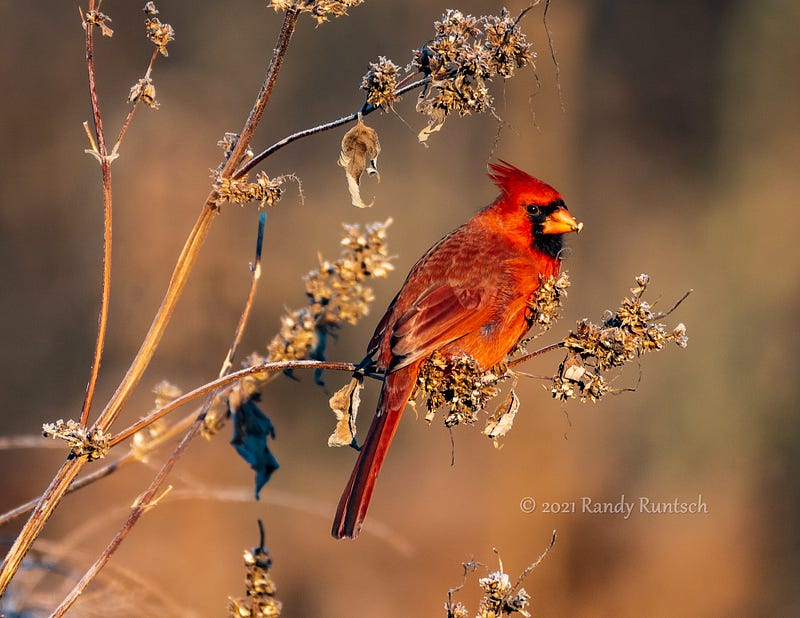
Male northern cardinal. Photo by the author.

Whenever I hike through the woods of Essex Park, a mile from home, northern cardinals seem to welcome me. At most any moment, one or two males sing to mark their territories.
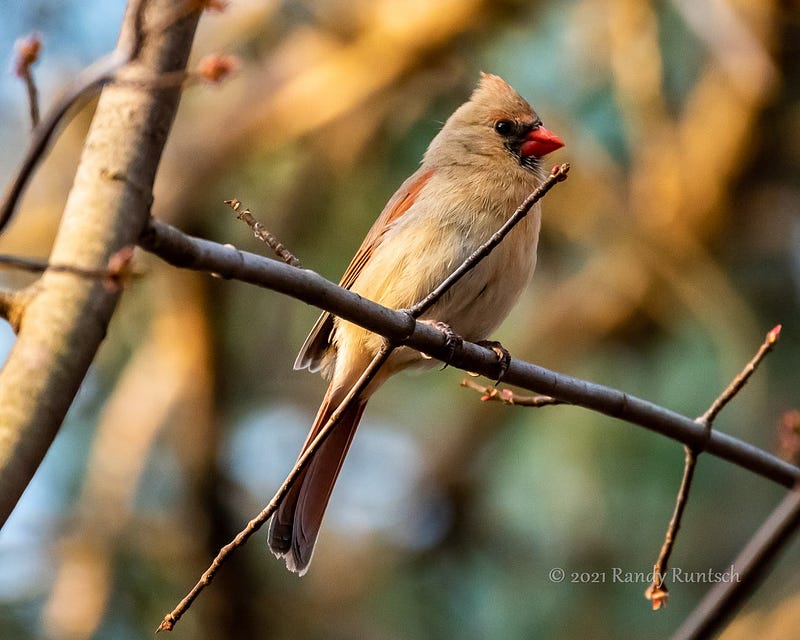
Female northern cardinal. Photo by the author.

The charismatic northern cardinal might be North America’s favorite songbird. It is so popular that these seven states in the United States have named it as their state bird:

  • Illinois
  • Indiana
  • Kentucky
  • North Carolina
  • Ohio
  • Virginia
  • West Virginia

The cardinal makes its home in the U.S., much of Mexico, and southeastern Canada. It also lives in Belize and Guatemala.
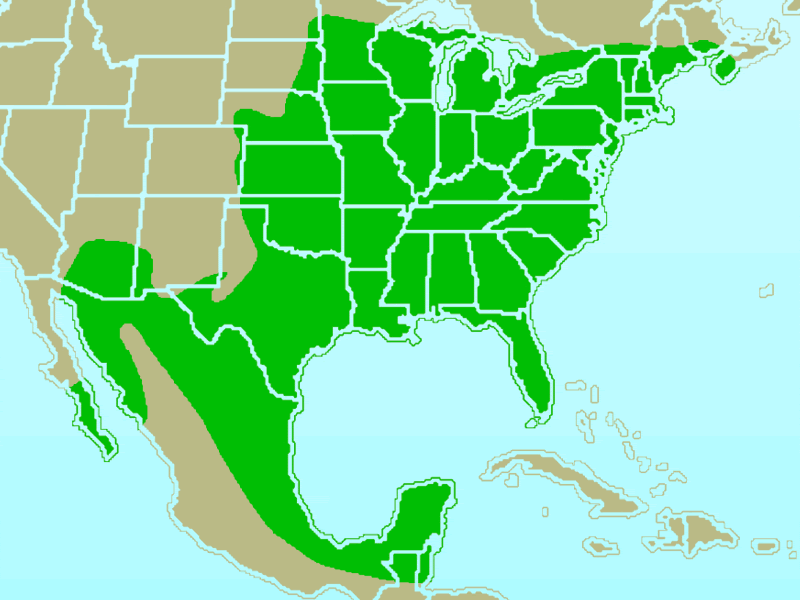
Northern cardinal range. Image in the public domain.

Cardinals are mid-sized songbirds. They measure up to nine inches long with a wingspan of up to 12.2 inches. They can weigh up to 2.29 ounces.
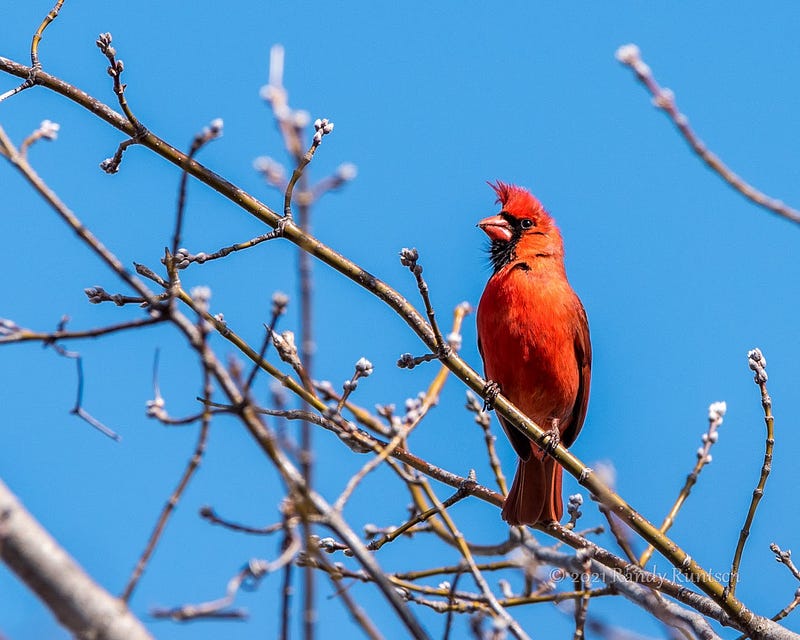
Male northern cardinal. Photo by the author.

Northern cardinals take their name from the cardinals of the Roman Catholic Church. The church leaders wear distinctive red cloaks and caps. Males are bright red while females are reddish-olive.

Male and female cardinals can raise or lower their unique crests. They also feature coral-colored beaks.
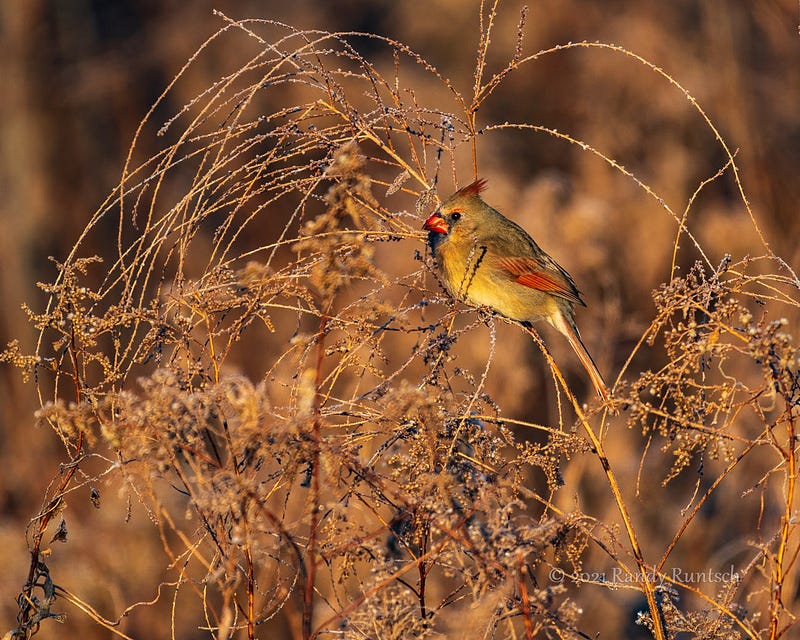
Female northern cardinal. Photo by the author.

Northern cardinals do not migrate. Pairs stay in one area year-round.

“Pairs of cardinals might mate for many years, but they sometimes separate or “divorce” and choose a new mate.” - The author

Pairs of cardinals might mate for many years, but they sometimes separate or “divorce” and choose a new mate. They also may find a new mate when their partner dies.
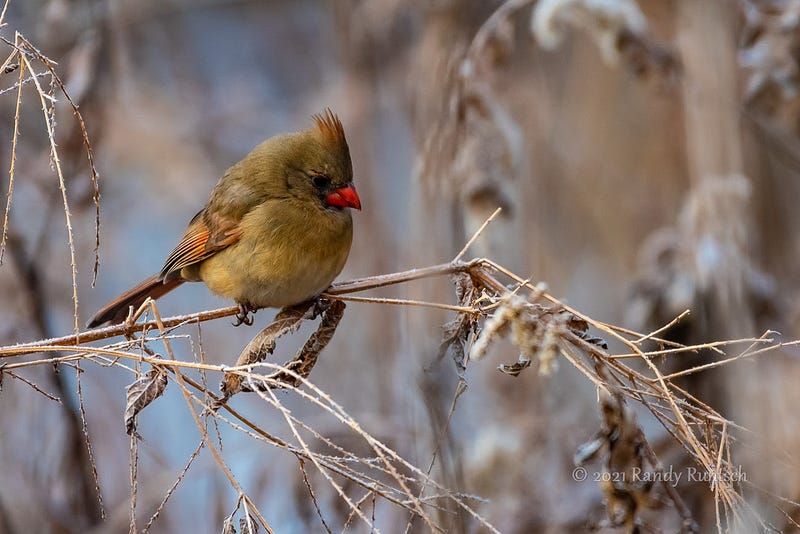
Cardinals often feed on or near the ground as they hop among trees and shrubs. They also pick seeds or berries from plants. They favor seeds, grains, and fruits. They also eat snails and insects.
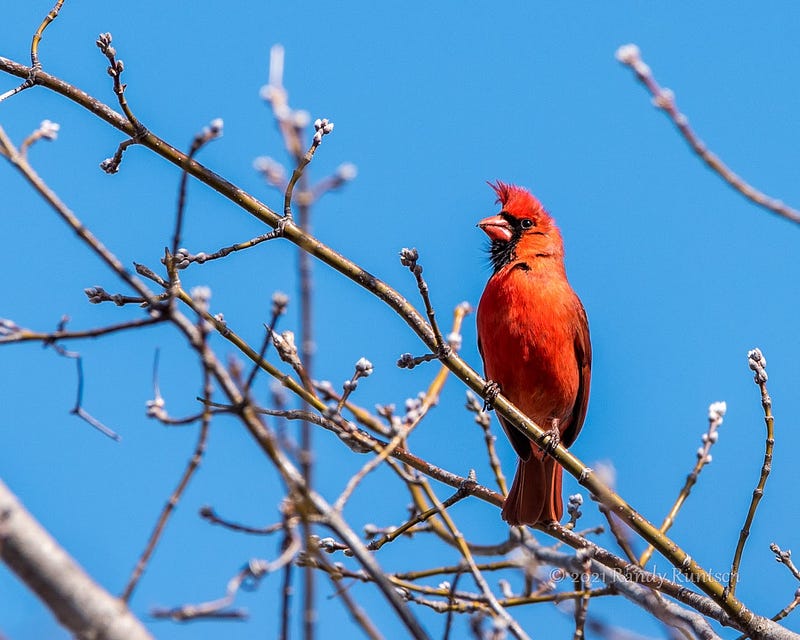
Male northern cardinal. Photo by the author.

Pairs of northern cardinals visit my backyard bird feeder year-round. They especially love sunflower seeds.

One time, a cardinal pair perched on the railing of the deck at my house. The male picked up a peanut from the bird feeder with his beak. He then placed the peanut in the beak of his mate.
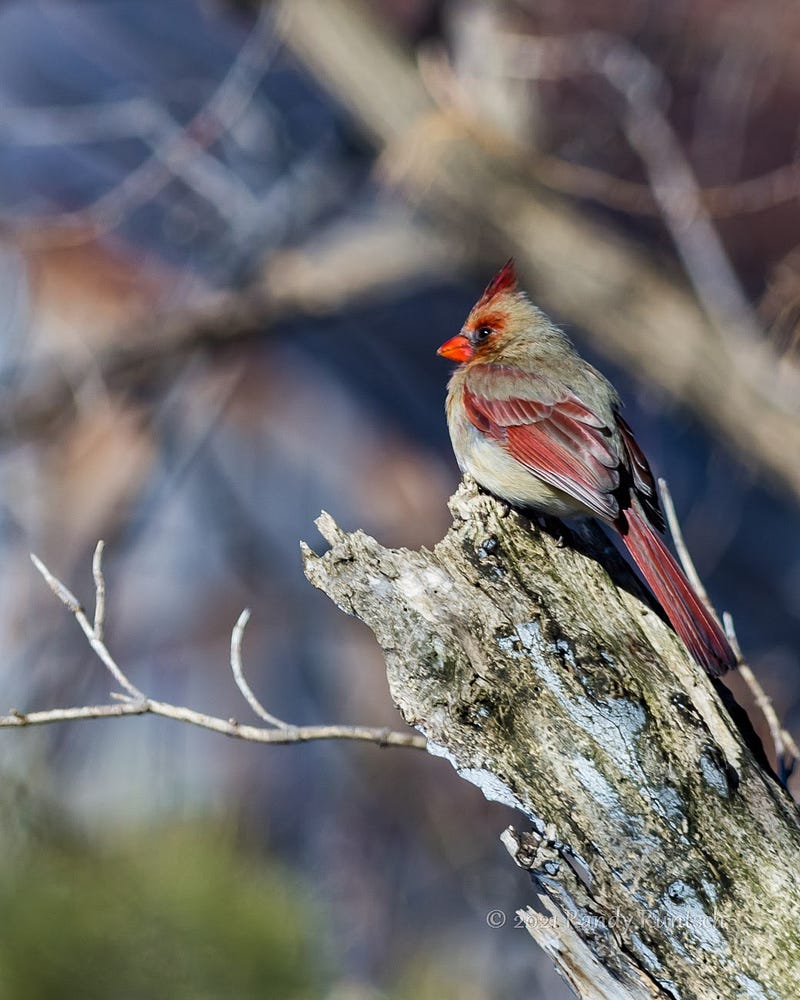
Female northern cardinal. Photo by the author.

Male cardinals sing to guard their territory. He will chase off males who enter his domain.
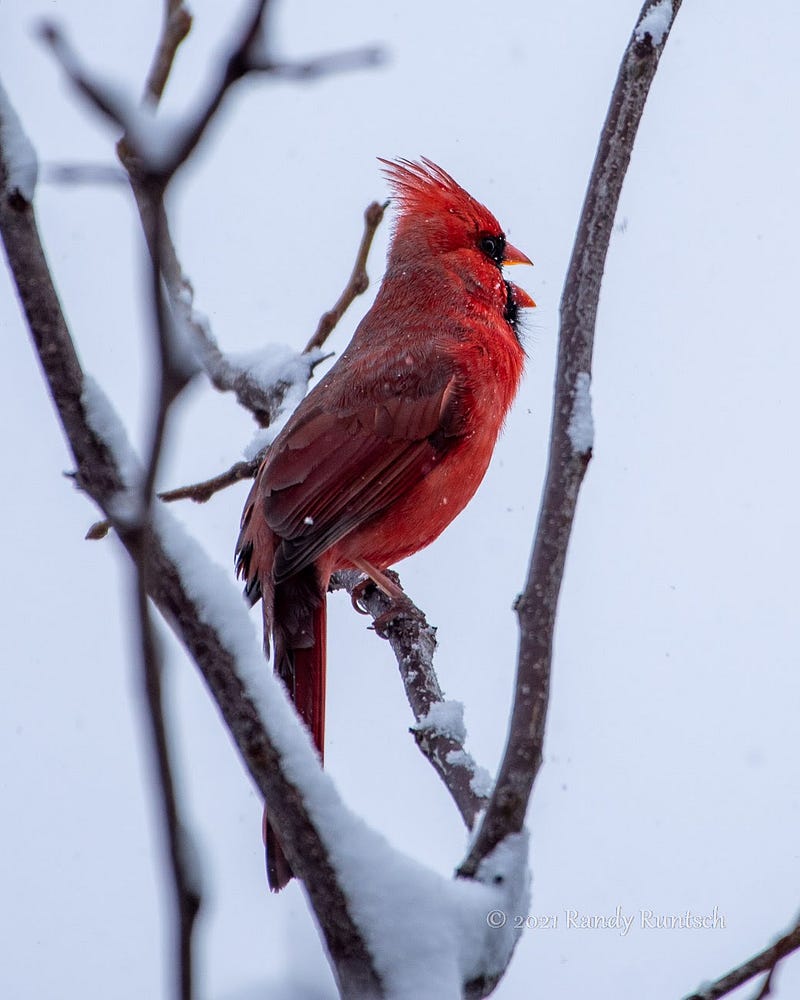
Male northern cardinal in snow. Photo by the author.

Reflections of their images in mirrors or glass can confuse cardinals. They believe that their reflection is an intruder. They sometimes attempt to chase it away for long periods.

Female cardinals build cup nests of twigs, bark, and grass. Males sometimes provide materials. The birds conceal their nests well among brush or branches.
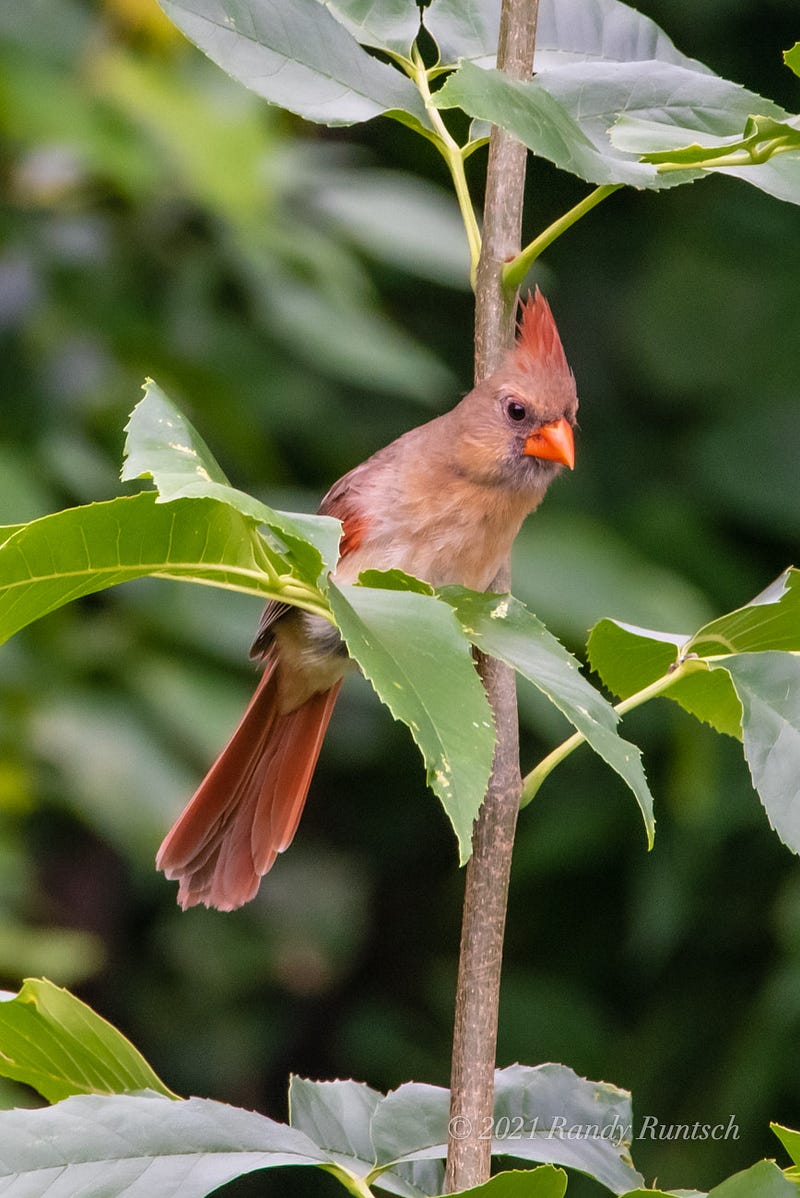
Juvenile northern cardinal. Photo by the author.

Within six days after they complete their nest, the female cardinal lays a clutch of three or four eggs. Each egg measures up to 0.7 inches by 1.1 inches. Females do most of the incubating.

Chicks hatch after 12 or 13 days of incubation and fledge within 11 days. A pair of cardinals produces one or two broods each year.
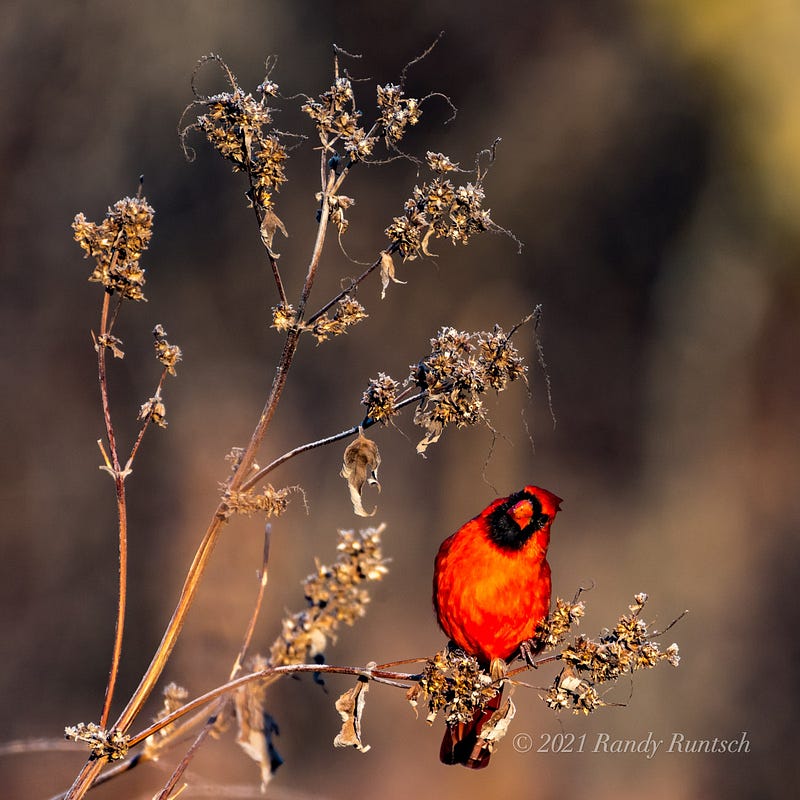
Male northern cardinal. Photo by the author.

The northern cardinal adapts well to human-dominated environments. They live in open woodlands, city parks, backyards, heavy brush, and desert washes. The birds spend most of their time in thickets or perched in trees while they sing.

Northern cardinals have moved northward with expanding towns and cities. The North American Breeding Bird Survey estimated their total population at 120 million in 2014.

Shortly after sunrise this morning, I will hike the woods of Essex Park. I look forward to hearing the cardinals’ songs. But now I know the comely birds want to chase me from their domain.

References

All About Birds — Northern cardinal

National Audubon Society — Northern cardinal

Wikipedia — Northern cardinal

Birds
Photography
Nature
Environment
Wildlife
Recommended from ReadMedium