
Leadership & Networking
The Collective: How to Build a Powerful Friend Group
11 Leadership Tips for Rising Leaders
“Never doubt that a small group of thoughtful, committed citizens can change the world. Indeed, it is the only thing that ever has.”― Margaret Mead
Some friends have staying power.
Nurture good relationships and don’t burn bridges — you will find that something new emerges as you mature as a person and as a leader.
A persistent network that can move mountains.
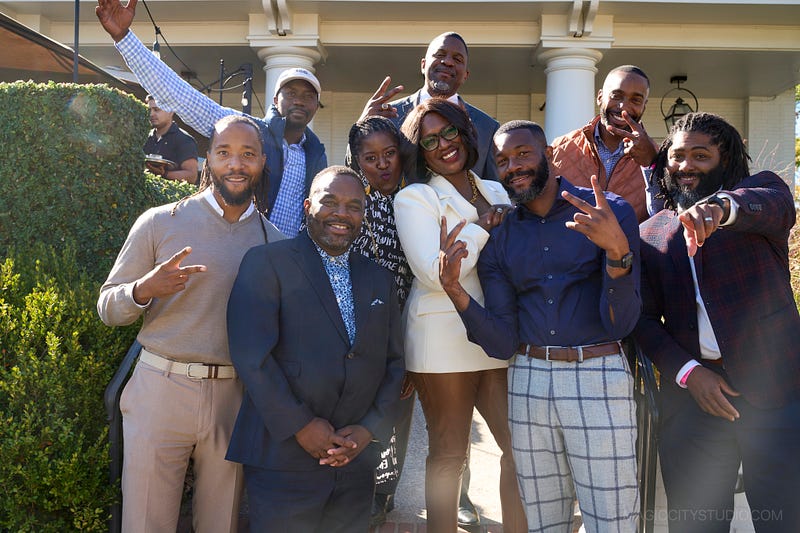
If you are intentional and can bring those relationships together, then you will have the makings of a powerful friend group. For the purpose of this discussion, let’s call it a collective.
What is a Collective?
Cities are comprised of formal and informal networks.
Formal institutions and networks are visible. They have charters, governance structures, and mission statements. They have membership dues, buttons and pins, and websites.
Informal networks — collectives — are nebulous. They are intersectional networks with flexible missions, serving the interests of a value-aligned group of people.
“Collective” as defined by Webster’s dictionary:
adjective: Done by people acting as a group. “a collective protest”
noun: a cooperative enterprise. “the exhibition showcases the work of art collectives from more than 20 countries”
Collectives are not about the faces of power. They are about the structures of power. They undergird movements. They invest beyond themselves.
Collectives define winning by the total success of the group, rather than one person — no matter how successful any one person will be.
- What group(s) of people are you working with right now that make it their business to see one another successful? Can you name them? Can they name you?
- Who is actively on the hunt for the next opportunity with and alongside you? Maybe even on your behalf? Is the relationship reciprocal?
Collectives organize resources, people, and projects. Sometimes their movements are obvious, but more often than not, they are invisible to the naked eye.
Sometimes the people in them ebb and flow, depending upon the goals, timing of opportunities and shared interests of the participants. But more often than not they don’t change much.
It is not a zero-sum game — you can have more than one collective at a time.
In fact, you may find that it makes sense to keep the collective you have and simply engage a derivative network for new efforts.
Advice From a Powerful Friend Group
I had the fortune to spend time with one such friend group a few months ago. We spoke with a group of rising leaders and encouraged them to nurture relationships with each other.
We did not expect to be peppered with questions, but we got plenty of them.
“How do you handle things if one of you drop the ball?”
“How can we get well-established leaders to support us?”
The conversation went on for more than an hour. There was much shared from us — and from those rising leaders.
Here are eleven takeaways from that discussion. Follow this advice and increase your chances of growing your own powerful friend group.
Eleven tips for growing a powerful friend group.
- Be discreet. What is shared with you is for you. Even when it is hard to hold. Keep each other’s confidence like an asset of the highest order.
- Eat humble pie. When you make a mistake, strive to fix it; immediately. And, when you don’t make the mistake, eat the pie anyway. Ego is the enemy of progress, especially as you become more successful.
- Try, try early. Working together means practicing together. Everything you partner on won’t last forever. Play the long game. Trying things together early on builds critical muscle for the big opportunities that eventually find you.
- Read everything you can get your hands on.
- Be above reproach. High quality people will not stick around people with poor character. Period. Keep your nose clean. And, your hands out the cookie jar, among other places.
- Diversify. Your inner circle should reflect four societal pillars: corporate, entrepreneur, public official, and nonprofit. Be sure your group can cover all bases. Don’t be so organic and in love with your shared identities that you miss including one of these pillars.
- Respect your emotions. Leaders fail more often on poor emotional decisions than anything else. Just read the headlines and look around you. Moments of desperation, frustration and moral weakness sink more ships than poorly executed projects.
- Learn who to share your next moves with. Not all friends should get equal treatment in all situations. Be discerning about what information might inspire conflicts. But, don’t be so tightly private that you go at big efforts alone.
- Practice mentoring now. Everyone is old to someone.
- Know when you need to go at it alone. Your friends may already have cash tied up in projects, have personal health issues, or are just not aligned on certain efforts. Don’t wait on your friends if you know the time to act is now. Get moving. If you are playing the long game, they will eventually see you when the time is right and get on board later. Don’t hold grudges when people cannot see what you see exactly when you see it. Don’t take it personally.
- Keep having birthdays, i.e., stay healthy and stay alive. Take care of yourself.
The best of the best don’t want to do it alone.
Even Jesus had 12 guys with him.
To paraphrase the sentiment in a song popularized by Master P and Snoop Dogg on No Limit Records: “Get a crew willing to put someone’s picture on the front of a t-shirt for you.”
Honestly,
Ed.
I am a poet, essayist, and strategist based in Birmingham, Alabama. Stay connected via HonestlyEd at LinkedIn, Medium, or Instagram. Or, simply Buy Me A Coffee.
Subscribe to receive my stories. Or, join Medium for unlimited access to our community of great writing.


