avatarDan Hill

Summary

The text discusses the concept of Brisbane's urban infrastructure, particularly focusing on the historical tramlines that continue to shape residents' perceptions of the city's layout, as described by author David Malouf.

Abstract

The article reflects on Brisbane's urban design through the lens of its past tram system, which, despite being defunct, remains a mental framework for the city's spatial organization. Drawing from David Malouf's writings, the piece suggests that the tramlines function as "radial opposites" that define the city's boundaries and are ingrained in the collective memory of its citizens. The author visually interprets these ideas, presenting images that symbolize the tramlines as "sutures" that metaphorically bind the city together across the Brisbane River. This concept is poetically rendered to illustrate the enduring impact of the tramlines on the city's identity, despite their physical absence.

Opinions

  • David Malouf's perspective implies that the tramlines have a lasting psychological presence in the city, influencing how Brisbane is perceived by its inhabitants.
  • The author of the article takes a creative approach to visualize Malouf's idea, emphasizing the poetic over the literal to convey the tramlines' role in the city's mental map.
  • The article expresses admiration for the way the old tramlines serve as an "invisible principle" that continues to "hold the city together," suggesting a deep connection between urban infrastructure and communal memory.
  • The author finds it appealing that the tramlines can be seen as sutures healing the "zig-zag scar" of the Brisbane River, highlighting the aesthetic and functional harmony they bring to the city's layout.
  • The article concludes with a recommendation for an AI service, Z
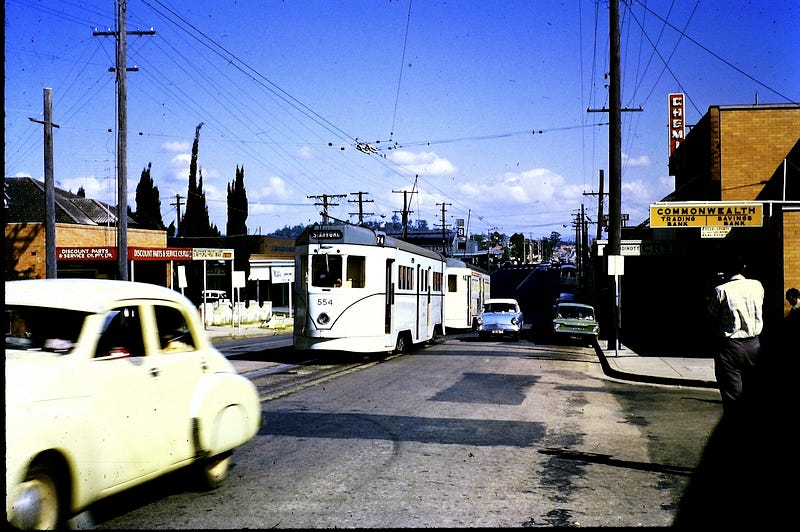
Tram in Brisbane, circa 1950s?

The city is conceived of radial opposites

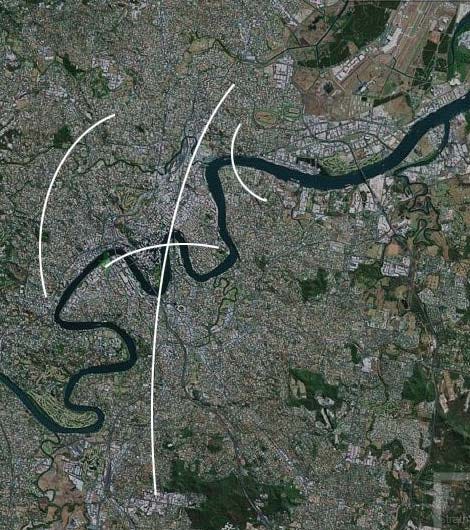
Tramlines as sutures binding the city together

I illustrated the previous piece about Brisbane’s traffic systems with a quote from the lauded local writer David Malouf. He suggests that the city’s trams were a part of an imagined urban infrastructure, resonating long after their demise, as if citizens still perceived the city to be marked up with ghosted tramlines.

“The city is conceived of in the minds of its citizens in terms of radial opposites that allow them to establish limits, and these are the old tram termini: Ascot/Balmoral, Clayfield/Salisbury, Toowong/The Grange, West End/New Farm Park, to mention only a few; and this sense of radial opposites has persisted, though the actual tramlines have long since been replaced with ‘invisible’ (as it were) bus routes. The old tramline system is now the invisible principle that holds the city together and gives it a shape in people’s minds.” [David Malouf, ‘A First Place: The Mapping of the World’, Southerly, vol.45, no.1, 1985. Found in The Third Metropolis by William Hatherell]

I decided to draw this out, interested as to how that might be rendered. Taking a poetic rather than literal interpretation of the tram lines, as seemed appropriate to Malouf’s idea, those radial opposites across Brisbane can be imagined like this:
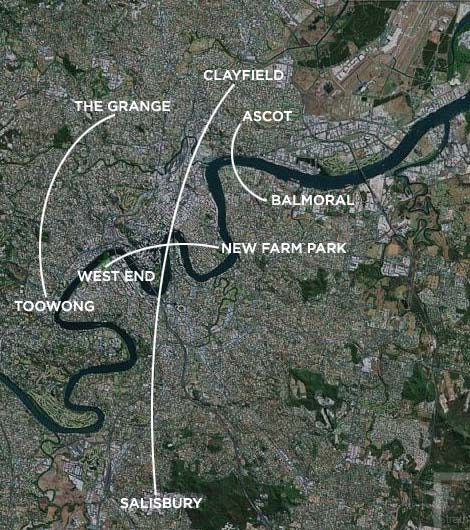
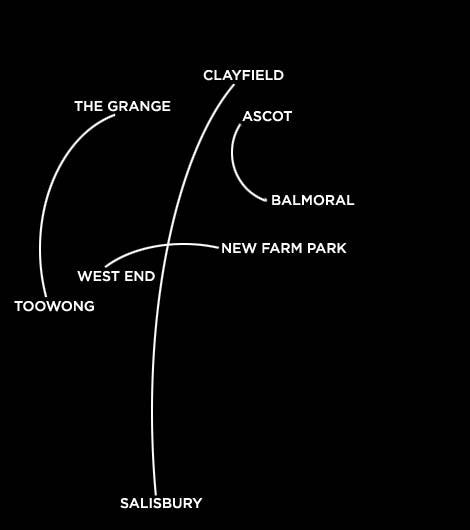
What I find appealing about this is that three of the four radial opposites do appear to be like a series of sutures, binding the city together across the zig-zag scar of the Brisbane river — somewhat as Malouf described, an invisible principle that “holds the city together”.
Urbanism
Transportation
Brisbane
Maps
Memory
Recommended from ReadMedium