
The Circular Discipline
Brotherly love among the Spanish monks
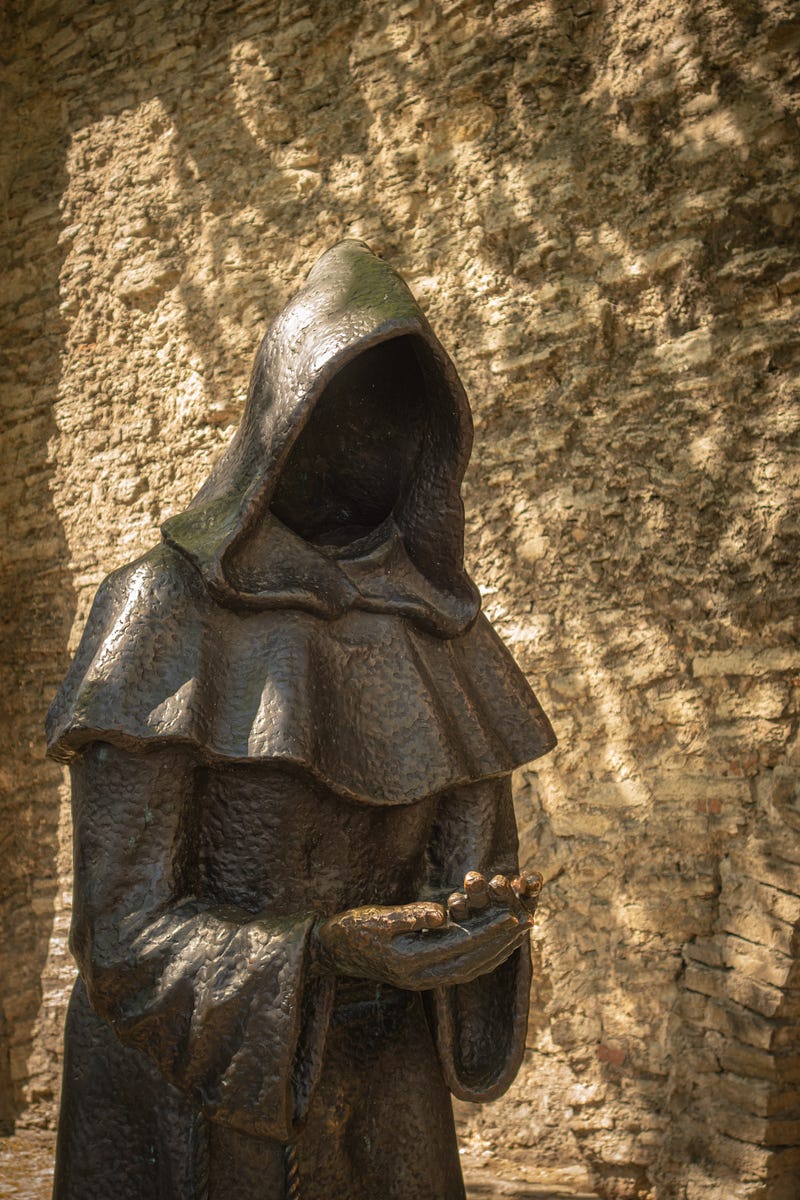
When St John of the Cross joined forces with St Teresa of Avila in leading a reform movement within the Carmelite religious order, he was not expecting an easy life.
The Discalced Carmelites (apart from not being permitted to wear shoes) were expected to devote their time to prayer and fasting and to live their lives in the most ascetic way imaginable.
St John took his rules on austerity to an extreme, allegedly instructing a brother monk not to soak the lentils overnight as that would be worrying about tomorrow, and therefore contrary to the gospels.
He was to have more than his fill of austerity.
In December 1577, in what smacks more of a modern-day action movie, he was kidnapped by his brothers of the unreformed order, blindfolded and taken to the Carmelite monastery of Toledo, where he was thrown in the dungeon. His alleged crime was to betray the oath of obedience which he had made to the order, despite the reform having been authorised by the papal legate.
Kept under lock and key for nine months, he only left his cell three times a week, to kneel in front of the friars while they ate in the refectory. After they had finished, he would bare his shoulders and the friars would form a circle, moving round him as, one by one, they beat him with a bunch of sticks.
During this “circular discipline” the recipient was prohibited from uttering a word in response to the accusations which were made against him.
It seems that the diet of bread, water, and the occasional sardine, the beatings from his fellow monks and the freezing temperatures he suffered in his cell, far from breaking his spirit, awakened his creative energies and strengthened his faith. Some of his finest poetry, and the broad concepts of his major prose works, all took shape in that prison. He was to later thank the Carmelite order for the many blessings he had received there.
Nonetheless, he recognised that to remain there would be to die there, and he still had work to do outside. Again returning to thriller territory, he progressively loosened the screws on the lock of his cell door, and escaped one night when the jailer was asleep, lowering himself down the monastery walls by tying his blankets together.
I am mystified as to why this hasn’t yet been the subject of a film.
Perhaps it is just too implausible!
Many thanks for reading!
Many think that St John’s poem En Una Noche Oscura was inspired by his escape from prison. My nonet, based on his poem, may be found below:
A complete translation of his Llama de Amor Viva may be seen here:


