
The Case That Should Have Defunded The Police
Dethorne Graham’s Case Was Not Just Another Traffic Stop
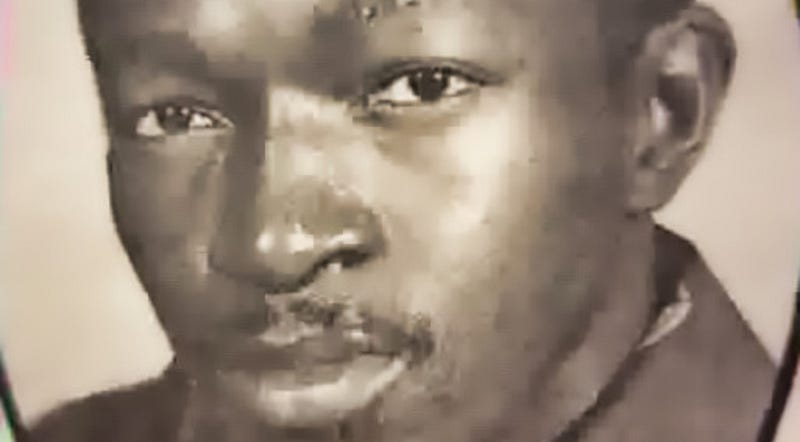
Dethorne Graham had diabetes. He had taken his insulin that day 34 years ago but he had not eaten. He feared he might go into diabetic shock so he had a friend stop at a store so he could get some orange juice.
Mr. Graham entered the store but the line was too long. He decided to leave and try another store. His hasty departure and his blackness got him racially profiled. A police officer saw him leave in a haste and pulled Mr. Graham and his friend (Mr. Berry) over.
Then the following happened, according to the official court transcripts:
“Plaintiff, suffering from his insulin reaction, exited Berry’s automobile and ran around it twice. Berry then asked Officer Connor to help him catch Plaintiff, and suggested that Officer Connor go one way around the car and that he, Berry, would go the other way. On seeing Berry and Connor coming from opposite directions, Plaintiff sat down on the curb and Officer Connor and Berry knelt down to see what was wrong with Plaintiff. The Plaintiff apparently passed out and the next thing he remembered was that he was handcuffed and lying face down on the sidewalk and that in addition to Connor there were four other police officers.
…Mr. Graham testified that the officers picked him up and with his hands cuffed behind his back placed him against and over the hood of Berry’s car. Mr. Graham tried to reach for his wallet in his hip pocket to tell the officers that he was a diabetic and wanted his wallet to show his diabetic identification. One of the officers, Matos, shoved his head down and told him to shut up that no one had asked him anything.”
A man has a diabetic reaction that could kill him and this is how he is treated by the police? I once lost a law client to a sudden diabetic shock. It is real.
Mr. Graham eventually sued under our nation’s civil rights laws. The famous Section 42 U.S.C. 1983 statute states:
“Every person who, under color of any statute, ordinance, regulation, custom, or usage, of any State or Territory or the District of Columbia, subjects, or causes to be subjected, any citizen of the United States or other person within the jurisdiction thereof to the deprivation of any rights, privileges, or immunities secured by the Constitution and laws, shall be liable to the party injured in an action at law, suit in equity…”
Lawyers sue under this law all the time. There was no reason to stop Mr. Graham.
No one reported a crime. He had not committed a crime. He was dying perhaps. He needed help. If anything, the police officers should have assisted Mr. Graham in addressing his health problem. They didn’t. He was roughed up by the police.
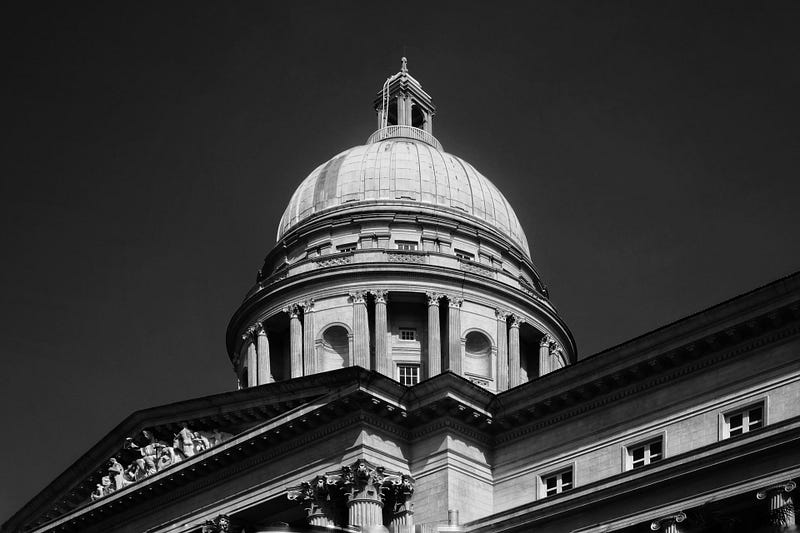
District Court
In Mr. Graham’s lawsuit, held in North Carolina, in the U.S. District Court for the Western Division, the presiding judge was Judge Robert D. Potter, Chief Judge of that court at the time. It is important to provide a few notes on Judge Potter because this is where the trouble starts.
Robert D. Potter was born in Wilmington, North Carolina in 1923. Potter received an A.B. degree from Duke University in 1947, and a law degree from Duke University School of Law in 1950. He practiced law in Charlotte for 30 years from 1951 to 1981 and also served as a Commissioner of Mecklenburg County, North Carolina from 1966 to 1968.
Potter additionally served as a campaign worker for Republican Senator Jesse Helms of North Carolina and it was Senator Helms who recommended his appointment to the federal bench to President Ronald Reagan in 1981. He served for 28 years.
Potter’s reputation on the bench was that of an old-fashioned, hard conservative judge who sentenced those convicted of crimes to the maximum sentence. For this, Potter became known as “Maximum Bob.” Potter also was a segregationist for the most part. He was old school in that respect on the bench.
Mr. Graham testified in his case. His testimony is pretty clear. Here’s what he said initially about stopping at the store before the traffic stop:
When I got out of the car, I noticed a police car sitting directly in front of us. He was parked going this way, and we was parked going this way, but he was parked in the store yard anyway, but he was talking to someone, but I didn’t pay that much attention to him because I had to have something for the reaction. I hurried in the store, and once I got in the store, there was five or six people up at the register, so I turned around and came back out of the store. I was in a hurry. I came back out of the store, and I got in the car and we pulled away. Nobody came out of the store behind me or anything, but we just pulled away, and he got on West Boulevard, and I pointed toward my girlfriend’s house. He knew where I was going, and he knew what was wrong, and he kept asking me, “Are you all right?” And I just-(pointing)-and we started down the boulevard, and the police car came out and started following us, and he asked me, he said, “What did you do in the store?” I said, “I didn’t do anything.” He said, “There’s a police car following us.” I said, “Skip him. Just keep on to where we’re going.” The police car stopped us. Q. About how far from the store had you gone before the police car stopped you? A. Half a mile. Q. What happened then? A. The police car stopped us, and-but I didn’t have any idea why he wanted to stop us. He came up to the car. He didn’t say anything to the driver. He said, “What’s wrong with your friend?” And he told him, he said, “I don’t know, but I think he’s having a sugar reaction,” and he said, “I don’t know what to do for him,” and the officer said, “Well, I’m going to have to-wait here until I find out what he did in the store.” Q. What did you do at that point? A. At that point, now, this is the last thing that I remember. I said to myself I'm not sure whether I said it out loud or not. I said, “If he thinks I’m going to sit here in the car while I’m dying to wait for him to find out something when there really is nothing,” and that’s about the last thing I remember.
Judge Potter found in favor of the police officers in this case.
Mr. Graham, a diabetic seeking to avoid a diabetic coma, was racially profiled by the police officer who pulled him over for a useless traffic stop. He could have died. Potter threw the case out. The officers, according to Judge Potter, acted appropriately.
Mr. Graham, according to the court records, was assaulted by the police after his insulin shock reaction. His head was bashed onto the car. He suffered a bruised forehead, broken foot, and cuts and abrasions.
They never charged the officer with anything. Judge Potter could have made this right from the start. He failed.
Appeals/The U.S. Supreme Court
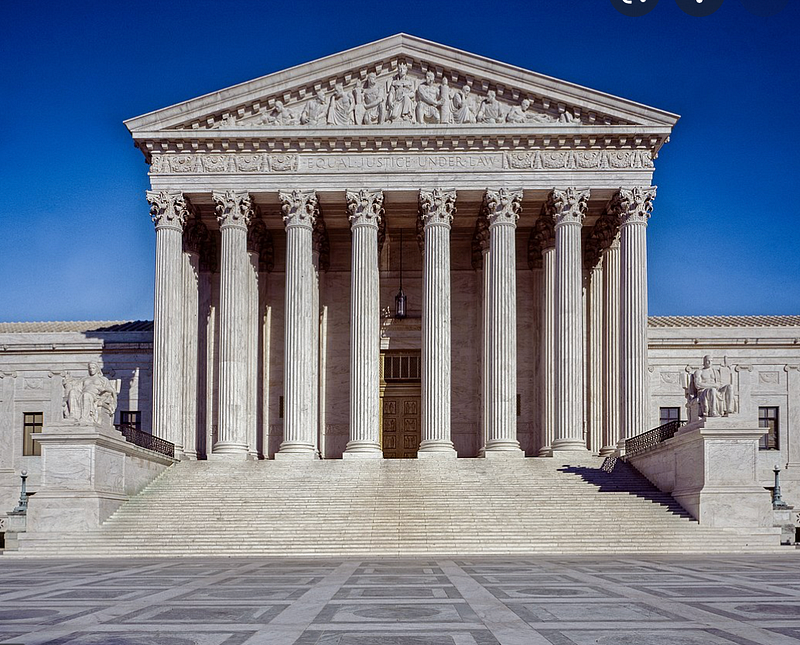
After the case was unsuccessfully appealed to the U.S. Court of Appeals for the Fourth Circuit, it made it to the U.S. Supreme Court. Considering the U.S. Supreme Court receives hundreds of requests for review every year, and the Graham case was accepted for review, that was a good sign.
When the case reached the U.S. Supreme Court, the fact that the late Justice, William Rehnquist wrote the majority opinion, in this case, should have been a red flag. Mr. Graham’s lawsuit was reinstated and the original trial court judgment was vacated but instead of bringing the hammer, Rehnquist changed the history of policing in America.
Rehnquist wrote that the following was now the new standard in police cases involving allegations of brutality:
“whether the officers’ actions are ‘objectively reasonable’ in light of the facts and circumstances confronting them, without regard to their underlying intent or motivation. The ‘reasonableness of a particular use of force must be judged from the perspective of a reasonable officer on the scene, and its calculus must embody an allowance for the fact that police officers are often forced to make split-second decisions about the amount of force necessary in a particular situation.”
As writer, Alan Singer noted in 2017, Rehnquist establishes a neutral test for these cases that is colorblind and does not even consider race at all. Singer stresses that America is not neutral on the issue of race historically and it is impossible to ignore race. In this case, just reading the record makes it obvious the police officer pulled Mr. Graham over because he is Black.
The U.S. Supreme Court gets the last word in the U.S. and after that, courts must follow the legal interpretation that the court provides. In Graham, the Court remanded the case and provided instructions on this new standard. It was a disaster.
While slightly better than the prior standard, it still was no good for people maimed by the police or even killed. In addition, it provided police officers with an almost airtight defense in police brutality cases. It has become known as the Graham standard.
If a police officer could objectively (not subjectively) prove that they acted reasonably in a particular circumstance, their actions were justified. Mr. Graham’s case was remanded and he received a new trial. He lost again.
It is pretty clear why he would lose too. It is also clear why few police officers rarely get held accountable under such a stringent standard. All the officers need to say is they felt as if their life was in danger and they acted on that belief. Unless that officer’s belief is unreasonable, it is unlikely they will ever encounter any issues.
But, we all know the better standard should be a subjective standard in America. It shouldn’t be the objective beliefs of a reasonable officer but it should be a subjective standard or the evaluation of the situation should take into account many other factors.
Like, the officer who pulled Mr. Graham never should have pulled him over. He pulled him over because he was Black. That should have been taken into account in the case review. It wasn’t.
Interestingly, when the Graham case was decided, several of the other justices on the court also thought the standard was problematic. The justices, as Alan Singer noted, in 2017, did not want Rehnquist’s test extended to any other case. The standard should be contained to just this case. It wasn’t. It has spread to every police brutality action now.
In particular, several justices agreed that the trial decision should be vacated but they also believed that there was no reason or justification for coming up with a standard right now that police officers must follow in these kinds of cases. But it was too late. The conservative justices ruled in favor of the officers (though the case was vacated) because that officer's personal feelings were set apart.
As an example, in the O.J. Simpson case when it was discovered that Mark Furhman was a hardcore racist, that info was offered to the court as evidence that Furhman might have acted in bad faith. The O.J. Simpson trial was not a civil suit but Simpson’s lawyers litigated it as if the police department was on trial.
The judge did not allow hardly any of the Furhman racist evidence into evidence but he did hold a hearing which was televised. The belief today is the families of the jurors watched the hearings and then reported to their family members on the jury that Furhman is a racist.
The overall point though is, it was important that Furhman was judged as himself and not as a police officer with no beliefs or personal feelings about race that could impact his conduct.
In the Graham case, a mistake was made in 1989. It was never corrected. Graham has imprisoned our society legally. It never should have happened.
Related Stories
Sources and References
The Baxter Bulletin — Mountain Hill, Arkansas
‘subjective’ — based on or influenced by personal feelings, tastes, or opinions.