
Of The Killing Of Sean Bell
A Forgotten Killing But His Death Is Now Part Of A Movement
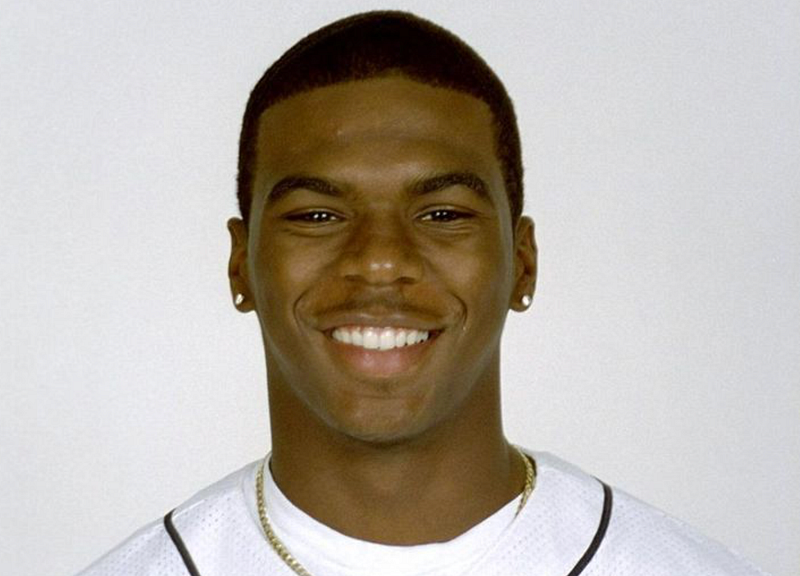
The day after Sean Elijah Bell was killed in New York City, the New York Times reported his death rather casually:
“Hours before he was to be married, a man leaving his bachelor party at a strip club in Queens that was under police surveillance was shot and killed early yesterday in a hail of police bullets, witnesses and the police said. Two of his friends were wounded, one critically, they said.”
Bell was 23 years old when he was shot to death by NYPD in his car outside a strip club on November 25, 2006. He was to be married later that day.
Today, this year, in an era of much more public outrage and protest over the killings of unarmed Black men, Bell would be turning just 38 later this month. If he had been killed today, it is likely protest would be more intense. One has to wonder.
Don’t be mistaken though — in late 2006, Bell’s shooting death was shocking. Amadou Diallo had been killed in a hail of 41 shots a few years before in New York and no police officer was convicted for it. Bell’s case went a bit further — Bell and the occupants of his vehicle had 51 bullets fired at them.
Then there was New York City Mayor Michael Bloomberg famously stating in the days following the shooting that it sounded to him like “excessive force was used.”
More than 50 shots, according to Bloomberg was “inexplicable” and “unacceptable.” Yet, the case, to this day, remains perplexing and again, there were no convictions. To this day, most who remember it, can’t believe the officers were acquitted.
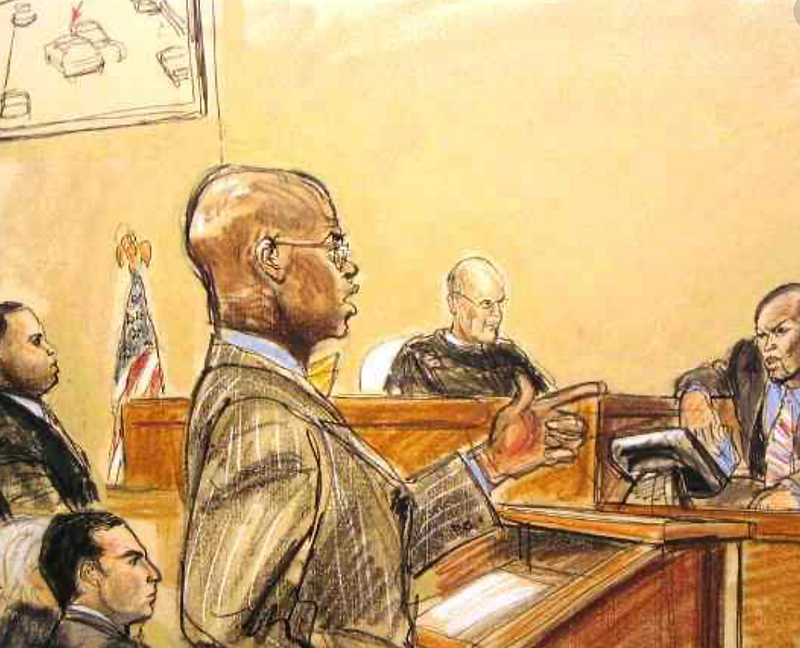
The trial was public and well covered in the media; yet, nothing. The officers and their superior officer were forced off the police force but that’s it. The trial, at least some of it, strongly suggests something went wrong.
According to Lieutenant Gary Napoli, the commanding officer of the officers who had been working the Club Kalua, the spot where Sean Bell and friends hung that night, none of his officers identified themselves as police officers when they converged on Sean Bell’s automobile that night.
It was 4:00 am in Jamacia Queens.
Napoli’s testimony, as reported by Newsday during the trial is stated as follows: “…he didn’t hear anyone shout ‘police’ or ‘Stop, police’…”
Napoli added that he didn’t recall seeing any of the officers in his unit display a badge, although he stressed he wasn’t looking for badges at the time. The second fact is important.
Jean Nelson, one of the more than 50 witnesses who testified in the Sean Bell trial, testified consistent with Lieutenant Napoli’s version but with one important caveat.
Nelson testified that the officers did not yell: “police,” nor did they say “stop police” when they descended upon Bell’s car. Nelson testified that one officer pulled out his gun as he walked towards Bell’s car and said — “let me holler at you.”
Now put yourself in Bell’s spot and in his mind.
It is 4:00 am in the morning. Someone is walking towards your car in the dark of night. They are dressed in plain clothes and packing steel. Bell had just argued with someone out front of a strip club and threatening words were exchanged.
The person you argued with advised you they were armed, and they would use their weapon without hesitation. Moments later, your car is rammed, and then someone is coming towards your car in the dark with a gun and they say: “let me holler at you.”
Right away, Sean Bell made his choice. Bell hit the gas and tried to escape, to save himself, at least in his mind. He thought this was it. These were not police officers, in his mind; the car that rams him are the people he argued with outside the club.
Mr. Bell hits a police officer in the leg on his way out even though he didn’t know it was an officer. He thought he was about to die. He was right just not by the guys he argued with at the club.
The officer reacts. His fellow officers react.
The reaction is 51 bullets, a storm of hot lead. One officer, Michael Oliver emptied one clip, re-loaded, and kept shooting. He got off 31 rounds in just a few seconds. Two other officers, both of whom were black, were responsible for the rest of the barrage.
As the Sean Bell trial began, I intentionally did not pay attention to it. I knew how it would end. I smelled a rat and knowing the law, I knew police officers can use deadly force if a reasonable police officer believes their life is in danger.
To this day, most observers don’t understand how it is you can unload that much firepower on unarmed men and not be guilty of something.
Bell’s death and the trial of the officers represented what we long for in these cases — equal justice. Right after the not guilty verdicts, my email inbox was flooded with anger and sadness as friends and acquaintances chimed in on the justice system and how it failed us again.
There was little, if any, reflection or empathy. Poems were written quickly about the episode, message boards loaded up with stark commentary about racism, police, and the failure of the system again.
Most of what I read had nothing to do with the Sean Bell case. But to the individuals who were making the comments, it didn’t matter. They barely knew the facts but a man was dead, he was black and the shooters were police officers.
No one cared that the prosecution had a difficult task of proof in the case, that several key witnesses changed their stories (the judge noted this was central to his verdict), and that it was not a jury trial (the officers waived their jury trial rights and asked a judge to hear the case).
But the problem with Sean Bell’s murder was that it was a tragic killing but was much more tragic because it was the result of an unfortunate series of events that were highly unlikely. The Bell case, in other words, is terribly sad but from the start based on the way the law works, a conviction was highly unlikely.
This is not even to say that there should not have been accountability in the case; it was just not going to happen. And when the U.S. Department of Justice did not bring a civil rights claim, it only compounded the lack of accountability.
Heather MacDonald, a frequent apologist for the killing of unarmed Black people, again dismissed the killing of Sean Bell. Oddly, she admits police officers make mistakes but she does not say that they should be punished criminally for their mistakes, which happens all the time to all sorts of people for mistakes.
Fact is whatever happened out there that night, Mr Bell was killed. It was again the result of how policing is done (the police went right to escalation during the confrontation that they started) and racist beliefs about Black men.
In June 2008, Mumia Abu-Jamal, the writer, and political prisoner, summed up the incident as follows:
“That they were Black men ~ even unarmed Black men — was deemed sufficient to unload on them, because in America, their color was crime enough. So, 22 year old Sean Bell joins Amadou Diallo, and others guilty of the capital offense of WWB-Walking While Black. And while millions of Black and white Americans thrill at political illusions of “post-racialism”, Sean Bell’s case proves how deeply deadly race can still be.”
Little did most of us know that injustice of the Sean Bell killing was a steppingstone to the movement we have today for real, long term change to the system.
In the aftermath of the horrible verdict, only 150 people showed to protest the verdict initially. Perhaps, by this point after Rodney King, and Amadou Diallo, people were exhausted mentally. Rev. Al Sharpton even went as far as to praise the peaceful response to the injustice.
Sharpton was criticized for his inaction, by some.
However, the initial cynical response to the verdict is probably much more simple: no video evidence, no violent outrage. No phone camera account of the 51 bullets being sprayed at Bell and his friends at 4:00 am in Queens.
In 2006, the average person did not yet have a smart phone to record the event. It was the same in the Amadou Diallo case though that verdict got a response.
Yet, two weeks later, Rev. Al Sharpton and others did organize marches through New York and clogged traffic. May 8, 2008. Over 200 people were arrested. The traffic snarls pissed many off but the message was sent.
We are not going away. You will not sweep this issue under the carpet. And for Rev. Al Sharpton, it was one of his best moments. A strategic protest that got maximum news coverage and shook things up in the name of justice. The issue was front and center that day — a precursor of things to come:
Complex Magazine — The Death of Sean Bell


