
The Capstone mission has launched and will explore the orbit of the future Gateway lunar station!
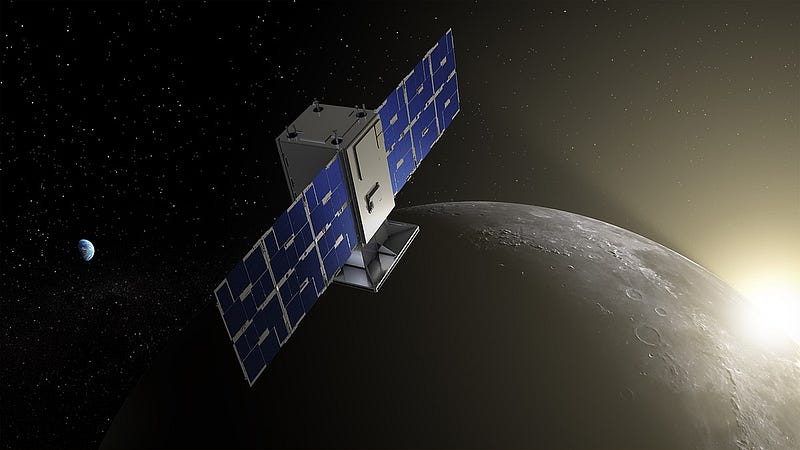
A small satellite with a size of only 34 x 61 cm. A small Electron rocket, only 17 meters high. Low cost, at only $30 million. And yet it is definitely a great mission, demonstrating that even small companies can make quite a contribution to elaborate space programs, such as the return to the Moon program currently under development, the international Artemis program.
.jpg)
On Tuesday, Rocket Lab’s Electron rocket lifted off from New Zealand’s Spaceport to carry the Capstone satellite into orbit. This tiny satellite, a cubesat belonging to Advance Space, has a big task: to study the stability of an elongated, elliptical orbit called a halo. The same one on which the first orbital station around the moon, Gateway, is expected to travel in a few years.
This satellite, weighing about 25 kg, was launched by the Electron rocket belonging to the New Zealand-American company Rocket Lab. However, it was not the same Electron, whose last stage quite recently returned to Earth caught by a helicopter.
Capstone mission — preparations
Scientists spent two years assembling equipment on the small rocket that is used in large rockets designed to fly into deep space, such as the Saturn V and the SLS, which is now being tested. Since the rocket is very small, all the equipment had to be miniaturized. A completely new, third stage of the rocket, the so-called Photon, was also designed. It is equipped with the latest generation Hyper Curie engine. Photon will first carry the satellite into a so-called transfer orbit, after which the cubesat will reach the vicinity of the Moon, and then continue its journey, allowing it to perform the tests necessary for future Venusian and Mars missions.
The selection of radio communication system components was also important in the Photon/Capstone mission. It is important to properly configure the antennas and ensure communication with Photon even when, after separation from the satellite, it begins to move away from Earth to reach a distance of 1.3 million km. This is 3 times farther than the Earth-Moon distance.
Maintaining such communication is akin to aiming a narrow laser beam at a coin-sized point hundreds of thousands of kilometers away — which is why testing of Photon’s radio transmitter alone took six months.
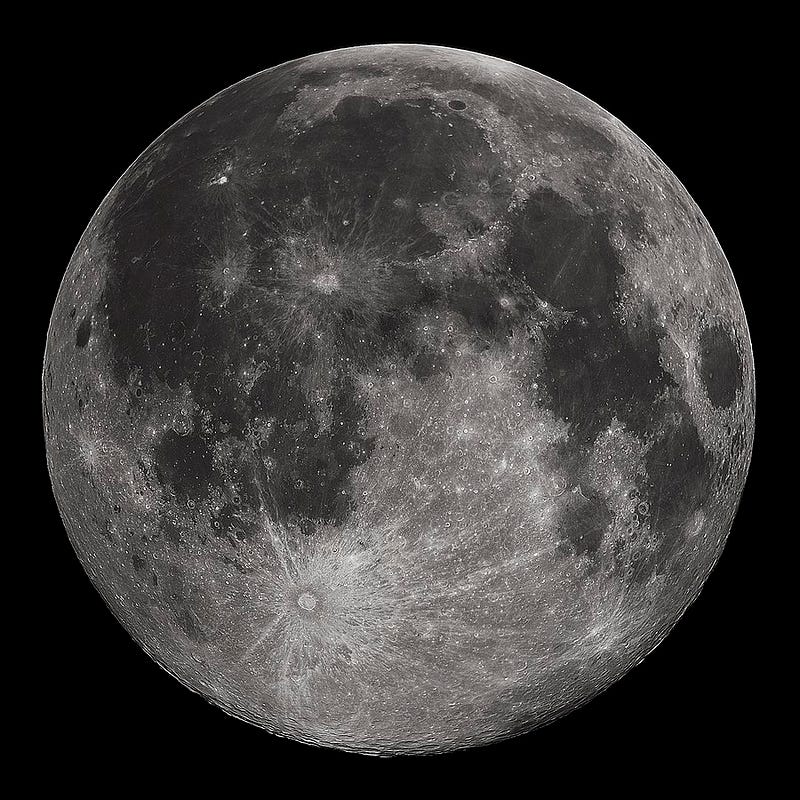

On its way to orbit
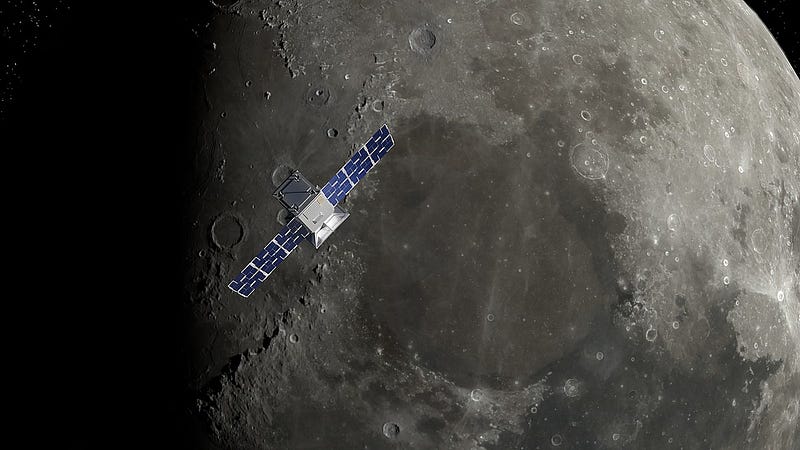
The Photon with the Capstone cubesat on board will travel around the Earth for six days, slowly changing orbit to a higher and higher orbit to reach what is known as a transfer orbit, whereby the released Capstone will enter what is known as a rectilinear orbit around the Moon, called a halo orbit.
Thanks to its special location, the satellite will never lose contact with Earth because it will never be on the other side of the Moon, where communications could be severed.
.jpg)
Interestingly, no other satellite has appeared in this orbit to date. This makes this mission valuable to NASA’s space agency. This is because the existing mathematical models will be verified.
But NASA is not responsible for the Capstone satellite mission. It’s another company called Advanced Space out of Denver that only employs 45 people. The company managed to buy the satellite for the mission from yet another company, Terran Orbital.
The Capstone mission will hit its target orbit on Nov. 13, 2022. The Photon mission will end even earlier, in late September or early October of this year.
Cool that you made it to the end of this article. I will be very pleased if you appreciate the effort of creating it and leave some claps here, or maybe even start following me. Thank you!