
A giant spot on the Sun has doubled in size in just 24 hours — It’s headed straight for us!
A giant spot on the Sun has formed near the solar equator over the past week. It may be the source of solar flares. However, according to scientists, they will not be dangerous for our planet.
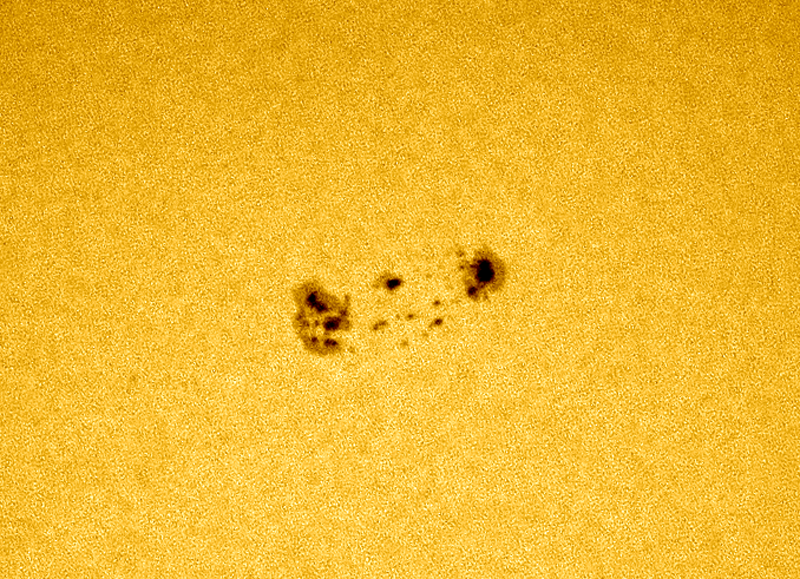
Observations of the Sun have revealed many surprising phenomena that occur on the surface and in the atmosphere of our star. One of these is sunspots. These are spots on the Sun’s surface that are noticeably darker and cooler than their surroundings.
The lower temperature is due to an unusually strong magnetic field. This keeps the heat inside the star from rising to the surface.
“In simpler terms, a sunspot is simply a region of strong magnetic activity,” — explains Rob Steenburgh, head of the National Oceanic and Atmospheric Administration’s Space Weather Forecast Office. That is, the science center tasked with tracking and forecasting weather on the Sun.
What is a solar flare?
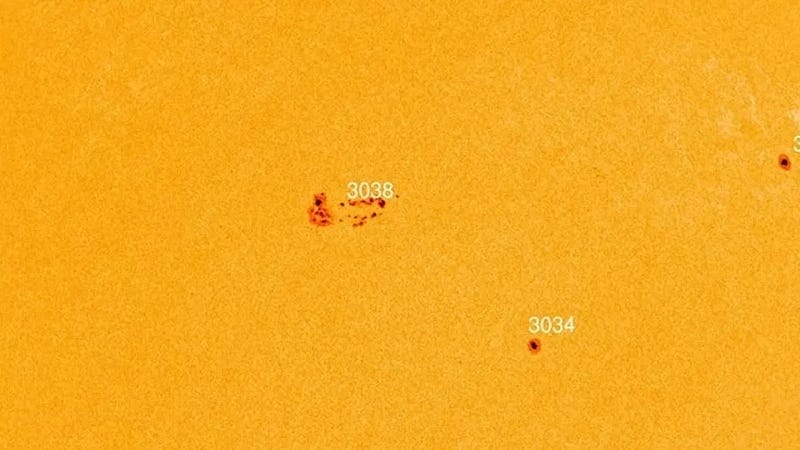
Recently, a region of the Sun identified as AR3038 has attracted the interest of NOAA (and other similar institutions) scientists. This is a giant sunspot that is located near the star’s equator. It is pointed straight toward Earth.
In the 24 hours between last Sunday and Monday, its size expanded as much as twice. Right now, the diameter of AR3038 is 2.5 times the diameter of the entire Earth.
Why does this matter to us? Sunspots can generate solar flares. They are the result of changes in the sunspot’s strong magnetic field. The result can be the release of huge amounts of kinetic and heat energy.
Does a solar flare threaten Earth?
AR3038 looks threatening, but scientists reassure — it shouldn’t cause us much trouble. The spot has already been the source of class C flares, the effects of which are not felt by us. According to C. Alex Young, director of science at NASA’s Goddard Space Flight Center, the energy it contains could at most lead to an M-class flare, which is a medium-sized flare. The chances of that happening are 30 percent.
Solar flares are designated by the letters A through X. A number is then added to indicate the intensity of the phenomenon. The strongest flares are marked X20. They could threaten the operation of satellites and lead to the failure of communication and power grids on Earth. Fortunately, they happen on average once per solar cycle. M-class flares, on the other hand, can cause radio transmission problems near Earth’s poles at most.

How dangerous can a coronal mass ejection be?
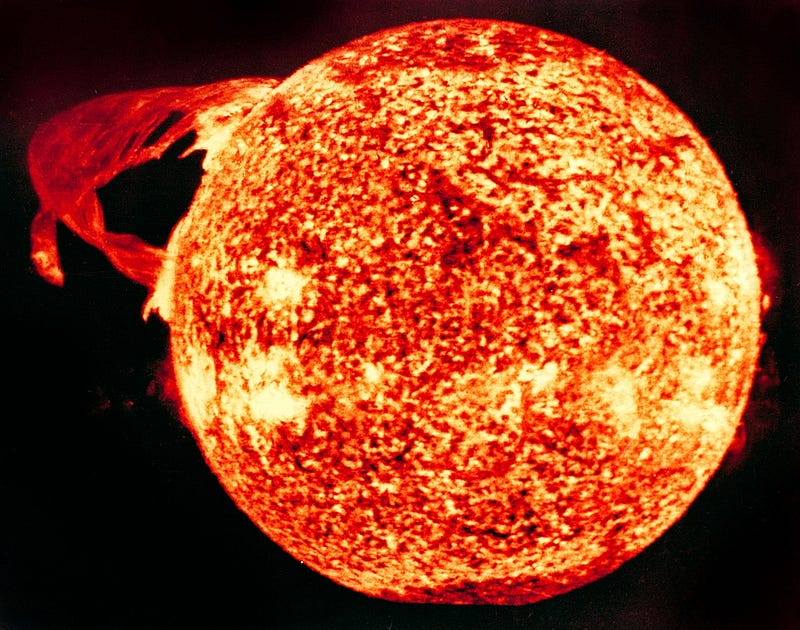
A coronal mass ejection occurs when heated gas — or plasma — is ejected into space after breaking free from the Sun’s atmosphere. When a coronal mass ejection reaches Earth, it can “break through” the magnetosphere and cause a magnetic storm on Earth.
How serious could its effects be? According to scientists, the strongest magnetic storm was recorded in 1859. It was the so-called Carrington Event. It was named after the astronomer who observed the solar flare that was the source of the powerful CME. Telegraphs stopped working around the world at the time, and auroras brighter than the moon were even seen in the Caribbean.
According to modern researchers, the energy released was equivalent to the explosion of 10 billion nuclear bombs with the force of one megaton. Today, such a powerful CME could destroy satellites and terrestrial power installations.
Sources: phys.org, Science Alert
Cool that you made it to the end of this article. I will be very pleased if you appreciate the effort of creating it and leave some claps here, or maybe even start following me. Thank you!