avatarGunnar De Winter

Free AI web copilot to create summaries, insights and extended knowledge, download it at here

2866

Abstract

ked to an increased chance of stomach cancer. They do this probably by directly causing tissue damage.</p><p id="2b35">There are also indirect effects. Not all our mini passengers directly damage tissues, but some of them might produce molecules that can increase the odds of developing cancer.</p><p id="7b82">For example, some gut bacteria can metabolize estrogen and the molecules they produce can <a href="https://academic.oup.com/jnci/article/108/8/djw029/2457487">affect breast cancer risk in postmenopausal women</a>. Another example of an indirect effect: your gut microbiome affects the risk for developing obesity and obesity is linked to cancer risk. Presto, indirect effect. Even beyond obesity, how our gut microbes deal with the typical Western diet — high in animal protein and fat — can affect cancer risk. Some microbes <a href="https://www.tandfonline.com/doi/full/10.1080/19490976.2016.1150414">metabolize taurine (found mostly in animal tissues) into acetate and ammonia, with a side of hydrogen sulfide</a>, a known ‘genotoxic’ molecule. Result? Increased risk for colon cancer.</p><figure id="880d"><img src="https://cdn-images-1.readmedium.com/v2/resize:fit:800/0*sXdE2xArcnSUVe_v.png"><figcaption>A disrupted gut microbiome (aka dysbiosis) can increase the odds for colorectal cancer, either directly through tissue damage and inflammation, or indirectly through the production of toxic compounds. (Wikimedia commons, Cécily Lucas, Nicolas Barnich and Hang Thi Thu Nguyen)</figcaption></figure><h1 id="01cb">The microbiome in cancer</h1><p id="998b">So, our microbiome(s) can affect our cancer risk, but does cancer itself have a microbiome? A tumor may start as a single cell, but it quickly graduates to a mass of cells. Plenty of room for new tenants, one might think.</p><p id="35f8">And indeed, <a href="https://science.sciencemag.org/content/368/6494/973">recent work has identified tumor-specific microbiomes</a>. Tumors have a microbiome that differs from the ‘regular’ microbiome. And what’s more, different tumors have different microbiomes. Breast cancer seems to have a very rich and diverse microbiome.</p><p id="a761">The unique amenities offered by tumor cells (e.g. certain metabolites, remodelled tissue, new blood vessels…) seem to attract a specific crowd.</p><p id="e4d5">Most of the bacteria in the microbiomes of different tumors had made a home inside the actual tumor cells. But, interestingly, some members of the tumor microbiome(s) also nestle themselves within the immune cells near or in the tumor, where they <a href="https://medicalxpress.com/news/2020-05-cells-bacteria-cancer.html">can potentially alter the immune response against tumor cells</a>.</p><h1 id="b31b">The microbiome against cancer</h1><p id="03c4">Given that our microbiome seems to directly and indirectly affect the odds of developing cancer,

Options

and the fact that tumors have a unique microbiomial signature, can we leverage that knowledge to our advantage? Can we manipulate our microbiome to decrease the odds of developing cancer, or even fight cancer? Can we ‘disrupt’ tumor microbiomes to the tumor’s detriment?</p><p id="0e45">Well, maybe.</p><p id="0d53">Remember that microbiomes are complex ecosystems. Many bacteria, viruses, protozoans, and fungi constantly interact with each other, each doing its thing and producing certain molecules which may or may not be used by other members of the microbiome ecosystem.</p><p id="9f4e">There are, however, some hints that the microbiome might offer a new route in the fight against cancer.</p><p id="5e4e">For example, <a href="https://www.nature.com/articles/d42859-019-00060-w">certain microbiome compositions have been linked to a better response to immune therapy</a>. A study in a mouse lung cancer model even identified <a href="https://microbiomejournal.biomedcentral.com/articles/10.1186/s40168-020-00811-2">specific species of bacteria that improved the response to immune therapy</a>. Also, <a href="https://www.cancernetwork.com/view/effect-antibiotics-immunotherapy-outcomes-urgently-requires-further-look">exposure to broad-spectrum antibiotics (which wipe out parts of the microbiome) prior to immune therapy negatively affects the response to that therapy</a>. So, it seems that there are microbiome members that could help us out.</p><p id="8f81">Further, the tumor microbiome composition itself also affects the response to treatment. <a href="https://pubmed.ncbi.nlm.nih.gov/31398337/">Pancreatic tumors, for example, respond better or worse to treatment depending on their specific microbiome</a>.</p><p id="6e31">But, sadly, we’re not there yet. There’s no (or not yet?) a pro- and/or prebiotic that can treat and/or prevent cancer. Studies in humans tend to be correlative and actual intervention studies are — as of yet — mostly done in mice or petri dishes. The actual mechanisms of the effects we observe are not yet entirely elucidated either. As <a href="https://jitc.biomedcentral.com/articles/10.1186/s40425-019-0574-4">an excellent recent review</a> puts it:</p><blockquote id="6053"><p>Moving forward, there is need for a deeper understanding of the underlying biological mechanisms that link specific bacterial strains to host immunity. Integrating microbiome effects with other tumor and host factors regulating immunotherapy responsiveness versus resistance could facilitate optimization of therapeutic outcomes.</p></blockquote><p id="089c">However, there are reasons for hope. This is a relatively unexplored, yet fat-moving field of research. This combo means that high-impact discoveries might lie waiting just around the proverbial corner.</p><p id="4d84">Or, maybe more accurate, in the microbiome.</p></article></body>

The Cancer Microbiome

Our microbiome affects several aspects of cancer, and even tumors themselves have a distinct microbiome
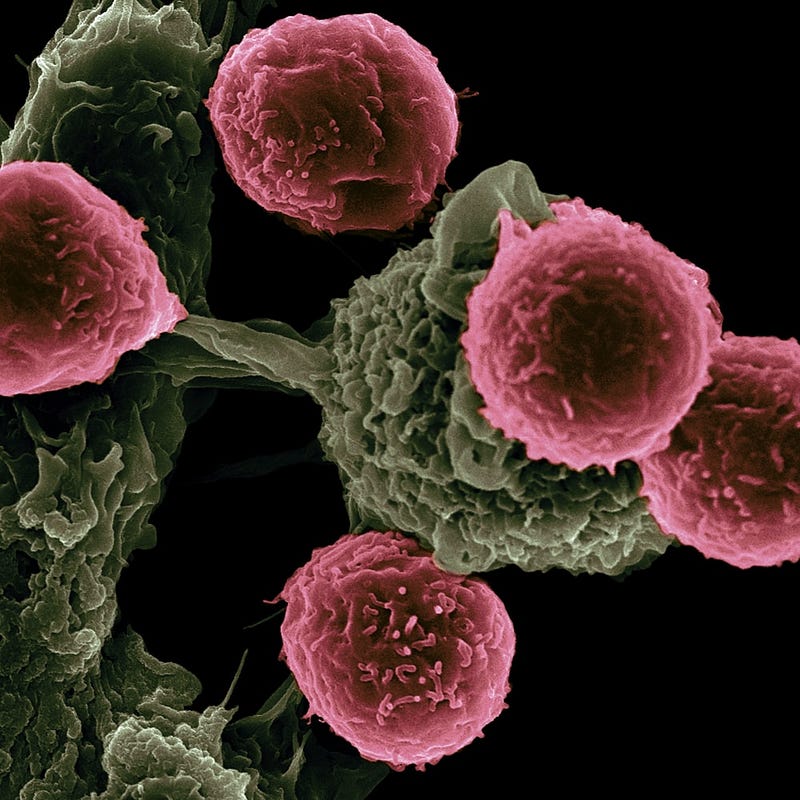
(Pixabay, National Cancer Institute)

Mini me’s

By now, we have all heard the term ‘microbiome’. It’s invaded the popular media. We read that our microbiome can make us sick, healthy, obese, lean, happy, sad, and it can even shape our personality traits.

The microbiome is hot, and rightfully so. The tiny tenants inhabiting us are increasingly being linked to various aspects of our lives.

But before we proceed to the topic of this post, two clarifications.

Microbiome is a general term that is used to refer to any microbial community that lives in or on a multicellular organism. So we have a skin microbiome (even a distinct armpit microbiome), nasal microbiome, gut microbiome… In the popular press, microbiome is also sometimes used specifically to refer to the gut microbiome.

Second, the (gut) microbiome is implicated in a lot of processes, from how we process our food, over our propensity for certain diseases, to our personality traits. But causation is not correlation. Does the microbiome cause any of those things, or do diseases/personality/food habits shape the microbiome? Probably a bit of both, which makes it very hard to pinpoint exactly what causes what. Keep that in mind.

On to the actual post.

The microbiome and cancer

When we’re looking at links between the microbiome and cancer, we’ll have to distinguish between direct and indirect effects.

Direct effects are those in which a microbiomial beasty directly affects the propensity of tissues to develop cancer. For example, infections and tissue damage are correlated with an increased chance of tumor formation (after all, the more you force tissues to rebuild, and thus cells to divide, the more chance something can go wrong).

Some microbiome members can forego their tenancy agreement and run rampant. We all know human papillomavirus (HPV) can increase the odds of developing cervical cancer. And the stomach ulcer bug Heliobacter pylori has been linked to an increased chance of stomach cancer. They do this probably by directly causing tissue damage.

There are also indirect effects. Not all our mini passengers directly damage tissues, but some of them might produce molecules that can increase the odds of developing cancer.

For example, some gut bacteria can metabolize estrogen and the molecules they produce can affect breast cancer risk in postmenopausal women. Another example of an indirect effect: your gut microbiome affects the risk for developing obesity and obesity is linked to cancer risk. Presto, indirect effect. Even beyond obesity, how our gut microbes deal with the typical Western diet — high in animal protein and fat — can affect cancer risk. Some microbes metabolize taurine (found mostly in animal tissues) into acetate and ammonia, with a side of hydrogen sulfide, a known ‘genotoxic’ molecule. Result? Increased risk for colon cancer.
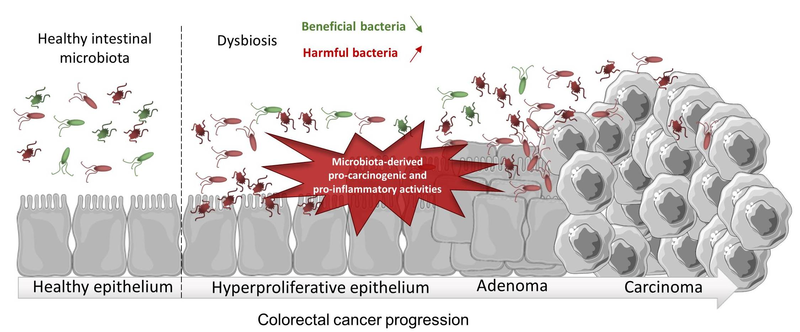
A disrupted gut microbiome (aka dysbiosis) can increase the odds for colorectal cancer, either directly through tissue damage and inflammation, or indirectly through the production of toxic compounds. (Wikimedia commons, Cécily Lucas, Nicolas Barnich and Hang Thi Thu Nguyen)

The microbiome in cancer

So, our microbiome(s) can affect our cancer risk, but does cancer itself have a microbiome? A tumor may start as a single cell, but it quickly graduates to a mass of cells. Plenty of room for new tenants, one might think.

And indeed, recent work has identified tumor-specific microbiomes. Tumors have a microbiome that differs from the ‘regular’ microbiome. And what’s more, different tumors have different microbiomes. Breast cancer seems to have a very rich and diverse microbiome.

The unique amenities offered by tumor cells (e.g. certain metabolites, remodelled tissue, new blood vessels…) seem to attract a specific crowd.

Most of the bacteria in the microbiomes of different tumors had made a home inside the actual tumor cells. But, interestingly, some members of the tumor microbiome(s) also nestle themselves within the immune cells near or in the tumor, where they can potentially alter the immune response against tumor cells.

The microbiome against cancer

Given that our microbiome seems to directly and indirectly affect the odds of developing cancer, and the fact that tumors have a unique microbiomial signature, can we leverage that knowledge to our advantage? Can we manipulate our microbiome to decrease the odds of developing cancer, or even fight cancer? Can we ‘disrupt’ tumor microbiomes to the tumor’s detriment?

Well, maybe.

Remember that microbiomes are complex ecosystems. Many bacteria, viruses, protozoans, and fungi constantly interact with each other, each doing its thing and producing certain molecules which may or may not be used by other members of the microbiome ecosystem.

There are, however, some hints that the microbiome might offer a new route in the fight against cancer.

For example, certain microbiome compositions have been linked to a better response to immune therapy. A study in a mouse lung cancer model even identified specific species of bacteria that improved the response to immune therapy. Also, exposure to broad-spectrum antibiotics (which wipe out parts of the microbiome) prior to immune therapy negatively affects the response to that therapy. So, it seems that there are microbiome members that could help us out.

Further, the tumor microbiome composition itself also affects the response to treatment. Pancreatic tumors, for example, respond better or worse to treatment depending on their specific microbiome.

But, sadly, we’re not there yet. There’s no (or not yet?) a pro- and/or prebiotic that can treat and/or prevent cancer. Studies in humans tend to be correlative and actual intervention studies are — as of yet — mostly done in mice or petri dishes. The actual mechanisms of the effects we observe are not yet entirely elucidated either. As an excellent recent review puts it:

Moving forward, there is need for a deeper understanding of the underlying biological mechanisms that link specific bacterial strains to host immunity. Integrating microbiome effects with other tumor and host factors regulating immunotherapy responsiveness versus resistance could facilitate optimization of therapeutic outcomes.

However, there are reasons for hope. This is a relatively unexplored, yet fat-moving field of research. This combo means that high-impact discoveries might lie waiting just around the proverbial corner.

Or, maybe more accurate, in the microbiome.

Health
Disease
Cancer
Microbiome
Science
Recommended from ReadMedium