
Buddhism
The Buddha’s First Teaching Is That Happiness Is Not Possible.
It’s the antithesis of our obsessive self-development culture
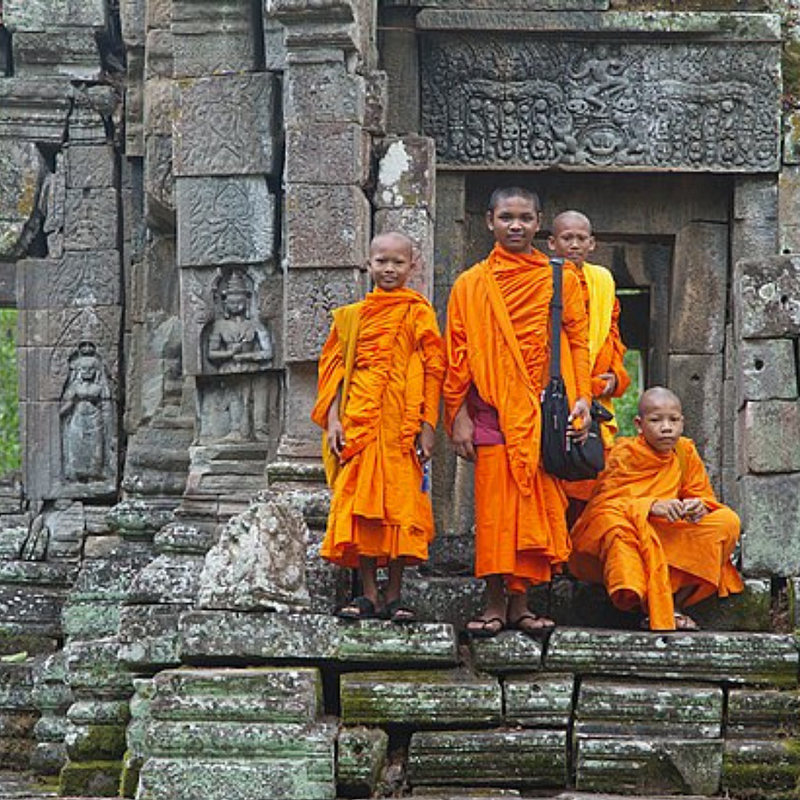
I am not enlightened. The following article is a series of ideas that have spewed forth from my crazy mind. They should not be taken as spiritual advice but only as food for contemplation. If you seek a spiritual path, please look for the guidance of a fully-realised master — not a sharp-tongued lizard-like myself.
It was the year 2001.
I know this because I had recently watched the September 11 attacks on television.
Don’t get me wrong here. I didn’t have some epiphany and realise how fucked up life was. Besides fascination, the attacks didn’t affect me emotionally at all.
I already knew the world was fucked. I had been hammering crystal meth daily less than a year before.
Anyway, I was living with three witches in a shitty suburban house.
I was off the meth, but the bongs had taken over.
I spent days reading, burning incense and watching a tremendous amount of movies on VHS — smoking at least twenty bongs a day.
Those were the days.
Somebody gave my girlfriend at the time a ‘Buddha in a Box’ for Christmas. The package included a small Buddha statue and a book containing some rather crude translations of the Buddhas teachings.
I brought my obsessive, weed fueled-personality to the task of reading the book several times before taking out every book on Buddhism I could find from the library.
A few days later, I announced to everyone at dinner
‘I am a Buddhist’.
When I hear the stories of people becoming Buddhists, they often say that the teachings just made sense to them.
To me, they didn’t make sense. I read about the four noble truths and emptiness repeatedly and didn’t get why the fuck people would want to get involved.
Looking back, it seemed to have a sense of annihilation to it.
Still, there was something about it that I found cool. I don’t want to sound like a wanker, but it felt like home.
The Buddhas first teaching is damn well depressing if you look at it from our cultural perspective.
If you study it correctly, it goes against everything our society is built on.
Our capitalist culture thrives on the desire for happiness. We can’t stand the idea of suffering, and we are taught that is inherently wrong.
Look at how we immediately ship off dead bodies while other cultures embrace them and keep them uncovered. Look at how we hide our meat consumption in giant abattoirs in the outer suburbs.
This rejection creates a deep, confusing situation where we feel guilty for suffering.
Society tells us that we are losers for not being happy like those we see on social media with their ‘perfect’ lives. Yet, the Buddha said life is broken and that any guise of happiness is only taking place within the frame of suffering.
We have a sense of this every day but we just can’t accept it.
From the perspective of our modern self-help culture, we are certain that we can find some happiness in this life as long as we can fix whatever is wrong with us.

We take this self-improvement culture and project it onto everything, including Buddhism.
We wander from situation to situation, thinking,
The following situation is the one. No, this next situation is the one.
The whole time, we are unaware that we are carrying the dissatisfaction with us from one object to the next.
We end up following Buddhism to find happiness and so it ends up as just another self-help tool.
This is a profound contradiction.
The first noble truth is commonly referred to as the truth of suffering.
You read the English translation of the Buddha’s opening line:
Monks, this life is suffering,
And, you might think the Buddha is being gothic or depressing or something.
I mean, anyone can make a general statement about how shit life is right?
Anyone can just have a bitch about how hard done by they are.
Some chunky calved trainer on Youtube might tell you to stop blaming life at this point.
But not the Buddha.
He is saying that our constant search for happiness is a wasted endeavour.

There is a story about a man sitting on the side of the road eating chillies.
He is sweating and burning his face off when a woman comes up to him and asks, ‘Why do you persist when you are in so much pain?’
He tells her, ‘I am waiting for a sweet one’.
Not knowing the nature of chillies, the man keeps eating.
Somebody needs to tell that bastard, I’m sorry about this, but the nature of chillis is to burn.
You can search forever and never find a sweet one.
The Buddha was saying precisely this when he preached the first noble truth.
Like the chillis, the nature of life is to burn. We can search for happiness forever and we will never find it.
We are like the man on the road constantly enduring the pain and waiting for the sweetness.
But it isn’t coming.
It’s not like there aren’t any clues around.
Our entire life, we have experienced the flux from good to bad, good to bad, good to bad. Yet, even with our tremendous sense of analysis and logic, we still feel we can permanently extend the good and end the bad.
It’s madness.
I hate it when people compare Buddhism to the Matrix.
It’s not that there isn’t Buddhist symbolism in there. It’s just so god damn cliche.
Yet here we are.
In the Matrix, Morpheus tells Neo that all he offers is the truth, nothing more.
To Neo, it turned out that the truth was more important than anything, regardless of how fucked up that reality was.
That's why he chose the red pill.

It’s the offer of the truth, it seems, that is also important to new Buddhists.
The Buddha’s revelation undermines our lives and goals. The happiness that we are taught will make our lives complete is a myth.
There is one giant overlying spectre that ruins everything we do. It’s the spectre of impermanence — the ghost of change — the Lord of Death.
Sure, we find ways to put a positive spin on death in our new age self-improvement culture, but it’s all just fake.
We all experience death.
Everything and everyone we know will die.
That’s a motherfucking hard pill to swallow.
But, rather than spinning the facts, the practice of the first noble truth is to accept it as it is, with all of its dark overtones.
Be Brave. Accept it.
Even when we talk about making peace with death, our crafty mind is still trying to find a way past it.
‘Maybe if I accept it, the pain will go away, we think.
But no.
Accepting death is accepting the pain as well.

The Buddha wasn’t beating around the bush, nor was his teaching.
Buddhism is concerned with the truth and only the truth.
The Buddha isn’t some ancient Anthony Robbins.
He is not trying to sell you some philosophy on how you can overcome your weaknesses, drive a Lamborghini and grow your penis by four centimetres.
The Buddha is not a Life Coach.
His first teaching is concerned with the truth and that truth is fucking painful.
He said that happiness isn’t possible. Sorry about that.
People can wash this down in all kinds of ways. They are desperate to keep Buddhism in the realm of self-development, so they say things like,
‘Happiness isn’t possible in the relative world, but there is this place called Nirvana where everyone is happy.’
Is such a distortion of Buddha’s teaching any different from other theistic religions that promise virgins, gold, nectar and all the rest if you can ‘win the game’ and go to heaven?
No.
The Buddha said there is no end to the game. You can’t fucking win this.
It’s an unwinnable game.
To really understand Buddhism, you need to understand this fundamental truth first.
There is a reason why Buddha taught it first. He wants you to develop a renunciation mind.
People often think of the renunciation mind as belonging to a monk who no longer eats meat, drinks alcohol or has sex. It’s associated with giving up things.
But this is inaccurate.
The renunciation mind understands that there is no inherent satisfaction in this world and gives up on chasing it.
According to the Buddha, once you understand that you are playing an unwinnable game, you are facing the right direction, and you can look for a better solution than ‘happiness’.
If ya think this was alright, sign up for my free newsletter. That’s where I put all the really good shit.
Also, do you like books, kind Sir/Madam/Other? How about bald, penis rocket spacemen who sell books? If so, visit my author page at the cracked head gasket of the economy AKA cockrocket.com.
More from Frank T Bird (That’s me):


