
The Black People’s Utopia
A prosperous Black community was subdued by a racist agenda.
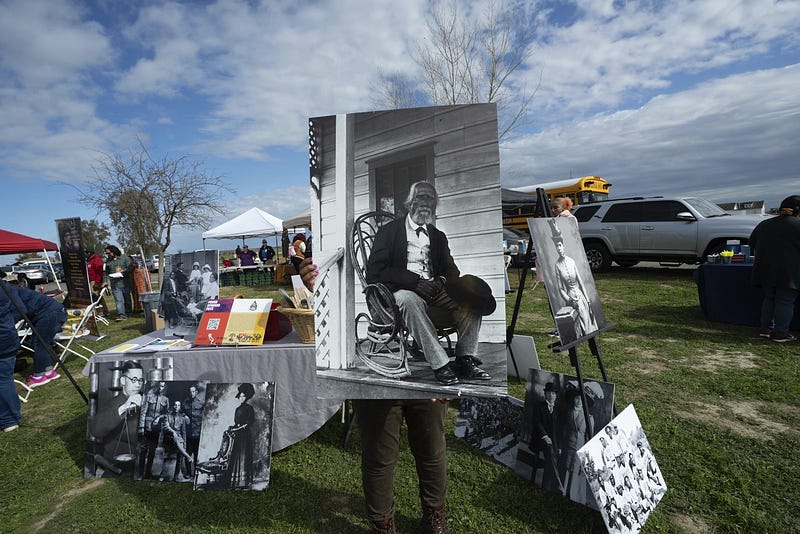
Colonel Allensworth State Historic Park has been a well-kept secret for too many years among the general populations over the state of California and the surrounding states. Allensworth State Historic Park has a history of prosperity and riches until the railroad came through their land without stopping and cutting off their water supply.
In 1914, the Santa Fe Railroad moved its rail stop from Allensworth to the white town of Alpaugh, about 10 miles away. Trains would not stop in Allensworth which affected its growth. Also, the town’s agricultural options were drastically reduced when nearby farmers diverted tributaries to irrigate their crops, cutting off Allensworth’s water supply.
The town’s growth was further hampered as a company with a racist agenda took control of Allensworth’s water rights to stunt the town’s growth. Residents regained control but the water declined over the years due to drought and diverted waterways, allowing arsenic to become more prevalent underground. The problem persists today.
Whites were out to stop the prosperity of Allensworth and they eventually did. Even some people think that Colonel Allensworth’s death in 1914 was not an accident as he visited Los Angles to raise state support for his proposed college. He was hit by a motorcycle as he was stepping off the curb to cross Monrovia street. The police said it was an accident but some others believe it was murder.
Allentown back in the day was called a Black utopia aka Freedmen’s town in Central Valley founded by Colonel Allensworth and a group of enterprising men in the early 20th century where Black people prospered free from racist ideologies. They sought to create their own haven away from the bonds of racism. In Allensworth, there was no racism and everyone got along. Allensworth, near Bakersfield, was the state’s first town founded, funded, and governed by Black Americans.
Today, a California Historic Park commemorates life in the unique prosperous community, similar to Tulsa, Oklahoma’s Black Wall Street community. During the turn of the century, similar Black townships sprung up around the country and prospered in the face of much discrimination.
Allensworth lured Blacks from all other the country looking for the Black utopian dream and was welcomed with kinfolk-like hospitality. Some families were given housing for free, and others ordered new homes (kits of lumber and supplies) from the Sears, Roebuck & Co. catalog and arrived via train. They all worked together to build each other’s homes. In Allensworth heyday, they had a few hundred residents.
Even the Buffalo Soldiers who settled there, taught the residents how to defend themselves, their land, the area, and city leaders initiated by the colonel’s friend, Booker T. Washington as they planned for a university. The population grew, and there was the emergence of a schoolhouse, post office, voting precinct, and “ladies’ improvement society”.
Allensworth was a formerly enslaved man who served in the Union Army and was its highest-ranking Black officer who died before fulfilling his dream of building a “Tuskegee of the West”. Racially motivated agendas ruined the town that spanned 2,700 acres which housed the first free-circulation library in Tulare County and a two-room schoolhouse built in 1912. There was a general store built in 1910 and they had a local bakery.
Having visited this site in the distant past, many historic buildings are scattered across 240 acres. These buildings are furnished depicting the life and times of the prosperous Blacks during that period and Allensworth’s pioneering efforts in Black self-determination. While much of the land has become a historical site, there are few Black residents and farmhands who still call the area home.
After the death of Col. Allensworth, the prospect of the Black Utopia seem to fade and the town’s residents began to move away. By 1973, Allensworth could not be found on the map. There appeared to be a calculated move to cause Allensworth to cease to exist.
Currently, there is a push by two nonprofits, Friends of Allensworth and the Allensworth Progressive Associations who are working with residents to continue the colonel’s quest for empowerment by developing agricultural academies and sustaining a farm with a future of becoming an economic engine for the region.
The California State Parks restored several buildings and declared Allensworth a historic landmark. In the 1990s, crowds would visit the historic park’s campground but the crowds have since fizzled out. Black History Month, Founder’s Day, and Juneteenth have caused more visitors to frequent Allensworth.
In conclusion, Allensworth will be resurrected to a new day Black Utopia and Colonel Allensworth’s dream will be fulfilled by those who see the value in this Black Utopia. Racism squashed Colonel Allensworth’s dream but love will resurrect his dream. Long live Allensworth. May the ancestors now rest in peace.
For additional reads:


