
New England Mingo’s Beach Real Owner
A short story about the legend of Robin Mingo, an enslaved man, and owner of Mingo’s Beach.
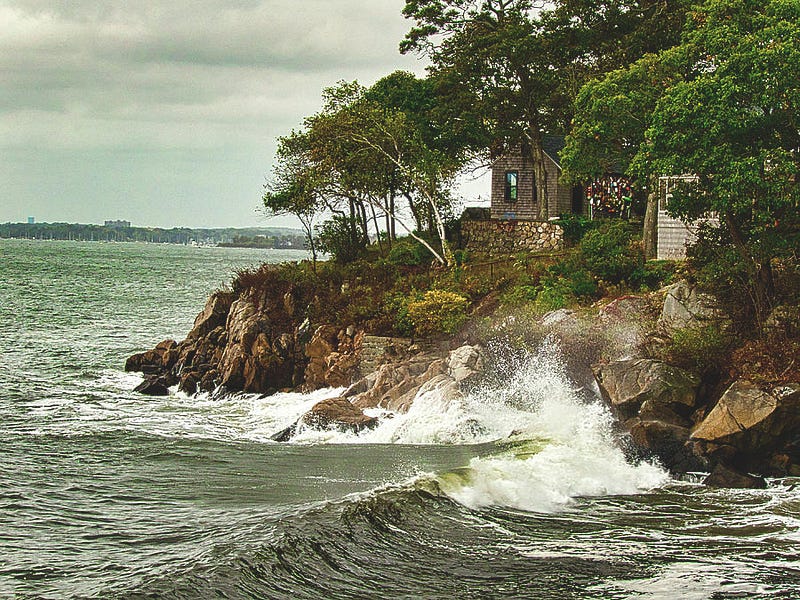
Slavery is at the core of America and there are many states making a concerted effort to recognize slavery for it is, what it did and what needs to be done to correct such an atrocity against the enslaved. Admittance is the first step toward a state’s healing.
New England has joined such states as California, Kansas, Colorado and a few others to right the wrong done in the same of slavery. California has gone one step further providing reparation for Native Americans and African Americans.
New England slavery route can be traced back to a Massachusetts beach, Mingo Beach, named after an enslaved man, Robin Mingo whose story became a local legend.
This story sound very familiar, check out Bruce Beach’s history, taken by force from the Bruce Family who were Black entrepreneurs who created a haven for Blacks.
Mingo Beach is located in Beverly, Massachusetts, and is playing a major role in the reality of tracing slavery along the Massachusetts North Shore. As the legend goes Robin Mingo took the challenge to walk out on the shores if and when the tide receded and would gain his freedom from his white slave master once done and that area of challenge was Mingo Beach. No one knows if he completed the task, drowned, or remained in slavery without the tide never receding.
Historians are working to piece together not only the slavery history in masschatuestees but adding credibility to Mingo Beach’s origin and the life of Robin Mingo. It has been documented that Mingo’s tale includes being married to a free Native American lady and his enslavers were the original founders of Beverly.
The Mingo’s puzzle includes Robin Mingo’s life according to local records suggesting that he was a real-life person who lived into his 80s, was baptized, raised a daughter, and was a landowner before his death in 1748.
Currently, there is much research to trace slavery in Massachusetts and to look into the real history underlining Mingo Beach, with the hopes to memorialize Robin Mingo’s legendary story. There are concerted efforts to allow Mingo’s legend to be the launching paid for tracing slavery and to create a memorial of recognition for him along with charting Beverly’s past history of slavery.
Local professors and students are mapping Mingo’s legend with books and virtual exhibits. Their intent is to map this North Shore location, Mingo Beach, with its historical significance to people of color and the possibility of becoming a historical landmark.
The goal is to tie the loops and holes of how slavery had been overlooked in New England. These changes will afford others to learn about not only slavery in New England but the truth regarding Mingo Beach’s founder.
Kudos to the historical society in Beverly as they make great strides to unearth the truth regarding slavery in this region of the country. They have launched a virtual exhibit that features stories of the enslaved in Beverly, a city 25 miles north of Boston. The identification of about 100 enslaved people and more than 200 local ships that were a part of the slave trade will be included in the exhibit.
According to a local historian of the historical society board, slavery was given a different face in New England, i.e. it didn’t exist or was different from other states. Records show that the enslaved Africans were the workers of the land and gave rise to its prominence in farming, fishing, and building ships.
Historical records convey that Massachusetts was among the first states to abolish slavery in 1783, even though other records convey slavery persisted there until the early 1800s as it gradually disappeared.
Tracing slavery and the slaves’ journey in Massachusettes is key to unifying another state that has far too long stood on the sidelines like slavery never touched its shores. Living a lie will only perpetuate more lies. As the old saying goes, “the truth will set your free.”
In conclusion, it is never too late to unveil the truth regarding slavery in this country. All states should stand up and take ownership of slavery and make amends for healing to occur throughout the land. It is time for lies to take a back seat and the truth unveiled in books, exhibits, and all media outlets.
For additional reads:
Such slave narratives typically centered on the harsh reality of Southern plantation life and the extraordinary perils some slaves endured to escape to freedom, making Mingo’s tale a uniquely New England take on the genre, she said. “What we know right now is a puzzle piece,” Matelski said. “As a historian, you’re like a cold case detective, trying to create as complete a picture as you can of this really important story that hasn’t been told.” Marcelo writes for the Associated Press.


