
The Bilbao Effect: Language, Legends, and the Pointless Search for Authenticity
Bulk buying in Basque Country
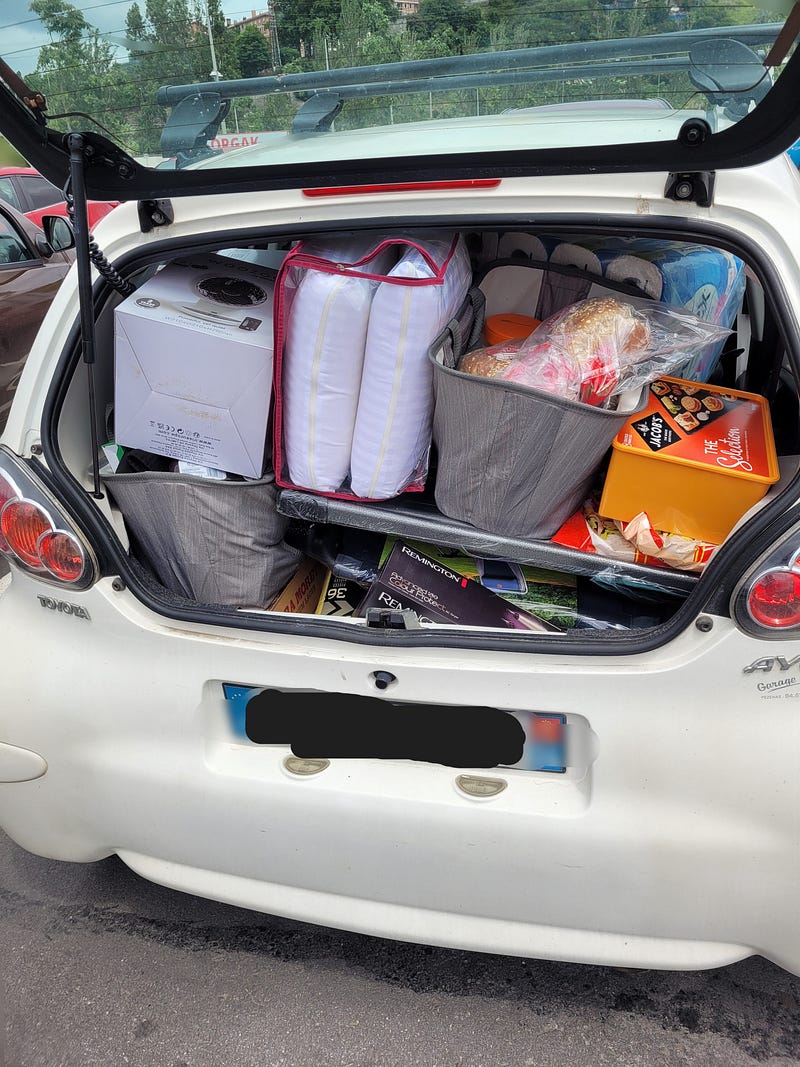
How far would you go for a Costco run?
During the darkest and most isolating days of the COVID-19 pandemic, my wife shopped for a living.
She wasn’t a reseller, one of those parasites who cornered the market on the suddenly thin supply of toilet paper to extort government dollars from panicking neighbors. She sold unnecessary things at healthy markups to people who couldn’t or didn’t want to go to the store themselves.
In those days, Costco was one of her most valuable suppliers.
She loves to shop. But she’s not the kind of woman who dreams of traipsing through the boutiques of Beverly Hills or Milan. The kind of shopping she likes is the suburban housewife type, scouring the big box stores and strip malls for bargains.
There aren’t many things I hate more.
But a wife’s birthday demands a sacrifice, bloody as Baal with his bulls and boys.
In Europe — excluding the UK, exceptional as always — Costco outlets are rare. There are only two stores in all of France, both in the outskirts of Paris. Where we live close to the Spanish border, our local Costco is actually in Bilbao, a solid six-hour drive away.
Sometimes, love is a long road.
The Spain we know is Catalonia
The clear turquoise waters of the Costa Brava and its sun-soaked beaches. Gaudi’s Catalan modernism that makes the buildings of Barcelona seem like they have grown out of the pavement by the forces of nature. The bookstores of Girona. The half-submerged town of Darnius Lake.
When we think of Spain, we think of rocky mountains flanked with scrub that makes them look poorly shaved, and the wild wind keeps the sky blue and blank and bare.
But the countryside around Bilbao, all the way across the narrow neck that joins France to Spain, couldn’t be more different.
We drove across France for hours, paying the heinous tolls that keep the roads glassy-smooth, until Bayonne. Then we kept heading east and south across the blind border until the crashing waves of the grey Atlantic raged at the base of tall cliffs.
This part of Spain is astonishingly green. Bilbao averages just under 1200 mm of rain every year, making it much rainier than London and comparable to the eternally dripping West Coast of Ireland.
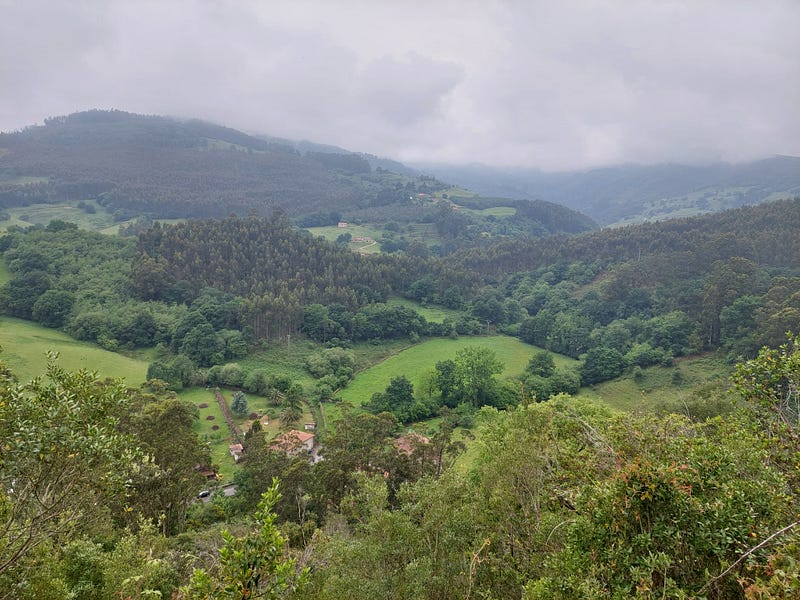
In fact, it was Ireland I found myself thinking of most as we made our way through the autonomous Basque Country. The same sheets of rain blowing in off the silver sea to make the trees grow tall, and the fields glow in a dozen shades of differentiated green. The same craggy cliffs frowning over the foaming white waves. There was a time when ETA, the Basque separatist group, and the IRA were Europe’s most feared terrorist organizations. Or freedom fighters, depending on your politics.
Maybe resistance foments under low clouds.
But the links go further than that. Strong rain makes roots grow deep, and all rain runs into the same sea in the end.
“What the fuck have I done to these people?” —
Frank Gehry, after seeing the Bilbao Guggenheim he designed
They call it the Bilbao Effect
Cultural investment and flashy architecture can transform a city. Before it was chosen as the location for a branch of the Guggenheim Art Museum, Bilbao was a former industrial city in decline. Once a center for mining and steel production, Bilbao went down the same path every manufacturing city in the western world suffered in the late 20th century.
The mines and the factories close. The manufacturing jobs that used to support thousands of families disappear to the other side of the world, leaving behind pollution, the rusting hulks of manufacturing plants, and a deepening sense of despair.
It’s a sensation I know well. I grew up in a town around the same size Bilbao, with a similar history of manufacturing that evaporated by the time I got out of school. But Coventry didn’t get a Guggenheim. Bilbao did.
Opened in 1997, the Guggenheim is now Bilbao’s top tourist attraction. A $100 million investment into the city’s decaying waterfront revitalized the town that might otherwise still be steeped in malaise to this day. And even the attempt of ETA to launch a few grenades at the opening of the museum couldn’t stop the transformation that followed.
Attracting around a million visitors a year, the museum has become the poster child of iconic architecture and its power to reshape the fortunes of an entire town.
Because Bilbao is not a grimy and polluted industrial city anymore. It’s a bright and shiny and unique city surrounded by green mountains, its flawlessly preserved old town as charming and beautiful as any tourist could want.
For some people, that’s a problem.
When people talk about authenticity in travel, I reach for the sick bag
We all like to laugh at the people who blunder bleary-eyed off a cruise ship in a town whose name they don’t even know, snap a quick picture of the cathedral and the palace, then climb back on board the boat to be transported to the next place they’ll never understand.
They’re tourists, we say with a sneer. Not travelers, like us.
But in travel, as in life, there’s no right or wrong way to do it.
It’s hard to imagine a less authentic experience of the Basque country than to visit an American big box store that looks exactly like the ones I’ve been to in Vancouver, Seattle, Maui, Iceland, and Coventry. The windowless walls block out the sounds of the Basque txistu the same way, if one were to open in Dublin, it would remain unhaunted by the sound of Irish tin whistles.
Reality is what it is, not what we wish it to be.
I’ve worn out immeasurable shoe leather on the streets of almost every European capital. I’ve sat for hours on long-distance buses winding their way through endless Polish wheatfields and French vineyards to save a few dollars. I’ve breathed in the footstink of hostelers from all over Europe and burned blisters onto my feet, looking for the reality of cities I struggle to pronounce.
No version of travel is more authentic than any other.
Besides, Costco in Bilbao has some real bargains.
It’s just a little bit too clean
That was my wife’s opinion as we made our way through the immaculate streets of Bilbao, fruitlessly searching for dinner. This is Spain, and Bilbao makes no concession to tourists when it comes to food. If the kitchen opens before 10 PM, you’re lucky.
Until then, you’ll have to make do with pintxos, the Basque version of tapas. Just about anything, really; any item of food you can imagine, from fish to stuffed peppers to omelettes, potato croquettes, miniature fried eggs, and thinly-sliced steak, pinned to a slice of bread with a toothpick.
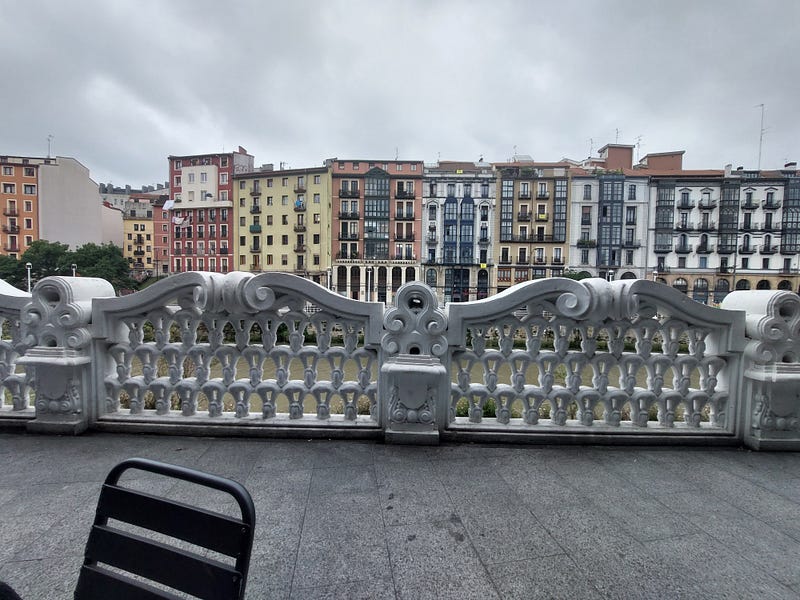
And as we ate pintxos with a lively crowd on the beautiful riverside patio of the Erribera merkatua, once the largest food market in Europe, I found myself agreeing with her.
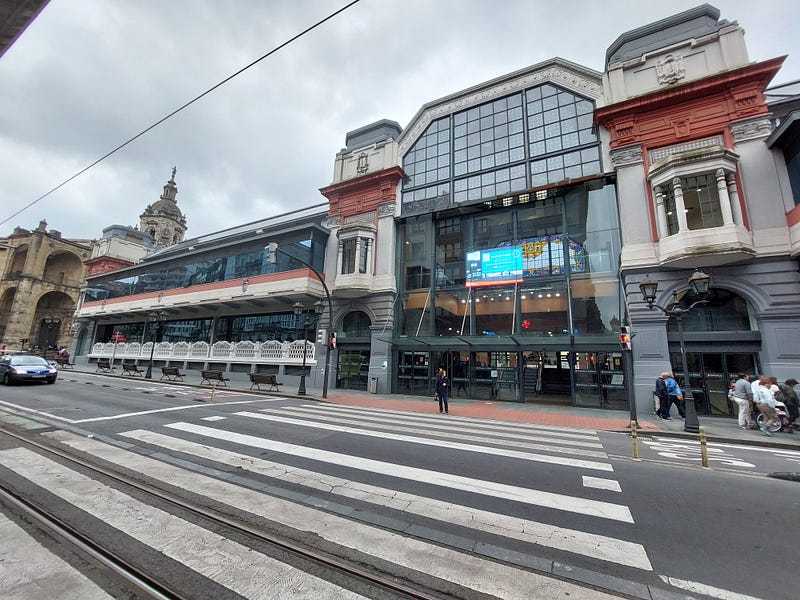
Bilbao has cleaned up its act. The terrorists have put down their guns, and the industrial waste has been safely packed away, and in the rain, the city shines. The beautiful buildings are beautifully maintained, the titanium-plated skin of the museum shines in the occasional burst of watery light, and the heavens open far too often for the dogshit on the pavement to last long.
It’s lovely, really. And of course it’s real. As real as anything is, in the same way that Disney’s Main Street USA is every bit as real as Naples’ Via Toledo.
But there’s only one of those streets I wouldn’t be caught dead on.
Basque is a language isolate
In other words, the Basque language (called Euskara) has no connection to any other language spoken on earth.
Surrounded by Romance languages like Spanish and French, it remains stubbornly itself. It predates the arrival of Indo-European languages in Europe, which were developed by the third millennium BC at the latest.
That makes Euskara possibly the oldest language in Europe. And maybe, as some Basques claim, it’s descended from the language people were speaking when they painted animals on the ceiling of Altamira cave outside Bilbao, the Sistine Chapel of prehistoric art.
You can’t go into Altamira now, though. While in other caves hidden in the green mountains of Cantabria, you can still see the original marks our ancient ancestors made on the walls, at Altamira, you have to be content with a replica.
Is that authentic? Depends on your politics.
But as we made our way home, the suspension of our tiny car bumping under the weight of Costco purchases, I stared out at the scenery one last time. The roaring cliffs. The foaming ocean. The growling clouds that hide the world’s oldest art.
It’s a long way from here to Catalonia. Even further from here to Ireland, where the music sounds the same, even if the language is completely different.
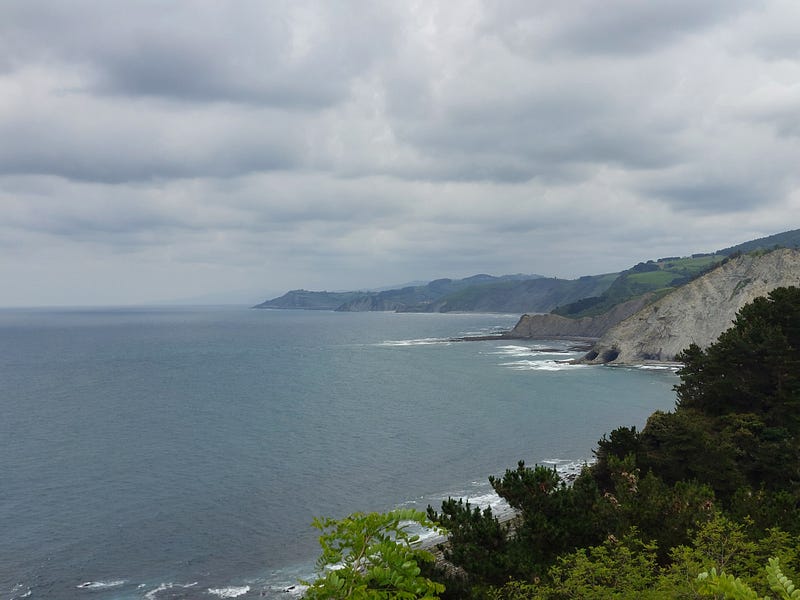
Spotting a viewpoint on the highway, I told my wife to pull over. She complied, and we got out of the car. The brushed steel sea showed only the faintest tinge of blue, reflecting instead the permanent gray of the Atlantic clouds.
As we looked up and down the coast, mountains stretched in either direction, vanishing into the watery haze of a strange and utterly unique country that still somehow felt completely recognizable.
In Irish legend, the ancient inhabitants of Ireland, the Tuatha de Danaan, were driven out by newcomers who arrived from Spain. The Tuatha, the old pagan gods, became fairies who lived in prehistoric burial mounds dotted throughout the country, while the Spanish invaders became the Irish people.
For a long time, this was considered a medieval Christian legend designed to link the Irish people with biblical events, or confusion between Iberia and Hibernia. Roman writers thought that Ireland lay between Spain and Britain, making Spain the obvious place for Ireland’s first inhabitants to come from.
It was all a big misunderstanding.
Except in 2009, DNA analysis by Trinity College Dublin’s Institute of Genetics found that the closest genetic relatives of Irish people are the people still living in Spain’s Basque country.
It’s not just the weather. Not just the scenery. Not even the music. It’s entirely possible that direct ancestors of mine spoke this unique language, played those same instruments, left hand prints on the walls of the caves.
That’s an authentic experience.
It’s just a shame I had to go to Costco to find it.