
The Best Nonfiction Book Ever Written About a Legal Case: Anthony Lewis’ ‘Gideon’s Trumpet’
How a destitute prisoner’s handwritten letter to the U.S. Supreme Court made history
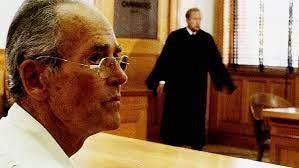
Fifty years ago a poor, angry prisoner in Florida wrote a letter to the U.S. Supreme Court — in pencil, on lined prison paper — saying that he had been denied the right to a lawyer when convicted. The court agreed to hear his case and held that the Constitution required the government to provide counsel in all serious criminal cases for defendants too poor to afford one. Clarence Earl Gideon won the right to a new trial, this time with a lawyer, and a jury acquitted him in just over an hour.
Anthony Lewis’ story of Gideon v. Wainwright glows with humanity, intelligence and the elegance of the judicial system at its best. Clarence Gideon, “tossed aside by life,” burned with a sense of injustice. Abe Fortas brought to his court-appointed role as the prisoner’s champion a heady mix of intellectual sophistication, a passion for his cause and the resources of a top-tier Washington law firm. Assistant Attorney General Bruce Jacob of Florida was so overmatched with Fortas, a future Supreme Court justice, that in Lewis’ hands he earns sympathy even as he argues that giving the accused the right to counsel would cost too much and “be requiring the states to adopt socialism.”
The Supreme Court acquires a personality of its own, dignified yet less stuffy than is often imagined as Lewis explains the factors that affected the outcome of Gideon, including legal precedent, oral argument and friend-of-the-court briefs. At one point, Lewis writes: “Justice [Robert H. Jackson], who was one of the great oral advocates of his day before he went on the bench, said in his wonderfully astringent style that he felt ‘there should be some comfort derived in any question from the bench. It is clear proof that any inquiring justice is not asleep.’ ”
The Supreme Court announced its unanimous decision in Gideon’s favor on March 18, 1963, and in 2003 Lewis rightly noted in an essay marking its 40th anniversary that, in important ways, the U.S. has failed to honor the justices’ intent. “Many states and localities offer not even the minimal level of support needed for an adequate defense,” he said. “And far too often the lawyers provided for indigent defendants have not met the barest standards of competence.”
Those failures do not diminish the achievement of this great book, a beautifully written portrait of a moment when the U.S. government honored one of the noblest of American ideals: that all people deserve equal protection under the law. In an era when the law too often fails the poor, it’s a heartening reminder that, sometimes, the system works.
For more information:
Anthony Lewis laments the government’s failure to fulfill the promise of Gideon V. Wainwright in a New York Times essay, “The Silencing of Gideon’s Trumpet.” (Adam Liptak gives more recent examples of that failure in “Lawyers Stumble, and Clients Take Fall,” a New York Times article that deals in part with a death-row inmate whose lawyer “was on probation for public intoxication” and “battling a crippling drug addiction” to crystal methamphetamine while representing his client.) Gideon’s Trumpet won the 1965 Edgar Award from the Mystery Writers of America for the best fact crime book. Henry Fonda played Clarence Earl Gideon in the Hallmark Hall of Fame TV movie of the novel. You can read more about Gideon v. Wainwright at Oyez.org.


