avatarRay Wirth

Free AI web copilot to create summaries, insights and extended knowledge, download it at here

2237

Abstract

ad frozen to a hard crust, which brilliantly reflected the sunset and provided a stark contrast to the bicyclist and shadow bicyclist. Shadows, of course, are not reflections but rather the absence of reflection.</p><figure id="aebe"><img src="https://cdn-images-1.readmedium.com/v2/resize:fit:800/1*wXzcmDgHPxytYoFi4eTI7A.jpeg"><figcaption>Ray Wirth photo.</figcaption></figure><p id="d1c1">As in the previous photo, I noticed that the angle of my camera to the reflected light was important. I had to maneuver my kayak and then find the best height for my camera in order to capture the reflected light on the pickerel weeds as well as on the water beyond it.</p><figure id="289a"><img src="https://cdn-images-1.readmedium.com/v2/resize:fit:800/1*PCeINPMWaNwTrYsCQ0DEEQ.jpeg"><figcaption>Ray Wirth photo.</figcaption></figure><p id="6811">So many patterns going on in this photo. Can you count them? There are at least two levels of clouds in the sky, each creating a different reflection pattern in the water. The lights on the distant footbridge create their own reflective pattern. The subtle wind ripples on the water are disrupted by the kayaker, and these intersecting wave patterns tilt sections of water in different planes, with each one of these having its unique way of reflecting the light.</p><figure id="6f7c"><img src="https://cdn-images-1.readmedium.com/v2/resize:fit:800/1*Kb_nTWnsywZ7iFgysjWlPA.jpeg"><figcaption>Ray Wirth photo.</figcaption></figure><p id="5d4d">This shot picks up on the theme of the previous photo. During this sunset, I became intrigued with how the backsides of these small waves were tilted in just the right direction to reflect the light of the sunset. Full disclosure, I did a lot of maneuvering to get in the right position for this shot. The same waves that created the beautiful patterns kept trying to push my kayak out of the way.</p><figure id="d6f7"><img src="https://cdn-images-1.readmedium.com/v2/resize:fit:800/1*CvAhsGxh_Y2cnrFJczT7-g.jpeg"><figcaption>Ray Wirth photo.</figcaption></figure><p id="5038">This was a gift shot on a beautiful morning in North Carolina last November. We were about to get in the car and head down the road when this great egret caught our eyes. When I

Options

photographed the great egret launching into the air, I had no idea I was also taking the egret’s beautiful reflection.</p><figure id="565f"><img src="https://cdn-images-1.readmedium.com/v2/resize:fit:800/1*Ybxh5iyLDun2jZ8QEj9Djg.jpeg"><figcaption>Ray Wirth photo.</figcaption></figure><p id="8dd8">How often we miss moments like this. I had been doing a project near the shore of the pond when briefly the pond became still, the clouds cleared away, and the sun came out. Fifteen minutes later, the wind was back and the sun and the vivid reflections were gone. I love the way the sterns of the kayaks rest on pillows made of clouds.</p><figure id="7662"><img src="https://cdn-images-1.readmedium.com/v2/resize:fit:800/1*haz-FD0EJBawuCiDlR5Rdw.jpeg"><figcaption>Ray Wirth photo.</figcaption></figure><p id="041c">In contrast with many of the above photos, the reflections in this photo are very subtle — and that is what I like about it. The photo was taken on the shore of Millinocket Lake in Maine. Mt. Katahdin is in the distance.</p><figure id="b7d9"><img src="https://cdn-images-1.readmedium.com/v2/resize:fit:800/1*0T-6ew3r9Pz3gaC6tXBohQ.jpeg"><figcaption>Ray Wirth photo.</figcaption></figure><p id="37e3">This is another shot in which timing was important. I was paddling along the shore and noticed the orange light silhouetting my partner's kayak. I knew that I needed a slightly higher vantage point if I was going to capture the scene — and also have a foreground. So I raced ahead to a small beach, jumped out of my boat, and climbed up on a rock just in time to take the shot.</p><p id="0b9d">If you enjoyed this, you may want to check out:</p><div id="084c" class="link-block"> <a href="https://readmedium.com/time-froze-in-the-ice-cave-6b2d9c20b6f3"> <div> <div> <h2>Time Froze in the Ice Cave</h2> <div><h3>A discovery while kayaking</h3></div> <div><p>medium.com</p></div> </div> <div> <div style="background-image: url(https://miro.readmedium.com/v2/resize:fit:320/1*QQVnELTWxjBIgsYXTRhmCQ.jpeg)"></div> </div> </div> </a> </div></article></body>

Ray Wirth photo.

The Bending of the Light

Reflections on reflections — Snapshot March Challenge

What creates reflections, anyway? And why are there sometimes a lot more reflections than at others?

I’ve been digging around the internet and have learned that when light meets up with water, two things happen: (1) some of the light is absorbed; and (2) some of the light is reflected.

In both cases, the light is bent — or diverted from — its original path.

As I wrote in my article on winter paddling, when the sun is near the horizon, light strikes the water at a lower angle — and more of it is reflected rather than absorbed. Thus all the sparkles! These have a scientific name. They are called glitter patterns.

A lot of physics is needed to fully understand how light interacts with water, but one thing I know is that all this bending of light is mind-bending — and it’s good for us to notice it.

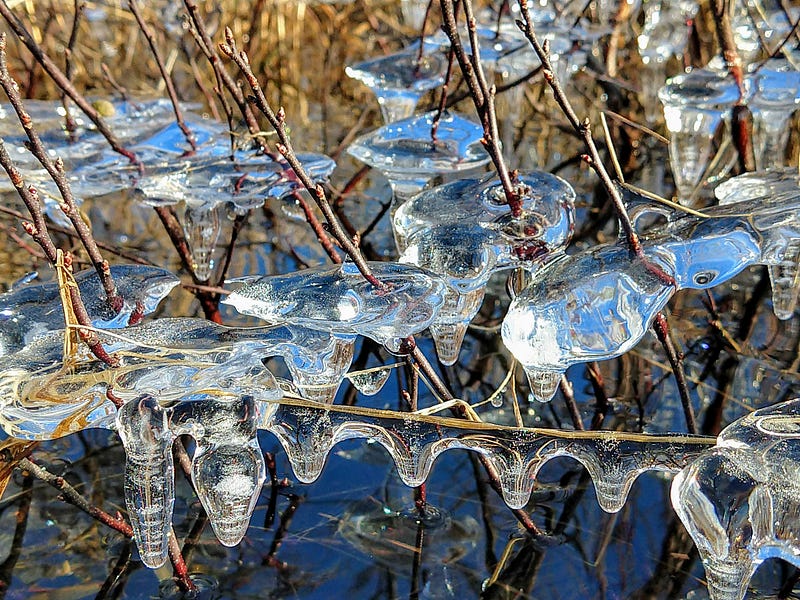
The photo above was taken after an ice storm deposited icicles on tiny branches. The ice droplets were — of course — not blue but were reflecting the blue of the sky.
Ray Wirth photo.

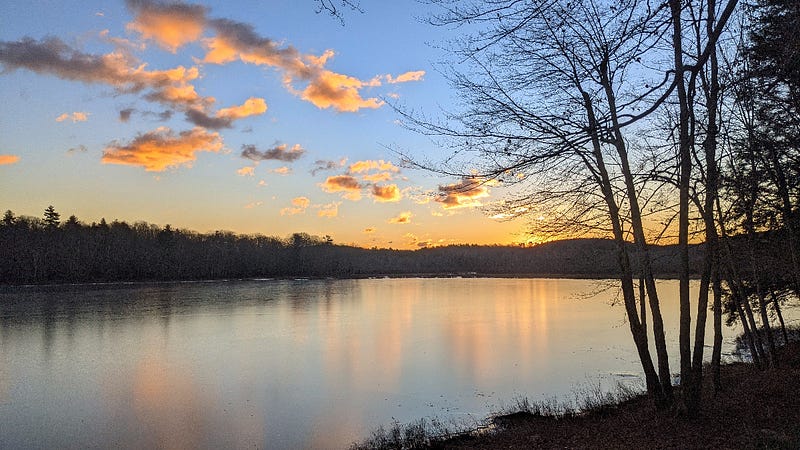
This shot was taken just before sunrise on a December morning. The sun was still below the horizon, so the light was reflecting off the water droplets in the clouds and then down onto the pond. The surface of the pond was frozen, so it reflected the light in a more diffuse way than if it had been water.
Ray Wirth photo.

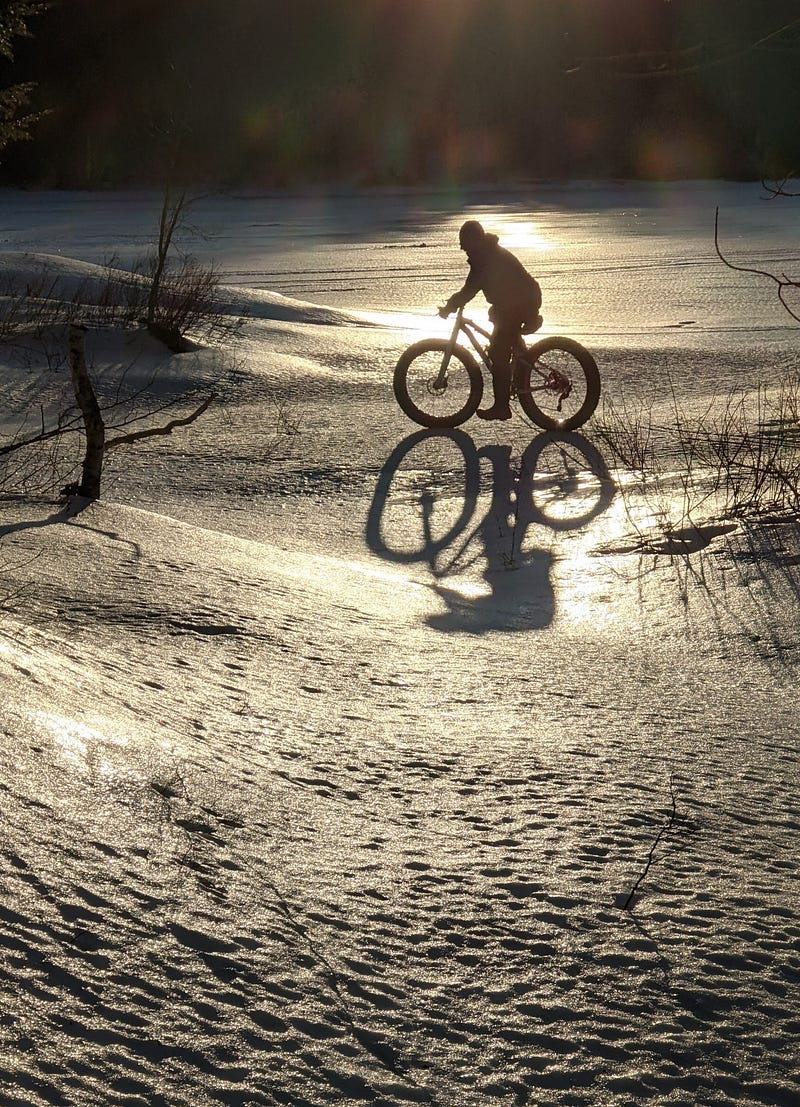
The pond and surrounding area had frozen to a hard crust, which brilliantly reflected the sunset and provided a stark contrast to the bicyclist and shadow bicyclist. Shadows, of course, are not reflections but rather the absence of reflection.
Ray Wirth photo.

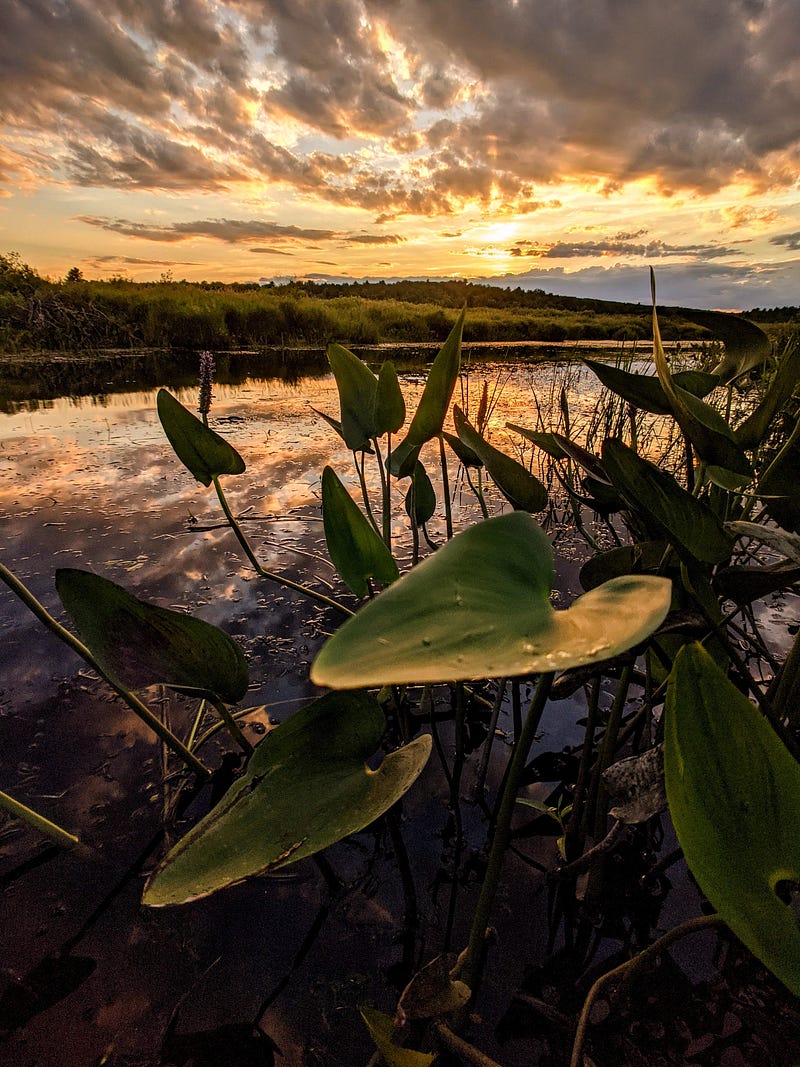
As in the previous photo, I noticed that the angle of my camera to the reflected light was important. I had to maneuver my kayak and then find the best height for my camera in order to capture the reflected light on the pickerel weeds as well as on the water beyond it.
Ray Wirth photo.

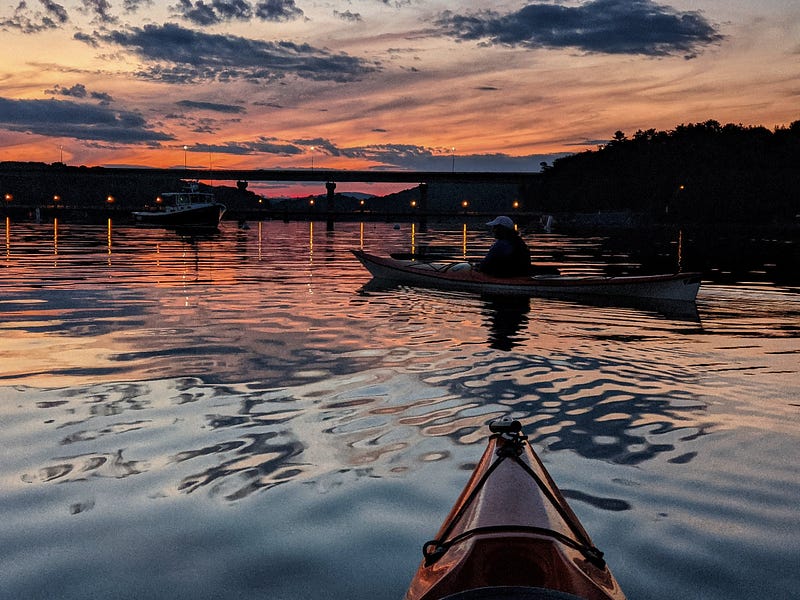
So many patterns going on in this photo. Can you count them? There are at least two levels of clouds in the sky, each creating a different reflection pattern in the water. The lights on the distant footbridge create their own reflective pattern. The subtle wind ripples on the water are disrupted by the kayaker, and these intersecting wave patterns tilt sections of water in different planes, with each one of these having its unique way of reflecting the light.
Ray Wirth photo.

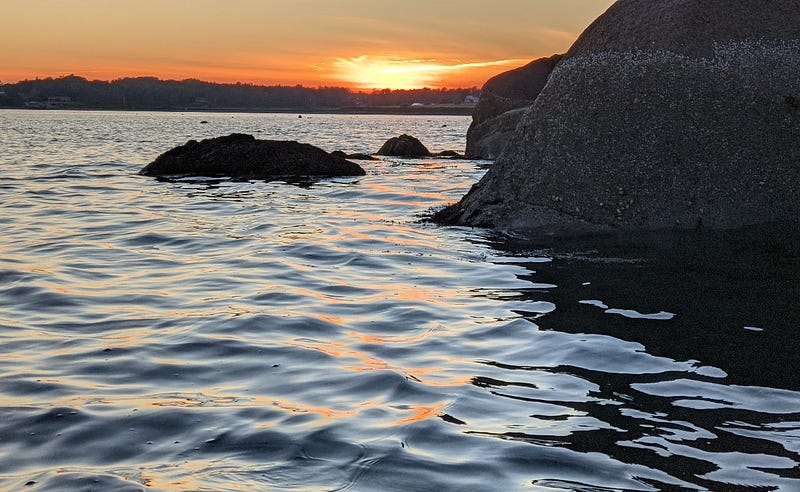
This shot picks up on the theme of the previous photo. During this sunset, I became intrigued with how the backsides of these small waves were tilted in just the right direction to reflect the light of the sunset. Full disclosure, I did a lot of maneuvering to get in the right position for this shot. The same waves that created the beautiful patterns kept trying to push my kayak out of the way.
Ray Wirth photo.

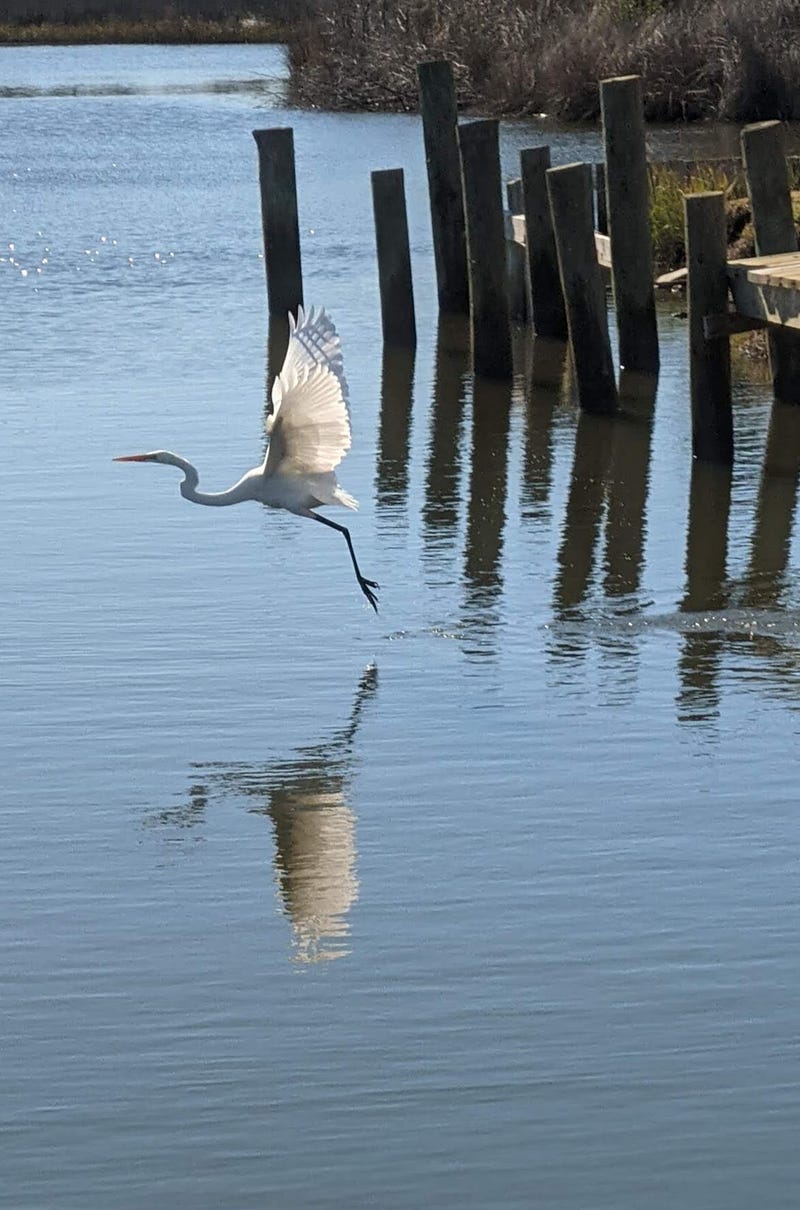
This was a gift shot on a beautiful morning in North Carolina last November. We were about to get in the car and head down the road when this great egret caught our eyes. When I photographed the great egret launching into the air, I had no idea I was also taking the egret’s beautiful reflection.
Ray Wirth photo.

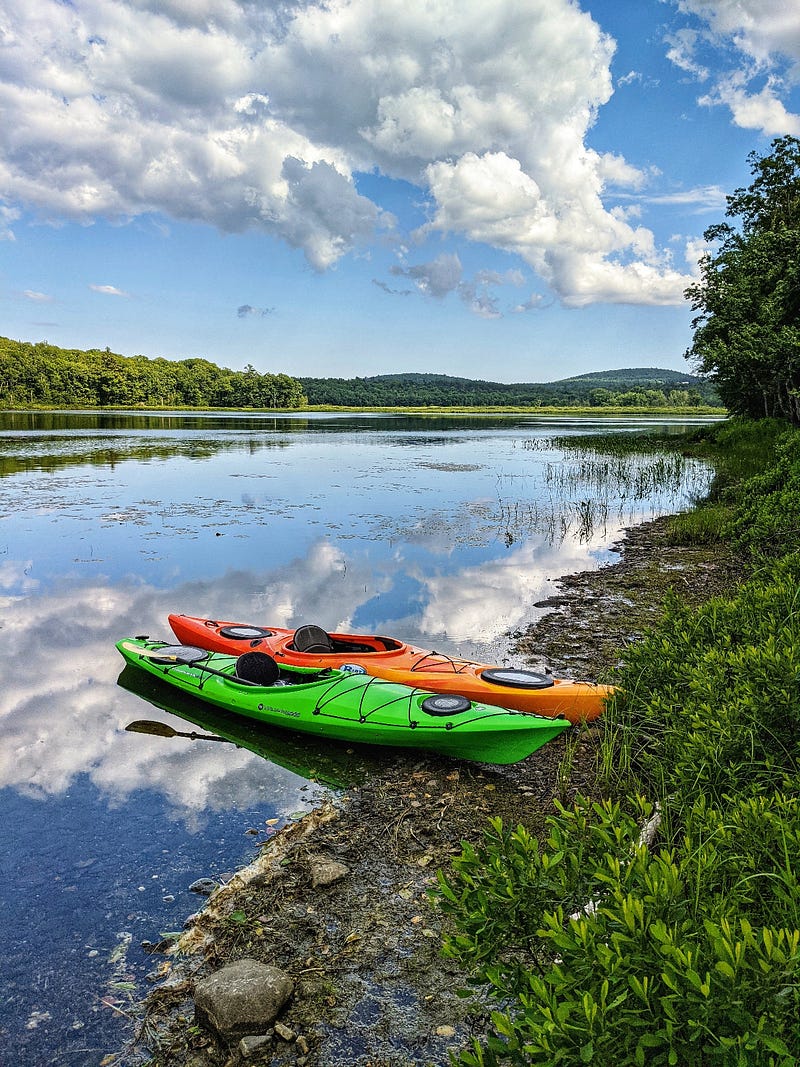
How often we miss moments like this. I had been doing a project near the shore of the pond when briefly the pond became still, the clouds cleared away, and the sun came out. Fifteen minutes later, the wind was back and the sun and the vivid reflections were gone. I love the way the sterns of the kayaks rest on pillows made of clouds.
Ray Wirth photo.

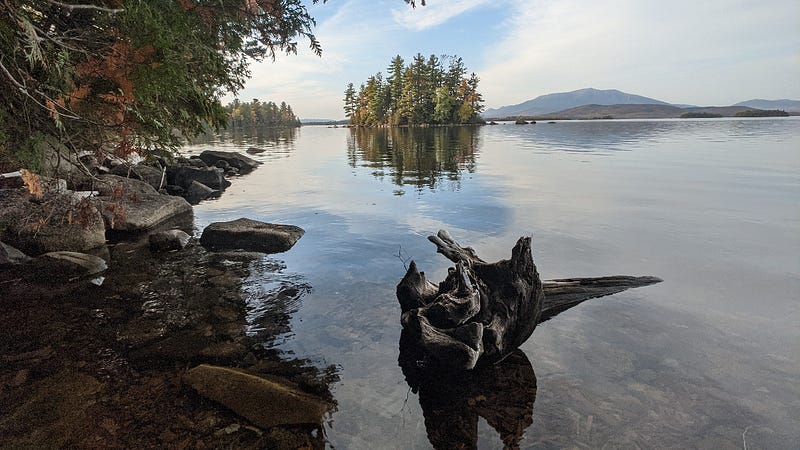
In contrast with many of the above photos, the reflections in this photo are very subtle — and that is what I like about it. The photo was taken on the shore of Millinocket Lake in Maine. Mt. Katahdin is in the distance.
Ray Wirth photo.

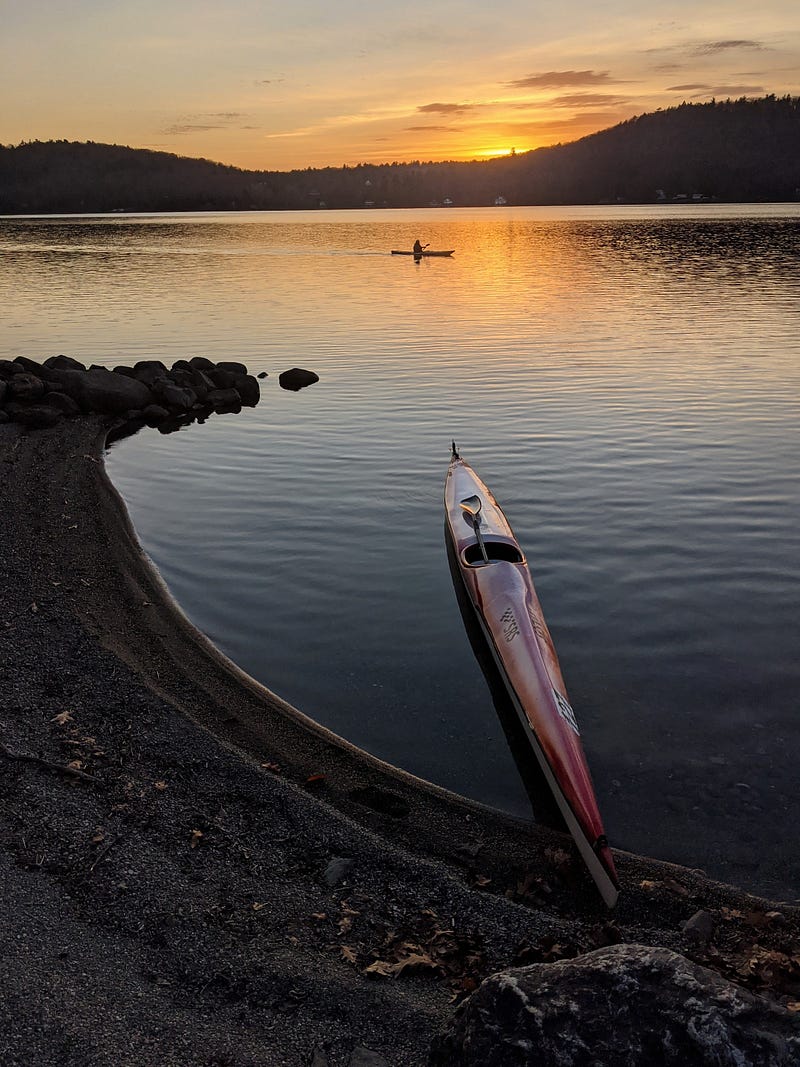
This is another shot in which timing was important. I was paddling along the shore and noticed the orange light silhouetting my partner's kayak. I knew that I needed a slightly higher vantage point if I was going to capture the scene — and also have a foreground. So I raced ahead to a small beach, jumped out of my boat, and climbed up on a rock just in time to take the shot.

If you enjoyed this, you may want to check out:

Outdoors
Nature
Nature Writing
Photography
Nature Photography
Recommended from ReadMedium