avatarRay Wirth

Free AI web copilot to create summaries, insights and extended knowledge, download it at here

3257

Abstract

igure id="a01a"><img src="https://cdn-images-1.readmedium.com/v2/resize:fit:800/1*BMlLlwgikvEJhl_RfpeTnA.jpeg"><figcaption>The low angle of the winter sun means more light is reflected. Photo by <a href="https://unsplash.com/@adrigeo_?utm_source=unsplash&amp;utm_medium=referral&amp;utm_content=creditCopyText">adrianna geo</a> on <a href="https://unsplash.com/s/photos/kayak-and-snow?utm_source=unsplash&amp;utm_medium=referral&amp;utm_content=creditCopyText">Unsplash</a></figcaption></figure><h1 id="fb5c">The Beauty</h1><p id="1aa5">Water is beautiful in all seasons, and it has its own special beauty in the winter. As highlighted above, the low angle of the sun means the water reflects more light and creates more sparkles. That’s for starters.</p><p id="ca0e">Winter hiking, especially if the ground is bare, can be an exercise in subtlety. The inland winter landscape is hued in quiet browns and grays. In contrast, especially if you are on the ocean, the sky is bigger and the sea is nearly as big — and, on a sunny day at least, both are as blue as ever. The vivid browns, yellows, and greens of seaweeds, the dark rocks, and the white sea foam, are a rich feast for color-starved eyes.</p><p id="a2d3">Paddling in the winter feels like a privilege. Everything about the experience feels rare. You won’t be staying there long, and the weather that allows you to be there likely won’t last long either.</p><p id="ac2d">The creatures you see are likewise surviving in a narrow margin. While paddling a coastal shoreline or bay, I often see eagles or loons. Or further out, among the ledges, I catch glimpses of cormorants and eiders. And then there are the winter visitors, whose appearances always feel like an unexpected treat — the mergansers, scoters, buffleheads, and grebes.</p><p id="4d54">If there is snow along the water and ice formations on the cliffs, the beauty is amped up even more, as these frozen forms of water provide a beautiful contrast to the water itself. Along the immediate coast, the snow rarely lasts more than a few days. It is a layer of ephemeral on the ephemeral — and being there when the snow is, makes it all the more special.</p><figure id="3f96"><img src="https://cdn-images-1.readmedium.com/v2/resize:fit:800/1*rO62VlDpK0is9UAPetE6uQ.jpeg"><figcaption>Winter paddling provides an increased sense of quiet. Ray Wirth photo.</figcaption></figure><h1 id="baf8">The Solitude</h1><p id="d5cb">If you are paddling with a buddy or group — which, in most cases, you should be — you will likely be alone out there. More than any other time of year, the ocean will feel large and you will feel small — such is the experience of paddling in winter.</p><p id="4cc3">On the coast of Maine, when paddling in winter months, we rarely see other boats. Occasionally, in a harbor, we might cross wakes with another kayaker or a group of rowers on a gig.</p><p id="55f8">Missing are the lobster boats, along with the drone of their diesel engines. Also missing are the bays cluttered with lobster buoys and the harbors jumbled with moorings. What bustles with activity in the summer is now a near-wilderness. The winter quiet allows you to hear waves, the wind the trees, and even <a href="https://www.birdnote.org/listen/shows/go

Options

ldeneyes-and-whistling-wings">the wings of ducks as they fly overhead</a>. You breathe the salt air. All this creates a sense of solitude you would normally have to travel much farther to find.</p><p id="7eb7">Beyond the harbors and bays, the islands are out there, just as they are in summer. I haven’t yet camped on a <a href="https://mita.org/">Maine Island Trail</a> island in the winter, but I know people who do. You are almost certain to have the island to yourself. In winter, even more than other times of the year, those offshore islands offer a unique experience of quiet and of the immensity of the sea.</p><figure id="1baf"><img src="https://cdn-images-1.readmedium.com/v2/resize:fit:800/1*AKOgVgOjq9F_KtPSnAoYMQ.jpeg"><figcaption>Winter paddling provides challenges — and challenges make for adventures. Ray Wirth photo.</figcaption></figure><h1 id="50c5">The Adventure</h1><p id="aa09">The solitude, the remoteness, the amped-up beauty, the snow, the ice floes, the challenges of getting your boat down to the water, the increased sense of self-reliance (you are on your own out there if something goes wrong), all combine to create a heightened sense of adventure. By definition, adventure requires challenge. Having the right gear, staying warm, and taking the right safety precautions are part of the challenge — and part of the fun.</p><p id="b6d9">Trips that might feel tame in the summer can feel downright adventurous in the winter. For example, our local paddling season often starts in February when the ice goes out of the nearby Marsh Stream. We ski down to the pond towing our kayaks behind us. We then ski another quarter mile across the still-frozen pond. Finally, we swap our ski boots for water shoes and slide our kayaks into the river.</p><p id="3f8d">For bigger winter adventures on the ocean, I usually choose shoreline trips — tracing peninsulas, and paddling along rugged coastlines but rarely far from shore.</p><p id="020a">One of my winter paddling goals is to paddle to an offshore island with backcountry skis and put down fresh tracks on the island. Likely the tracks won’t be there long, but the memories will linger like the winter light.</p><p id="23a7">A note on safety: In a <a href="https://medium.com/@raywirth.me/how-to-paddle-safely-in-the-winter-95ba3ff6eaca">recent article</a>, I discussed safety considerations for winter paddling. Especially if you are new to winter paddling, be sure to read that as well. Paddling in cold water is dangerous if you don’t have the right training and equipment. Dress for immersion, wear a life jacket, seek certified paddling instruction, continually improve your skills, paddle with a group, and stay safe!</p><p id="3fe8"><i>Ray Wirth is a Registered Maine Sea Kayak Guide. He writes about the outdoors and about how outdoor experiences can awaken our minds and improve our health.</i></p><p id="0855">Enjoy more on Medium. Become a member with the link below.</p><blockquote id="b59e"><p><i>Your $5.00 Medium membership will grant you unlimited access to my stories and the stories of many other great writers. (I will receive a small commission if you <a href="https://medium.com/@raywirth.me/membership">use this link</a>.)</i></p></blockquote></article></body>

Everything’s Gonna Be All Light — Winter Paddling is Soul-Filling

Kayaking and canoeing can promote year-round fitness
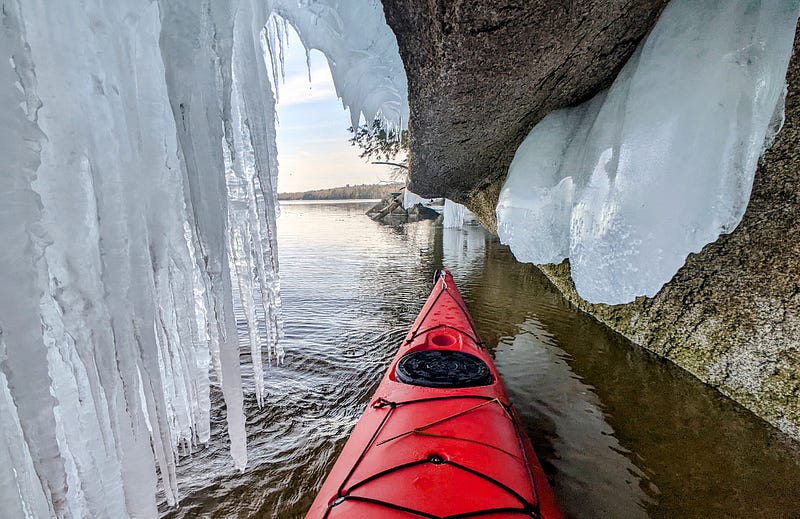
An ice cave on the Penobsot River is a den of reflected light. Ray Wirth photo.

The Light

Most of us in the northern latitudes don’t get enough light in the winter. 40 percent of Americans are vitamin D deficient. As many as 25 percent are at least mildly affected by seasonal affective disorder. These medically measurable conditions may be only the tip of the deficiency iceberg. And this isn’t surprising, considering the way our species evolved.

The simple truth is that we’re not designed to live with so little natural light. Our ancestors first evolved in places where sunlight was readily available, and for 99.99 percent of human history, humans spent a far greater proportion of their time outside.

Spending time out on the water is a great way to overcome light deficiency in a hurry. I never realized this until I became a winter paddler. Once I started paddling in the winter months, I was struck by how much light is out on the water. And it’s not just me. The science supports it. When the summer sun is overhead, as little as two percent of the light is reflected. In contrast, when the sun is on the horizon, the surface of the water reflects 65 percent of the light, or about 30 times as much.

Science aside, one of the things I find myself doing when I paddle in the winter is simply grooving on the light. If I’ve been out on the water the day before and friends see the healthy winter tan on my face, they sometimes ask if I’ve returned from a getaway in Florida. “Nope. I’ve been out paddling,” is my response. Don’t forget the sunscreen!
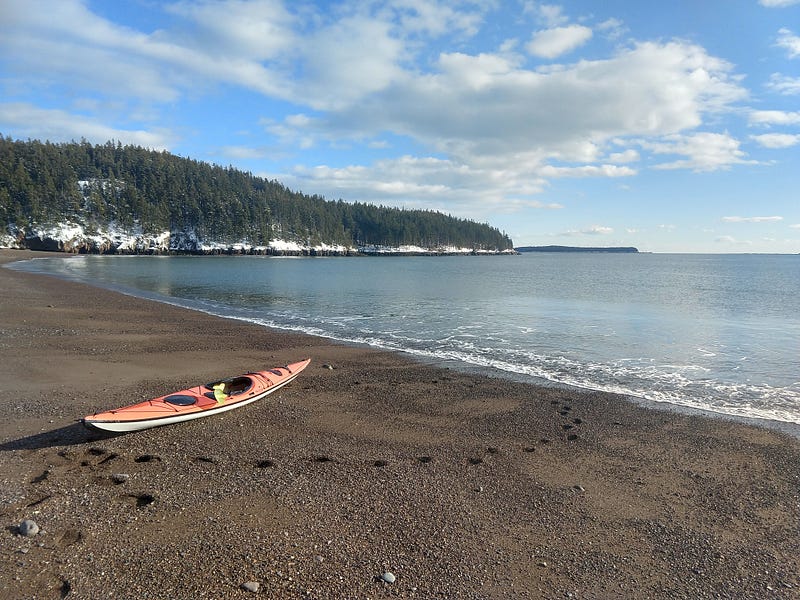
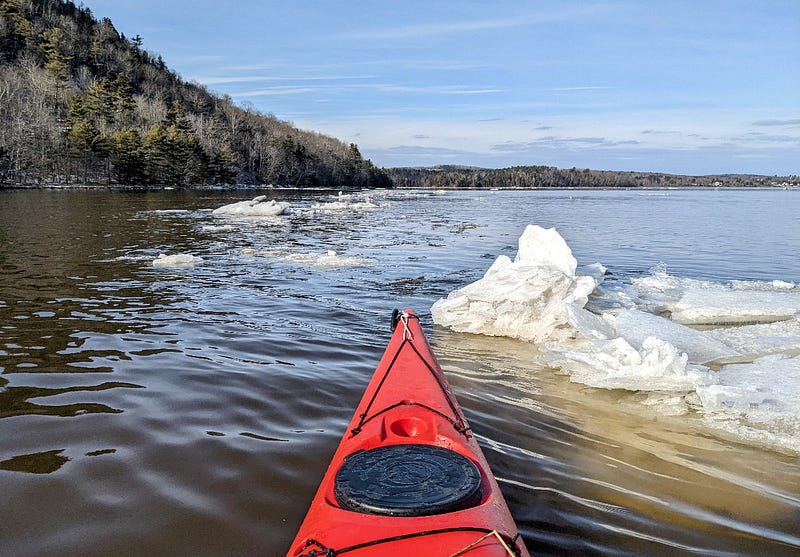
If you have the right gear, winter paddling can be everything summer paddling is — and more. Ray Wirth photo.

Up a Notch

All that light is one of the things that makes winter paddling special. Most paddlers would agree that getting out on the water is a joyful experience, no matter the time of year. Paddling in the winter, however, can boost that experience up a notch.

When you paddle in the winter, you get all the mental and physical benefits of outdoor exercise as well as the spiritual benefits of being outdoors. But you also get some additional things that make it particularly fun, memorable, and awe-inspiring. Below are three more reasons that kayaking and canoeing in the winter are so good for the soul.
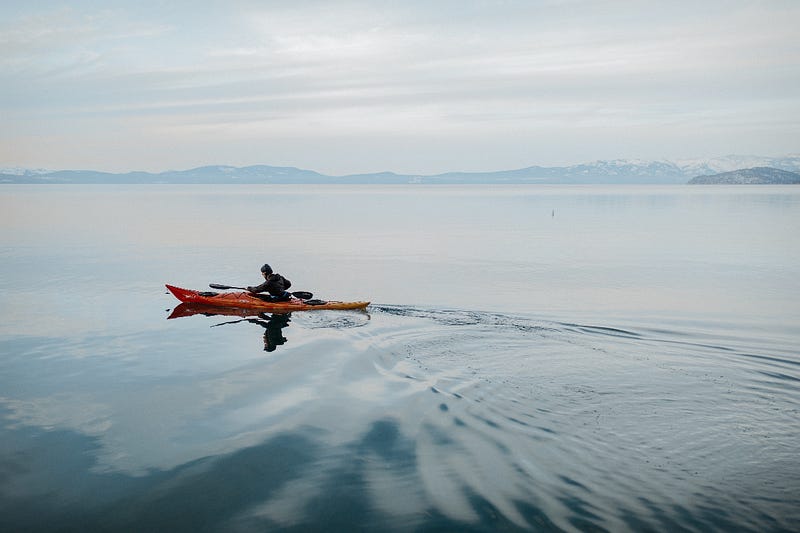
The low angle of the winter sun means more light is reflected. Photo by adrianna geo on Unsplash

The Beauty

Water is beautiful in all seasons, and it has its own special beauty in the winter. As highlighted above, the low angle of the sun means the water reflects more light and creates more sparkles. That’s for starters.

Winter hiking, especially if the ground is bare, can be an exercise in subtlety. The inland winter landscape is hued in quiet browns and grays. In contrast, especially if you are on the ocean, the sky is bigger and the sea is nearly as big — and, on a sunny day at least, both are as blue as ever. The vivid browns, yellows, and greens of seaweeds, the dark rocks, and the white sea foam, are a rich feast for color-starved eyes.

Paddling in the winter feels like a privilege. Everything about the experience feels rare. You won’t be staying there long, and the weather that allows you to be there likely won’t last long either.

The creatures you see are likewise surviving in a narrow margin. While paddling a coastal shoreline or bay, I often see eagles or loons. Or further out, among the ledges, I catch glimpses of cormorants and eiders. And then there are the winter visitors, whose appearances always feel like an unexpected treat — the mergansers, scoters, buffleheads, and grebes.

If there is snow along the water and ice formations on the cliffs, the beauty is amped up even more, as these frozen forms of water provide a beautiful contrast to the water itself. Along the immediate coast, the snow rarely lasts more than a few days. It is a layer of ephemeral on the ephemeral — and being there when the snow is, makes it all the more special.
Winter paddling provides an increased sense of quiet. Ray Wirth photo.

The Solitude

If you are paddling with a buddy or group — which, in most cases, you should be — you will likely be alone out there. More than any other time of year, the ocean will feel large and you will feel small — such is the experience of paddling in winter.

On the coast of Maine, when paddling in winter months, we rarely see other boats. Occasionally, in a harbor, we might cross wakes with another kayaker or a group of rowers on a gig.

Missing are the lobster boats, along with the drone of their diesel engines. Also missing are the bays cluttered with lobster buoys and the harbors jumbled with moorings. What bustles with activity in the summer is now a near-wilderness. The winter quiet allows you to hear waves, the wind the trees, and even the wings of ducks as they fly overhead. You breathe the salt air. All this creates a sense of solitude you would normally have to travel much farther to find.

Beyond the harbors and bays, the islands are out there, just as they are in summer. I haven’t yet camped on a Maine Island Trail island in the winter, but I know people who do. You are almost certain to have the island to yourself. In winter, even more than other times of the year, those offshore islands offer a unique experience of quiet and of the immensity of the sea.
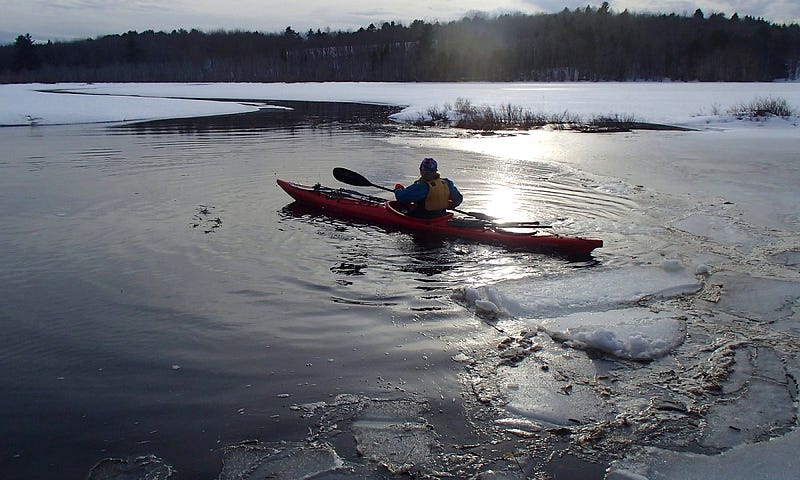
Winter paddling provides challenges — and challenges make for adventures. Ray Wirth photo.

The Adventure

The solitude, the remoteness, the amped-up beauty, the snow, the ice floes, the challenges of getting your boat down to the water, the increased sense of self-reliance (you are on your own out there if something goes wrong), all combine to create a heightened sense of adventure. By definition, adventure requires challenge. Having the right gear, staying warm, and taking the right safety precautions are part of the challenge — and part of the fun.

Trips that might feel tame in the summer can feel downright adventurous in the winter. For example, our local paddling season often starts in February when the ice goes out of the nearby Marsh Stream. We ski down to the pond towing our kayaks behind us. We then ski another quarter mile across the still-frozen pond. Finally, we swap our ski boots for water shoes and slide our kayaks into the river.

For bigger winter adventures on the ocean, I usually choose shoreline trips — tracing peninsulas, and paddling along rugged coastlines but rarely far from shore.

One of my winter paddling goals is to paddle to an offshore island with backcountry skis and put down fresh tracks on the island. Likely the tracks won’t be there long, but the memories will linger like the winter light.

A note on safety: In a recent article, I discussed safety considerations for winter paddling. Especially if you are new to winter paddling, be sure to read that as well. Paddling in cold water is dangerous if you don’t have the right training and equipment. Dress for immersion, wear a life jacket, seek certified paddling instruction, continually improve your skills, paddle with a group, and stay safe!

Ray Wirth is a Registered Maine Sea Kayak Guide. He writes about the outdoors and about how outdoor experiences can awaken our minds and improve our health.

Enjoy more on Medium. Become a member with the link below.

Your $5.00 Medium membership will grant you unlimited access to my stories and the stories of many other great writers. (I will receive a small commission if you use this link.)

Outdoors
Kayaking
Winter Sports
Health
Exercise
Recommended from ReadMedium