
The Beginner's Guide To Reading The Bible
A 5-step guide to reading the Bible
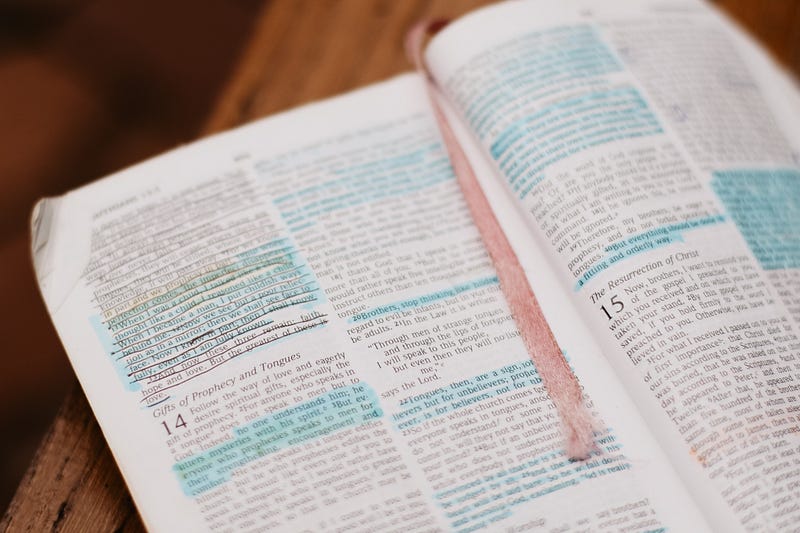
Sitting down across from my new mentor in the student union building at my college, he pulled out his Bible. It was a large book. The pages were worn with use. There was writing all over the inside of it and highlighter marks. It was crazy to see how much he had written in it.
He was flipping through the pages to share something with me when I finally had to stop him. Looking at the worn pages, writing, and the fact that this book was thousands of pages long, I became extremely overwhelmed.
I told him that exact thing. He smiled kindly. Then he explained something to me which has stuck with me for years. He listed them out on a piece of paper which helped me understand more about this book I have come to love.
- The Bible is a library of books. Different human authors wrote them. They are yet, inspired by God, the creator of all things.
- Each book of the Bible fits into a literary style. Some books are history, some are poetry, and some are teaching.
- There are two main sections, the Old Testament and the New Testament. The Old Testament tells of the time before Jesus. The New Testament tells us of the time of Jesus and beyond.
- The Bible is one continuous narrative pointing to Jesus. Reading it in light of this will help us understand and know God.
- Lastly, the Bible is one of the few books you can repeatedly read throughout your life and not understand it all.
At first, this didn't help my feelings of being overwhelmed. Yet, as I looked at these points, my eyes fell on the last one. "It is a book that I would read over and over again throughout my life."
It was like receiving permission to be overwhelmed.
After going through each point, he gave me some insight into reading and studying the Bible. After all, I had grown up with the Bible fed to me. I did not know much of the Bible other than a few familiar verses.
This is the beginner's guide to reading the Bible. It is this advice I will share with you today. Yet, it can be an excellent refresher for those who have been reading the Bible for years. So, let's dive right in.
Step #1: Find the Right Bible Translation
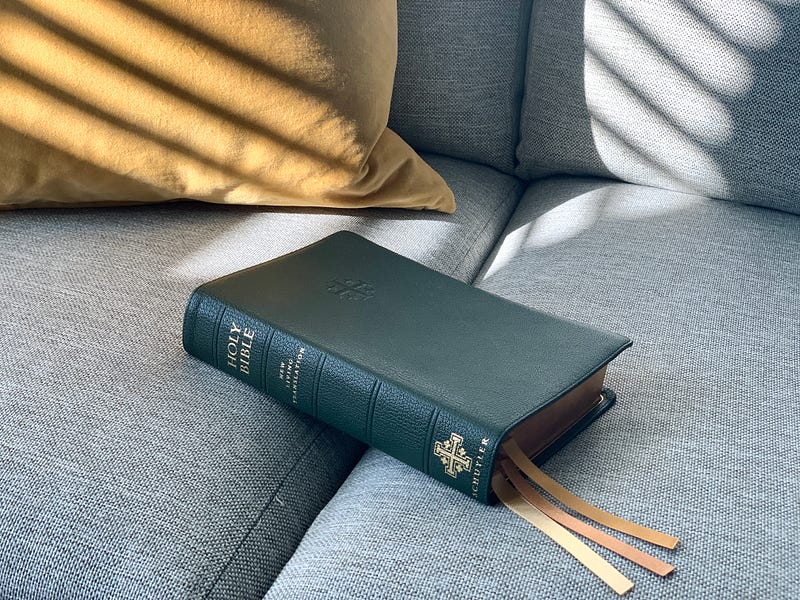
What do I mean by Bible Translation? The Bible has been translated a few different ways (Yes, I know, this causes problems for some people, but hear me out). The Bible is translated in various ways to help people connect with God through the Bible.
There are three main ways the Bible is translated:
- Literal or Word-for-Word
- Paraphrased
- Dynamic
Here is a quick breakdown of each of these main translation categories with examples for you to choose from:
Literal or Word-for-Word Translations
Literal Bible translations can be pretty beneficial. They are typically the translations chosen by bible experts since they excel at correctly translating the wording of the ancient manuscripts into English.
Most "literal" translations, on the other hand, deviate from the original phrasing to account for variations in linguistic structure and allow us to understand what has been written.
The downside of a literal translation is that it is sometimes difficult to understand and read. Some parts might be difficult to read and understand since concepts do not translate well from Hebrew or Greek to English.
Examples: ESV, KJV, and NKJV Translations
Paraphrased Translations
Paraphrased translations are on the other end of the range. The purpose of a paraphrase is not to translate the Biblical text word for word. Rather, it is to take a whole concept and interpret it so that the idea is conveyed.
Paraphrasing can be pretty helpful for individuals unfamiliar with the Bible or who want something more natural to read. They are, however, prone to errors and should be acknowledged for what they are: an interpretation.
Some paraphrases are acceptable as long as they don't wander too far from the original text. On the other hand, some renditions would be hard to classify as anything more than a remark.
Examples: The Message Bible or The Passion Translation
Dynamic Translations
Dynamic translations attempt to strike a balance between thought-for-thought and word-for-word translations. They are frequently excellent for the majority of people since they are both accurate and legible.
What are some of the drawbacks of dynamic translation? There may not be any significant drawbacks for the majority of people. There will be plenty of people who find a dynamic translation either too literal or too loose, as with any attempt to find a middle place.
Those who want to be confident in reading the most readable version of the original text may not be satisfied with a dynamic translation. However, those who want something written in the most contemporary language may not be satisfied with rigid dynamic translations.
Examples: NIV and NLT Translations
Many Options, Which to Choose?
I would highly suggest the New Living Translation Bible (NLT). It is my personal favorite for daily reading of the Bible. I quote it the most as it is the version I am most comfortable using regularly.
It falls on the Bible spectrum as a dynamic translation which means it gives a balance of word-for-word and thought-for-thought translation. Most of all, it is easy to read.
Step #2: Pick a Place to Start
You don't have to start at the beginning of the Bible and read your way from front to back. I don't suggest that for most people. If you choose this method, the Old Testament can be pretty confusing once you get a couple of books into it.
So, where should you start?
Often enough, the best place to start is the New Testament. I say this because the New Testament often references the Old. This helps us become more accustomed to that part of the Bible. But what part of the New Testament should I start with?
Most often, I would suggest the Gospel of John. It is a great place to start because it focuses on what happens when we believe in Jesus. It is refreshing and encouraging. Most of all, it is the perfect foundation before reading the rest of the Bible.
No matter what you decide, I would highly encourage you to pick one book of the Bible to start. It will be the best way to read through all the different books of the Bible, one book at a time.
Step #3: Read a Little of the Bible at a Time
Most people don't read the Bible regularly because they go all-in on day one. They read three or four chapters of a particular book, don't quite understand what they read, get tired of it, and never pick the Bible up again.
This style works if you are a monk, living in the mountains with nothing else going on in life. But, the average person needs to break things up a little more, especially with our busy lives and all the information coming at us all day long.
So, how much is a little?
That all depends on you, to be honest. Generally speaking, I read about one chapter of a book of the Bible a day. Most of the time, this can take a few minutes, and it isn't too overwhelming.
However, you can even read one section a day if you want to dig into the book of the Bible you are reading. For example, in the first chapter of the Gospel of John, there are five small sections. You could read the entire chapter in one day or one section at a time.
The key is giving yourself the best chance to keep reading regularly.
Before you begin, but after picking which book of the Bible you plan on reading, I would decide how much you will read each day. Will it be one chapter? Or one section?
No matter what you choose, deciding ahead of time gives you your best chance at reading your Bible regularly, which is the goal—reading daily, becoming better acquainted with God, and understanding what He has in your life.
Step #4: Pray Before and After You Read
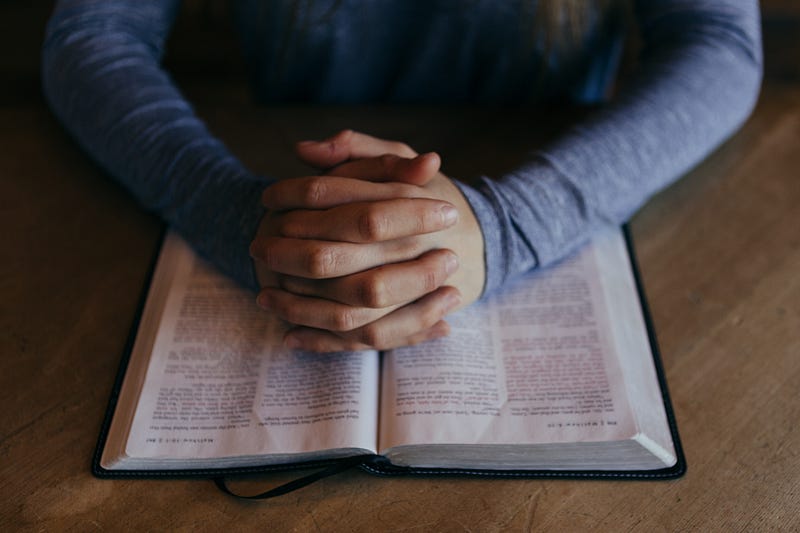
Why would you do this? What do prayer and the Bible have to do with each other? Okay, okay, for most people, this makes sense. However, I have learned over the years how God will speak through the words I read that day, and I can hear what he is saying to me.
Prayer Before
When you pray before, ask God to prepare your heart for what you are about to read. Ask God to give you the ability to understand his will for your life and to know him better. Most of all, ask God to bless your spirit to lead over your body and mind so you can receive all that Jesus has for you in your Bible reading time.
Prayer After
Once you have read the Bible, spend time praying. Listen for God to give you insight into what you just read. Ask God to solidify anything that connected with you. Thank God for the wisdom and teaching you receive from the Bible. There are many ways you can pray after reading the Bible, but it is essential to connect with God after reading his word.
Prayer and the Bible
The Bible is a starting point for many people. But, it cannot be read like a textbook. It needs to be read and experienced in its fullness. It won't change your life by itself. One of the best things you can do to experience life change and even deepen your faith is to bring God into your Bible reading.
Through prayer, you open yourself up to God, His Kingdom, the power of the Holy Spirit, and the fullness of faith in Jesus. The more we can experience these things, the greater our faith becomes.
Most of all, the more effective your Bible reading will become.
Step #5: Write Down What You Learn
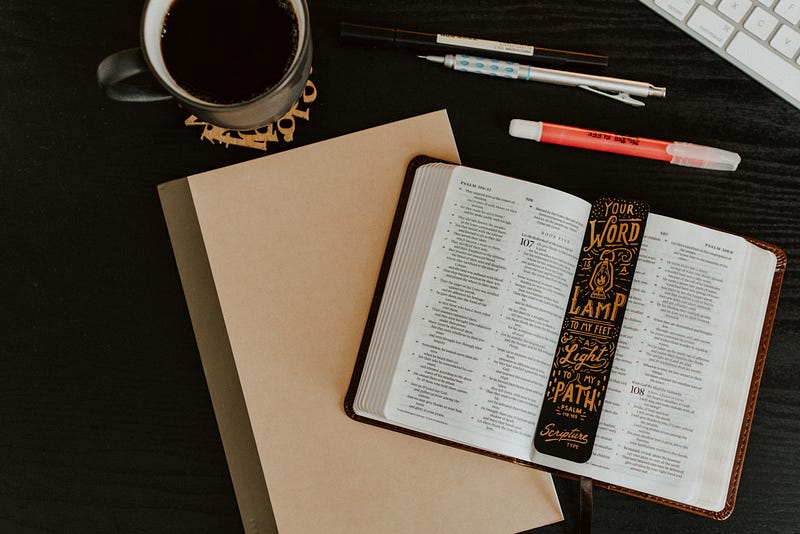
This is one of the most critical steps to reading the Bible.
After reading the Bible, one of the most valuable things for your life is to write down some reflections on what you just read. It will give you a place to go back to after reading the Bible. There are also three other benefits:
It helps you remember what you read.
Often enough, when we read something and don't write anything down about it, we forget most of what we read. So, spend a short amount of time writing down good Bible verses or something you learned from those verses.
A place for keeping God's promises.
So often, I will read something in the Bible and realize it is a promise from God. These promises from God are helpful when life is hard, or a particular situation isn't going well for me. Most of all, it will strengthen your faith even when things are good.
It is a record of your spiritual growth.
I have found that I have grown a lot in the way I view God, experience my faith, and share it with others over the years. As I look back through the countless journals, I can tell that I have grown a considerable amount.
Writing down what you read or learn changes everything.
Lastly, this changes everything in your life. You will begin to reference what you read, learn more about it in the future, and connect dots over decades of learning. Writing down what you know gives you a record of what God is doing in your life and how you connect with him.
Final Thoughts on Reading the Bible

While reading the Bible can feel overwhelming at first, it can become one of the most precious times of your day. It can change the way you see the world, help you out with problems in life, and create a sense of peace that you don't usually have in life.
Now, years later, I find myself enjoying these times of reading my Bible. Spending time in prayer, reading, and reflecting in my journal are the best ways for me to start my day.
I have read the Bible cover to cover several times. But, my favorite way to read it is just like I outline here in this beginner's guide to reading the Bible. I love to sit, read one chapter at a time, and write my reflections in my journal.
A Bonus Way to Starting a Bible Reading Habit
Every so often, to spice things up, I will focus on one verse at a time. I will take a single verse or two and read it two or three times. Then, I will pray through that verse aloud and sit in the silence, waiting for God to tell me something about it.
If you don't know where to start or are looking for a place to start, there are some prayer and meditation guides from different books of the Bible that you can download.