
The Struggle for ‘Gay Rights’ Is NOT Over
Neocon gay intellectual can’t imagine real LGBTQ equality
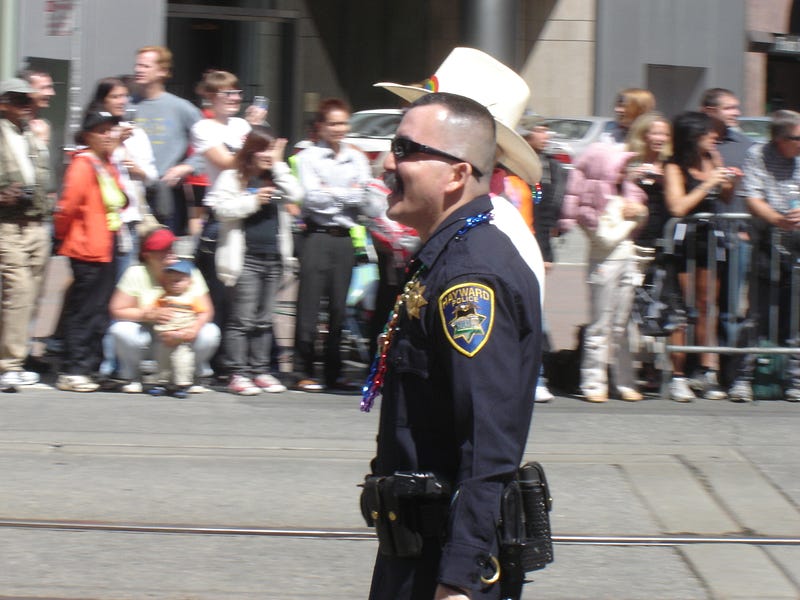
What does LGBTQ equality mean to you?
Do you dream of working for corporate America, living in an urban center, knowing that if you and your partner act like a traditional straight couple you’ll earn respect and affirmation?
Or do you dare dream bigger dreams?
Do you believe that that one day gender and sexual minorities won’t have to fight for respect? Do you believe that people will stop condemning and disparaging their fellow human beings just because they’re different?
I believe. I fight for that day!
I know our struggle isn’t even close to being over. I’m saddened that a respectable publication like The Atlantic just provided a platform to a man who doesn’t share our dream, who doesn’t know what our objectives are, but who is willing to declare the fight finished.
A Gay Neocon Calls ‘Gay Rights’ a Done Deal
James Kirchick, writing last Friday in The Atlantic, asserts that the struggle for “gay rights” is over. He claims that activist “grandees” are hesitant to “exult in their victories.” He implies that advocates have a stake in seeing the struggle continue, and that the stake is largely financial.
Kirchick, a gay neoconservative and visiting scholar at the Brookings Institution, could not be more wrong.
Meanwhile, at the San Francisco LGBT Pride Parade on Sunday,
a group of nearly 40 activists shut down the event for almost an hour, lying down in the street to call attention to the lack of true LGBTQ equality in the United States and to protest parade organizers’ priorities.
How can those activists and James Kirchick be on such different pages?
First, it’s instructive to note that in the headline of Kirchik’s Atlantic article, and throughout the piece, he uses the phrase Gay Rights, so old fashioned and out of touch that almost the only people who use it are conservatives and religious forces who oppose equality.
This is how the San Francisco parade organizers describe themselves —
The San Francisco Lesbian Gay Bisexual Transgender Pride Celebration Committee® is founded to produce the San Francisco Pride Celebration & Parade. SF Pride is dedicated to education, to the commemoration of LGBT heritage and to the celebration of LGBT culture and liberation.
Kirchick begins his Atlantic piece by setting up a false narrative
In describing the January 2018 Creating Change conference sponsored by the National LGBTQ Task Force, he sneeringly dismisses asexuals while falsely claiming that the Task Force exists to advocate for “people discriminated against because of their same-sex attraction.”
He repeats this false claim throughout his piece, setting up an expectation that same-sex attraction is and has always been the defining identity of the LGBT movement.
What the protestors in San Francisco realize and what the organizers of the San Francisco parade acknowledge, is that nobody has been pushing gay rights for decades. The LGBT equality movement is based on winning freedom for all gender and sexual minorities. The acronym LGBTQ exists to acknowledge that people who don’t fit into heterosexual and cisgender boxes suffer routine discrimination and exclusion.
Gender and Sexual minorities in the US live hard lives. Police routinely harass and brutalize queer youth and queer people of color.
The San Francisco protesters know this. They blocked the parade route to call attention to the fact that the organizers were honoring police and major corporate sponsors who aren’t actual LGBT allies.
In San Francisco and across the United States, police forces routinely target even gay men with harassment and arrest.
According to M. J. Murphy, Associate Professor of Gender and Sexuality Studies at the University of Illinois Springfield,
If you think dubiously-legal police tactics are a relic of the ‘dark ages’ before Stonewall and queer liberation, you’d be wrong. Police entrapment of bi and gay men is still a regular feature of modern American life — as seen here, here and here. Police “stings” are often staged during television “sweeps” months — when viewership numbers are measured.
For longer than there have been “gay” people or the word “homosexual” has existed, police and other law enforcement have operated as agents of the state, enforcing conformity to narrow sexual, gender, and relationship norms.
According to the Williams Institute, police in San Francisco, up and down California, and across the United States routinely harass and brutalize LGBT people, especially homeless youth and transgender people of color.
Yet Kirchick claims that, “America is rapidly becoming a post-gay country.”
He notes that, “gay people were once policed as criminal subversives, depicted in the popular culture as deviants … and mentally ill,” while asserting that, “Now most of America views homosexuality as benign.” He quotes a Pew Research survey that I often cite that found that 70% of Americans say homosexuality should be accepted by society.
That leaves a full three out of every ten Americans who can’t make that rather anemic statement. Post gay? It doesn’t sound very post to me. Now imagine those numbers spread out across the country. In major urban areas, almost 100% of people are on board with “accepted by society.” Suburban and rural areas go the other way, with large pluralities and even majorities of people believing society should not “accept” gay people.
Besides geography, Kirchick leaves out some crucial demographic data from that same Pew study.
- 52% of all men in the United States believe “homosexuality” should be discouraged.
- 59% of all Republicans believe “homosexuality” should be discouraged.
- A whopping 71% of white, evangelical Protestants believe “homosexuality” should be discouraged.
- 39% of all Americans say they would be “upset” if they discovered their child were gay.
- 59% of Republicans say they would be “upset” if they discovered their child were gay.
- 65% of white, evangelical Protestants say they would be “upset” if they discovered their child were gay.
- 60% of Black Protestants say they would be “upset” if they discovered their child were gay.
Donald Trump and the Republican Party are attacking LGBT rights
Astonishingly, Kirchick seems to claim otherwise, writing that while “Donald Trump built his campaign upon resentment of various minority groups, gay people were conspicuously not among them.”
Kirchick is a Europe specialist at the Brookings Institution, not a scholar of American politics or LGBT issues, so perhaps he can be forgiven not knowing what Trump and his evangelical Christian allies have been up to. Resentment of LGBTQ people is a mainstay of the Trump administration. Mean spirited harassment and ill treatment of same-sex attracted people run deep in Trump policy. Looking only at the State Department, these examples pop up:
- In a jaw-dropping move in the middle of 2018, the State Department stopped pressuring African nations to repeal their anti-LGBTQ criminal laws. One official justified the decision by stating the US doesn’t want to “discourage Christian values in other democratic countries.” Despite recent lip service to the contrary, this remains official State Department policy.
- During the same time period, the State Department stopped granting visas to the same-sex partners of UN and international NGO staffers. Staffers who live in countries where same-sex marriage is illegal may no longer bring their same-sex partners to the US. No motive here other than plain, mean-spirited bigotry.
- The State Department routinely refuses to acknowledge the citizenship of babies born overseas to same-sex American couples. Gay parents have to go to court to get passports for their children, and even though multiple courts have ordered the State Department to comply, appeals are in progress and the matter is not settled.
Transgender Rights are central to LGBT Equality, and they always have been
Kirchick acknowledges the Trump assault on transgender rights, but goes on to claim that trans rights and gay rights don’t belong together. He claims that, “The conflation of transgender issues with the gay rights movement [is] a recent development and not one undertaken without some controversy among gays and lesbians themselves.”
Kirchick is dead wrong about recent “conflation,” both historically and practically.
Gender nonconforming people have been part of our movement since the movement existed. Only vocabularies have changed.
For the people who ask why we added transgender people to the LGBTQ movement, we didn’t. Our transgender brothers and sisters have always been with us and part of us.
Transgender men and women are integral and organic to the LGBTQ movement, and always have been. Tensions have always existed too, between those fighting for radical, systemic change, and those pushing for something more like integration or assimilation.
From the proto-gender-queer 19th-century Uranians, to the roaring days of Queer Berlin of the 1920s and 30s, to the drag-queen-and-trans-infused Stonewall Riots of 1969 Greenwich Village, transgender men and women have shared a cause and fought for rights along with lesbians, gay men, and bisexual people.
We need the proposed federal LGBT Equality Act
Huge numbers of LGBTQ people in the US live in areas where the law does not protect them from discrimination in employment and housing. Kirchick disputes the need for the Act by claiming three things:
- The need for equality in housing is not as great as it was for Black people in the 50s and 60s when the major Civil Rights Acts were passed. He doesn’t explain why a lesser need would mean that equality is not important. He ignores the fact that LGBTQ people report discrimination in housing all the time, and that they usually have no legal recourse.
- Gays are well off financially, outperforming heterosexuals, so the need for legal protection becomes less. This is not true of LGBT people as a class, or even of gay men. Kirchick misrepresents the 2017 Vanderbilt University study he cites. The authors are on the record disputing the notion that gay people do better financially than straight people. But even if they weren’t, LGBTQ youth, trans people, and gender nonconforming people are rarely well off financially, and often report discrimination in employment and housing.
- Some businesses may discriminate against LGBTQ people in hiring, but their numbers are dwindling, and they regularly face pressure campaigns to change their practices. Kirchick cites HRC’s Corporate Equality Index, which tracks LGBTQ inclusiveness among the country’s leading employers, Fortune 500 companies. He neglects to mention that most Americans are employed by small businesses, which don’t face pressure to comply with corporate hiring norms. LGBTQ people report discrimination in hiring all the time.
Kirchick declares victory by citing failure —
The end of gay rights does not mean the end of homophobia. As long as gay kids commit suicide at rates higher than their straight peers, as long as even one gay person is denied a job because of his sexual orientation, there will be a need for activism, education, and other efforts toward positive social change. But for the gay movement to persist in its current mode risks prolonging a culture war that no longer needs to be fought because one side — the gay side — has already prevailed.
As I’ve already pointed out, no “gay movement” as such exists, or has existed for a very long time. LGBTQ youth suffer enormously from homelessness and suicide, as Kirchick acknowledges in his piece. I wonders why he thinks that is? Or how he can say that we’ve prevailed while it remains the case.
I can only suppose that his own privilege blinds him. A product of elite schools, a graduate of Yale, and a wealthy resident of American urban bubbles, he clearly doesn’t experience the same America that so many other LGBTQ people do. Nobody’s every evicted him because he’s gay, or tossed his job application in the trash because he’s gender nonconforming.
He’s insulated by his privilege. And I suppose that’s understandable. But he crosses a line when writes this:
“The smallness of the American debate over these issues does not really strike you until you’ve spent time overseas in places where it is truly dangerous to be gay.”
I’ve lived in Europe and traveled the world. I know first hand how bad things are for gender and sexual minorities in parts of the Middle East, North Africa, and Central America. But I don’t calibrate my expectations on those low standards. I don’t aspire to live more freely than people in Morocco, Yemen, or Panama.
I dream of true equality, of a world where sexual orientation and gender identity are irrelevant.
I don’t calibrate my expectations based on my ability to live in New York, DC, Chicago or Seattle, or to draw a paycheck from a Fortune 500 company. I dream of retiring to the bayous of Louisiana and knowing my adopted children will thrive at school, despite that they and I are not ordinary in terms of sexuality or gender.
I know I can’t do that today. Even in rural Michigan, I’m shunned.
The village where I live is not a safe place to be a gay man, not to mention any other kind of minority. I can only imagine how children here feel growing up knowing they’re different. They’ll have no choice but to closet themselves deeply. And suffer.
I think James Kirchick would do better trading places with me here in the heartland than belittling LGBT activists in Washington DC and declaring victory in a war he knows next to nothing about.


