
Corporations Donate Millions to Anti-LGBTQ Politicians
Real equality demands more than flag waving
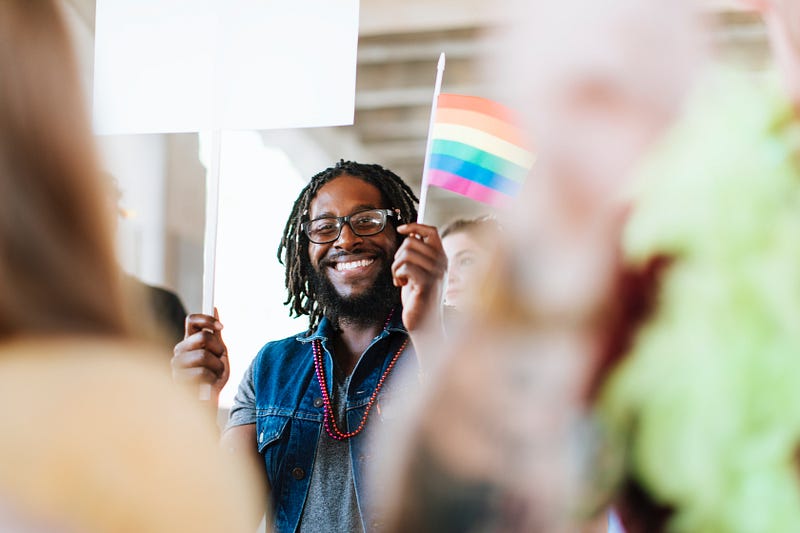
Corporate sponsorship of LGBTQ Pride events is a hot button issue. Activists are angry that corporations appear to pander to Pride, treating it as a marketing opportunity. But another, quieter debate is boiling among queer advocates, activists, and corporate allies. The players and the issues may shock you.
My partner Lenny and I strolled through the packed streets and alleys of Greenwich Village one sunny, sultry Pride Day in the mid 90s. What a festival of love and joy! We looked forward every year to the throngs of queer people and genuine allies who flooded our neighborhood to protest for equality.
“Excuse me, sir!” My head whipped around as a cute guy’s voice grabbed my attention. “You guys want a shot?”
He pointed out a little table set in the middle of the street, iced bottles of booze sticking out of silver buckets. “Huh?” I asked.
“They’re free, man! My company says happy Pride! We’re giving all these shots away until they’re gone. Drink up. Tell your friends!”
Then he told us about how great his job was, and how lucky he felt as a gay man to work in a supporting environment.
Lenny and I reached for shot glasses, and as I tipped one back, the burn in my throat matched the warm glow I felt to think that one of America’s major distilleries was participating in Pride. Later, when I noticed the same corporation had taken out celebratory Pride ads in major national magazines, I felt even more proud and accepted.
That shot I drank represented the beginning of American corporate involvement in Pride.
Reactions among LGBTQ people were at first uniformly positive. We were shocked and pleased that big corporations were marketing to us and taking us seriously. We congratulated them on their courage.
Even at Act Up and Queer Nation meetings, grumblings about ‘collaboration’ were muted and half hearted. We were so happy to have powerful allies and partners that we didn’t consider the possible downsides.
And partners we had!
By the 1990s, major American corporations were beginning to be led or heavily influenced by young business majors educated at elite, progressive universities. Senior managers of the most successful businesses in the United States tended to view LGBTQ equality as a matter of basic decency, just like most other liberal Americans did.
As the tech sector boomed with the rise of the Internet, the effect grew even more pronounced. Influential corporations like Microsoft, Google, and Apple boasted managements that skewed very young, which meant even more liberal. Corporate HR departments across the United States began to enforce equality beyond what the law required.
IBM began offering same-sex couple benefits in 1996. Then, as today, working for a Fortune 500 company usually meant a better working environment for gay people.
Even early on, tensions arose —
- While corporations tended to be very strong on treating gay men and lesbians well as employees, transgender and gender-variant people didn’t fare nearly so well. The progressive business school graduates driving progress were almost uniformly white, cis-normative people who lacked personal understanding of marginalization. Queer people of color and gender-variant people didn’t enjoy the same privileges that gay, white men and women began to enjoy.
- Even corporations with strong internal HR policies often drew the line at advocating for change in government policy. As former Clinton administration staffer Richard Socarides relates in The New Yorker, “getting executives to a meeting about gay rights was a challenge, even though they generally liked being invited to the White House.”
Those two tensions remain today —
Corporate America has evolved enormously on both fronts since the 1990s. There’s no question that big business has helped advance equality in important ways. However, many LGBTQ people still complain that gay white men and women tend to enjoy privileges that other marginalized people in the corporate world lack.
Big business has begun to step up to the plate to push for change on the government level. In November of last year, 56 Fortune 500 companies issued a joint statement protesting Trump Administration efforts to erase legal protections for transgender people.
Corporations often flex political and financial muscles to pressure states and municipalities to treat LGBTQ people equally. Clearly, we’ve come a long way, but even on the political front, the corporate story is not entirely positive.
Problems persist in surprising places —
Let me back up for a minute. Writing about LGBTQ allies a couple of months ago, I noted that huge majorities of Americans and even large pluralities of conservative Americans believe that LGBTQ people should be treated equally under the law.
Despite that, many Americans who think of themselves as allies often behave as if full LGBTQ equality isn’t settled yet. Corporations are no exception.
It’s time to take the next step, a paradigm shift. LGBTQ people and allies need to move past justifying equality and move toward expecting and enacting equality. But many of our allies, especially corporate allies, are holding back, hedging their bets. That’s the persisting problem I’m talking about.
Rainbow-bedecked corporations give millions to politicians who block equality
According to the Popular Information Newsletter of June 17, dozens of major American corporations that describe themselves as LGBTQ friendly, and that prominently fly the rainbow flag in June, contribute big money to the most notorious anti-LGBTQ politicians in Washington.
Popular Information identified nine corporations that donated $1 million or more in the last election cycle to politicians that received a zero on the HRC Congressional scorecard, indicating the worst possible voting record on LGBTQ equality legislation.
Here are three examples. You can read the report for the rest.
- AT&T donated $2,755,000 to 193 anti-gay politicians from 2017 to 2018. They gave Senator Marsha Blackburn of Tennessee $20,000. She’s a vocal supporter of Trump’s effort to roll back trans rights in the military, voted against LGBTQ hate crimes legislation, opposed the Violence Against Women Act because it included LGBTQ protections, and opposes marriage equality.
- UPS donated $2,366,122 to 159 anti-gay politicians. They gave $20,000 to Congressperson Karen Handel of Georgia. She opposes same-sex adoption. “I think that for a child to be in a household…[with] the parents being one man and one woman, is not the best household for a child.” She said she would “absolutely” support legislation banning adoption by same-sex parents.
- Comcast donated $2,116,500 to 154 anti-gay politicians. They gave $10,000 to Congressperson Virginia Foxx of North Carolina, one of the most notorious anti-gay politicians in Washington. She opposed the Matthew Sheppard Act, which empowered the Department of Justice to prosecute hate crimes against LGBTQ people. Foxx claimed that Sheppard was not murdered because he was gay, calling his death a “hoax.”
These corporations raise strong voices for equality in public
HRC awards them perfect scores on its Corporate Equality Index. In private, they’re forking over money to politicians who block equality. That’s not what true allies do.
I’m not suggesting that the corporations aren’t helping. Their contributions have been large, important, and effective. LGBTQ people who work for them generally find themselves in affirming environments. Sometimes, the corporations lobby hard for positive change.
But like many other progressive Americans, they aren’t all in. They clearly don’t consider equality to be a settled matter. They clearly aren’t prepared for a final, concentrated push to put an end to LGBTQ oppression in the United States. They aren’t prepared to shut out people who support oppression.
LGBTQ advocates and organizations know this. They’re always negotiating, jockeying, positioning, and working for the most effective means of leveraging corporate power.
Politics is the art of the possible, after all.
So, when you read about corporate Pride problems this year, and when you take part in discussions and debates, remember some of these issues that are deeper, more interesting, and maybe more troubling than the issues that are most touted.
Ask some questions:
- How can corporations more effectively include people of color and gender-variant people in their HR equality policies?
- How can corporations that fly the rainbow flag leverage their political power more effectively?
- What can we do do as LGBTQ people and allies to convince corporations to cut off funding to politicians who block equality?


