
The AI Art Renaissance
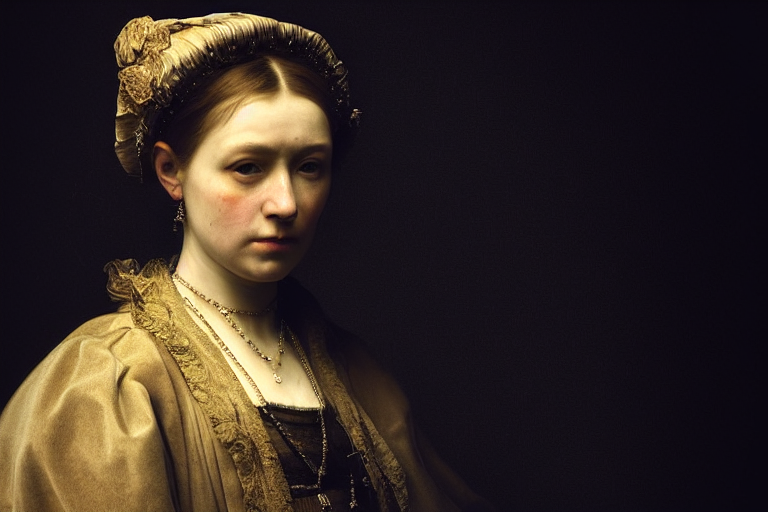
2022 will be remembered as the year when the AI art Renaissance began.
The word ‘Renaissance’ is a French word translated as ‘rebirth’ and it symbolized the beginning of a new era of art in the Western European world. It was a time of exploration and discovery, when artists and thinkers expressed new ideas.
The Renaissance period cultivated a new change in art, knowledge, and culture. It is also often referred to as the beginning of humanism and the modern era.
During the European renaissance, art was at the forefront of shaping a new perspective on humanity. Today, a new artform referred to as AI Generative art is also at the forefront of something radically new. The beginning of a post-humanist age of artificial intelligence. Maybe we should call it humanism+
Is AI art a threat to human creativity or is AI an aid towards a new type of creativity? AI art will force us to re-think our relationship with art, as well as our relationship with machine intelligence.
And just like the Renaissance, this is more than an art movement, it’s the beginning of a cultural shift. Artificial intelligence will permeate every aspect of our society and reshape our culture.
The Birth of AI Art
Today, AI Art is very much in the exploration stage, with impressive generative art tools like Stable Diffusion, DALL-E 2, and Midjourney. Diffusion models are maturing at a rapid pace.
These art explorations are populating our Twitter feeds and Discord channels, but AI art is not accepted in the mainstream yet. There is a good amount of backlash from artists who see AI art as a threat, and there are some AI artists who are working incognito as a concern for their safety. The U.S. Copyright Office does not consider AI art subject to copyright protection, and I would imagine that most people you ask today would not consider AI art as real art.
Therefore, AI art is still very much a grassroots movement in search of a mainstream category. It is still a conversation in-progress.
However, it should be noted that while the mainstream may not accept AI art as a serious artform yet, the process is, and will be regarded as a fascinating, intriguing and fun technology to play with. The first mainstream AI products will likely be the creation of memes, and don’t be surprised when mobile photo apps like Instagram include the ability to create AI generative photos.
How Will Artists Use AI Art
I do believe that eventually many artists will embrace AI generative art. Some will use it as a means of inspiration, composing in different styles and formats to help foster new artistic ideas.
Some will collaborate with AI art via mixed media, either inputting their own art and allowing AI to paint over it, or starting with generative art and editing the output. Inpainting will become a sophisticated new art method.
Others will become prompt engineers, tweaking and refining numerous outputs, combining text and image variations, and learning how the AI models interpret various combinations.
There will be so much AI generative art everywhere that the real creative AI work will eventually surface to the top as art, and the irony is that traditional human created art will likely become more rare and valuable.
Final Thoughts
The Renaissance was a time of transition from the ancient world to the modern and provided the foundation for the birth of the Age of Enlightenment. It gave rise to astronomy, the printing press, world exploration and vernacular language in writing.
We are on the verge of a new post-enlightenment age of artificial intelligence that will provide the foundation for something new ahead.
The artworld was at the frontier then, and it is at the frontier now. We are only at the beginning of this new age.
Related Articles: The Case for Generative Art AI Generative Art Based On Emotions Stunning AI Generated Portraits


