
The 6 Most Useful Attitudes to Disconnecting from Work at Home Office
Learn what you must do to not live an on-call regime and protect your health and intimate relationships

Some people wake up working, others turn off the laptop 5 minutes before going to sleep, and there are others who keep the smartphone connected on the work communication platform while watching a movie with the family later at night.
Because of these habits, we hear so many bad experiences about the home office.
"It’s terrible work at home because I never can leave it" — A comment from a Quora topic about home office
Work remotely have numerous benefits, I guarantee.
When company leaders know how to deal with this work model properly, everyone wins. But if they don’t know and employees are not well managed, workers’ private lives become a hell bringing deep problems for their mental health and in relationships with loved ones.
Remote work’s bad reputation comes from its misuse.
Working remotely since 2013 made me learn, after tons of mistakes, how to be productive but also, respect my personal life and my beloved ones.
You are doing all wrong
It's complicated to blame the employees in the lower hierarchy because they have a real fear of losing their jobs. Companie's owners, leaders, managers need to encourage a good work-life balance for workers. Making them understand that they should not feel guilty if they "only" worked the contracted hours per day instead of working their ass off.
But there is another side.
If most employees are aware of their rights and how valuable they are for the company, they can help introduce good practices in their work environment and promote changes that will benefit everybody's mental health.
How to make it right
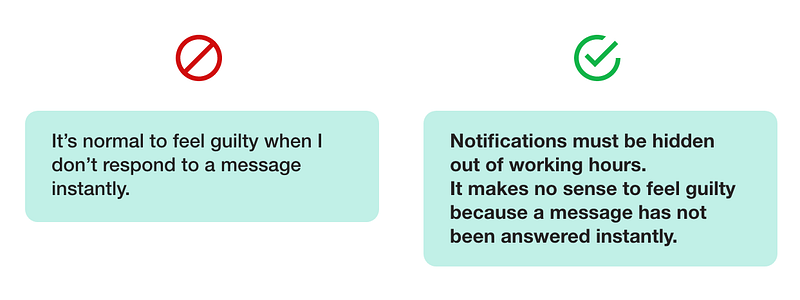
1. Don't feel guilty for not answering messages immediately
If you could have a smartphone only dedicated to work would be great. If not, you would need to have good self-control when seeing the red tag with numbers inside indicating the quantity of the messages you received.
Resist. They don't need to be read while you are having dinner. If the working day is done, the messages don't even need to be read today.

Some apps allow to turn on the Do Not Disturb mode, disabling alert sounds. To stop the visual stimuli, an alternative that works well is reserving a home screen only for work apps icons and it should be the last in the sequence.
This way, the apps used for work won't be seen mixed with apps used for personal purposes and will be easier to ignore.
Replace the wrong belief with a correct one
2. Only part of the day must be consumed by work
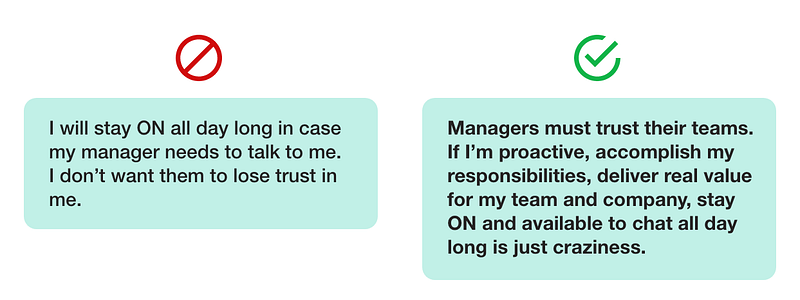
Be online after waking up till sleep time is a practice that some employees adopted to avoid frustrating leaders when they decide to check information about projects out of planned meetings or when they merely want to confirm that the employee was being productive.
A qualified leader knows the importance of trusting the team. It's not sending messages in random moments that will confirm the productiveness of somebody.
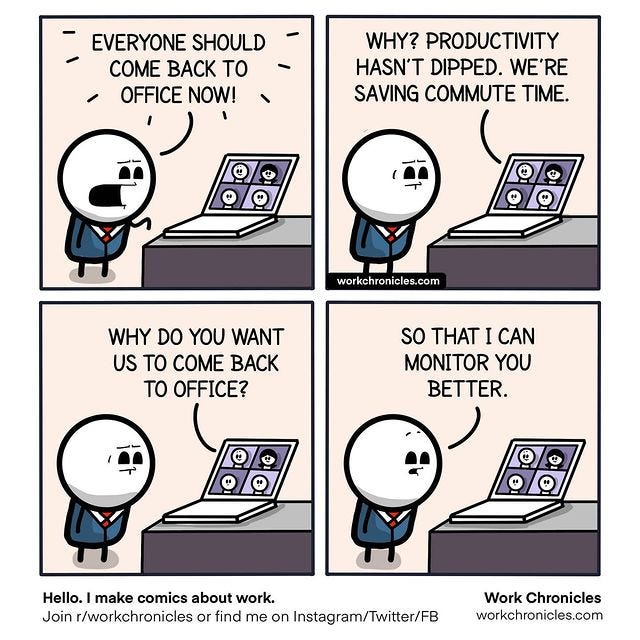
However, for some leaders with an old approach, the daily in the office is much easier to keep up with who is joining on time, leaving early, leaving late, taking long lunchtime, or any other actions that we already know, don't define productiveness.
People who got used to working for old-fashion employers think that showing they are trustworthy means being available even during the child’s birthday party, at the gym, or in a romantic dinner with the partner.
We understand how bad this behavior is when we conclude that we are disrespecting our family and friends.
Replace the wrong belief with a correct one
If you’re a legitimate remote worker, leaders who need to monitor the team closely, as they do in the office, don’t fit your profile well.
3. The task can be continued tomorrow
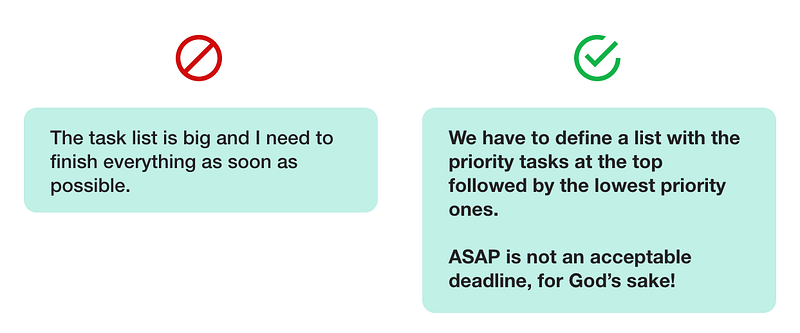
Checking messages before breakfast for fear of missing an important message, having lunch frequently on the desk typing with a hand and holding the fork with another, and not stopping work in the evening can be indications of anxiety and bad control of professional life.
Write on the wall: The task list will never end, and it’s fine. Life goes on.
If your body got used to only being allowed to rest when receiving dopamine after concluding a task successfully, it needs to be treated.
All this obsession with getting work done can lead to a serious illness. And after it happens, the process to solve it can be slow and long.
Better avoid it quickly, right?
Replace the wrong belief with a correct one
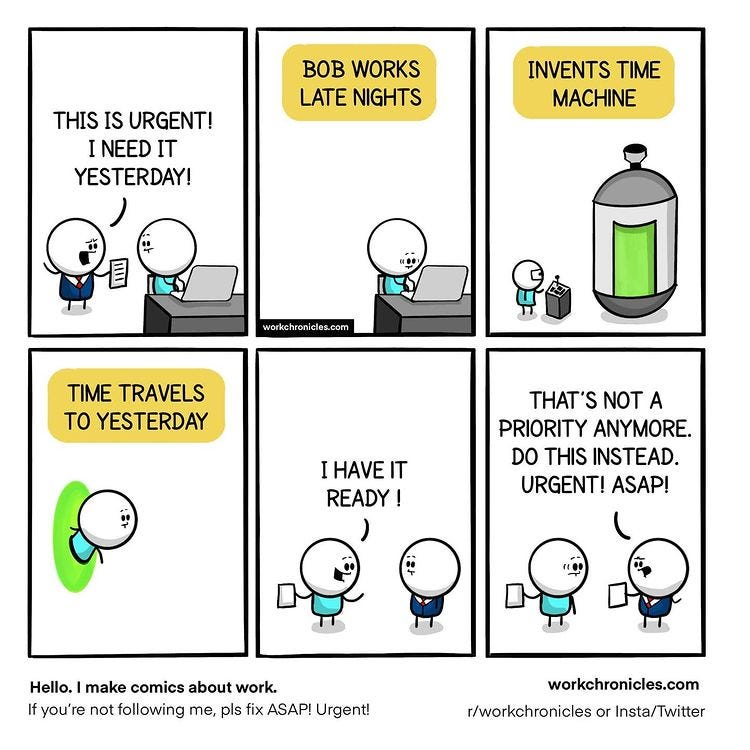
And don't lose your time building a time machine to accomplish yesterday tasks. It won’t be worth it.
4. Keep work tools organized in one place
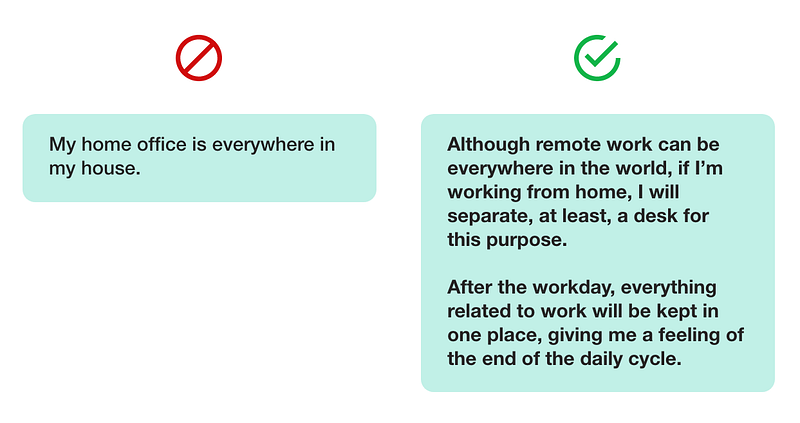
If it's possible to reserve a room at home to be the office, brilliant! But if not, at least a small spot is required.
It doesn't mean we can't walk with the laptop, notebooks for other parts of the house while using them, but when we stop working, the work tools should be kept somewhere, preferably where we don’t see them all the time.
It is a good habit that gives the feeling of the end of a daily cycle that in the face-to-face work model we do when we leave the office.
And having it not so visible, avoid triggers to think about work out of the time.
Replace the wrong belief with a correct one
5. Protect yourself from not losing focus
It's great to chat with teammates. Exchange knowledge, share nice ideas, news and even talk about personal life. From the work environment, golden friendships can come.
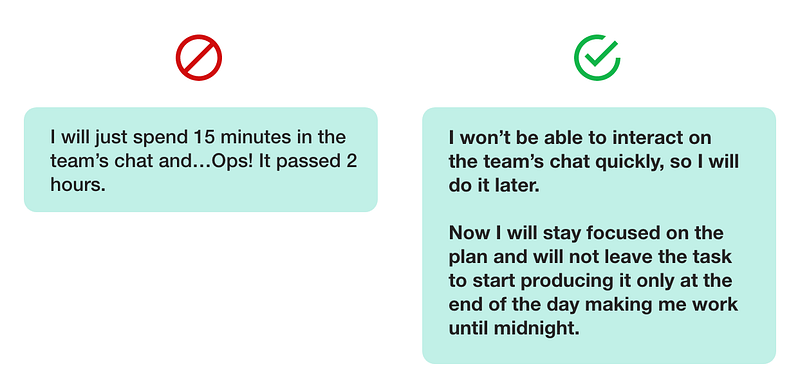
However, if we don't control the time we spend chatting, it can push all the pile of work for later and we know what it means. Work till late.
As we have responsibilities, it's important to focus on the expected work to be accomplished and after that, spend time with other staff, including interact with the team more freely.
Replace the wrong belief with a correct one
6. Repeat 10x: Remote work is different from working in an office
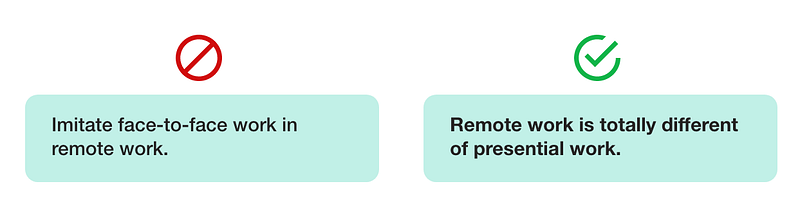
After all, those who expect the same office dynamics in the remote work will be frustrated, in trouble, or both.
Writing-based culture, asynchronous communication and decision making, meetings previously scheduled are remote working rules that will give more freedom to the workers.
If we bring the rules of the office to our homes, and as the time to leave the work physical space will never come, we will work double the usual or more.
If we don't have control of it, personal life will be merged with professional life and the work will seem to be never finished, culminating in extreme tiredness or more serious problems.
Replace the wrong belief with a correct one
Put the above tips into practice and see the feeling of the infinite work loop slipping away.
Leaders who have the power to promote changes should encourage the team to respect their personal life.
Employees who work for old-fashion employers can organize together to propose improvements aiming at everyone’s mental health that certainly will impact productiveness positively.
Work is very important, but live our lives doing other interesting things is as important as that.
Work wisely and enjoy your time on Earth!
Check out related articles: