
The 6 Most Important Rules for Remote Work that Companies Ignore
Without applying these rules, remote work is a hell

In the last months, many people are showing they are open to the idea to continue working remotely, but some companies are not so convinced to do so.
Also, brand new professionals just finishing college are listening to remote work tendencies and are considering becoming nomad workers, after all, it offers a more free way to live.
But misconceptions to understand how it works successfully can bring difficulties to make it a good reality.
Companies that don’t get the remote work concept
Many companies are struggling to adapt to this work format. Some of them had a tough time during the pandemic hardest phases, so with the liberation for people who took 2 vaccine shots, they already requested the teams to come back to the office since things didn’t go so well working on distance.
Their big mistake is to continue with the same concepts and structure used in the office. Leaders must understand that it’s necessary to learn new ways to communicate and be productive.
As a professional experienced with remote work since 2013 and a big enthusiast of this model, I list 5 important topics that make a lot of improvements and companies have limitations to realize:
1. Focus on the results
First of all, it’s fundamental to trust people. Give people the opportunity to show they are trustful is one of the main steps to build an effective team.
Don’t trust the team it’s out of date even for the office environment, imagine for the remote work. Punch the clock and require detailed information from each team member daily don’t work anymore. If it ever worked one day.
A successful and healthy company generates revenue and offers a good environment for humans.
A work environment focused on rules causes stress on people. People have different ways to live and consequently to work. Physiological differences make people be more productive and focused in different moments. A smart work model considers these natural variations.
So if the leaders work with people they trust, they don’t ask the employees to log time for every small task, record the screen during remote work time, or any other mediocre rule.
Effective communication and achieving goals with quality will define if the work is done. And that’s what is needed to have a good performance.
2. Communication is well structured and clearly defined
The remote work has written communication as default.
It’s crucial to define one single app to gather all communication. There are options out there: Slack, Discord, MS Teams, Basecamp, among others.
Having said that, no internal conversation needs to use email, Whatsapp, Telegram, or other additional apps. We should not spread information in different places. It’s confusing and not practical for further search.
If the remote work has text as the main method to communicate, define standards of good practices is welcome:
a. Be kind and direct.
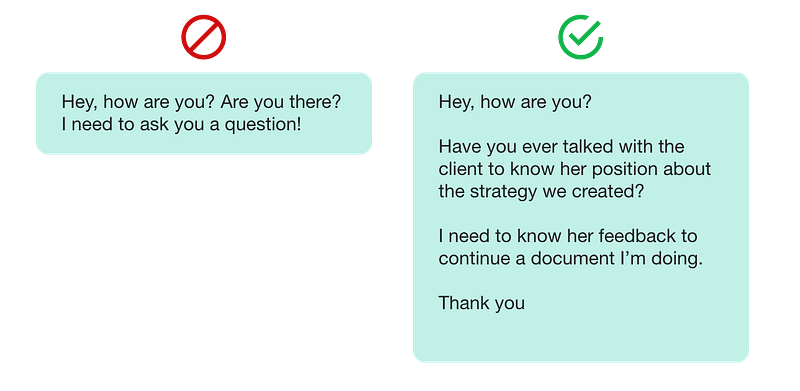
b. Use simple communication.
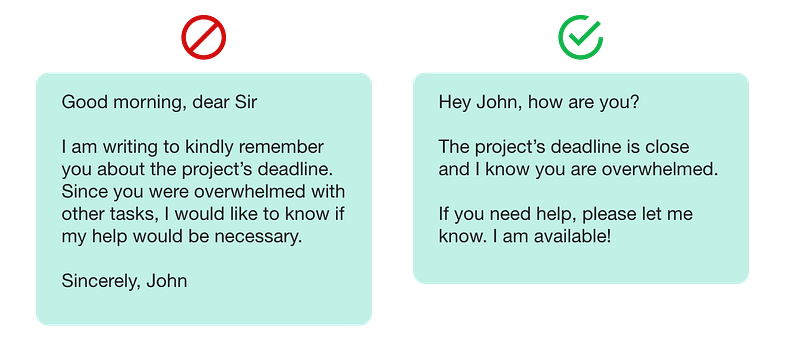
c. Write in a digestible format.
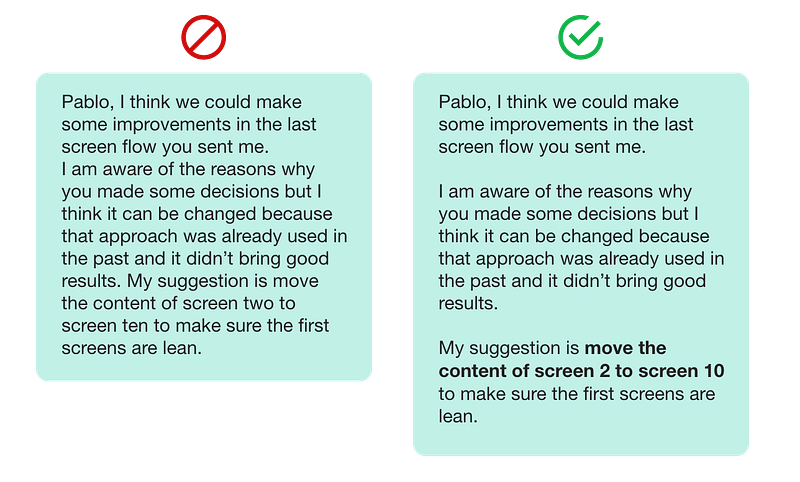
3. Be online and be available are different things — Instant replies are not expected
Accepting that remote work has a different dynamic than a presential model, we need to understand that each person has their routine, and respect it is essential.
Instead of receiving a quick and short message as a reply, workers should expect to wait more time to have their questions answered in a more complete and better-crafted way.
We know what instant message apps do with our minds. We feel anxious to answer the message received when we hear the notification, we have the feeling we are missing something regularly, there is pressure to reply as soon as possible.
The teams need to work in a culture that encourages people to disable notification sounds, avoiding the stress of being interrupted frequently, motivate them not to expect quick answers because it’s important to have time to think about and send back good content and not something superficial.
4. Meetings are meaningful and predictable
As a working model that prioritizes productivity and results, the meetings are the last communication resource and they must not happen all of a sudden.
Meeting objectives should be clear and precise and they need to be scheduled upfront. The reason to schedule it is to discuss punctual points and not talk about the project randomly.
Other general rules for meetings should be applied like looking for the best schedule for the whole team and controlling the duration.
“The longer meetings drag on, the less engaged your team is going to be – and the less productive your meetings will be as a result.” — Deanna deBara, Most productive time to schedule a meeting
5. Transparency is essential
The information needs to be shared and not stay only in somebody’s mind.
Independently of the communication platform is used, all of them have the option to communicate in groups, normally organized by teams working on the same project.
Most of the communication about the project should be done using the group’s channel and not through private messages. This way all participants are aware of what is happening and it’s possible to follow the project’s progress.
6. Urgency is urgency
All urgent calls should be done for a good reason. A manager must not use their position to make false alarms and interrupt subordinates with topics that can be talked per text in the project's channel and teammates must not use this resource regularly because of disorganization.
In the same way, we don’t call the police because there is a cockroach in the room, we don’t ask for immediate attention because we are anxious to say something or get a quick response if it can wait.
For candidates, to avoid bad surprises, I recommend asking questions related to the points I mentioned above during the interview process.
This way, it's possible to understand if the company culture respect well-defined processes or it's a mess.
HR always opens the opportunity to let the interviewed person solve doubts during this phase: use this time wisely!
Work remotely can be awesome but if not applied carefully, it can be hell and bring terrible consequences for the company and for employees’ mental health. Preserve your energy and your time!
Time is life!