avatarJeremy Roberts

Free AI web copilot to create summaries, insights and extended knowledge, download it at here

7827

Abstract

now let’s go to bed:” Reverend Samuel Whitehead [Andy Griffith] is roused from bed by his children Todd Starke, Buddy Foster, and Amber Smale to investigate the creepy, definitely foggy cemetery behind the Church of the Redeemer in 1969’s “Angel in My Pocket,” produced by Edward Montagne, Griffith, and longtime manager Richard Linke. Image Credit: Universal Pictures / Collectors Universe</b></figcaption></figure><p id="17ab">While <i>Angel </i>was being edited for release, newspapers including the Progress Bulletin in Pomona, California, announced Griffith’s next Universal script. <i>Me and My Shadow, </i>to be produced by Montagne and co-written by Fritzell and Greenbaum, would be a buddy adventure about two Depression-era hitchhikers keeping one step ahead of the law. The shocking reveal — Knotts would costar. De Visé, incidentally the brother-in-law of the bug-eyed, anxiety-ridden funnyman, sheds light on why <i>Me and My Shadow</i> fell apart. “Andy wanted to try to establish himself as a solo actor,” confirms De Visé in an exclusive interview. “As soon as the<i> Griffith </i>show was over, Andy’s people wanted him to join forces with Don again. It’s not so much that Don was a huge star as that Don and Andy had been such a popular duo. Don’s presence in a project always seemed to make it a hit.” Griffith cut to the bone in a <a href="https://www.itsabouttv.com/2017/01/this-week-in-tv-guide-january-9-1971.html">1971 TV Guide interview</a> — “I love Don, but teaming up with him again would be like going backwards.”</p><p id="e109"><i>The Love God</i>? was Knotts’ fourth Universal feature and a bawdy attempt to seize a maturer audience. It broke his string of moderate hits in the Age of Aquarius. If anyone bothered to notice, <i>How to Frame a Figg </i>was Knotts’ fifth and final collaboration with Universal in 1971. Facing a similar dire predicament as his one-time comedy partner, Knotts finally turned his fortunes around in 1975 when — wait for it — Disney cast him as the inept leader of <i>The Apple Dumpling Gang</i> bossing Tim Conway around. Knotts remained at the Buena Vista locale for five more flicks — <i>No Deposit, No Return </i>and <i>Hot Lead and Cold Feet </i>are the cleverest.</p><p id="c0a4">Griffith was severely deflated by the failure of <i>Angel </i>and Universal’s lack of confidence in his ability to carry a film. In a two and a half hour <a href="https://youtu.be/uguoAWL8RLA?t=625">Archive of American Television interview</a> from 1998, Griffith deemed <i>Angel</i> a “very good picture but Universal didn’t know what to do with it…I never did have them audited, but I know that they made more money than they said they made.” He ordered Linke to kill the five-year contract, not returning to the silver screen until 1975 in a key supporting role as Jeff Bridges’ backstabbing cowboy mentor in the acclaimed <i>Hearts of the West.</i></p><p id="3c6e">Until Griffith’s comeback in the mid-’80s as a sharp-witted Atlanta criminal defense lawyer on <i>Matlock</i>, his career in the disco decade was chock-full of disappointing series — <i>Headmaster, The New Andy Griffith Show, Salvage 1 — </i>but more promising TV movie-of-the-weeks where he could branch out as the heavy and confound audience expectations. Griffith eventually softened his stance about Knotts, reuniting with his best friend for the NBC ratings juggernaut <i>Return to Mayberry</i> and 17 episodes of <i>Matlock </i>where Knotts humorously depicted “King of Plastics” oddball Les Calhoun.</p><p id="8334"><i>Angel’s </i>sink into oblivion was brisk. Griffith’s biographer Terry Collins remembers <i>The Ghost and Mr. Chicken</i>, <i>The Reluctant Astronaut,</i> and <i>The Shakiest Gun in the West </i>all being “re-released throughout the 1970s as kiddie matinees. I was about eight years old in 1975 when I first saw Knotts’ movies inside<i> </i>the Earle Theatre in downtown Mount Airy — the same theatre where <i>A Face in the Crowd</i> premiered in Andy’s hometown. However, <i>Angel </i>wasn’t very popular, and there weren’t any demands for it to be reissued. Andy also didn’t have an active series keeping him in the public eye. Ironic that many of his 1970s TV films are now readily available, and yet a studio film with a substantial budget is missing in action.”</p><p id="7c36"><i>Angel </i>has not been rerun since the mid-nineties on Southern Baptist evangelist Pat Robertson’s since-rebranded Family Channel and was never issued in any home video format. What about streaming? No dice there, either. The 50th anniversary of <i>Angel </i>has past, and 2020 triggers 60 years of <i>TAGS </i>and enhanced media attention. If there’s ever a time for a company such as the manufactured-on-demand Warner Archive to license and remaster <i>Angel</i>, it’s now. The non-profit Internet Archive providentially has a decent print available for viewing below.</p><p id="4a5c">Don’t expect a film approaching the caliber of <i>No Time for Sergeants, Onionhead, Hearts of the West, Rustlers’ Rhapsody, Waitress, </i>or Griffith’s bone-chilling assessment of a power-hungry singer exploiting his unsuspecting TV audience in Elia Kazan’s <i>A Face in the Crowd. </i>Nevertheless, <i>Angel in My Pocket </i>does hold merit and should not have extinguished Griffith’s dream of transitioning into a matinee idol.</p><div id="9e9d" class="link-block"> <a href="https://archive.org/details/AngelInMyPocket"> <div> <div> <h2>Angel In My Pocket 1969 movie : Free Download, Borrow, and Streaming : Internet Archive</h2> <div><h3>Copy of the unreleased on home video Andy Griffith movie, Angel In My Pocket. Found in a case with a print out of the…</h3></div> <div><p>archive.org</p></div> </div> <div> <div style="background-image: url(https://miro.readmedium.com/v2/resize:fit:320/0*SLmePRFA1A81KUzI)"></div> </div> </div> </a> </div><div id="fc40" class="link-block"> <a href="https://readmedium.com/mayberry-blood-brothers-the-light-and-darkness-of-andy-griffith-and-don-knotts-fdc0a4f8c030"> <div> <div> <h2>Mayberry blood brothers: The light and darkness of Andy Griffith and Don Knotts</h2> <div><h3>“Andy & Don: The Making of a Friendship and a Classic American TV Show” biographer Daniel de Visé furnishes a panoramic…</h3></div> <div><p>medium.com</p></div> </div> <div> <div style="background-image: url(https://miro.readmedium.com/v2/resize:fit:320/1*pkgS0bdKRrxLEhZ3zKx8RQ.jpeg)"></div> </div> </div> </a> </div><figure id="874f"><img src="https://cdn-images-1.readmedium.com/v2/resize:fit:800/1*BdFnuBwswJK6E851uAxClg.jpeg"><figcaption><b>“If everybody was saved there wouldn’t be anything for a preacher to do.” Samuel D. Whitehead [Andy Griffith] has plenty of small town bickering to combat as the new preacher of the Church of the Redeemer in Wood Falls, Kansas, in this press photo from director Alan Rafkin’s obscure 1969 comedy-drama “Angel in My Pocket.” Image Credit: Universal Pictures / Ronald Grant Archive / Mary Evans Picture Library</b></figcaption></figure><figure id="3a5a"><img src="https://cdn-images-1.readmedium.com/v2/resize:fit:800/1*cGZfPv_IT4TlgZmnI9t1HQ.jpeg"><figcaption><b>Wonderful sermon, preacher, except when you…presenting a still from the little seen 1969 comedy-drama <a href="https://archive.org/details/AngelInMyPocket">“Angel in My Pocket,”</a> written by Jim Fritzell and Everett Greenbaum and directed by Alan Rafkin, all veterans of “The Andy Griffith Show.” Left to right are Lee Meriwether, Andy G

Options

riffith, Ruth McDevitt [Don Knotts’ over-protective mother in “The Shakiest Gun in the West”], Margaret Hamilton [i.e. the Wicked Witch of the West in “The Wizard of Oz”], and Maggie Peterson Mancuso [besotted with Sheriff Andy Taylor as mountain songbird Charlene Darling Wash on five gut-busting episodes of “The Andy Griffith Show”] in the yellow floral pattern dress. Image Credit: Universal Pictures / AF Archive</b></figcaption></figure><figure id="95a4"><img src="https://cdn-images-1.readmedium.com/v2/resize:fit:800/1*BAdmbXTa-vb-NEOuYeh2GA.jpeg"><figcaption><b>Todd Starke, Lee Meriwether, Kay Medford, Andy Griffith, Amber Smale, Jerry Van Dyke, and Buddy Foster convene inside the Church of the Redeemer in director Alan Rafkin’s rural comedy satire <a href="https://archive.org/details/AngelInMyPocket">“Angel in My Pocket,”</a> distributed on February 7, 1969, to indifferent box office receipts. Did you know? “Banjo-Playing Deputy” was the final black and white episode of “The Andy Griffith Show” in May 1965 and incidentally Van Dyke’s sole guest spot on Griffith’s landmark production. Immediately following “<i>Angel in My Pocket,”</i> Griffith requested that Van Dyke join the cast of “<i>Headmaster”</i> as his good pal / athletic coach Jerry Brownell. “<i>Headmaster” </i>was a 30-minute CBS dramedy that focused on social issues of the day during its abbreviated 14-episode run. Meriwether teamed up with Griffith two years later to again portray his spouse in “<i>The New Andy Griffith Show,” </i>a failed replacement for the preachy “<i>Headmaster.”</i> Even though Knotts, George Lindsey, and Paul Hartman improbably guest starred on the debut episode as their beloved <i>TAGS</i> characters, the 10-episode sitcom remains extremely hard to find. “<i>Headmaster”</i> shares a similar forgotten fate. Image Credit: Universal Pictures / IMDB</b></figcaption></figure><figure id="e632"><img src="https://cdn-images-1.readmedium.com/v2/resize:fit:800/1*0FX3NV_OxI5CbDSI44AH7w.jpeg"><figcaption><b>Newly ordained minister Samuel Whitehead [Andy Griffith] receives a warm welcome home after a hard day’s work at his temporary job in a brickyard from sons Sammy [Buddy Foster, older brother of Oscar-winning Jodie Foster who portrayed Ken Berry’s son Mike in “The Andy Griffith Show” successor “Mayberry R.F.D.”] and Dink [Todd Starke, best known as one of Doris Day’s two kids on the first three seasons of CBS’s sitcom “The Doris Day Show”] and pregnant wife Mary Elizabeth [Lee Meriwether, aka Catwoman in the 1966 theatrical feature “Batman”] in director Alan Rafkin’s <a href="https://archive.org/details/AngelInMyPocket">“Angel in My Pocket,”</a> dropped on February 7, 1969. Image Credit: Universal Pictures / eBay</b></figcaption></figure><figure id="f898"><img src="https://cdn-images-1.readmedium.com/v2/resize:fit:800/1*6M0RWzJEsS3R_vmHeWxTlw.jpeg"><figcaption><b>The bold tagline of the official 1969 movie poster for <a href="https://archive.org/details/AngelInMyPocket">“Angel in My Pocket”</a> reads, “He’s an ex-Marine turned preacher…in a wacky and wonderful entertainment for the whole family!” Image Credit: Universal Pictures / Femmes, Fatales & Fantasies, Inc.</b></figcaption></figure> <figure id="09da"> <div> <div> <img class="ratio" src="http://placehold.it/16x9"> <iframe class="" src="https://cdn.embedly.com/widgets/media.html?src=https%3A%2F%2Fwww.youtube.com%2Fembed%2Fe4uqmwERgT0%3Ffeature%3Doembed&amp;url=http%3A%2F%2Fwww.youtube.com%2Fwatch%3Fv%3De4uqmwERgT0&amp;image=https%3A%2F%2Fi.ytimg.com%2Fvi%2Fe4uqmwERgT0%2Fhqdefault.jpg&amp;key=a19fcc184b9711e1b4764040d3dc5c07&amp;type=text%2Fhtml&amp;schema=youtube" allowfullscreen="" frameborder="0" height="480" width="640"> </div> </div> </figure></iframe></div></div></figure> <figure id="e04a"> <div> <div> <img class="ratio" src="http://placehold.it/16x9"> <iframe class="" src="https://cdn.embedly.com/widgets/media.html?src=https%3A%2F%2Fwww.youtube.com%2Fembed%2FZARxj8KpRTI%3Ffeature%3Doembed&amp;url=http%3A%2F%2Fwww.youtube.com%2Fwatch%3Fv%3DZARxj8KpRTI&amp;image=https%3A%2F%2Fi.ytimg.com%2Fvi%2FZARxj8KpRTI%2Fhqdefault.jpg&amp;key=a19fcc184b9711e1b4764040d3dc5c07&amp;type=text%2Fhtml&amp;schema=youtube" allowfullscreen="" frameborder="0" height="480" width="854"> </div> </div> </figure></iframe></div></div></figure><div id="1171" class="link-block"> <a href="https://readmedium.com/dadvice-from-a-globe-trotting-preacher-and-a-mayberry-sheriff-7ff9fef1a9c4"> <div> <div> <h2>Dadvice from a globe-trotting preacher and a Mayberry sheriff</h2> <div><h3>Get the scoop on love, sacrifice, honesty, and more homespun wisdom for fathers courtesy of Andy Griffith of Mayberry…</h3></div> <div><p>medium.com</p></div> </div> <div> <div style="background-image: url(https://miro.readmedium.com/v2/resize:fit:320/1*brTGSiLNbf4QXud2eVTugQ.jpeg)"></div> </div> </div> </a> </div><div id="99f3" class="link-block"> <a href="https://readmedium.com/airport-escapades-with-gomer-pyle-and-frankensteins-monster-ed6bb1f729ec"> <div> <div> <h2>Airport escapades with Gomer Pyle and Frankenstein’s monster</h2> <div><h3>Simple-minded “Andy Griffith Show” mechanic Jim Nabors and irascible “Everybody Loves Raymond” father Peter Boyle were…</h3></div> <div><p>medium.com</p></div> </div> <div> <div style="background-image: url(https://miro.readmedium.com/v2/resize:fit:320/1*an9lEck_zP5fwK31_FGqiA.jpeg)"></div> </div> </div> </a> </div><div id="2f3a" class="link-block"> <a href="https://readmedium.com/revisiting-the-emmy-winning-barney-comes-to-mayberry-1967-episode-of-the-andy-griffith-show-c9c01a5e4415"> <div> <div> <h2>Revisiting the Emmy-winning ‘Barney Comes to Mayberry’ 1967 episode of ‘The Andy Griffith Show’</h2> <div><h3>“Barney Comes to Mayberry” materialized during the seventh, next-to-last season of the beloved Andy Griffith Show…</h3></div> <div><p>medium.com</p></div> </div> <div> <div style="background-image: url(https://miro.readmedium.com/v2/resize:fit:320/1*DkDHxJl6h9oBbe8Qs9xwCQ.jpeg)"></div> </div> </div> </a> </div><div id="dae7" class="link-block"> <a href="https://readmedium.com/long-lost-video-of-andy-griffith-and-don-knotts-performing-classic-skit-surfaces-dc233fbf8c64"> <div> <div> <h2>Long-lost video of Andy Griffith and Don Knotts performing classic skit surfaces</h2> <div><h3>The Andy Griffith Show, perhaps television’s first dramedy, remains one of the most beloved, iconic programs of all…</h3></div> <div><p>medium.com</p></div> </div> <div> <div style="background-image: url(https://miro.readmedium.com/v2/resize:fit:320/1*GmmL5KDpefMqZ4NqbK0EQg.jpeg)"></div> </div> </div> </a> </div><p id="1385"><i>© Jeremy Roberts, 2019. All rights reserved. To touch base, email <a href="mailto:[email protected]"></a></i><a href="mailto:[email protected]">[email protected]<i></i></a><i> and mention which story led you my way. I appreciate it sincerely.</i></p></article></body>

The 50th anniversary of Andy Griffith’s ‘Angel in My Pocket’ and still no official remaster in sight
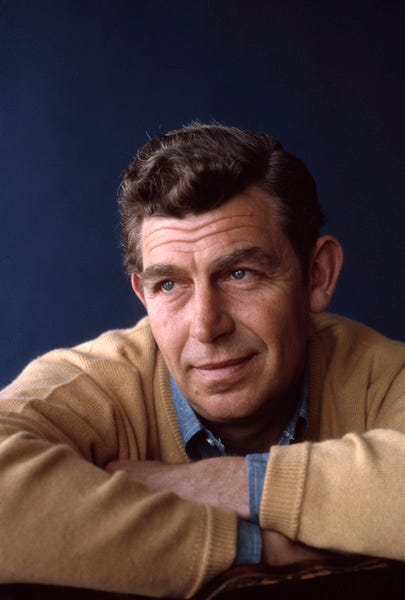
As the No. 3 Nielsen-rated, seventh season of “The Andy Griffith Show” prepares to get underway at Desilu Studios on 846 North Cahuenga Boulevard in Hollywood, the series’ namesake 39-year-old star poses contemplatively on the back of a wooden chair in an outtake from his June 4–10, 1966, cover shoot for TV Guide. Photography by Ken Whitmore

The 1969 comedy-drama Angel in My Pocket was the first project Andy Griffith tackled after willingly abdicating The Andy Griffith Show [TAGS], the number one rated television series for its final 1967–1968 season. Angel in My Pocket, Griffith’s first theatrical film since a supporting turn eight years earlier in Debbie Reynolds’ modest comedy western The Second Time Around, was born out of a tantalizing proposal by Universal Studios executives.

Sensing Griffith’s dissatisfaction after eight seasons of rendering even-handed Sheriff Andy Taylor and having already distributed three kid-friendly comedies by former TAGS second banana Don Knotts, Terry Collins reported in The Andy Griffith Story: An Illustrated Biography that Universal said, “Come with us and make feature films, and you’ll be another Jimmy Stewart or Henry Fonda.” With a minimum paycheck of $2 million, a third of the net profits guaranteed, and producer reins shared with Svengali-like manager Richard Linke [i.e. Andy Griffith Productions, Inc.], the “Romeo and Juliet” comedy monologist’s 5-year, 10-movie contract seemed like a sure bet.

Jim Fritzell and Everett Greenbaum were chosen on the strength of their 29 hysterical black and white scripts of TAGS — they hatched Ernest T. Bass — and Knotts’ three previous Universal movies — The Ghost and Mr. Chicken, The Reluctant Astronaut, and The Shakiest Gun in the West. Greenbaum told TAGS author Richard Kelly that “‘Andy was a large man of large appetites and emotions.’ In a little bungalow at Universal where he and Fritzell were writing Angel, Greenbaum did his impersonation of Claude Rains [the scene-stealing, morally questionable Captain Renault in Casablanca] for Andy, who ‘laughed so hard he punched his fist right through the wall.’” Griffith had no desire to rock the boat, surrounding himself with other key members of Knotts’ Universal team — producer Edward Montagne [also the creator of McHale’s Navy] and director Alan Rafkin [27 episodes of TAGS highlighted by “Barney Runs for Sheriff”].

TAGS acting alumni were secured, too. Jack Dodson [dweebish county clerk Howard Sprague], Maggie Peterson Mancuso [besotted with Sheriff Taylor as mountain songbird Charlene Darling Wash], Buddy Foster [Ken Berry’s son Mike in TAGS successor Mayberry R.F.D. and the older brother of Oscar winner Jodie Foster], Ellen Corby [“Barney’s First Car”], Edgar Buchanan [“Aunt Bee’s Brief Encounter”], Ruth McDevitt [“Helen’s Past,” “Emmett’s Anniversary,” and Knotts’ over-protective mother in The Shakiest Gun in the West], Al Checco [“The Bank Job” and “If I Had a Quarter Million Dollars”], Herbie Faye [“Banjo-Playing Deputy,” “Aunt Bee Takes a Job,” and “The Tape Recorder”], and Jerry Van Dyke [“Banjo-Playing Deputy”].

The future Coach sidekick shared the same manager with Griffith [as did Mancuso] and did a stage act together in Las Vegas and Lake Tahoe. Lee Meriwether [Catwoman in the 1966 theatrical feature Batman, the plantation-accustomed wife of Rebel colonel Rock Hudson in John Wayne’s The Undefeated, Barnaby Jones’ gumshoe-yearning daughter-in-law] and Margaret Hamilton [the Wicked Witch of the West in The Wizard of Oz] were newcomers, although Meriwether reunited with Griffith two years later to again portray his spouse in the mercifully short-lived New Andy Griffith Show.
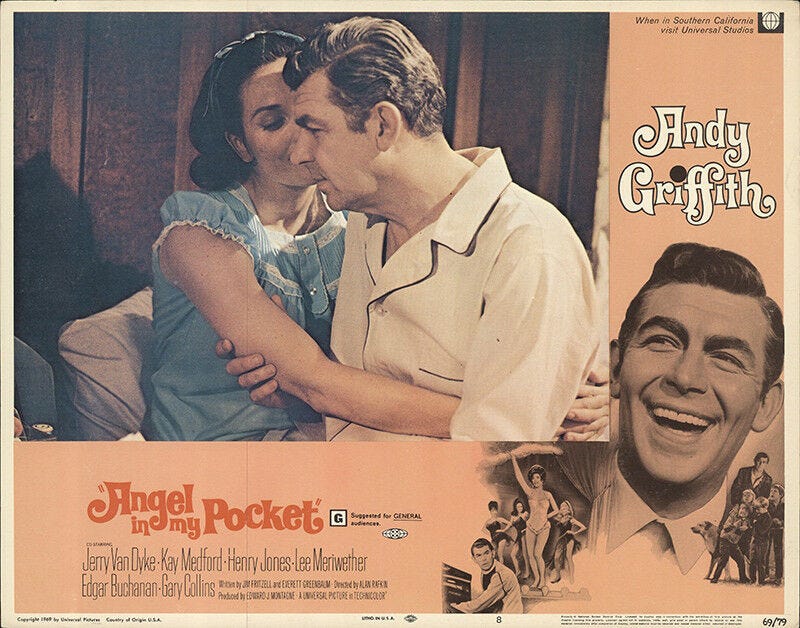
“Honey, you know you’re not being very understanding.” “I’m understanding. I understand that they’re the most narrow-minded people on the face of the Earth!” “You’re not doing yourself a bit of good getting all upset like this. Come on, sweetheart. Come to bed.” The 69th of 79 lobby cards issued for the rare 1969 comedy-drama “Angel in My Pocket,” starring Andy Griffith and Lee Meriwether. Image Credit: Universal Pictures / Femmes, Fatales & Fantasies, Inc.

With such a proven ensemble, why did a movie about an ex-marine turned man of the cloth combating small town narrow-mindedness tank at the box office upon its February 7, 1969, bow in Atlanta? The notoriously shy Griffith even undertook a two-week, nine-city promotional tour across the American South to no avail. Universal’s quality control department dwindled for Angel. Roger Ebert’s otherwise positive Chicago Sun-Times review — “a pleasant fantasy, well acted, telling a story interesting enough to do more than just amuse the kids” — contained a dismaying footnote: “The quality of the print I saw was shameful. It was filled with splices distorting or eliminating many lines of dialog. An occasional splice is inevitable, but this was the worst first-run print I’ve ever seen.”

Daniel de Visé’s unflinching 2015 Andy & Don biography asserts that Angel is “the antithesis of Mayberry…Rev. Sam Whitehead [Griffith] labors to rebuild the dilapidated Church of the Redeemer and, by extension, the town of Wood Falls, Kansas, itself. But he is thwarted at every turn. Only when the church burns to the ground do the townsfolk embrace him.” Griffith also exhibits grouchiness which permeated the three final color seasons of TAGS without Knotts, episodes that fans tend to avoid.

The ink slinger elaborates, “Angel is shot in the harsh, vérité style of its era. Young marrieds Andy and Lee look sweaty, and Lee wobbles around with a prosthetic baby bump…still, they emanate a gentle chemistry. After eight years on TAGS, Andy wanted to do drama. But Universal wanted Angel to replicate the gentle comedy of TAGS. The result was a gentle satire, capably acted and deftly written — but hardly a bold artistic statement.”

The counterculture and the loosening of the Hays Code negatively impacted family fare like Angel. Easy Rider, Bob & Carol & Ted & Alice, The Wild Bunch, Butch Cassidy & the Sundance Kid, True Grit, Midnight Cowboy, Once Upon a Time in the West, and They Shoot Horses, Don’t They? are among the Top 25 highest grossing films of 1969. Interestingly, Walt Disney’s The Love Bug, starring Dean Jones and Herbie the supremely intelligent white Volkswagen, was that year’s second biggest blockbuster. In hindsight, a studio like Disney would have been a wiser alternative for Griffith’s homespun persona.
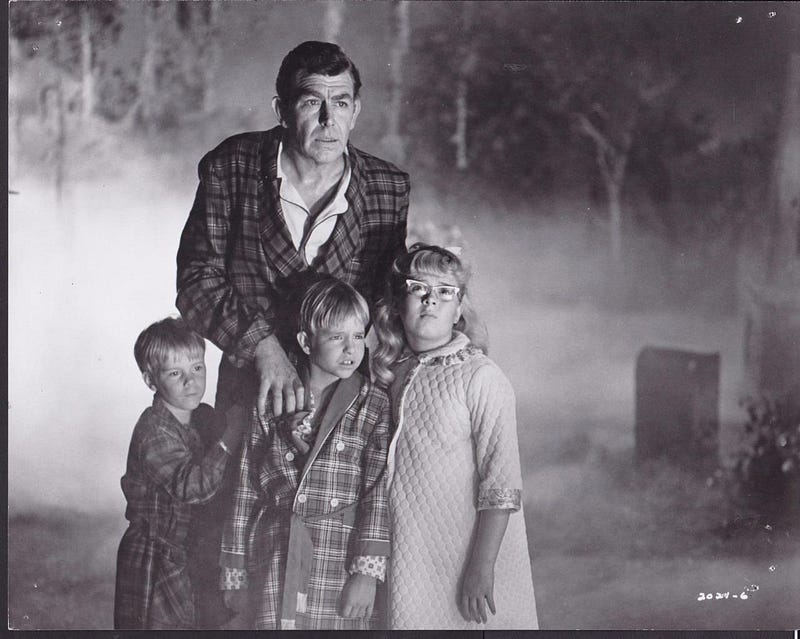
“You see, there are no ghosts in here, now let’s go to bed:” Reverend Samuel Whitehead [Andy Griffith] is roused from bed by his children Todd Starke, Buddy Foster, and Amber Smale to investigate the creepy, definitely foggy cemetery behind the Church of the Redeemer in 1969’s “Angel in My Pocket,” produced by Edward Montagne, Griffith, and longtime manager Richard Linke. Image Credit: Universal Pictures / Collectors Universe

While Angel was being edited for release, newspapers including the Progress Bulletin in Pomona, California, announced Griffith’s next Universal script. Me and My Shadow, to be produced by Montagne and co-written by Fritzell and Greenbaum, would be a buddy adventure about two Depression-era hitchhikers keeping one step ahead of the law. The shocking reveal — Knotts would costar. De Visé, incidentally the brother-in-law of the bug-eyed, anxiety-ridden funnyman, sheds light on why Me and My Shadow fell apart. “Andy wanted to try to establish himself as a solo actor,” confirms De Visé in an exclusive interview. “As soon as the Griffith show was over, Andy’s people wanted him to join forces with Don again. It’s not so much that Don was a huge star as that Don and Andy had been such a popular duo. Don’s presence in a project always seemed to make it a hit.” Griffith cut to the bone in a 1971 TV Guide interview — “I love Don, but teaming up with him again would be like going backwards.”

The Love God? was Knotts’ fourth Universal feature and a bawdy attempt to seize a maturer audience. It broke his string of moderate hits in the Age of Aquarius. If anyone bothered to notice, How to Frame a Figg was Knotts’ fifth and final collaboration with Universal in 1971. Facing a similar dire predicament as his one-time comedy partner, Knotts finally turned his fortunes around in 1975 when — wait for it — Disney cast him as the inept leader of The Apple Dumpling Gang bossing Tim Conway around. Knotts remained at the Buena Vista locale for five more flicks — No Deposit, No Return and Hot Lead and Cold Feet are the cleverest.

Griffith was severely deflated by the failure of Angel and Universal’s lack of confidence in his ability to carry a film. In a two and a half hour Archive of American Television interview from 1998, Griffith deemed Angel a “very good picture but Universal didn’t know what to do with it…I never did have them audited, but I know that they made more money than they said they made.” He ordered Linke to kill the five-year contract, not returning to the silver screen until 1975 in a key supporting role as Jeff Bridges’ backstabbing cowboy mentor in the acclaimed Hearts of the West.

Until Griffith’s comeback in the mid-’80s as a sharp-witted Atlanta criminal defense lawyer on Matlock, his career in the disco decade was chock-full of disappointing series — Headmaster, The New Andy Griffith Show, Salvage 1 — but more promising TV movie-of-the-weeks where he could branch out as the heavy and confound audience expectations. Griffith eventually softened his stance about Knotts, reuniting with his best friend for the NBC ratings juggernaut Return to Mayberry and 17 episodes of Matlock where Knotts humorously depicted “King of Plastics” oddball Les Calhoun.

Angel’s sink into oblivion was brisk. Griffith’s biographer Terry Collins remembers The Ghost and Mr. Chicken, The Reluctant Astronaut, and The Shakiest Gun in the West all being “re-released throughout the 1970s as kiddie matinees. I was about eight years old in 1975 when I first saw Knotts’ movies inside the Earle Theatre in downtown Mount Airy — the same theatre where A Face in the Crowd premiered in Andy’s hometown. However, Angel wasn’t very popular, and there weren’t any demands for it to be reissued. Andy also didn’t have an active series keeping him in the public eye. Ironic that many of his 1970s TV films are now readily available, and yet a studio film with a substantial budget is missing in action.”

Angel has not been rerun since the mid-nineties on Southern Baptist evangelist Pat Robertson’s since-rebranded Family Channel and was never issued in any home video format. What about streaming? No dice there, either. The 50th anniversary of Angel has past, and 2020 triggers 60 years of TAGS and enhanced media attention. If there’s ever a time for a company such as the manufactured-on-demand Warner Archive to license and remaster Angel, it’s now. The non-profit Internet Archive providentially has a decent print available for viewing below.

Don’t expect a film approaching the caliber of No Time for Sergeants, Onionhead, Hearts of the West, Rustlers’ Rhapsody, Waitress, or Griffith’s bone-chilling assessment of a power-hungry singer exploiting his unsuspecting TV audience in Elia Kazan’s A Face in the Crowd. Nevertheless, Angel in My Pocket does hold merit and should not have extinguished Griffith’s dream of transitioning into a matinee idol.
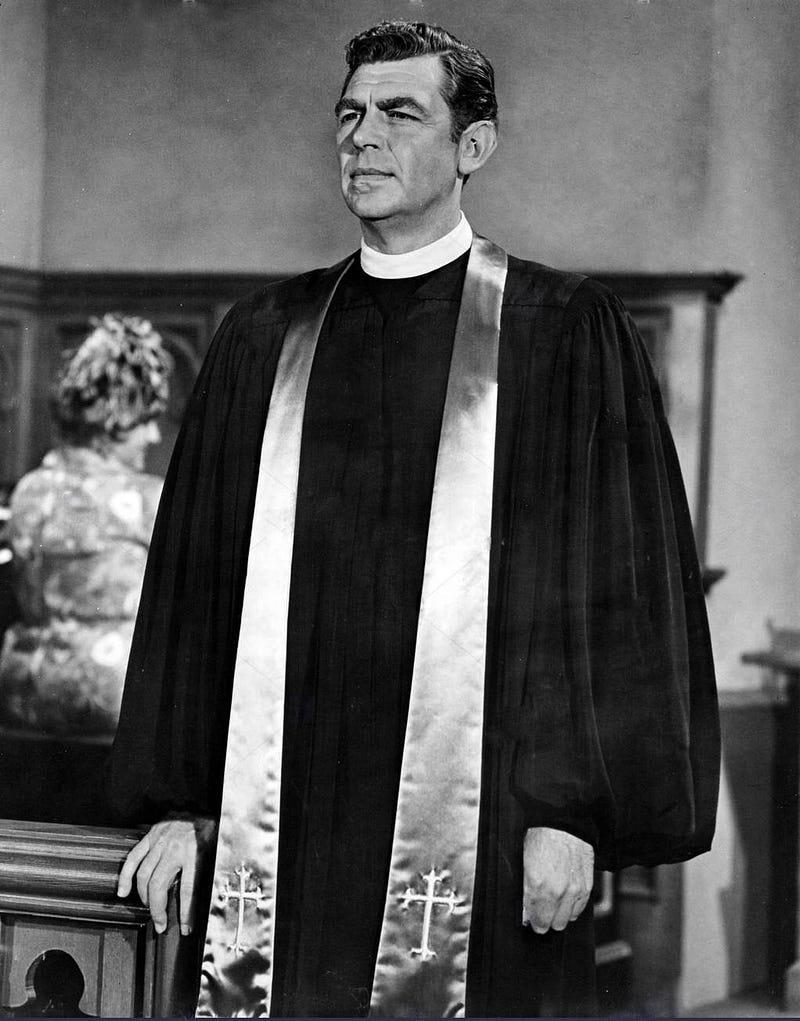
“If everybody was saved there wouldn’t be anything for a preacher to do.” Samuel D. Whitehead [Andy Griffith] has plenty of small town bickering to combat as the new preacher of the Church of the Redeemer in Wood Falls, Kansas, in this press photo from director Alan Rafkin’s obscure 1969 comedy-drama “Angel in My Pocket.” Image Credit: Universal Pictures / Ronald Grant Archive / Mary Evans Picture Library
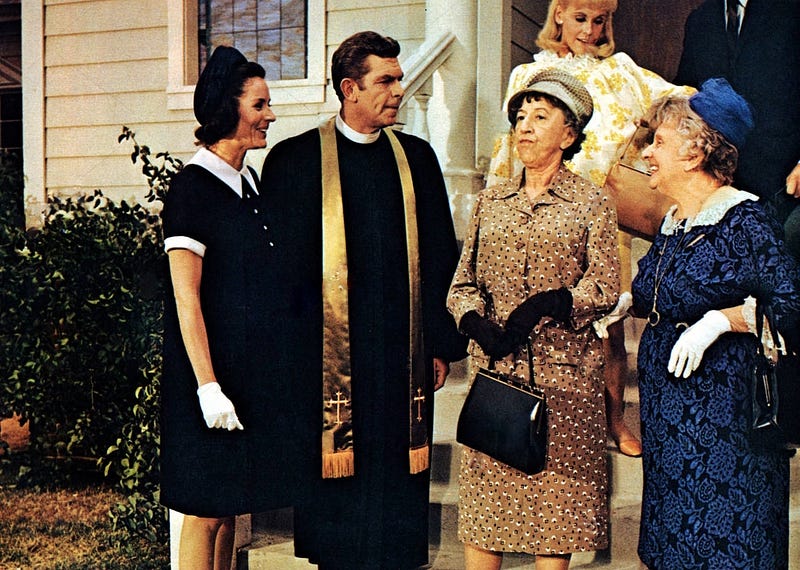
Wonderful sermon, preacher, except when you…presenting a still from the little seen 1969 comedy-drama “Angel in My Pocket,” written by Jim Fritzell and Everett Greenbaum and directed by Alan Rafkin, all veterans of “The Andy Griffith Show.” Left to right are Lee Meriwether, Andy Griffith, Ruth McDevitt [Don Knotts’ over-protective mother in “The Shakiest Gun in the West”], Margaret Hamilton [i.e. the Wicked Witch of the West in “The Wizard of Oz”], and Maggie Peterson Mancuso [besotted with Sheriff Andy Taylor as mountain songbird Charlene Darling Wash on five gut-busting episodes of “The Andy Griffith Show”] in the yellow floral pattern dress. Image Credit: Universal Pictures / AF Archive
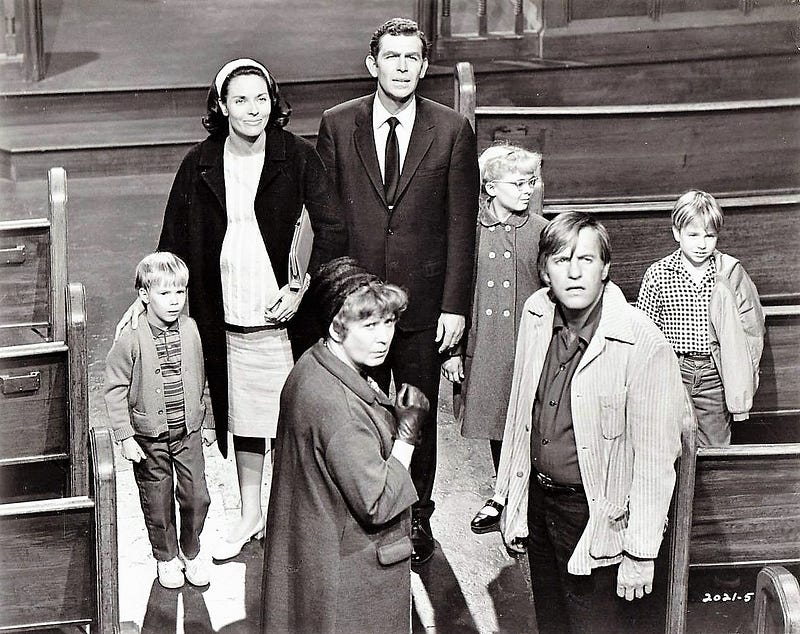
Todd Starke, Lee Meriwether, Kay Medford, Andy Griffith, Amber Smale, Jerry Van Dyke, and Buddy Foster convene inside the Church of the Redeemer in director Alan Rafkin’s rural comedy satire “Angel in My Pocket,” distributed on February 7, 1969, to indifferent box office receipts. Did you know? “Banjo-Playing Deputy” was the final black and white episode of “The Andy Griffith Show” in May 1965 and incidentally Van Dyke’s sole guest spot on Griffith’s landmark production. Immediately following “Angel in My Pocket,” Griffith requested that Van Dyke join the cast of “Headmaster” as his good pal / athletic coach Jerry Brownell. “Headmaster” was a 30-minute CBS dramedy that focused on social issues of the day during its abbreviated 14-episode run. Meriwether teamed up with Griffith two years later to again portray his spouse in “The New Andy Griffith Show,” a failed replacement for the preachy “Headmaster.” Even though Knotts, George Lindsey, and Paul Hartman improbably guest starred on the debut episode as their beloved TAGS characters, the 10-episode sitcom remains extremely hard to find. “Headmaster” shares a similar forgotten fate. Image Credit: Universal Pictures / IMDB
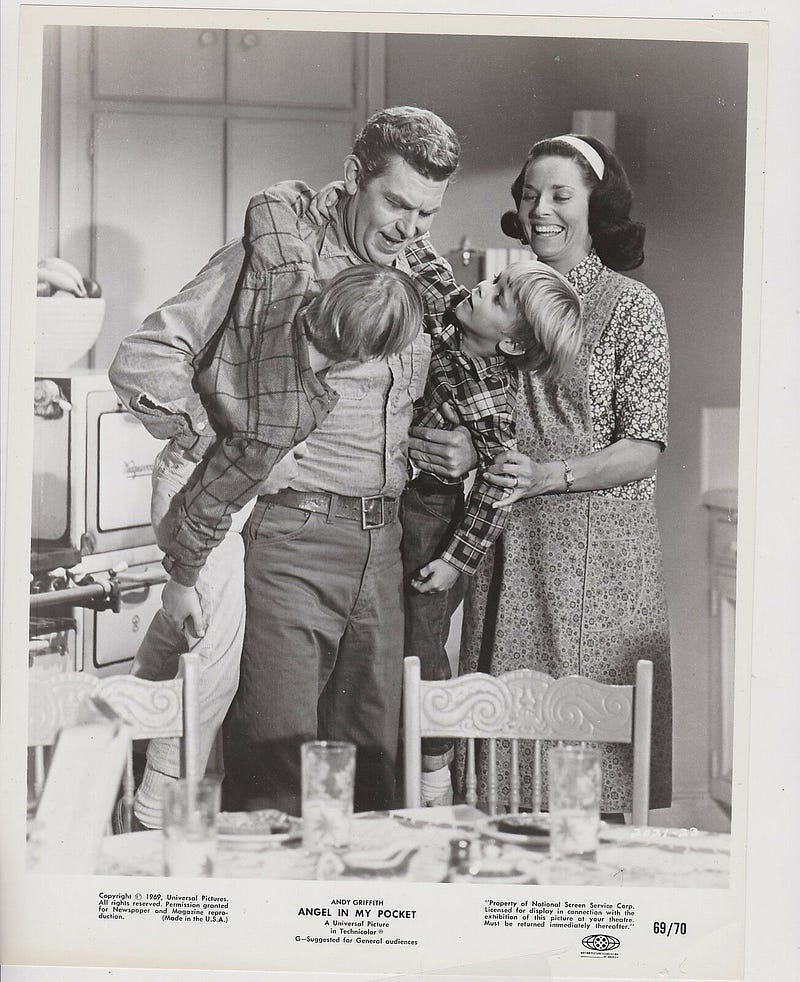
Newly ordained minister Samuel Whitehead [Andy Griffith] receives a warm welcome home after a hard day’s work at his temporary job in a brickyard from sons Sammy [Buddy Foster, older brother of Oscar-winning Jodie Foster who portrayed Ken Berry’s son Mike in “The Andy Griffith Show” successor “Mayberry R.F.D.”] and Dink [Todd Starke, best known as one of Doris Day’s two kids on the first three seasons of CBS’s sitcom “The Doris Day Show”] and pregnant wife Mary Elizabeth [Lee Meriwether, aka Catwoman in the 1966 theatrical feature “Batman”] in director Alan Rafkin’s “Angel in My Pocket,” dropped on February 7, 1969. Image Credit: Universal Pictures / eBay
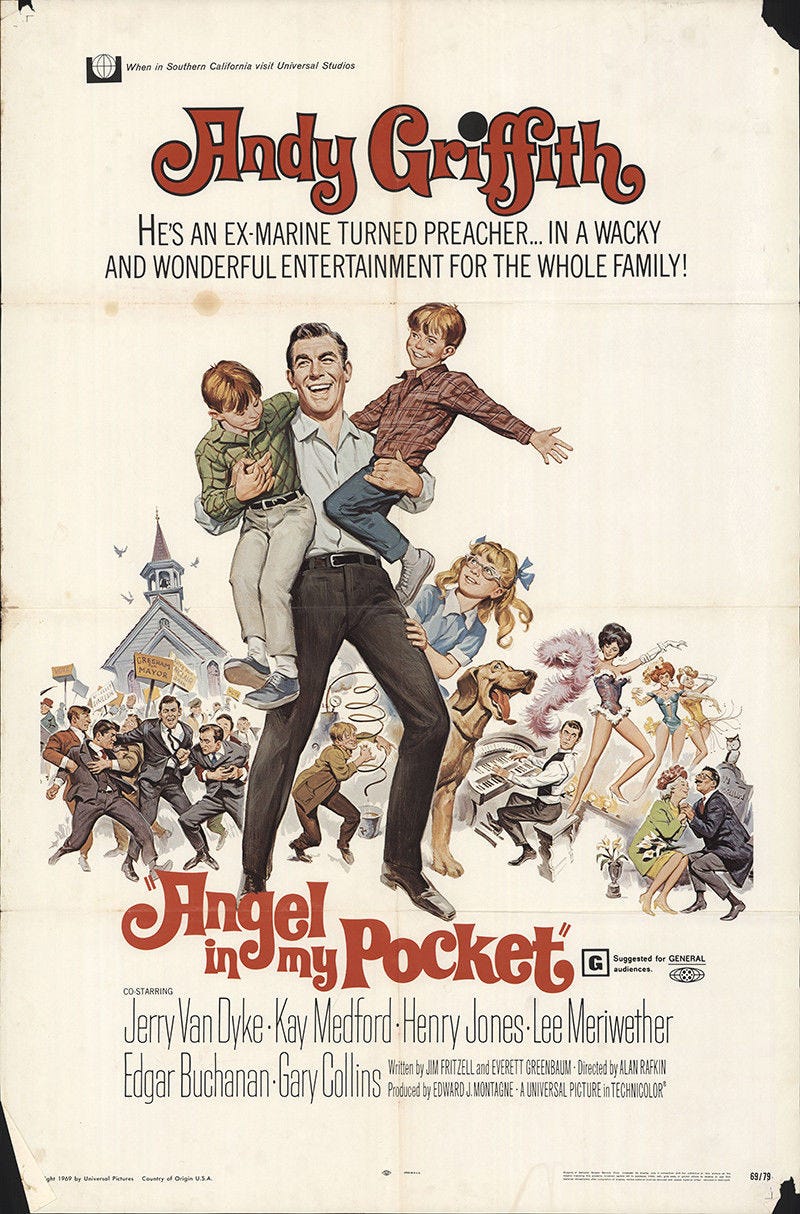
The bold tagline of the official 1969 movie poster for “Angel in My Pocket” reads, “He’s an ex-Marine turned preacher…in a wacky and wonderful entertainment for the whole family!” Image Credit: Universal Pictures / Femmes, Fatales & Fantasies, Inc.

© Jeremy Roberts, 2019. All rights reserved. To touch base, email [email protected] and mention which story led you my way. I appreciate it sincerely.

Movies
Television
Comedy
Humor
Christianity
Recommended from ReadMedium